


Refine Results
Sort By
From
To

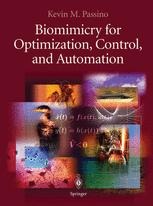
In this book, we focus onhowtousebiomimicryof the functionaloperationofthe “hardwareandso- ware” of biological systems for the development of optimization algorithms and feedbackcontrolsystemsthatextendourcapabilitiestoimplementsophisticated levels of automation. The primary focus is not on the modeling, emulation, or analysis of some biological system. The focus is on using “bio-inspiration” to inject new ideas, techniques, and perspective into the engineering of complex automation systems. There are many biological processes that, at some level of abstraction, can berepresentedasoptimizationprocesses,manyofwhichhaveasa basicpurpose automatic control, decision making, or automation.
This volume contains 18 chapters focused on ‘Biomolecular Sensing, Processing and Analysis’, written by experts in the field of BioMEMS and biomedical nanotechnology. The chapters are groups into three broad categories of Sensors and Materials, Processing and Integrated Systems, and Microfluidics.Prof. Taun Vo-Dinh from Oakridge National Labs begins the Sensors and Materials section by providing a review of biosensors and biochips. This review is followed by an example of mechanical cantilever sensor work described by Prof. Arun Majumdar’s group at UC Berkeley and Prof. Tom Thundat at Oakridge National Laboratory.
The human body is composed of structures organized in a hierarchical fashion: from biomolecules assembled into polymers, to multimeric assemblies such as cellular or-ganelles, to individual cells, to tissues, to organ systems working together in health and disease- each dominated by a characteristic length scale. Decades of science and engineer-ing are now converging to provide tools that enable the orderly manipulation of biological systems at previously inaccessible, though critically important, length scales (<100 mi-crons). Thus, the approaches described in this volume provide a snapshot of how micro-and nanotechnologies can enable the investigation, prevention, and treatment of human disease.The volume is divided into three parts. The first part, Cell-based therapeutics; cov- ers the merger of cells with micro- and anosystems for applications in regenerative medicine spanning the development of novel nanobiomaterials.
Abe Lee has been working on micro/ and nanotechnology for biomedical and biotech applications since 1992. His recent research focuses on the development of integrated micro and nano fluidic chip processors for the following applications: point-of-care diagnostics, "smart" nanomedicine for early detection and treatment, stem cell biology and therapeutics, the synthesis of novel and pure materials, and biosensors to detect environmental and terrorism threats. Jim Lee's research interest includes BioMEMS/NEMS, and polymer micro/nanotechnology. In the last 4 years, he has over 20 refereed journal publications, 2 book chapters, and 5 patents in these areas. He is now leading an NSF Nanoscale Science and Engineering Center for Affordable Nanoengineering of Polymer Biomedical Devices at OSU.
Biology and Mechanics of Blood Flows presents the basic knowledge and state-of-the-art techniques necessary to carry out investigations of the cardiovascular system using modeling and simulation. Part II of this two-volume sequence, Mechanics and Medical Aspects, refers to the extraction of input data at the macroscopic scale for modeling the cardiovascular system, and complements Part I, which focuses on nanoscopic and microscopic components and processes. This volume contains chapters on anatomy, physiology, continuum mechanics, as well as pathological changes in the vasculature walls including the heart and their treatments. Methods of numerical simulations are given and illustrated in particular by application to wall diseases. This authoritative book will appeal to any biologist, chemist, physicist, or applied mathematician interested in the functioning of the cardiovascular system.

Biology and Mechanics of Blood Flows presents the basic knowledge and state-of-the-art techniques necessary to carry out investigations of the cardiovascular system using modeling and simulation. Part I of this two-volume sequence, Biology, addresses the nanoscopic and microscopic scales. The nanoscale corresponds to the scale of biochemical reaction cascades involved in cell adaptation to mechanical stresses among other stimuli. The microscale is the scale of stress-induced tissue remodeling associated with acute or chronic loadings. The cardiovascular system, like any physiological system, has a complicated three-dimensional structure and composition. Its time dependent behavior is regulated, and this complex system has many components.
Creating some links between control feedback and biology modeling communities based on similarities in modeling, observing and perceiving alive structures, and analyzing interconnections between biological structures and subsystems was the main objective of this volume. The idea of this book was conceived in the context mentioned above with the objective to help in claiming many of the problems for control researchers, starting discussions and opening interactive debates between the control and biology communities, and, finally, to alert graduate students to the many interesting ideas at the frontier between control feedback theory and biology.
The biological effects of asteroid and comet impacts have been widely viewed as primarily destructive. The role of an impactor in the K/T boundary extinctions has had a particularly important influence on thinking concerning the role of impacts in ecological and biological changes. th During the 10 and final workshop of the ESF IMPACT program during March 2003, we sought to investigate the wider aspects of the involvement of impact events in biological processes, including the beneficial role of these events from the prebiotic through to the ecosystem level. The ESF IMPACT programme (1998-2003) was an interdisciplinary effort that is aimed at understanding impact processes and their effects on the Earth environment, including environmental, geological and biological changes.
Ion channels are biological nanotubes that are formed by membrane proteins. Because ion channels regulate all electrical activities in living cells, understanding their mechanisms at a molecular level is a fundamental problem in biology. This book deals with recent breakthroughs in ion-channel research that have been brought about by the combined effort of experimental biophysicists and computational physicists, who together are beginning to unravel the story of these exquisitely designed biomolecules. With chapters by leading experts.
Interfacial electrochemistry of redox metalloproteins and DNA-based molecules is presently moving towards new levels of structural and functional resolution. This is the result of powerful interdisciplinary efforts. Underlying fundamentals of biological electron and proton transfer is increasingly well understood although with outstanding unresolved issues. Comprehensive bioelectrochemical studies have mapped the working environments for bioelectrochemical electron transfer, supported by the availability of mutant proteins and other powerful biotechnology. Introduction of surface spectroscopy, the scanning probe microscopies, and other solid state and surface physics methodology has finally offered exciting new fundamental and technological openings in interfacial bioelectrochemistry of both redox proteins and DNA-based molecules.
Bioinformatics as well as Computational Intelligence are undoubtedly remarkably fast growing fields of research and real-world applications with enormous potential for current and future developments. "Bioinformatics using Computational Intelligence Paradigms" contains recent theoretical approaches and guiding applications of biologically inspired information processing systems(Computational Intelligence) against the background of bioinformatics. This carefully edited monograph combines the latest results of Bioinformatics and Computational Intelligence and offers a promising cross-fertilisation and interdisciplinary work between these growing fields.
Bioconductor is a widely used open source and open development software project for the analysis and comprehension of data arising from high-throughput experimentation in genomics and molecular biology. Bioconductor is rooted in the open source statistical computing environment R. This volume's coverage is broad and ranges across most of the key capabilities of the Bioconductor project, including: Importation and preprocessing of high-throughput data from microarray, proteomic, and flow cytometry platforms / Curation and delivery of biological metadata for use in statistical modeling and interpretation. / Statistical analysis of high-throughput data, including machine learning and visualization,modeling and visualization of graphs and networks. This book is a dynamic document. Code underlying all of the computations that are shown is made available on a companion website, and readers can reproduce every number, figure, and table on their own computers.
Bioactive Marine Natural Products is the first book available that covers all aspects of bioactive marine natural products. It fills the void in the literature for bioactive marine natural products. The book covers various aspects of marine natural products and it is hoped that all the major classes of bioactive compounds are included. Different classes of marine organisms and the separation and isolation techniques are discussed. The chemistry and biology of marine toxins, peptides, alkaloids, nucleosides and prostanoids are discussed in detail. Biological, toxicological and clinical evaluations are also dealt with to ensure that the book may be adopted at any stage by any practicing organic chemist or biologist, working in academia or in R&D divisions of pharmaceutical companies. Each chapter in the book includes an abstract to highlight the major points discussed in the text and concluding remarks are given. References to books, monographs, review articles and original papers are provided at the end of each chapter.
This volume contains 10 chapters. The contributions are from researchers famous in their respective fields and the chapters contain high quality reviews on topics related to the chemo-biological studies of several different heterocyclic groups. The first chapter from Saracoglu reviews the functionalization of indoles and the pyrroles via Michael additions, as these compounds have potential for their biological activities. In second chapter Men ́endez reviews the chemistry of the welwitindolinones. Topcu and Demirkiran, in the third chapter, describe the chemistry and biological studies of lignans from Taxus species, including their biosynthesis and recent strategies for the synthesis of lignans.
This volume contains nine more contributions from expert researchers of the?eld, providing readers with in depth and current research results regarding therespective topics. In the?rst chapter, Flemming et al. review the chemistry, biosynthesis, metabolism and biological activities of tetrahydrocannabinol and its deri- tives. Hansch and Verma contribute to the quantitative structure-activity re- tionship (QSAR) analysis of heterocyclic topoisomerase I and II inhibitors. These inhibitors, knowntoinhibit either enzyme, actasantitumoragentsand are currently used in chemotherapy and in clinicaltrials. In the third chapter, Khan reviews some aspects of molecular modeling studies on biologically active alkaloids.
Bioactive Heterocycles III provides readers with a comprehensive overview of the most recent breakthroughs in the ?eld of heterocycles. This volume contains 8 chapters written by experts in their respective ?elds from all over the world. The chapters summarize years of extensive research in each area, and providein sight in the new themesofnaturalproduct research.Manyofthe contributors illustrate their laboratory experiences. It's obvious that readers will gain exciting and essential information fromthe volume. In the ?rst chapter, Kayser et al. describe the chemistry, biosynthesis and biological activities of artemisinin, one of the most promising antimalarial molecules, and its related natural peroxides.
Specific binding of a ligand to a receptor is a key step in a variety of biol- ical processes, such as immune reactions, enzyme cascades, or intracellular transport processes. The ligand-receptor terminology implies that the rec- tor molecule is signi?cantly larger than the ligand, and the term "bioactive conformation" usually characterizes the conformation of a ligand when it is bound to a receptor. In a more general sense, bioactive conformation applies toanymoleculeinabiologicallyrelevantboundstateregardlessofsizecons- erations. Mostofthecontributions tothisbookaddressligandsthat aremuch smaller than their receptors. X-ray crystallography and high resolution NMR spectroscopy are the two main experimental techniques used to study bioactive conformations. The- fore, the twovolumes ofthisbookcover approachesthat use either ofthetwo techniques, or a combination thereof.
Of all food products dairy foods have the most potential concerning functional foods. Therefore, there is a tremendous amount of interest in value-added milk products and the identification of components in food which have health benefits. Bioactive Components of Milk provides an overview of these derived components and their diverse activities including: the stimulation of beneficial microflora, alerting the immune system to the presence of potential pathogens and allergens, binding and eliminating toxins, etc. The book is divided into four parts. The first part focuses on bioactive milk lipid components, which very widely among mammalian species. The second part describes different aspects of biological active colostrums and milk proteins and their derivatives, with special concern on species specific effects. The third part reviews the production of recombinant human proteins in the milk of livestock animals - including ethical issues - and the aims of altering milk composition for the benefit of both the animals themselves and the consumers. The final part focuses on the influence of ruminants nutrition on the biological activity of milk.
The book begins with a brief introduction to binary rare earth oxides, their physical and chemical stabilities, polymorphism, crystal structures and phase transformation and the association with current applications. The book goes on to present the band structure of the oxides using several quantum chemical calculations, which belong to a newly developed area in the binary rare earth oxides. Central to this chapter are the characterizations of electrical, magnetic and optical properties, as well as details of single crystal growth and particle preparation methods that have progressed in recent years. Later chapters concentrate on thermo-chemical properties and trace determination techniques. The final chapter contains a variety of useful applications in various fields such as phosphors, glass abrasives, automotive catalysts, fuel cells, solid electrolytes, sunscreens, iron steels, and biological materials.

Devoted to heterocyclizations of aliphatic and aromatic, -unsaturated carbonyls with various binucleophiles leading to three-, five-, six and seven-membered partially hydrogenated nitrogen-containing heterocycles. During the last decade interest in these classes of organic c- pounds has been experiencing a scientific renaissance owing to their significant role in biological processes in living cells and diverse effects on physiological activities. In addition, such compounds are also more prevalent from the vi- point of ''classical'' problems of organic chemistry, among them reactivity, chemo- and regioselectivity, tautomerism, conformational analysis and features of their electronic structure. The character of these problems in the case of partially hydrogenated heterocycles differs sufficiently from that for hetero- omatized and perhydrogenated heterocyclic compounds and investigations in this field very often lead to interesting and unusual results. Extensively characterized cyclocondensations of, -unsaturated carbonyls, their synthetic equivalents and their precursors are the most widespread, facile and generally valid pathway to dihydroazaheterocycles.

Daraa Highway - Ghabagheb - Syria
+963-15 2050 - 15 860 380 /1/2/3 - 11 662 3900