



Page 88
Page 88

IUTAM symposium on one hundred years of boundary layer research ; Proceedings of the IUTAM Symposium held at DLR-Göttingen, Germany, August 12-14, 2004
This book collects peer-reviewed lectures of the IUTAM Symposium on the 100th anniversary of Boundary Layer research. Covers classification, definition and mathematics of boundary layers; instability of boundary layers and transition; boundary layers control; turbulent boundary layers; numerical treatment and boundary layer modelling.
IUTAM Symposium on Multiscale Problems in Multibody System Contacts ; Proceedings of the IUTAM Symposium held in Stuttgart, Germany, February 20–23, 2006
The investigation of multiscale problems in multibody system contacts is an interesting and timely topic which has been the subject of intensive research. This proceedings volume summarizes contributions of many authors active in the field and gives insight in very different areas of this fascinating research.

IUTAM Symposium on Mechanics and Reliability of Actuating Materials ; Proceedings of the IUTAM Symposium held in Beijing, China, 1-3 September, 2004
The general assembly of IUTAM approved in August, 2002 at Cambridge University, UK, a proposal to hold an IUTAM symposium to summarize the relevant research findings. The main themes of the symposium are: (i) the constitutive relations of actuating materials that couple mechanical, electrical, thermal and magnetic properties, as well as incorporate phase transformation and domain switch; (ii) the physical mechanisms of deformation, damage, and fatigue crack growth of actuating materials; (iii) the development of failure-resilient approaches that base on the macro-, meso-, and micro-mechanics analyses; (iv) the investigation of microstructural evolution, stability of phase transformation, and size effects of ferroelectric ceramics, shape memory alloys, actuating polymers, and bio-actuating materials.

IUTAM symposium on chaotic dynamics and control of systems and processes in mechanics ; Proceedings of the IUTAM Symposium held in Rome, Italy, 8-13 June 2003
In recent years, careful experimental studies have been made to establish the actual occurrence and observability of the predicted dynamic phenomenaComplex dynamics have been shown to characterize the behaviour of a great number of nonlinear mechanical systemswhen the first IUTAM Symposium devoted to the general topic of nonlinear
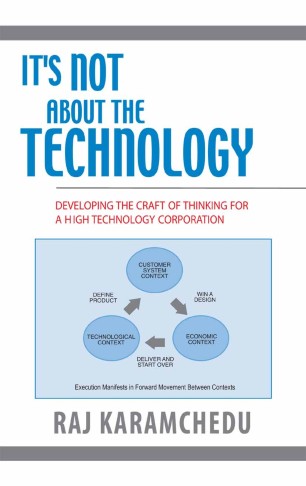
Its Not About the Technology : Developing the Craft of Thinking for a High Technology Corporation
This book is not about a new concept, or a new technique. It tackles the big questions of how to develop the craft of the thinking that is required of us in high technology companies. It is predicated on a radical notion that, even though the problematic is the execution in a high technology corporation, neither a high level market strategy nor the kind of technology itself matters, insofar as learning the craft of execution goes. How marketers and engineers comprehend a context uniquely shapes the ways they interact, engage in decision-making phenomenon, and eventually their execution performance in a company. The breakdown of their interaction occurs when the individual contexts of a marketer and an engineer are permanently secluded from one another.this book methodically demystifies the key to successful execution in the high technology space

ITIL® Version 3 at a Glance : Information Quick Reference
The desk reference’s unique graphical approach will take otherwise complex textual descriptions and make the information accessible in a series of consistent, simple diagrams. ITIL® Version 3 At a Glance will be of interest to organizations looking to train their staffs in a consistent and cost-effective way. Further, this book is ideal for anyone involved in planning consulting, implementing, or testing an ITIL® Version 3 implementation.

ITI treatment guide ; Vol.11 : Digital workflows in implant dentistry
Addressing the technology and tools necessary to incorporate DDT into a traditional workflow, along with the clinical steps required for data acquisition, such as CBCT imaging and intraoral, extraoral, and facial scanning. The software tools needed to interpret the digital data are presented, and instructions are given on how to integrate data sets to virtually reconstruct the patient s orofacial anatomy. In addition, a series of 13 clinical cases illustrate digital technologies applied to oral implantology.
Iterative Learning Control : Robustness and Monotonic Convergence for Interval Systems
This monograph studies the design of robust, monotonically-convergent iterative learning controllers for discrete-time systems. Two key problems with the fundamentals of iterative learning control (ILC) design as treated by existing work are: first, many ILC design strategies assume nominal knowledge of the system to be controlled and; second, it is well-known that many ILC algorithms do not produce monotonic convergence, though in applications monotonic convergence is often essential. Iterative Learning Control takes account of the recently-developed comprehensive approach to robust ILC analysis and design established to handle the situation where the plant model is uncertain. Considering ILC in the iteration domain, it presents a unified analysis and design framework that enables designers to consider both robustness and monotonic convergence for typical uncertainty models, including parametric interval uncertainties, iteration-domain frequency uncertainty, and iteration-domain stochastic uncertainty.
Iterating Infusion : Clearer Views of Objects, Classes, and Systems
Iterating Infusion presents comprehensive tools for you to best manage and work with object orientation. These include simplified fundamental concepts, popular language comparisons, advanced designing strategies, a broad usage progression, thorough design notations (interaction algebra), and data-oriented (fundamentally-OO) languages. The title, Iterating Infusion, alludes to the fact that any system has multiple, coexisting functional levels and that new levels—both lower and higher—are continually added to the same functional area. The practical effect is to bring processes into focus, always clarifying the vague. The extreme form of this is when separate but compatible technologies are brought together to create advancements; these can be baby-steps or great leaps, with varying amounts of effort. In more general terms, the same thing in a different context can take on much more power. And actually, this phenomenon is at the heart of object-oriented software.
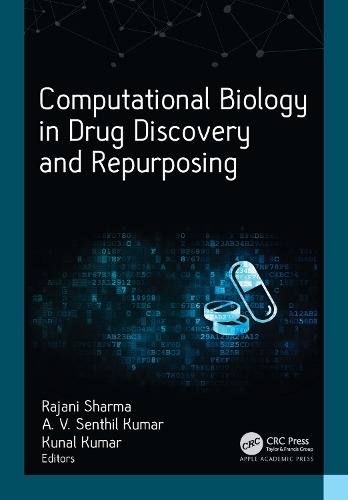
Computational biology in drug discovery and repurposing
Takes an in-depth look at the emerging and prospective field of computational biology and bioinformatics, which possesses the ability to analyze large accumulated biological data collected from sequence analysis of proteins and genes and cell population with an aim to make new predictions pertaining to drug discovery and new biology. The book explains the basic methodology associated with a bioinformatics and computational approach in drug designing. It then goes on to cover the implementation of computational programming, bioinformatics, pharmacophore modeling, biotechnological techniques, and pharmaceutical chemistry in designing drugs. The major advantage of intervention of computer language or programming is to cut down the number of steps and costs in the field of drug designing, reducing the repeating steps and saving time in screening the potent component for drug or vaccine designin

CompTIA Network+ guide to networks ; 9th ed.
It thoroughly prepares you for success on CompTIA's Network+ N10-007 certification exam with fully mapped coverage of all objectives, including protocols, topologies, hardware, network design, security and troubleshooting. Virtualization-based projects give you experience working with a wide variety of hardware, software, operating systems and device interactions, while "On the Job" stories, Applying Concepts activities, and Hands-On and Capstone Projects let you explore concepts in more depth. MindTap Networking offers additional practice and certification prep.

Compressor Instability with Integral Methods
Compressor Instability with Integral Methods" is a book, to bring together the quick integral approaches and advances in the field for the prediction of stall and surge problem in compressor. This book is useful for people involved in the flow analysis, design and testing of rotating machinery. For students, it can be used as a specialized topic of senior undergraduate or graduate study. The book can also be served as a self-study material to those who keen to acquire this knowledge. In brief, this book focuses on the numerical/computational analysis for the effect of distorted inlet flow propagation on the rotating stall and surge in axial compressors. It gains insight into the basic phenomena controlling these flow instabilities, and reveals the influence of inlet parameters on rotating stall and surge.

Composition of embedded systems : Scientific and industrial issues ; 13th Monterey Workshop 2006 Paris, France, October 16-18, 2006 Revised Selected Papers
This book discussed a range of challenges in embedded systems design that require further major advances in software and systems composition technology. The papers are organized in topical sections on model driven develo.
Composites for building assembly : connections, members and structures
Pesents buildings developed using modular assembly approaches based on lightweight and corrosion-resistant fiber reinforced polymer (FRP) composites. Construction methods and the choice of building materials offer great opportunities for more productive and environmentally friendly solutions. This book includes valuable experimental data on large-scale structural components (beams, slabs, amd columns), connections (shear connections, wall stud connections, beam-column connections, column-column connections) and structures (composite floor system, structural sandwich assemblies, and full-scale structural demonstrations), supported with detailed numerical modelling and analytical methods.
Composite Systems Decisions
Composite decisions consist of interconnected parts or subdecisions and correspond to a composite (composable, modular, decomposable) system. Composite Systems Decisions describes an educational approach that is based on systems engineering and considered modular design of composite decisions. Divided into four parts, this book contains descriptions of basic systems approaches and examines basic ‘technological’ problems for composite systems, including: modular hierarchical design; multistage design; multistage planning; redesign/improvement/adaptation; evaluation; and, combinatorial evolution/development.

Composite structures of steel and concrete : Beams, slabs, columns and frames for buildings
Provides an introduction to the theory and design of composite structures of steel and concrete. Material applicable to both buildings and bridges is included, with more detailed information relating to structures for buildings. Throughout, the design methods are illustrated by calculations in accordance with the Eurocode for composite structures, EN 1994, Part 1-1, 'General rules and rules for buildings' and Part 1-2, 'Structural fire design', and their cross-references to ENs 1990 to 1993.

Composite Materials : Properties as Influenced by Phase Geometry
This book deals with the mechanical and physical behavior of composites as influenced by composite geometry. This monograph provides a comprehensive introduction for researchers and students to modern composite materials research with a special emphasis on the influence of geometry to materials properties. Composite Materials enables the reader to a better understanding of the behavior of natural composites, improvement of such materials, and design of new materials with prescribed properties.

Component-based software engineering ; 11th International Symposium, CBSE 2008, Karlsruhe, Germany, October 14-17, 2008. Proceedings
This book constitutes the refereed proceedings of the 11th International ACM SIGSOFT Symposium on Component-Based Software Engineering, CBSE 2008, held in Karlsruhe, Germany in October 2008.
Component-Based Software Development for Embedded Systems : An Overview of Current Research Trends
Embedded systems are ubiquitous. They appear in cell phones, microwave ovens, refrigerators, consumer electronics, cars, and jets. Some of these embedded s- tems are safety- or security-critical such as in medical equipment, nuclear plants, and X-by-wire control systems in naval, ground and aerospace transportation - hicles. With the continuing shift from hardware to software, embedded systems are increasingly dominated by embedded software. Embedded software is complex. Its engineering inherently involves a mul- disciplinary interplay with the physics of the embedding system or environment. Embedded software also comes in ever larger quantity and diversity. The next generation of premium automobiles will carry around one gigabyte of binary code. The proposed US DDX submarine is e?ectively a ?oating embedded so- ware system, comprising 30 billion lines of code written in over 100 programming languages. Embedded software is expensive. Cost estimates are quoted at around US$15– 30 per line (from commencement to shipping). In the defense realm, costs can range up to $100, while for highly critical applications, such as the Space Shuttle, the cost per line approximates $1,000. In view of the exponential increase in complexity, the projected costs of future embedded software are staggering.

Component models and systems for grid applications ; Proceedings of the Workshop on Component Models and Systems for Grid Applications held June 26, 2004 in Saint Malo, France.
This first volume of the CoreGRID series addresses such vital issues as the architecture of the Grid, the way software will influence the development of the Grid, and the practical applications of Grid technologies for individuals and businesses alike. Part I of the book, Application-Oriented Designs, focuses on development methodology and how it may contribute to a more component-based use of the Grid. Middleware Architecture, the second part, examines portable Grid engines, hierarchical infrastructures, interoperability, as well as workflow modeling environments. The final part of the book, Communication Frameworks, looks at dynamic self-adaptation, collective operations, and higher-order components. With Component Models and Systems for Grid Applications, editors Vladimir Getov and Thilo Kielmann offer the computing professional and the computing researcher the most informative, up-to-date, and forward-looking thoughts on the fast-growing field of Grid studies.
