



Page 8
Page 8
IUTAM Symposium on Multiscale Problems in Multibody System Contacts ; Proceedings of the IUTAM Symposium held in Stuttgart, Germany, February 20–23, 2006
The investigation of multiscale problems in multibody system contacts is an interesting and timely topic which has been the subject of intensive research. This proceedings volume summarizes contributions of many authors active in the field and gives insight in very different areas of this fascinating research.

IUTAM Symposium on Mechanics and Reliability of Actuating Materials ; Proceedings of the IUTAM Symposium held in Beijing, China, 1-3 September, 2004
The general assembly of IUTAM approved in August, 2002 at Cambridge University, UK, a proposal to hold an IUTAM symposium to summarize the relevant research findings. The main themes of the symposium are: (i) the constitutive relations of actuating materials that couple mechanical, electrical, thermal and magnetic properties, as well as incorporate phase transformation and domain switch; (ii) the physical mechanisms of deformation, damage, and fatigue crack growth of actuating materials; (iii) the development of failure-resilient approaches that base on the macro-, meso-, and micro-mechanics analyses; (iv) the investigation of microstructural evolution, stability of phase transformation, and size effects of ferroelectric ceramics, shape memory alloys, actuating polymers, and bio-actuating materials.
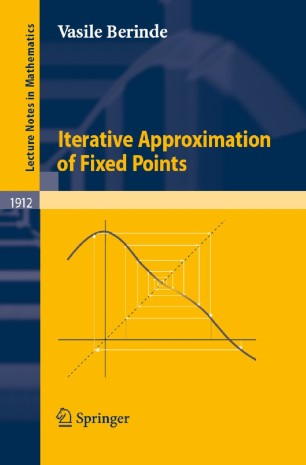
Iterative Approximation of Fixed Points
The aim of this monograph is to give a unified introductory treatment of the most important iterative methods for constructing fixed points of nonlinear contractive type mappings. It summarizes the most significant contributions in the area by presenting, for each iterative method considered (Picard iteration, Krasnoselskij iteration, Mann iteration, Ishikawa iteration etc.), some of the most relevant, interesting, representative and actual convergence theorems. Applications to the solution of nonlinear operator equations as well as the appropriate error analysis of the main iterative methods, are also presented.
Commodity marketing : Strategies, concepts, and cases
Commoditization is a major challenge for companies in a wide range of industries, and commodity marketing has become a priority for many top managers. This book tackles the key issues associated with the marketing of commodities and the processes of commoditization and de-commoditization. It summarizes the state of the art on commodity marketing, providing an overview of current debates. It also offers managerial insights, case studies, and guidance to help manage and market commodity goods and services.

Clinical evaluation of medical devices : Principles and case studies
It include the many innovations and clinical research methods that have developed since the first edition, as well as current information on the regulatory, legal, and reimbursement environment for medical devices. The book's deeply experienced authors summarize the key principles and approaches employed in medical device clinical trials and illustrate their uses in a revealing series of detailed, real-world case studies.

Chlorophylls and Bacteriochlorophylls : Biochemistry, Biophysics, Functions and Applications
This book summarizes the chemical, physical, biological and medical aspects of chlorophyll (and bacteriochlorophyll) research and development, with a focus on the tremendous progress achieved over the past 15 years. Each section has an up-to-date introductory overview which is followed by a series of concise well-focused and fully-referenced chapters written by experts in (bio)chemistry, (bio)physics, photobiology and photomedicine.
Cardiovascular Regeneration Therapies Using Tissue Engineering Approaches
The cardiovascular system transports oxygen and nutrients to all parts of the body; therefore, any impediment to this system through, for example, a circulatory disorder, represents a serious threat to organs, tissues, and cells. Obstructive diseases of vessels with a diameter of more than 1 mm can be treated by conventional surgical and interventional approaches; however, blockages in small vessels with a diameter of less than 1 mm cannot be treated by conventional methods. As a consequence, therapeutic ang- genesis and vasculogenesis for the treatment of ischemic diseases have been widely studied in the last decade. These methods may contribute to the re pair of intractable cardiovascular diseases with a main vascular involvement in the body's smallest vessels. In this book, Hikaru Matsuda and I have tried to summarize recent Japanese developments in the field of cardiovascular regeneration therapies using tissue engineering.

Carbon monoxide in drug discovery, basics, pharmacology, and therapeutic potential
Carbon monoxide, one of the smallest organic natural molecules, is widely known for its toxicity. Formation of CO via incomplete combustion is a major contributing factor to accidental or intentional CO poisoning, leading to severe health consequences or death. In addition, CO is a by-product of tobacco smoking, and has been associated with some of the harmful effects of smoking. However, less known and probably far more important is the recognition of the essential physiological roles of CO as a signaling molecule in mammals. Against over more than a century of negative connotation, the last few decades have proven that CO possesses a multitude of physiological roles and therapeutic functions including regulation of the immune response, cellular proliferation, and control of cell survival. This concept is supported by the discovery that CO is produced by all cells and more so under conditions of stress. This book comprehensively summarizes key aspects of CO's endogenous roles, therapeutic functions, and challenges that we face in its development as a therapeutic agent. We hope this preface will provide a thread for reading this book and a birds-eye view of the landscape for understanding this field, and more importantly lay out the challenges ahead in understanding the detailed mechanisms of action of CO and in its development as a therapeutic agent.
Cancer drug resistance
In Cancer Drug Resistance, leading scientists from the best academic institutions and industrial laboratories summarize and synthesize the latest discoveries concerning the changes that occur in tumor cells as they develop resistance to a wide variety of anticancer therapeutics, as well as suggest new approaches to the biology of drug resistance that may afford new therapeutic opportunities.

Buruli Ulcer : Mycobacterium Ulcerans disease
A major objective of this book is to summarize the current status of Buruli Ulcer (BU) research for the first time. It will identify gaps in our knowledge, stimulate research and support control of the disease by providing insight into approaches for surveillance, diagnosis, and treatment of Buruli Ulcer. Book chapters will cover the history, epidemiology diagnosis, treatment and disease burden of BU and provide insight into the microbiology, genomics, transmission and virulence of Mycobacterium ulcerans.
Bulk Metallic Glasses : An Overview
Bulk Metallic Glasses explores an emerging field of materials known as bulk metallic glasses. It summarizes the rapid development of these materials over the last decade and includes documentation on diverse applications of bulk metallic glasses; from structural applications to microcomponents. Some of the applications covered are pressure sensors, microgears for motors, magnetic cores for power supplies, and nano-dies for replacing next generation DVDs. The chapters cover current theories and recent research including an atomistic theory of local topological fluctuations, atomistic simulations, and unique microstructures of these amorphous materials. Other topics include glass formation, glass forming ability, and the underlying mechanisms and physical insights of these criteria. The mechanical deformation of bulk metallic glasses, fatigue, fracture, and corrosion behaviors of these materials are also reviewed.

Bioprocessing Technology for Production of Biopharmaceuticals and Bioproducts
Written for industrial and academic researchers and development scientists in the life sciences industry, Bioprocessing Technology for Production of Biopharmaceuticals and Bioproducts is a guide to the tools, approaches, and useful developments in bioprocessing. This important guide: •Summarizes state-of-the-art bioprocessing methods and reviews applications in life science industries •Includes illustrative case studies that review six milestone bio-products •Discuses a wide selection of host strain types and disruptive bioprocess technologies

Bioactive Heterocycles VI : Flavonoids and anthocyanins in plants, and latest bioactive heterocycles I
Heterocyclic chemistry is the biggest branch of chemistry covering two-thirds of the chemical literature and this book covers the hot topics of frontier research summarized by reputed scientists in

Bioactive Heterocycles III
Bioactive Heterocycles III provides readers with a comprehensive overview of the most recent breakthroughs in the ?eld of heterocycles. This volume contains 8 chapters written by experts in their respective ?elds from all over the world. The chapters summarize years of extensive research in each area, and providein sight in the new themesofnaturalproduct research.Manyofthe contributors illustrate their laboratory experiences. It's obvious that readers will gain exciting and essential information fromthe volume. In the ?rst chapter, Kayser et al. describe the chemistry, biosynthesis and biological activities of artemisinin, one of the most promising antimalarial molecules, and its related natural peroxides.
Best practices in software measurement : How to use metrics to improve project and process performance
Not everything that counts can be counted. Not everything that is counted counts. Albert Einstein This is a book about software measurement from the practitioner’s point of view and it is a book for practitioners. Software measurement needs a lot of practical guidance to build upon experiences and to avoid repeating errors. This book t- gets exactly this need, namely to share experiences in a constructive way that can be followed. It tries to summarize experiences and knowledge about software measurement so that it is applicable and repeatable. It extracts experiences and lessons learned from the narrow context of the specific industrial situation, thus facilitating transfer to other contexts. Software measurement is not at a standstill. With the speed software engine- ing is evolving, software measurement has to keep pace. While the underlying theory and basic principles remain invariant in the true sense (after all, they are not specific to software engineering), the application of measurement to specific contexts and situations is continuously extended. The book thus serves as a ref- ence on these invariant principles as well as a practical guidance on how to make software measurement a success.
Basic theoretical physics : A concise overview
This concise treatment embraces, in four parts, all the main aspects of theoretical physics (I . Mechanics and Basic Relativity, II. Electrodynamics and Aspects of Optics, III. Non-relativistic Quantum Mechanics, IV. Thermodynamics and Statistical Physics). It summarizes the material that every graduate student, physicist working in industry, or physics teacher should master during his or her degree course. It thus serves both as an excellent revision and preparation tool, and as a convenient reference source, covering the whole of theoretical physics. It may also be successfully employed to deepen its readers' insight and add new dimensions to their understanding of these fundamental concepts. Recent topics such as holography and quantum cryptography are included, thus making this a unique contribution to the learning material for theoretical physics.

Axon growth and guidance
The complexarchitectureofneuronal networks togetherwith the extraordinary associated functions make the nervous system a fascinating biological structure. The considerable work performed to explore this cellular machinery is nowadays successfulbecause the mysteryofnervous system developmentisbeing unravelled. As described in their outstanding review published 10 years ago in Science.' Marc Tessier-Lavigne and Corey Goodman-the pioneers of the molecular era of axon guidance-summarized the assembly of nervous system connections as a subtle game of attraction and repulsion of neuronal growth cones. The cellular ballet ensuring the formation of billions of synapses, which ultimately gives rise to the highest cognitive functions, is primarily orchestrated by a step-by-step mechanism of growth driven by multiple molecular cues. While our general concept of axon guidance remains identical, a profound evolution ofour knowledge ofthe molecular identityofthe guidance cues together with their interactions and signalling pathways occurred over the past ten years.

Avian Navigation : Pigeon Homing as a Paradigm
This monograph summarizes our current knowledge about pigeon homing, about the birds' application of a sun compass and a magnetic compass, of a visual topographical map within a familiar area and -- most surprisingly -- of an olfactory map using atmospheric chemosignals as indicators of position in distant unfamiliar areas
Artificial sight : Basic research, biomedical engineering, and clinical advances
Artificial sight is a frontier area of modern ophthalmology combining the multidisciplinary skills of surgical ophthalmology, biomedical engineering, biological physics, and psychophysical testing. Many scientific, engineering, and surgical challenges must be surmounted before widespread practical applications can be realized. The goal of Artificial Sight is to summarize the state-of-the-art research in this exciting area, and to describe some of the current approaches and initiatives that may help patients in a clinical setting.

Arnheim, Gestalt and Art : A Psychological Theory
The book discovers an unappreciated unity to Arnheim’s thinking. Not content to simply summarize Arnheim’s theory, however, Arnheim, Art, and Gestalt goes on to enrich (and occasionally question) Arnheim’s findings with the contemporary results of gestalt-theoretical research from around the world, but especially in Italy and Germany. The result is a workable overview of the psychology of art with bridges built to contemporary research, making Arnheim’s approach living and sustainable.
