



Page 8
Page 8
Metabolome Analyses : Strategies for Systems Biology
Metabolome Analyses is intended as a follow-up to Metabolic Profiling: Its Role in Biomarker Discovery and Gene Function Analysis (Kluwer, 2003). That text offered guidelines to currently available technology, bioinformatics and databases. Evidence was presented showing metabolic profiling as a valuable addition to genomics and proteomics strategies devoted to drug discovery and development. This book focuses on how metabolic profiling is being more comprehensively integrated with the other "omics" technologies. It provides more practical applications of such "panomics" or "Systems Biology" approaches. The expanding use of mass spectrometry as a measurement technology in metabolic profiling is addressed through demonstrated applications. The integration of metabolic profiling and proteomics is probably most developed for plant-based studies, which was not addressed in Volume 1. Other areas related to metabolic profiling continue to show significant development. These include database strategies and an increased acceptance by the pharmaceutical industry of metabolic profiling. Also covered is the use of in silico metabolic networks. Again the focus is primarily on the pharmaceutical industry but the importance of metabolic profiling to studies on human nutrition (a burgeoning area) is discussed.
Metabolism and Functions of Bioactive Ether Lipids in the Brain
This book will be particularly useful to neuroscience graduate students, academics, and researchers. Clinicians will find this book useful for understanding molecular aspects of neurodegeneration in acute neural trauma and neurodegenerative diseases that are mediated by plamalogen-selective phospholipases A2 and PAF acetyl hydrolases. This monograph is the first to provide a comprehensive description of not only metabolism and role of plasmalogen and platelet activating factor in brain tissue but also the involvement of these lipids with abnormal signal transduction processes in neurological disorders.
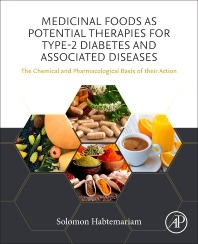
Medicinal foods as potential therapies for type-2 diabetes and associated diseases : The chemical and pharmacological basis of their action
Focuses on active pharmacological principles that modulate diabetes, associated risk factors, complications and the mechanism of action of widely used anti-diabetic herbal plants—rather than just the nutritional composition of certain foods. Provides up-to-date information on acclaimed antidiabetic super fruits, spices and other food ingredients. Sections cover diabetes and obesity at the global level, the physiological control of carbohydrate and lipid metabolism, the pathophysiology of type-2 diabetes, the chemistry and pharmacology of a variety of spices, and much more. This book will be invaluable for research scientists and students in the medical and pharmaceutical sciences, medicinal chemistry, herbal medicine, drug discovery/development, nutrition science, and for herbal practitioners and those from the nutraceutical and pharm industries.
Medical Image Computing and Computer-Assisted Intervention - MICCAI 2008 ; 11th International Conference, New York, NY, USA, September 6-10, 2008, Proceedings, Part II
The program committee carefully selected 258 revised papers from numerous submissions for presentation in two volumes, based on rigorous peer reviews. The first volume includes 127 papers related to medical image computing, segmentation, shape and statistics analysis, modeling, motion tracking and compensation, as well as registration. The second volume contains 131 contributions related to robotics and interventions, statistical analysis, segmentation, intervention, modeling, and registration.

Medical Image Computing and Computer-Assisted Intervention - MICCAI 2008 ; 11th International Conference, New York, NY, USA, September 6-10, 2008, Proceedings, Part I
The program committee carefully selected 258 revised papers from numerous submissions for presentation in two volumes, based on rigorous peer reviews. The first volume includes 127 papers related to medical image computing, segmentation, shape and statistics analysis, modeling, motion tracking and compensation, as well as registration. The second volume contains 131 contributions related to robotics and interventions, statistical analysis, segmentation, intervention, modeling, and registration.

Mechanochemistry in Nanoscience and Minerals Engineering
Mechanochemistry as a branch of solid state chemistry enquires into processes which proceed in solids due to the application of mechanical energy. This provides a thorough, up to date overview of mechanochemistry of solids and minerals. Applications of mechanochemistry in nanoscience with special impact on nanogeoscience are described. Selected advanced identification methods, most frequently applied in nanoscience, are described as well as the advantage of mechanochemical approach in minerals engineering. Examples of industrial applications are given. Mechanochemical technology is being applied in many industrial fields: powder metallurgy (synthesis of nanometals, alloys and nanocompounds), building industry (activation of cements), chemical industry (solid waste treatment, catalyst synthesis, coal ashes utilization), minerals engineering (ore enrichment, enhancement of processes of extractive metallurgy), agriculture industry (solubility increase of fertilizers), and pharmaceutical industry (improvement of solubility and bioavailability of drugs).

Mechanisms of Insulin Action
More than 18 million people in the United States have diabetes mellitus, and about 90% of these have the type 2 form of the disease. In addition, between 17 and 40 million people have insulin resistance, impaired glucose tolerance, or the cluster of abnormalities referred to variably as the metabolic syndrome, the dysmetabolic syndrome, syndrome X, or the insulin resistance syndrome. In all of these disorders, a central component of the pathophysiology is insulin resistance, i.e., reduced responsiveness to insulin in tissues such as muscle, fat and liver. Insulin resistance is also closely linked to other common health problems, including obesity, polycystic ovarian disease, hyperlipidemia, hypertension, and atherosclerosis. In this book, we will attempt to dissect the complexity of the molecular mechanisms of insulin action with a special emphasis on those features of the system that are subject to alteration in type 2 diabetes and other insulin resistant states. We explore insulin action at the most basic levels, through complex systems. The book will be appealing to basic and clinical scientists.

Mechanical Behaviour of Engineering Materials : Metals, Ceramics, Polymers, and Composites
How do engineering materials deform when bearing mechanical loads? To answer this crucial question, the book bridges the gap between continuum mechanics and materials science. The different kinds of material deformation (elasticity, plasticity, fracture, creep, fatigue) are explained in detail. The book also discusses the physical processes occurring during the deformation of all classes of engineering materials (metals, ceramics, polymers, and composites) and shows how these materials can be strengthened to meet the design requirements. It provides the knowledge needed in selecting the appropriate engineering material for a certain design problem. The reader will thus learn how to critically employ design rules and thus to avoid failure of mechanical components.

Matrix Metalloproteinases in Tissue Remodelling and Inflammation
Matrix metalloproteinases (MMPs) are proteolytic enzymes believed to be involved in many physiological and pathological processes associated with inflammatory reactions. This volume presents new advances in the involvement of MMPs in various diseases associated with inflammatory processes. Moreover, the recent development of selective and non selective inhibitors of MMPs provides new insights in the relationship between activation of inflammatory cells and tissue remodelling and advises new therapeutic possibilities for the treatment of inflammatory diseases.

Mathematics for Life Science and Medicine
Dynamical systems theory in mathematical biology has attracted much attention from many scientific directions. The purpose of this volume is to present and discuss the many rich properties of the dynamical systems that appear in life science and medicine. The main topics include cancer treatment, dynamics of paroxysmal tachycardia, vector disease models, epidemic diseases and metapopulations, immune systems, pathogen competition and coexistence and the evolution of virulence and the rapid evolution of viruses within a host. Each chapter will serve to introduce students and scholars to the state-of-the-art in an exciting area, to present new results, and to inspire future contributions to mathematical modeling in life science and medicine.

Mathematical Models of Distribution Channels
In Chapters 1 and 2 the authors provide an introduction to the current, analytical literature on distribution channels, and they present an intuitively appealing prologue to the Channel Myths that are developed rigorously in later Chapters. In Chapters 3, 4, and 10 they extend the literature by ascertaining the relationship between the manufacturer-optimal wholesale-price strategy and channel breadth. Specific analyses include multiple, non-competing retailers, multiple states-of-nature, and multiple, competing retailers. In Chapters 5-7 the authors determine the profitability of various wholesale-price strategies; this analysis culminates in Chapters 8 and 9 with the determination of the (very limited) conditions under which channel coordination can be optimal for the manufacturer. In Chapter 11 they prove that existing methods of measuring the effect of a change in the degree of inter-retailer substitutability are totally misleading. They then develop an original, theoretical basis for measuring the impact of a change in the degree of inter-retailer substitutability that yields insightful, intuitively appealing results. In Chapter 12 the authors set forth an agenda for future research based on a meta-model that embraces all existing models in the literature. They also issue an appeal for creation of a "Unifying Theory of Distribution Channels" that will enable researchers to work independently and yet to contribute toward the common goal of deepening the marketing science professions’ understanding of distribution channels.

Islamic Philosophy and Occidental Phenomenology on the Perennial Issue of Microcosm and Macrocosm
this volume are reviving the perennial positioning of the human condition in the play of forces within and without the human being. This theme has run from Plato through the Middle Ages, Renaissance and Modernity, and has been ignored by contemporaries. It now acquires a new pertinence and striking significance due to the scientific discoveries into the "infinitely small" in life, on the one hand, and the prodigious technological discoveries of the "infinitely great" on the other. Both open up undreamt-of prospects for the continuing conquest of cosmic forces.

Iron Nutrition in Plants and Rhizospheric Microorganisms
This book uses an interdisciplinary approach to provide a comprehensive review on the status of iron nutrition in plants. International scientists discuss research on acquisition of iron by strategy I and strategy II plants. These reviews summarize a variety of plant species and include both laboratory and field observations. Topics covered in this book include: plants as a source of iron for animals and humans, iron translocation in the plants, iron-stimulated activities that influence crop yield and fruit tree productivity, iron uptake by plants as influenced by microorganisms (i.e. free living soil microorganisms, symbiotic nitrogen-fixing and pathogenic bacteria), the role of plant hormones in iron transport, iron-metal competition in phytoremediation, root zone activities involving interactions between minerals and organic matter, the role of microbial siderophores in rhizospheric iron cycling, iron storage as phytoferritin, proteomic and metabolic studies associated with iron stress response, methods for studying iron metabolism including stable isotopes, and the correction of iron deficiency through the use of synthetic or natural chelates.

Iron metabolism : Methods and protocols
Explores classical and cutting-edge methods optimized and validated to analyze various aspects of iron metabolism, from in vitro to multi-organ level. Opening with a section on basic iron metabolism methods, the book continues with methods applicable to a variety of systems, ranging from bacteria to cultured mammalian cells and tissues, with a focus on cellular heme and iron-sulfur cluster species, as well as mitochondrial iron and its derivatives. Written for the highly successful Methods in Molecular Biology series, chapters include introductions to their respective topics, lists of the necessary materials and reagents, step-by-step and readily reproducible laboratory protocols, and tips on troubleshooting and avoiding known pitfalls.

Introduction to toxicology
Charts the evolution of the field of toxicology, from the use of natural toxins by ancient tribes through the developments established by Paracelsus, and progresses through to the current topics in the public interest. For centuries, the study of toxicology has fascinated students. The book begins with basic toxicological principles, including an historical summary, dose-response relationships (NEW chapter), exposure-response relationships (NEW chapter), disposition, and metabolism of xenobiotic toxic substances. Other important new chapters include target organ toxicity, toxicity of carcinogenic agents and new and updated concepts in toxicity testing, and antidotes and treatment of poisonings. In all, nine new or expanded chapters from the third edition are advanced. Current concerns about the effects of therapeutic drugs, carcinogens, industrial toxins, pesticides, and herbicides on human health, animal welfare, and the stability and maintenance of the ecosystem continue to highlight toxicology as an important and growing scientific discipline.

Introduction to Epigenetics
This textbook leads the reader from basic concepts of chromatin structure and function and RNA mechanisms to the understanding of epigenetics, imprinting, regeneration and reprogramming. The textbook treats epigenetic phenomena in animals, as well as plants.

Introduction to Drug Disposition and Pharmacokinetics
The application of knowledge of drug disposition, and skills in pharmacokinetics, are crucial to the development of new drugs and to a better understanding of how to achieve maximum benefit from existing ones. The book takes the reader from basic concepts to a point where those who wish to will be able to perform pharmacokinetic calculations and be ready to read more advanced texts and research papers.

Intramembrane-Cleaving Proteases (I-CLiPs)
The aim of this book is to provide an update on this emerging group of unusual but important proteases for both the specialist and those with a broader interest in proteases. Amongst the target audience will be protease researchers, enzymologists, those working in academia and the pharmaceutical industry on biological processes and diseases involving I-CLiPs.

Internal friction in metallic materials : A handbook
This book is a unique collection of experimental data in the field of internal friction, anelastic relaxation, and damping properties of metallic materials. It reviews virtually all anelastic relaxation phenomena ever published, and also most of the internal friction effects based on other types of dissipation of mechanical (elastic) energy. Furthermore, the reader is also supplied with explanations of the basic physical mechanisms of internal friction, a summary of typical effects for different groups of metals, and more than 2000 references to original papers.

Intermittent fasting
The potential benefits of intermittent fasting are not limited to weight loss and weight management. Recent studies have shed light on its role in adaptive cellular responses that reduce oxidative damage and inflammation, optimize energy metabolism and bolster cellular protection. By reprogramming metabolic and stress resistance pathways, intermittent fasting has the possible ability to increase longevity and reduce aging. Studies on animals have given promising result that show how intermittent fasting help prevent and treat diseases like diabetes, cancers, heart disease and neurodegeneration. Major mechanisms hypothesized to link fasting regimens with human health: circadian biology and the gastrointestinal microbiota.
