


Refine Results
Sort By
From
To

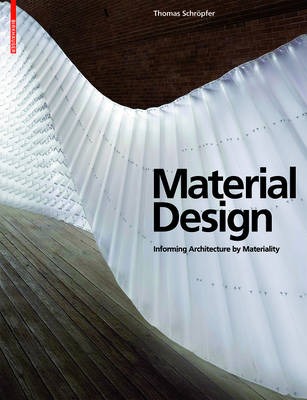
The approach of Material Design opens the way to an innovative use of materials in the design professions. Taking material qualities and properties such as texture, elasticity and transparency as a point of departure, the book describes a multitude of material operations, like folding and bending, carving and cutting, weaving and knitting, mirroring and screening.
This book provides a holistic, interdisciplinary overview of offshore wind energy, and is a must-read for advanced researchers. Topics, from the design and analysis of future turbines, to the decommissioning of wind farms, are covered. The scope of the work ranges from analytical, numerical and experimental advancements in structural and fluid mechanics, to novel developments in risk, safety & reliability engineering for offshore wind. The core objective of the current work is to make offshore wind energy more competitive, by improving the reliability, and operations and maintenance (O&M) strategies of wind turbines.
Wood is suitable for use in multi-storey building construction with barely any restrictions. This is new and requires creative rethinking of tried and tested practices in wood construction: classical categories can be replaced by mixed construction methods as necessary within a project, which yields completely new possibilities in designing wood structures. The Manual provides architects, engineers and wood specialists with the essential expertise on the new systematic and construction methodology, from the design to prefabrication to the implementation on site. It lays the grounds for mutual understanding among everyone involved in the project, to facilitate the necessary cooperation in the integral planning and construction process
For a number of years, the healthy and environment-friendly building material earth, in common use for thousands of years, has been enjoying increasing popularity, including in industrialized nations. In hot dry and temperate climate zones, earth offers numerous advantages over other materials. Its particular texture and composition also holds great aesthetic appeal.
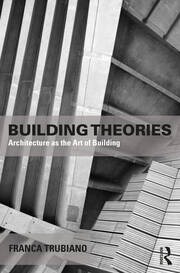
Discusses the content of treatises, essays, articles, and letters by those who have been, throughout history, committed to the art of building. In this, Building Theories argues for the return of a practice of architectural theory that is set amongst building, buildings, and builders. This journey of close reading reinterprets the words of Vitruvius, Alberti, de L’Orme, Le Camus de Mézières, Boullée, Laugier, Rondelet, Semper, Viollet-le-Duc, Hübsch, Bötticher, Berlage, Muthesius, Wagner, Behrendt, Gropius, and Arup. With chapters dedicated to texts from antiquity, the Renaissance, and the nineteenth century, and with a critical eye on architectural theory popularized in the Anglo-Saxon world post-1968, readers are introduced to a wider, more inclusive definition of architectural ideas.
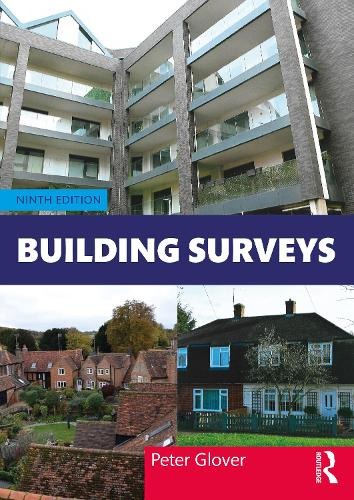
A trusted guide for both students and professionals for nearly 40 years, evolving to address the challenges and responsibilities of the building surveying role. It covers everything needed for initial inspections such as equipment, know-how and procedures to writing an accurate report. This updated edition features new material on modern methods of construction, new sustainable materials, new surveying technologies, and industry developments in the wake of the Grenfell Fire. Essential reading for building construction students, professional surveyors, and others who may be required to inspect and report on buildings
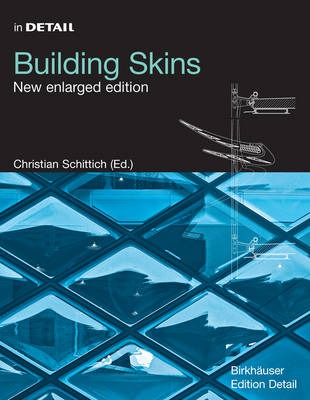
Focuses on the wide-ranging aspects of facade design, from the selection and use of materials to the advanced technical possibilities now open to the architect. A wide array of carefully selected international examples show the theory in the practice.
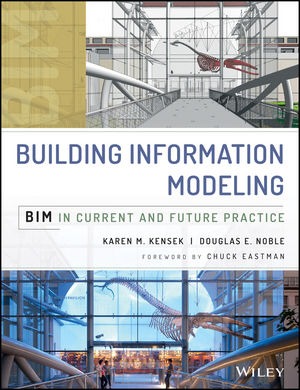
Thought leaders from universities and professional practice composed essays exploring BIM's potential to improve the products and processes of architectural design including the structure and content of the tools themselves. These authors provide insights for assessing the current practice and research directions of BIM and speculate about its future. Design Thinking and BIM BIM Analytics Comprehensive BIM Reasoning with BIM Professional BIM BIM Speculations
Provides the readers with a timely guide to the application of biomimetic principles in architecture and engineering design. As a result of a combined effort by two internationally recognized authorities, the biologist Werner Nachtigall and the architect Göran Pohl, the book describes the principles which can be used to compare nature and technology, and at the same time it presents detailed explanations and examples showing how biology can be used as a source of inspiration and “translated” in building and architectural solutions (biomimicry). Even though nature cannot be directly copied, the living world can provide architects and engineers with a wealth of analogues and inspirations for their own creative designs. But how can analysis of natural entities give rise to advanced and sustainable design? By reporting on the latest bionic design methods and using extensive artwork, the book guides readers through the field of nature-inspired architecture, offering an extraordinary resource for professional architects, engineers, designers and urban planners, as well as for university teachers, researchers and students.
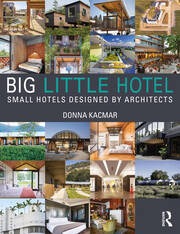
This book showcases small hotels, all located in the United States, designed by architects who use light and materials in interesting and intentional ways. The designs also deliberately connect to their local history, context, or land – in many cases all three. Both the architecture and the operations harmonize with the place, whether that is a bustling city, small town, or natural area. Many are new buildings but some are adaptive reuse projects or renovations of historic properties, extending the connectivity of the place into the future.
The facade serves as the building's public face, allowing rapid assessment of its architecture. 'Best of Detail: Facades' explores this topic with theoretical discussions and an in-depth look at a range of selected projects, which, besides showcasing suitable materials and designs, give the reader a detailed look behind the scenes. It turns out that quality architecture can only result from a coherency between the facade, structure, internal organisation and building services design elements that interact directly with each other. This presents the architect with enormous challenges, particularly as the unity between the exterior and interior is no longer a given, as today's range of materials and design possibilities offer nearly limitless creativity.
Presents highlights from the magazine published in recent years about concrete, a powerful medium for architectural expression. In additional to compelling specialist articles, this book contains a special section with a wide range of examples to inspire your own architectural practice, from train stations and churches to single-family homes
Masonry construction is usually the top priority in the constructive exercises during the course. The basic principles of dimensions, construction and component joining are developed using simple masonry structures. Topics: Material and dimensions Building physics and load-bearing properties Typical associations Components Execution of masonry
Detailed drawings are developed on the basis of the working drawings; they form an important part of the specification and contain precise information for the tradesmen, indicating how materials are to be used and how they are to be joined. Drawings are produced in various degrees of detail. Depending on the function of the drawings, they are produced in scales from 1:20 to 1:1 in order to define the materials and method of joining, and to better illustrate the various dimensions. Basics Detailed Drawings explains, step by step, how to compose detailed designs and produce correct construction drawings, using clear examples
It consists of measures to prevent fires from starting, to facilitate the rescue of individuals in a burning building, and to help firefighters contain a blaze. The book explains the general concepts and fundamental issues of fire safety in building design beyond the particulars of local building regulations
It not only contains new and up to date information on materials, practical methods, and historical research but also reflects changes in the attitudes, outlook and perceptions within the wider conservation, architectural heritage and construction communities which give a new dimension to the conservation and restoration. The growing interest in the preservation of post war ceramic tile murals and the subsequent demand for information pertaining specifically to this era is a welcome and useful addition.
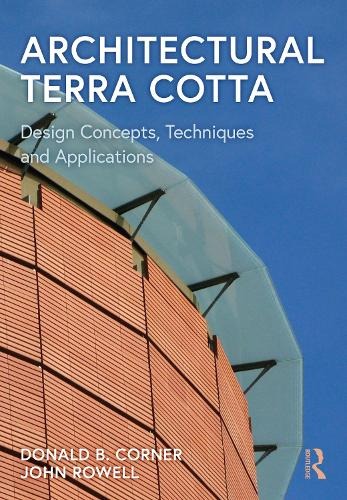
Examines the evolution of terra cotta and prepares architects and builders to make new, creative uses of the timeless material. Terra cotta is among the oldest of manufactured building products, yet it has once again become a material of choice in contemporary façade design. From the walls of Babylon to high performance rainscreens, terra cotta claddings have repeatedly proven to be technically superior and aesthetically triumphant. Understanding the evolution of terra cotta prepares architects to add new, creative chapters to a rich history.
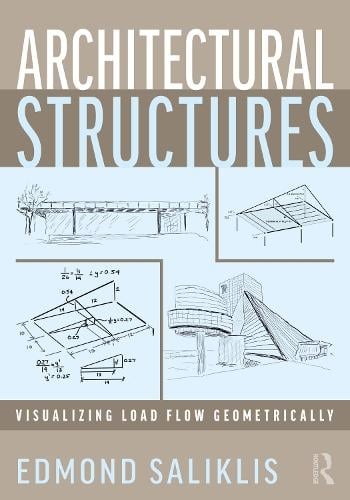
Presents an alternative approach to understanding structural engineering load flow using a visually engaging and three-dimensional format. This book presents a ground-breaking new way of establishing equilibrium in architectural structures using the Modern Müller-Breslau method. Includes approachable coverage of parametric modeling of two-dimensional and three-dimensional structures, as well as more advanced topics such as indeterminate structural analysis and plastic analysis. Hundreds of detailed drawings created by the author are included throughout to aid understanding. Architecture and structural engineering students can employ this novel method by hand sketching, or by programming in parametric design software.
This book teaches you how to design a building that will perform as well as you intend. Integrate appropriate detailing into your designs Learn the latest in materials, assemblies, and construction methods Incorporate sustainable design principles and current building codes Design buildings that perform well, age gracefully, and look great
Provides an index of ideas, theories, projects, and definitions that string into a methodology for evaluating the contemporary language of architecture described as “contemporism” through a review of topology (form) and typology (system and elements). Trying to answer the postmodern question of how to move beyond modernism through a thread of architectural styles that tried to respond to deficiencies from the modern promise and contextual changes. Yet, the question remains, should this ongoing struggle to move beyond modernism be a stylistic battle? Has the present architectural practice ever left the modernist tendencies, and is there a structure for a contemporary language in architecture? Presents a collection of highly illustrated projects that have worked under these parameters to break away from modernism in order to present a holistic integration of topology and typology as a language for “contemporism.” The index is illustrated with individual spreads, which can be read sequentially or independently, and encourages the reader to make their own connections. It also includes interviews and contributions from Toyo Ito, Anthony Vidler, Ben van Berkel, Christian Kerez, and Greg Lynn.

Daraa Highway - Ghabagheb - Syria
+963-15 2050 - 15 860 380 /1/2/3 - 11 662 3900