



Page 8
Page 8

Intracranial vascular malformations and aneurysms : From diagnostic work-up to endovascular therapy ; 1st ed.
This book describes the pathoanatomical, pathophysiological, and imaging features of vascular malformations and aneurysms of the brain and the modern, minimally invasive endovascular methods or techniques employed in their treatment. Individual chapters are devoted to venous malformations, capillary telangiectasias and cavernomas, pial arteriovenous malformations, dural arteriovenous malformations, and intracranial aneurysms. Each chapter is subdivided into four principal sections on pathology, clinical presentation, diagnostic imaging, and therapy, ensuring a standardized approach throughout. The book is richly illustrated with numerous informative CT, MR and DSA images.

Internet of things from hype to reality : The road to digitization
Presents updated material on its core content: an end-to-end IoT architecture that is comprised of devices, network, compute, storage, platform, applications along with management and security components. As with the second edition, it is organized into six main parts: an IoT reference model; fog computing and the drivers; IoT management and applications; smart services in IoT; IoT standards; and case studies. This edition’s features include overhaul of the IoT Protocols (Chapter 5) to include an expanded treatment of low-power wide area networks including narrow band IoT (NB-IoT) protocol, updated IoT platforms and capabilities (Chapter 7) to include comparison of commercially available platforms (e.g. AWS IoT Platform, Google Cloud IoT Platform, Microsoft Azure IoT Platform, and PTC ThinkWorx), updated security (Chapter 8) to include approaches for securing IoT devices with examples of IoT devices used in security attacks and associated solutions including MUD and DICE, and finally new Appendix B to include six IoT project detailed for students.

International Accounting
The 6th edition provides an overview of the broadly defined area of international accounting. It focuses on the accounting issues related to international business activities and foreign operations and provides substantial coverage of the IASB and IFRS. Its unique benefits include up-to-date coverage of relevant material; extensive numerical examples; two chapters devoted to the application of IFRS; and coverage of nontraditional but important topics such as management accounting issues in multinational companies, international corporate governance, and corporate social reporting. Distinguishing features include excerpts from recent annual reports to demonstrate differences in financial reporting practices across countries and financial reporting issues especially relevant for multinational corporations.

Interior Spaces : Space, Light, Materials
Space, light and material: from the meditative ambiance of a chapel or synagogue to the colourful, organic forms of fashion boutiques, the design of an interior space - composed of lighting, the surfaces, textures and colours of materials, finishing and features - creates atmosphere and lends specific character. The growing willingness on the part of designers in recent years to experiment with colours, materials and spatial concepts is demonstrated in the range and diversity of international examples presented in this, the third volume in the series "In Detail". All plans and drawings of interiors and furnishings have been carefully researched and drawn by the staff of DETAIL.

Interdisciplinary Perspectives on Mortality and its Timings : When is Death?
This volume provides a series of illuminating perspectives on the timings of death, through in-depth studies of Shakespearean tragedy, criminal execution, embalming practices, fears of premature burial, rumours of Adolf Hitler’s survival, and the legal concept of brain death. In doing so, it explores a number of questions, including: how do we know if someone is dead or not? What do people experience at the moment when they die? Is death simply a biological event that comes about in temporal stages of decomposition, or is it a social event defined through cultures, practices, and commemorations? In other words, when exactly is death? Taken together, these contributions explore how death emerges in a series of stages that are uncertain, paradoxical, and socially contested.

Intelligent Virtual Agents ; Vol.4133 ; 6th International Conference, IVA 2006, Marina Del Rey, CA; USA, August 21-23, 2006, Proceedings
This volume contains the proceedings of the 6th International Conference on Intelligent Virtual Agents, IVA 2006, held in Marina del Rey, California, USA from August 21–23.For the second year in a row,IVA also hosted the Gathering of Animated Lifelike Agents (GALA 2006), an annual festival to showcase the latest animated lifelike agents created by university students and academic or industrial research groups. IVA 2006 received 73 submissions from Europe, the AmericasandAsia.Thepaperspublishedherearethe24fullpapersand11short papers presented at the conference, as well as one-page descriptions of posters and the featured invited talks by Brian Parkinson of Oxford University, Rod Humble of Electronic Arts, and Michael Mateas of the University of California, Santa Cruz and Andrew Stern of Procedural Arts.

Intelligent Virtual Agents ; Vol.3661 : 5th International Working Conference, IVA 2005, Kos, Greece, September 12-14, 2005, Proceedings
The origin of the Intelligent Virtual Agents conference dates from a successful workshop on Intelligent Virtual Environments held in Brighton at the 13th European Conference on Artificial Intelligence (ECAI'98). This workshop was followed by a second one held in Salford in Manchester in 1999. Subsequent events took place in Madrid, Spain in 2001 and Irsee, Germany in 2003 and attracted participants from both sides of the Atlantic as well as Asia. th This volume contains the proceedings of the 5 International Working Conference on Intelligent Virtual Agents, IVA 2005, held on Kos Island, Greece, September 12–14, 2005, which highlighted once again the importance and vigor of the research field. A half-day workshop under the title “Socially Competent IVA’s: We are not alone in this (virtual) world!” also took place as part of this event. IVA 2005 received 69 submissions from Europe, North and South America, Africa and Asia. The papers published here are the 26 full papers and 14 short papers presented at the conference, as well as one-page descriptions of the 15 posters and the descriptions of the featured invited talks by Prof. Justine Cassell, of Northwestern University and Prof. Kerstin Dautenhahn, of the University of Hertfordshire. We would like to thank a number of people that have contributed to the success of this conference. First of all, we thank the authors for their high-quality work and their willingness to share their ideas.

Intelligent Computing Theories and Application ; 16th International Conference, ICIC 2020, Bari, Italy, October 2–5, 2020, Proceedings, Part I
This two-volume set of LNCS 12463 and LNCS 12464 constitutes - in conjunction with the volume LNAI 12465 - the refereed proceedings of the 16th International Conference on Intelligent Computing, ICIC 2020, held in Bari, Italy, in October 2020. The 162 full papers of the three proceedings volumes were carefully reviewed and selected from 457 submissions The ICIC theme unifies the picture of contemporary intelligent computing techniques as an integral concept that highlights the trends in advanced computational intelligence and bridges theoretical research with applications. The theme for this conference is “Advanced Intelligent Computing Methodologies and Applications.” Papers related to this theme are especially solicited, addressing theories, methodologies, and applications in science and technology.

Intelligent Computing ; Proceedings of the 2021 Computing Conference ; Vol.1
This book is a comprehensive collection of chapters focusing on the core areas of computing and their further applications in the real world. Each chapter is a paper presented at the Computing Conference 2021 held on 15-16 July 2021. Computing 2021 attracted a total of 638 submissions which underwent a double-blind peer review process. Of those 638 submissions, 235 submissions have been selected to be included in this book. The goal of this conference is to give a platform to researchers with fundamental contributions and to be a premier venue for academic and industry practitioners to share new ideas and development experiences.

Intelligence in communication systems ; IFIP international onference on intelligence in communication systems, INTELLCOMM 2005, Montreal, Canada, October 17-19, 2005
International Federation for Information Processing The IFIP series publishes state-of-the-art results in the sciences and technologies of information and communication. The scope of the series includes: foundations of computer science; software theory and practice; education; computer applications in technology; communication systems; systems modeling and optimization; information systems; computers and society; computer systems technology; security and protection in information processing systems; artificial intelligence; and human-computer interaction. Proceedings and post-proceedings of referred international conferences in computer science and interdisciplinary fields are featured. These results often precede journal publication and represent the most current research. The principal aim of the IFIP series is to encourage education and the dissemination and exchange of information about all aspects of computing.
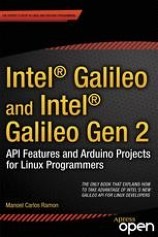
Intel® Galileo and Intel® Galileo Gen 2 : API Features and Arduino Projects for Linux Programmers
ntel® Galileo and Intel® Galileo Gen 2: API Features and Arduino Projects for Linux Programmers provides detailed information about Intel® Galileo and Intel® Galileo Gen 2 boards for all software developers interested in Arduino and the Linux platform. The book covers the new Arduino APIs and is an introduction for developers on natively using Linux.

Integrated River Basin Management through Decentralization
Drawing upon a worldwide survey of river basin organizations and in-depth studies of eight river basins in a variety of locations around the globe, this book examines how institutional arrangements for managing water resources at the river-basin level have been designed and implemented, what the impetus for these arrangements has been, and what institutional features appear to be associated with greater or lesser success in river basin management.

Integral Methods in Science and Engineering : Techniques and Applications
The physical world is studied by means of mathematical models, which consist of differential, integral, and integro-differential equations accompanied by a large assortment of initial and boundary conditions. In certain circumstances, such models yield exact analytic solutions. When they do not, they are solved numerically by means of various approximation schemes. Whether analytic or numerical, these solutions share a common feature: they are constructed by means of the powerful tool of integration—the focus of this self-contained book. This work illustrates the application of integral methods to diverse problems in mathematics, physics, biology, and engineering. The thirty two chapters of the book, written by scientists with established credentials in their fields, contain state-of-the-art information on current research in a variety of important practical disciplines.

Integral bridges : a fundamental approach to the time–temperature loading problem
In recent years, integral bridges have become increasingly popular in the UK. The Highways Agency standard now requires, where possible, that all new bridges with a length of less than sixty metres should be of integral form. In addition, it has been found that, due especially to the problems and costs associated with failed expansion joints, integral bridges are not only cost effective but also have a longer lifespan. Integral Bridges was commissioned by the Highways Agency to produce guidance for bridge designers by addressing the thermally induced soil/structure interaction problem created by environmental changes of temperature and the associated cyclical displacements imposed on the granular backfill to the bridge abutments. It develops a better theoretical understanding of the cyclic performance, in particular the strain racheting in the backfill soil when in contact with a stiff structure. It also identifies the governing soil parameters and examines their influence in the interaction problem, develops numerical modelling procedures to predict interactive soil behaviour, and identifies and quantifies the controlling features of bridge structures relevant to the interaction problem.

Integrable Systems in Celestial Mechanics
This work presents a unified treatment of three important integrable problems relevant to both Celestial and Quantum Mechanics. Under discussion are the Kepler (two-body) problem and the Euler (two-fixed center) problem, the latter being the more complex and more instructive, as it exhibits a richer and more varied solution structure. Further, because of the interesting investigations by the 20th century mathematical physicist J.P. Vinti, the Euler problem is now recognized as being intimately linked to the Vinti (Earth-satellite) problem. Here the analysis of these problems is shown to follow a definite shared pattern yielding exact forms for the solutions. A central feature is the detailed treatment of the planar Euler problem where the solutions are expressed in terms of Jacobian elliptic functions, yielding analytic representations for the orbits over the entire parameter range.

Instrumaster
Experiments with different neural network structures and algorithms in order to achieve musical note recognition as well as musical instrument recognition, all bundled in a mobile application. It also aims to create the most effective music-learning application that works completely offline, which is hard to find in modern music applications. The paper also explores why the instrument identifying AI is solely based on Multi-Layer Perceptron (MLP) and why the note-identifying AI system was chosen to be a ML system over CNN or other deep-learning trained AI. The paper presents feature extraction methods for audio signals and files and dives deep into the process, such as FFT, MFCCs, Wavelengths, sampling rates, etc. It also touches on Logistic Regression Algorithms, their limitations, and their performance with the different use cases in the application. All these techniques are then compared side by side for maximally added value, making this research paper a good reference for any future developers looking to find optimal neural networks techniques when it comes to audio processing and analysis.

Institutions, Sustainability, and Natural Resources : Institutions for Sustainable Forest Management
A new economic theory, rather than a new public policy based on old theory, is needed to guide humanity toward sustainability. Institutions are a critical dimension of sustainability and sustainable forest management, and economic analysis of institutional dimension requires an inclusionist rather than an exclusionist approach. This book provides a systematic critique of neoclassical economic approaches and their limitations with respect to sustainability. Leading institutional economists discuss theoretical perspectives about appropriate institutions for sustainable forest management, markets for environmental services, deforestation and specialization, and some country experiences about Kyoto Protocol, international trade, biodiversity conservation, and sustainable forest management in general. The book includes the ideas from old as well as new institutional economics and discusses the main features of Post-Newtonian economics.This book follows a companion book, Economics, Sustainability, and Natural Resources: Economics of Sustainable Forest Management, volume 1 of the series.

Insect Conservation and Islands
A series of original papers and reviews dealing with the peculiarities of island insects and their conservation in many parts of the world. Contributions to this special issue of Journal of Insect Conservation range from biogeographical analyses andecological features of island insects and their evolution to the variety of concerns for their wellbeing, and practical conservation through a variety of, sometimes novel, approaches. They provide a valuable and up-to-date resource for entomologists and conservation practitioners.

Inorganic Constituents in Soil : Basics and Visuals
A must-read for students of and beginners in soil science. In a well-organized and easy-to-follow manner, it provides basic outlines of soil minerals, new methods and recent developments in the field, with a special focus on visual aids. The chapters on primary minerals, secondary minerals, non-crystalline inorganic constituents and inorganic constituents sensitive to varying redox conditions will help readers understand the basic components of soils. Further, readers are introduced to new analytical methods with the aid of microscopy and recent developments in the field. Uniquely, the book features case studies on the identification and isolation methods for vivianite crystals from paddy field soils, as well as a identical procedure for identifying noncrystalline constituents such as volcanic glasses and plant opals, which can also be applied to other soils depending on the local conditions.

Innovation Policy in a Knowledge-Based Economy : Theory and Practice
Why Analyze Innovation Policies From a Knowledge- Based Perspective? It is broadly accepted that we have moved (or are moving) to a knowled- based economy, characterized at least by two main features: that knowl edge is a major factor in economic growth, and innovation processes are systemic by nature. It is not surprising that this change in the economic paradigm requires new analytical foundations for innovation policies. One of the purposes of this book is to make suggestions as to what they should include. Underpinning all the chapters in this book is a conviction of the impor tance of dynamic and systemic approaches to innovation policy. Nelson and Arrow saw innovation and the creation of new knowl edge as the emergence and the diffusion of new information, characterized essentially as a public good. The more recent theoretical literature regarded the rationale for innovation policies as being to provide solutions to "mar ket failures". Today, however, knowledge is seen as multidimensional (tacit vs. codified) and open to interpretation. Acknowledging that the creation, coordination and diffusion of knowledge are dynamic and cumu lative processes, and that innovation processes result from the coordination of distributed knowledge, renders the "market failure" view of innovation policies obsolete. Innovation policies must be systemic and dynamic
