


Refine Results
Sort By
From
To

The uniquely beautiful light display of an aurora is the result of charged particles colliding with tenuous atmospheric oxygen and nitrogen, more than 60 miles above the Earth, when the magnetosphere is disturbed by changes in the solar wind. Often - and incorrectly - regarded as being confined to high northern and southern latitudes, major auroral displays are visible from even the southern USA and the south of England, and occur perhaps twenty times in each eleven-year sunspot cycle. This book describes the aurora from the amateur observational viewpoint, discusses professional studies of auroral and geomagnetic phenomena to put amateur work in context, and explains how practical observers can go about observing and recording auroral displays.
this book offers a comprehensive and state of the art analysis of aerodynamic and flight mechanic entry topics. In addition, it provides a large set of application exercises and solutions. It is addressed to university and engineering school students, as well as engineers in aerospace companies and government agencies, or simply curious readers.
Modern aerospace vehicles, such as the space shuttle, other launch vehicles, and long-range ballistic missiles, do not discriminate between atmospheric and space flight. Most texts on flight dynamics, however, make this artificial distinction and therefore do not simultaneously cover aircraft and spacecraft. Bridging this gap in the literature, Atmospheric and Space Flight Dynamics is a unified presentation, demonstrating that the two disciplines have actually evolved from the same set of physical principles.Primarily useful as a textbook for advanced undergraduate and beginning graduate-level students, the work is also an excellent reference or self-study guide for researchers and practitioners in aerospace engineering, aviation, mechanical engineering, dynamics, astrodynamics, aeronautics, and astronautics.
Astrobiology, a new exciting interdisciplinary research field, seeks to unravel the origin and evolution of life wherever it might exist in the Universe. The current view of the origin of life on Earth is that it is strongly connected to the origin and evolution of our planet and, indeed, of the Universe as a whole. We are fortunate to be living in an era where centuries of speculation about the two ancient and fundamental problems: the origin of life and its prevalence in the Universe are being replaced by experimental science. The subject of Astrobiology can be approached from many different perspectives. This book is focused on abiogenic organic matter from the viewpoint of astronomy and planetary science and considers its potential relevance to the origins of life on Earth and elsewhere. Guided by the review papers in this book, the concluding chapter aims to identify key questions to motivate future research and stimulate astrobiological applications of current and future research facilities and space missions. Today’s rich array of new spacecraft, telescopes and dedicated scientists promises a steady flow of discoveries and insights that will ultimately lead us to the answers we seek.
Stochastic calculus and excursion theory are very efficient tools to obtain either exact or asymptotic results about Brownian motion and related processes. The emphasis of this book is on special classes of such Brownian functionals as: - Gaussian subspaces of the Gaussian space of Brownian motion; - Brownian quadratic funtionals; - Brownian local times, - Exponential functionals of Brownian motion with drift; - Winding number of one or several Brownian motions around one or several points or a straight line, or curves; - Time spent by Brownian motion below a multiple of its one-sided supremum.
"This book reviews the principle and rationale for using artificial gravity during space missions, and describes the current options proposed, including a short-radius centrifuge contained within a spacecraft. In Artificial Gravity, experts provide recommendations on the research needed to assess whether or not short-radius centrifuge workouts can help limit deconditioning of physiological systems.""Aided by an exquisite group of experts, Gilles Clement and Angie Bukley have managed to put together THE new, comprehensive reference book on artificial gravity. This book will be an essential resource for students, scientists, and program planners alike."
In this volume the author further develops his philosophy of quantum interpolation between the real numbers and the p-adic numbers. The p-adic numbers contain the p-adic integers Zp which are the inverse limit of the finite rings Z/pn. This gives rise to a tree, and probability measures w on Zp correspond to Markov chains on this tree. From the tree structure one obtains special basis for the Hilbert space L2(Zp,w). The real analogue of the p-adic integers is the interval [-1,1], and a probability measure w on it gives rise to a special basis for L2([-1,1],w) - the orthogonal polynomials, and to a Markov chain on "finite approximations" of [-1,1]. For special (gamma and beta) measures there is a "quantum" or "q-analogue" Markov chain, and a special basis, that within certain limits yield the real and the p-adic theories. This idea can be generalized variously. In representation theory, it is the quantum general linear group GLn(q)that interpolates between the p-adic group GLn(Zp), and between its real (and complex) analogue -the orthogonal On (and unitary Un )groups. There is a similar quantum interpolation between the real and p-adic Fourier transform and between the real and p-adic (local unramified part of) Tate thesis, and Weil explicit sums.
High-speed impact dynamics is of interest in the fundamental sciences, e.g., astrophysics and space sciences, and has a number of important applications in military technologies, homeland security and engineering.
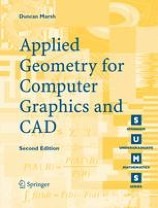
Focusing on the manipulation and representation of geometrical objects, this book explores the application of geometry to computer graphics and computer-aided design (CAD). An introduction to transformations of the plane and three-dimensional space describes how objects can be constructed from geometric primitives and manipulated. This leads into a treatment of projections and the method of rendering objects on a computer screen by application of the complete viewing operation. Subsequently, the emphasis is on the two principal curve and surface representations, namely, Bézier and B-spline (including NURBS).
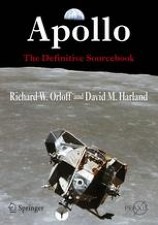
This book provides an overview of the origins of the Apollo program and descriptions of the ground facilities, launch vehicles and spacecraft that will serve as an invaluable single-volume sourcebook for space enthusiasts, space historians, journalists, and programme-makers on radio and TV. It supplements tha other books that have focused on the politics and management of the Apollo program, the astronauts, and their training and exploits.
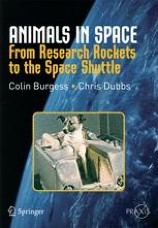
Animals in Space will explain why dogs, primates, mice and other rodents were chosen and tested, at a time when dedicated scientists from both space nations were determined to establish the survivability of human subjects on both ballistic and orbital space flights. It will also recount the way this happened; the secrecy involved and the methods employed, and offer an objective analysis of how the role of animals as spaceflight test subjects not only evolved, but subsequently changed over the years in response to a public outcry led by animal activists. It will explore the ways in which animal high-altitude and space flight research impacted on space flight biomedicine and technology, and how the results - both successful and disappointing - allowed human beings to then undertake that same hazardous journey with far greater understanding and confidence.

The physical and chemical mechanisms as well as the sizes of these processes are quite different. So are the motivations for studying them scientifically.The super- 8 nova is a thermo-nuclear explosion on a scale of 10 cm. Astrophysicists try to understand them in order to get insight into fundamental properties of the universe. In hows around airfoils of commercial airliners at the scale of 3 10 cm shock waves occur that influence the stability of the wings as well as fuel consumption in ight. This requires appropriate design of the shape and structure of airfoils by engineers. Knocking occurs in combustion, a chemical 1 process, and must be avoided since it damages motors. The scale is 10 cm and these processes must be optimized for efficiency and environmental conside- tions. The common thread is that the underlying ?uid ?ows may at a certain scale of observation be described by basically the same type of hyperbolic s- tems of partial differential equations in divergence form, called conservation laws. Astrophysicists, engineers and mathematicians share a common interest in scientific progress on theory for these equations and the development of computational methods for solutions of the equations. Due to their wide applicability in modeling of continua. A substantial portion of mathematical research is related to the analysis and numerical approximation of solutions to such equations. Hyperbolic conservation laws in two or more space dimensions still poseone of the main challenges to modern mathematics.
This book is an elementary introduction to stable maps and quantum cohomology, starting with an introduction to stable pointed curves, and culminating with a proof of the associativity of the quantum product. The viewpoint is mostly that of enumerative geometry, and the red thread of the exposition is the problem of counting rational plane curves. Kontsevich's formula is initially established in the framework of classical enumerative geometry, then as a statement about reconstruction for Gromov–Witten invariants, and finally, using generating functions, as a special case of the associativity of the quantum product.
This book gives a mathematical treatment of a novel concept in material science that characterizes the properties of dynamic materials—that is, material substances whose properties are variable in space and time. Unlike conventional composites that are often found in nature, dynamic materials are mostly the products of modern technology developed to maintain the most effective control over dynamic processes. These materials have diverse applications: tunable left-handed dielectrics, optical pumping with high-energy pulse compression, and electromagnetic stealth technology, to name a few. Of special significance is the participation of dynamic materials in almost every optimal material design in dynamics.
This book provides an introduction to the basics of sub-Riemannian differential geometry and geometric analysis in the Heisenberg group, focusing primarily on the current state of knowledge regarding Pierre Pansu's celebrated 1982 conjecture regarding the sub-Riemannian isoperimetric profile.
After publishing an introduction to the Navier–Stokes equation and oceanography (Vol. 1 of this series), Luc Tartar follows with another set of lecture notes based on a graduate course in two parts, as indicated by the title. A draft has been available on the internet for a few years. The author has now revised and polished it into a text accessible to a larger audience.
This book gives an introduction to modern geometry. Starting from an elementary level the author develops deep geometrical concepts, playing an important role nowadays in contemporary theoretical physics. He presents various techniques and viewpoints, thereby showing the relations between the alternative approaches.
The first part of the volume is devoted to the description of scattering processes in the context of relativistic quantum field theory. The use of the semi-classical approximation allows us to illustrate the relevant computation techniques in a reasonably small amount of space. Our approach to relativistic processes is original in many respects. The second part contains a detailed description of the construction of the standard model of electroweak interactions, with special attention to the mechanism of particle mass generation. The extension of the standard model to include neutrino masses is also described. We have included a number of detailed computations of cross sections and decay rates of pedagogical and phenomenological relevance.
The subject of this book is operator theory on the Hardy space H2, also called the Hardy-Hilbert space. The goal is to provide an elementary and engaging introduction to this subject that will be readable by everyone who has understood introductory courses in complex analysis and in functional analysis.

The Introduction to Navier-Stokes Equation and Oceanography corresponds to a graduate course in mathematics, taught at Carnegie Mellon University in the spring of 1999. Comments were added to the lecture notes distributed to the students, as well as short biographical information for all scientists mentioned in the text, the purpose being to show that the creation of scientific knowledge is an international enterprise, and who contributed to it, from where, and when. The goal of the course is to teach a critical point of view concerning the partial differential equations of continuum mechanics, and to show the need for developing new adapted mathematical tools.

Daraa Highway - Ghabagheb - Syria
+963-15 2050 - 15 860 380 /1/2/3 - 11 662 3900