


Refine Results
Sort By
From
To

A primary goal was to foster interaction and communication between participants from different cultures, both in the layman’s sense of the term and in terms of approaches to quantum gravity. We hope that the links formed by students and the school will persist throughout their professional lives, continuing to promote interaction and the essential exchange of ideas that drives research forward. This volume contains improved and updated versions of the lectures given at the School. It has been prepared both as a reminder for the participants, and so that these pedagogical introductions can be made available to others who were unable to attend. We expect them to serve students of all ages well.
This book and the following second volume is an introduction into modern algebraic geometry. In the first volume the methods of homological algebra, theory of sheaves, and sheaf cohomology are developed. These methods are indispensable for modern algebraic geometry, but they are also fundamental for other branches of mathematics and of great interest in their own.In the last chapter of volume I these concepts are applied to the theory of compact Riemann surfaces. In this chapter the author makes clear how influential the ideas of Abel, Riemann and Jacobi were and that many of the modern methods have been anticipated by them.

This book discusses and addresses the compelling questions concerning the ideals of citizenship, the processes of learning to fulfill these ideals, and possibilities of education in fostering citizenship. Rather than advocating for one framework, the authors demonstrate the continuously contested nature of the concept of citizenship as theoretically discussed and practically experienced. The monograph combines, in an unconventional way, selected philosophical accounts and everyday experiences from certain locations in Tanzania and Uganda.

Politics and the political discourse occupy a central position in the modern legal theoretical discussion. The goal of this book is to reconstruct and to classify, according to ideal-typical models, the different positions taken by the major contemporary legal theories as to whether and how law relates to politics. In particular, attention is focused on Kelsen, Hart, Finnis, Critical Legal Studies, Law and Economics and legal realisms.
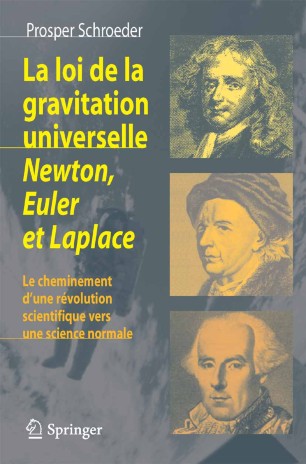
An analysis of Newton's ideas dismisses this hypothesis by the simple fact that the Principia sought to demonstrate the fallacy of earlier approaches. However, Newton suffered a failure in the application of his theory of gravitation to the explanation of the movement of the Moon, failure which marked the development of celestial mechanics throughout the 18th century. Clairaut, d'Alembert and Euler doubted the validity of Newtonian law almost at the same time and their ideas advanced celestial mechanics which reached the state of "normal science" with Laplace's treatise on celestial mechanics, a century after Newton.
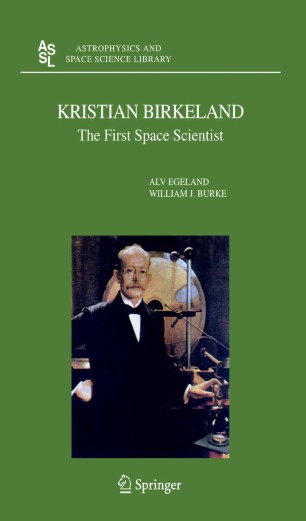
PREFACEThisscientific biography of Kristian Birkeland (1867–1917) was written to bring the story ofa Norwegian national hero to the attention ofthe English-speaking world. Birkeland’sheroic stature was established not on a field of military battle,but in the bitter cold of the Artic wilderness ashe sought to answer basic questions abouthow the Sun controlled northern lights andmag-netic storms. He was also afather of Norsk Hydro one ofNorway’s largest industries. Birkel and died before reaching the age of 50.Because Birkel and never kept adiary, documented information about his family and private life is sparse. Before he died, Olaf Devik, the last of Birke-ffland’s close friends, gave along interview and graciously transferred his personal archive to A.E. Birkeland’s 82 scientific papers and three book-length publications map the progress of his investigations. addressed this book questions that had vexed European scientists for centuries. Why do the northern lights appear overhead when the Earth’s magnetic field is disturbed? How are magnetic storms connected to disturbances on the Sun? To answer these questions Birkeland interpreted his advance laboratory simulations and daring campaigns in the Arctic wilderness in the light of Maxwell’s newly discovered laws of electricity and magnetism. Birkeland’s ideas were dismissed for decades, only to be vindicated when satellites could fly above the Earth’s atmosphere.
Leading experts in turbulence were brought together at this Symposium to exchange ideas and discuss, in the light of the recent progress in computational methods, new perspectives in our understanding of turbulence. The Symposium also fostered a vigorous interaction between those who pursue computations, and those concerned with developments in experiment and theory.
It is impossible to imagine modern mathematics without complex numbers. Complex Numbers from A to . . . Z introduces the reader to this fascinating subject that, from the time of L. Euler, has become one of the most utilized ideas in mathematics.The exposition concentrates on key concepts and then elementary results concerning these numbers. The reader learns how complex numbers can be used to solve algebraic equations and to understand the geometric interpretation of complex numbers and the operations involving them.The theoretical parts of the book are augmented with rich exercises and problems at various levels of difficulty. A special feature of the book is the last chapter, a selection of outstanding Olympiad and other important mathematical contest problems solved by employing the methods already presented.The book reflects the unique experience of the authors. It distills a vast mathematical literature, most of which is unknown to the western public, and captures the essence of an abundant problem culture.
The book starts with a textbook-like expose on nonlinear dynamics, attractors and chaos, both temporal and spatio-temporal, including modern techniques of chaos–control. Chapter 2 turns to the edge of chaos, in the form of phase transitions (equilibrium and non-equilibrium, oscillatory, fractal and noise-induced), as well as the related field of synergetics. While the natural stage for linear dynamics comprises of flat, Euclidean geometry (with the corresponding calculation tools from linear algebra and analysis), the natural stage for nonlinear dynamics is curved, Riemannian geometry (with the corresponding tools from nonlinear, tensor algebra and analysis). The extreme nonlinearity – chaos – corresponds to the topology change of this curved geometrical stage, usually called configuration manifold. Chapter 3 elaborates on geometry and topology change in relation with complex nonlinearity and chaos. Chapter 4 develops general nonlinear dynamics, continuous and discrete, deterministic and stochastic, in the unique form of path integrals and their action-amplitude formalism.
In the twenty-first century, applications in medicine and engineering must acquire greater safety and flexibility if they are to yield better products at higher efficiency. To this end, complex science and technology must be integrated in medicine and engineering. Complex medical engineering (CME) is a new field that merges medical science and technology, and includes biomedical robotics and biomechatronics, complex virtual technology in medicine, information and communication technology in medicine, complex technology in rehabilitation, cognitive neuroscience and technology, and complex bioinformatics. Experts from academia, industry, and government research laboratories who have pioneered CME ideas and technologies describe its concept and research approach and discuss related hardware and software, science and technology, and medicine and engineering. This book will be invaluable to scientists, researchers, and graduates in the emerging field of CME.
Esterel is based on the simple idea of providing a software language that has a synchronous model of time. That is, the execution of the program is divided into discrete instants, and statements are either guaranteed to execute in a single instant, or take multiple instants as requested by the programmer. Suitable for programming safety-critical real-time systems, Esterel and its model of computation have found use in industrial applications such as avionics, integrated circuit design, and other safety-critical environments. While Compiling Esterel does not assume prior knowledge of the Esterel language, readers will appreciate having prior knowledge of programming language semantics and compiler technology, along with some familiarity with synchronous digital hardware design.
illustrates the benefits to be gained from digitally networked communication for health, education and transitioning economies in developing nations (Sierra Leone and Papua New Guinea) and developed nations. Growing powers of e-citizenship can help build sustainable futures. This small volume provides a collection of examples and ideas from which the authors hope will help build a wider resource. Understanding how to link everyday lives with global networks in the digital world in ways that add benefit for the world’s people, and the health of the planet, is an ongoing project. IYGU recognises the integral roles of networking and communication systems, as well as interactions between people, near and far, as fundamental for building better futures. The global penetration of digital devices means everyday life, present and future, is inextricably linked with information technologies
This book is based on real inner product spaces X of arbitrary (finite or infinite) dimension greater than or equal to 2. With natural properties of (general) translations and general distances of X, euclidean and hyperbolic geometries are characterized. For these spaces X also the sphere geometries of Möbius and Lie are studied (besides euclidean and hyperbolic geometry), as well as geometries where Lorentz transformations play the key role. The geometrical notions of this book are based on general spaces X as described. This implies that also mathematicians who have not so far been especially interested in geometry may study and understand great ideas of classical geometries in modern and general contexts.
This book is based on real inner product spaces X of arbitrary (finite or infinite) dimension greater than or equal to 2. With natural properties of (general) translations and general distances of X, euclidean and hyperbolic geometries are characterized.

This volume is the proceedings of the first CPE conference in the new millennium and the thirteenth in a well-established series of conferences on Chemistry for the Protection of the Environment, first established in 1976. With support of the U.S. EPA, the series of conferences provides an opportunity for interdisciplinary exchange of ideas among international specialists, from diverse fields and backgrounds, on the chemical aspects of environmental protection. Over the years, the CPE conferences have gathered participants from more and more countries, and the scope of interests have been broadened. Held in Hilo, Hawaii, this was the first of these international conferences to take place in the United States. The Organizing Committee attracted to the conference a wide range of talented scientists and engineers who have useful ideas to contribute on how to clean our environment.

Specifically covered are the following aspects: exposure from the environment and the diet; biomarkers of exposure; risk assessment; epidemiology; mechanism of formation in food; biological alkylation of amino acids, peptides, proteins, and DNA by acrylamide and its epoxide metabolite glycidamide; neurotoxicity, reproductive toxicity, and carcinogenicity; protection against adverse effects; and possible approaches to reducing levels in food. Cross-fertilization of ideas among several disciplines in which an interest in acrylamide has developed, including food science, pharmacology, toxicology, and medicine, will provide a better understanding of the chemistry and biology of acrylamide in food, and can lead to the development of food processes to decrease the acrylamide content of the diet.
This book contains a selection of lectures from the first Summer School organized by the Center for Functional Nanostructures (CFN) at the University of Karlsruhe. The mission of the CFN is to carry out research in the following areas: nanophotonics, nanoelectronics, molecular nanostructures and nanostructured materials. The aim of the summer schools is mainly to exchange new ideas and illustrate emerging research methodologies through a series of lectures. This is reflected by both the selection of topics addressed in the present volume as well as the tutorial aspect of the contributions.

A specifically Calvinist identity and theology emerged out of two key conflicts in the region: first, the fight to turn away from Catholic practices and traditions a population that had been forced to convert to Protestantism by the Bernese after their conquest of Vaud in 1536; second, the struggle against the Zwinglian political and theological ideas that dominated the Swiss Confederation and differed from the Calvinists' understanding of ecclesiastical discipline, the Eucharist, and predestination. The Pays de Vaud was central to this struggle, for it was subject politically to Zwinglian, German-speaking Bern, but many of its ministers were more strongly influenced by Calvin. Calvin himself was initially excited about the prospects for reform in the region, but frustrations with the Swiss led him and the Genevans increasingly to focus their efforts on France.
Calibrating the Cosmos describes hard science, but is gently written. It explains in clear, non-mathematical language the measurements and the interpretation of the resulting data that have led to the current understanding of the origin, evolution and properties of our expanding Big Bang universe. Many people have a sketchy idea of the work of cosmologists, but Professor Levin’s experience in teaching both scientific and liberal arts students has enabled him to impart much of our current thinking without resorting to difficult mathematics. Theoretical concepts are emphasized, in particular the symmetries of homogeneity and isotropy enjoyed by our universe on the largest scales, how these symmetries lead to only one quantity being needed to describe the growth of the universe from its infancy to the present time, and how the so-called parameters of the universe are the ingredients used to construct the model universes to which ours – the real thing – is compared.
Aimed at first-year undergraduates in mathematics and the physical sciences, the only prerequisites are basic algebra, coordinate geometry and the beginnings of differentiation as covered in school. The transition from school to university mathematics is addressed by means of a systematic development of important classes of techniques, and through careful discussion of the basic definitions and some of the theorems of calculus, with proofs where appropriate, but stopping short of the rigour involved in Real Analysis.The influence of technology on the learning and teaching of mathematics is recognised through the use of the computer algebra and graphical package MAPLE to illustrate many of the ideas.

Daraa Highway - Ghabagheb - Syria
+963-15 2050 - 15 860 380 /1/2/3 - 11 662 3900