



Page 7
Page 7

Gastroesophageal reflux disease : Principles of disease, diagnosis, and treatment
Gastroesophageal reflux disease (GERD) is one of the most common disorders with an increasing prevalence and incidence in the last two decades. This book presents clinically relevant information for gastroenterologists, internists, surgeons, residents and also nurses, who frequently care for GERD patients.

Gastroesophageal reflux disease : From pathophysiology to treatment
Offers a state-of-the-art description of the pathophysiology, diagnosis and treatment of gastroesophageal reflux disease (GERD). Although GERD is one of the most common gastrointestinal disorders, its diagnosis and management are often challenging. Expert physicians provide an evidence- and experience-based analysis in each chapter.

Fundamentals of craniofacial malformations ; Vol.1 : Disease and diagnostics
Opens by considering general topics such as developmental biology and disease classification and then examines in depth the biological basis of the various malformations, including craniosynostoses, cleft-lip and palate with complex orofacial clefts, branchio-oculo-facial syndromes, rare syndromes, soft tissue malformations, and dysgnathia. Psychological aspects, including psychological evaluation methods and therapies and quality of life issues, are then addressed. Finally, all relevant clinical, radiological, and genetic investigations are described and important diagnostic issues are explored.

Fundamentals of anatomy and physiology of speech, language, and hearing
Each topic is explored in bullet-point form with augmentative paragraph information, in-depth box features, and detailed illustrations. High-resolution Anatomage virtual dissection table figures derived from real cadavers offer an unparalleled glimpse into the anatomical structures of the human body, featuring true-to-life colors and an impressive level of detail. Topics explored include respiration, phonation, articulation, swallowing, resonance, hearing, balance, neuroanatomy, and neurophysiology.

From Stochastic Calculus to Mathematical Finance : The Shiryaev Festschrift
The Festschrift is a collection of papers, including several surveys, written by his former students, co-authors and colleagues. These reflect the wide range of scientific interests of the teacher and his Moscow school. The topics range from the disorder problems to stochastic calculus and their applications to mathematical economics and finance. A full biobibliography of Shiryaev's works is included. The book represents the modern state of art of many aspects of a quickly maturing theory and will be an essential source and reading for researchers in this area.

From Melancholia to Depression : Disordered Mood in Nineteenth-Century Psychiatry
This book maps a crucial but neglected chapter in the history of psychiatry: how was melancholia transformed in the nineteenth century from traditional melancholy madness into a modern biomedical mood disorder

Frailty and Kidney Disease : A Practical Guide to Clinical Management
This book is of importance in nephrology, specifically nephrogeriatrics, since frailty is a condition affecting many elderly patients and which is becoming increasingly common in medical practice. As such, there is a considerable need for information to assist professionals treating these patients. The book includes chapters on the frailty syndrome (definition, evaluation and treatment), the main geriatric syndromes (gait disorder, falls, incontinence, and delirium), the main renal syndromes (acute renal injury, chronic kidney disease) as well as dialysis and kidney transplant, and the relationship between geriatrics and renal syndromes.

Forefoot Reconstruction
For a long time, forefoot surgery had many disadvantages including a painful postoperative period and recurrence of deformities. New techniques – notably Scarf, the first metatarsal osteotomy and the Weil osteotomy of the lesser metatarsal – provide a significant improvement in the treatment of static forefoot disorders. The great toe osteotomy has also been greatly improved. Since 1991, the author has introduced these techniques in many countries, while developing and studying the corresponding implants and the postoperative period. He has also developed surgical management techniques that bridge these different osteotomies. More than 1000 surgeons around the world are using these techniques, which are now widely taught. In this second edition of the book the general presentation is clearer and more pleasant and many pictures have been replaced. Several topics are emphasized, notably the great toe proximal phalanx osteotomy, the joint preservative surgery in severe forefoot disorders, including revision after failed bunionectomy and rheumatoid forefoot following the "ms” point for an accurate and effective metatarsal shortening. Lastly, new procedures are exposed, particularly in Claw toe and hammer with the PIP plantar release and the surgery of the middle phalanx and also the Weil osteotomy of the first metatarsal in hallux limitus.

Forces, Growth and Form in Soft Condensed Matter : At the Interface between Physics and Biology
This volume comprises the proceedings of a NATO Advanced Study Institute held at Geilo, Norway, 24 March - 3 April 2003, the seventeenth ASI in a series held every two years since 1971. The objective of this ASI was to identify and discuss areas where synergism between modern physics, soft condensed matter and biology might be most fruitful. The main pedagogical approach was to have lecturers focussing on basic understanding of important aspects of the relative role of the various interaction- electrostatic, hydrophobic, steric, conformational, van der Waals etc. Soft condensed matter and the connection between physics and biology have been the themes of several earlier Geilo Schools. A return to these subjects thus allowed a fresh look and a possibility for defining new directions for research. Examples of soft materials, which were discussed at this ASI, included colloidal dispersions, gels, biopolymers and charged polymer solutions, polyelectrolytes, protein/membrane complexes, nucleic acids and their complexes. Indeed, most forms of condensed matter are soft and these substances are composed of aggregates and macromolecules, with interactions that are too weak and complex to form crystals spontaneously. A characteristic feature is that small external forces, slight perturbations in temperature, pressure or concentration, can all be enough to induce significant structural changes. Thermal fluctuations are almost by definition strong in soft materials and entropy is a predominant determinant of structure, so that disorder, slow dynamics and plastic deformation are the rule. Hence the phrase ‘soft condensed matter’ has been coined.

Food addiction
This approach acknowledges the apparent parallels between substance use disorders and overeating of highly palatable, high-caloric foods. Although this idea seems to be relatively new, research on food addiction actually encompasses several decades, a fact that often remains unrecognized. Scientific use of the term addiction in reference to chocolate even dates back to the 19th century. In the 20th century, food addiction research underwent several paradigm shifts, which include changing foci on anorexia nervosa, bulimia nervosa, obesity, or binge eating disorder. Thus, the purpose of this review is to describe the history and state of the art of food addiction research and to demonstrate its development and refinement of definitions and methodologies

Food - drug interactions
The effect of drug on a person may be different than expected because that drug interacts with another drug the person is taking (drug-drug interaction), food, beverages, dietary supplements the person is consuming (drug-nutrient/food interaction) or another disease the person has (drug-disease interaction). A drug interaction is a situation in which a substance affects the activity of a drug, i.e. the effects are increased or decreased, or they produce a new effect that neither produces on its own. These interactions may occur out of accidental misuse or due to lack of knowledge about the active ingredients involved in the relevant substances. Regarding food-drug interactions physicians and pharmacists recognize that some foods and drugs, when taken simultaneously, can alter the body's ability to utilize a particular food or drug, or cause serious side effects.

Flow cytometry in hematopathology : A visual approach to data analysis and interpretation
Although instrumentation and laboratory techniques for flow cytometry (FCM) immunophenotyping of hematopoietic malignancies are well documented, there is relatively little information on how best to perform data analysis, a critical step in FCM testing. In Flow Cytometry in Hematopathology: A Visual Approach to Data Analysis and Interpretation, three physicians highly experienced in laboratory hematopathology and FCM offer a unique systematic approach to FCM data analysis and interpretation based on the visual inspection of dual parameter FCM graphics. This step-by-step approach to optimal FCM data analysis is demonstrated by means of numerous FCM graphics derived from actual well-documented clinical cases.The focus of the additional material is on the TCR-Vb eight-tube kit which has greatly facilitated the evaluation mature T-cell disorders, and on the DNA dye DRAQ5 for improved grading of malignant lymphoma. The authors also include notes on "tricks of the trade" and pitfalls to avoid. The discussion, covering leukemias, lymphomas, and other conditions, moves from simple to complex specimens, with an emphasis on visual pattern analysis.
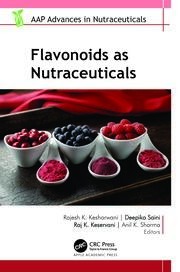
Flavonoids as nutraceuticals
Flavonoids are well-known plant metabolites that have extraordinary properties that can be used for treating health issues. The pharmaceutical importance of flavonoids is due to their anti-depressant, anti-viral, anti-inflammatory, and antioxidant capacities. They are also of great importance when it comes to neuroprotection, cardiovascular disorders, and many types of cancer. Flavonoids are also easily available and produce less harmful side effects than some conventional therapeutics. This new volume examines the growing use of flavonoids for prevention and treatment of diseases and discusses their beneficial mechanisms. Chapters in the volume address diverse uses as anti-aging tools, as anti-inflammatory agents, for treating pregnancy-induced disorders, as a promising tool to combat infection of Covid-19, etc. The book explores their specific therapeutic antiviral potentials, the gene expression by flavonoids, and the role of flavonoids in agriculture.

Fishs clinical psychopathology : Signs and symptoms in psychiatry
The fifth edition of this modern classic presents the clinical descriptions and psychopathological insights for which this text is renowned, and adds suggested questions to assist with eliciting key symptoms. It also covers recent revisions of diagnostic classification systems, including the World Health Organization's ICD-11: International Classification of Diseases. Clear and readable, this new edition provides concise descriptions of the signs and symptoms of mental illness and astute accounts of the varied manifestations of disordered psychological function. Designed for use in clinical practice, this is an essential text for students of medicine, trainees in psychiatry, and practising psychiatrists.

Fetus abnormalities relating drug
Drugs use in pregnancy remains a major public health problem. Fetal teratogenicity results from the effect of these substances during fetal development, particularly when used in combination. Approximately 3-5% of live births are complicated by a birth defect each year totaling around 120,000 babies. Additionally, more women taking any kind of medication has more than doubled in the last 30 years. Current evidence suggests that between 65%-94 % of women take at least one prescription drug during pregnancy. Nearly 70% of women are taking a medication in the first trimester during organogenesis. On average, women are taking 3 medications in pregnancy with over 50% of women using four or more. This includes over the counter medications and herbal supplements. During pregnancy, drugs are often required to treat certain disorders.

Ferro- and Antiferroelectricity : Order/Disorder versus Displacive
Solid-state systems are frequently classi?ed according to their physical, str- tural or chemical properties. Such schemes are extremely helpful since pr- erties related to any such classi?cation are typically known and facilitate id- tifying solids with special material classes. The best-known examples of these schemes are conductivity or resistivity measurements by means of which m- als are easily distinguishable from insulators. However, frequently clear-cut decisions between material classes are not possible, since anisotropy, chemical composition, binding forces and local effects wash out distinct properties and lead to competition or coexistence. Such unresolved situations are especially typical for transition metal oxides that exhibit a variety of ground-state properties in a fascinating way.

Female Urology : A Practical Clinical Guide
A Practical Clinical Guide offers a hands-on reference for the management of challenging disorders of the female lower urinary tract. This volume features scenario presentations in which a patient presentation is described and followed by two experts in the field reviewing work-up and management of the problem. The volume is divided into three, easy-to-follow sections. The first section, Evaluation, details the anatomy of pelvic support, the lower urinary tract, incontinency, and overactive bladders. The second section, Treatment, outlines treatments for stress urinary incontinence, overactive bladder, prolapse, and reconstruction. The third section includes case studies from various locales around the country, illustrating the proper techniques for the evaluation and treatment of problems relating to female urology.

Fatty acids
Fatty acid metabolism, including the de novo synthesis, uptake, oxidation, and derivation of fatty acids, plays several important roles at cellular and organ levels. Recent studies have identified characteristic changes in fatty acid metabolism in idiopathic pulmonary fibrosis (IPF) lungs, which implicates its dysregulation in the pathogenesis of this disorder. Here, we review the evidence for how fatty acid metabolism contributes to the development of pulmonary fibrosis, focusing on the profibrotic processes associated with specific types of lung cells, including epithelial cells, macrophages, and fibroblasts. We also summarize the potential therapeutics that target this metabolic pathway in treating IPF.

Family-Oriented Primary Care
I was a Medical Student in 1966 when the Millis Report on the training of the generalist physician was published,de?ning the concept of primary care. According to the Report, the primary provider has four major responsib- ities or roles. The ?rst role is that of initial contact care of the undiffer- tiated patient. The second is to provide comprehensive care based on the belief that the primary provider should be able to manage the overwhe- ing majority of problems with which patients present. Equally important is the third role—continuity and coordination of care within the health care system. Finally,the primary provider is responsible for demonstrating le- ership in the community. This Report’s description of a primary provider seems as relevant today as it was when it was written. In 1994,the Institute of Medicine’s assessment of primary care added the responsibility of family and community integration of care to the Millis Report description. Without question there are many challenges to a contemporary imp- mentation of this comprehensive description of primary care, beginning with the level of individual patients who so often suffer from complex pr- lems, such as mental disorders and obesity. Treating these conditions in a brief primary care visit is dif?cult. At the level of the larger system, re- bursement is often inadequate and can represent policies that are uns- portive of primary care, such as those that compromise payment for preventive services that help patients to quit smoking or lose weight.

Familial mediterranean fever
Familial Mediterranean Fever (FMF), a genetic disorder causing recurrent inflammatory attacks. It delves into various aspects of FMF, including: Definition and historical background of FMF Underlying causes, signs, and symptoms of the disease Modes of transmission through autosomal recessive inheritance Diagnostic methods encompassing genetic, urine, blood, and imaging tests, emphasizing the significance of early diagnosis The link between FMF and amyloidosis, a serious complication...
