


Refine Results
Sort By
From
To

Focusses specifically on topics that are important in three-dimensional modelling, surface design and real-time character animation. It provides an in-depth coverage of data structures and popular methods used in geometry processing, keyframe and inverse kinematics animations and shader based processing of mesh objects. It also introduces two powerful and versatile libraries, OpenMesh and Assimp, and demonstrates their usefulness through implementations of a wide range of algorithms in mesh processing and character animation respectively. This Textbook is written for students at an advanced undergraduate or postgraduate level who are interested in the study and development of graphics algorithms for three-dimensional mesh modeling and analysis, and animations of rigged character models.
This book is so far the first that covers the current state of the art in 3D imaging for safety and security. Special attention was given to advanced 3D imaging technologies in the context of safety and security applications. Comparative evaluation studies showing advantages of 3D imaging over traditional 2D imaging for a given computer vision or pattern recognition task were emphasized. Moreover, additional experts in the field of 3D imaging for safety and security were invited by the editors for a contribution to this book.
Model checking technology is among the foremost applications of logic to computer science and computer engineering. The model checking community has achieved many breakthroughs, bridging the gap between theoretical computer science and hardware and software engineering, and it is reaching out to new challenging areas such as system biology and hybrid systems. Model checking is extensively used in the hardware industry and has also been applied to the verification of many types of software. Model checking has been introduced into computer science and electrical engineering curricula at universities worldwide and has become a universal tool for the analysis of systems.

Presents clear and consistent guidance on all aspects of both common and less common, minor and major complications encountered in oral and maxillofacial surgery (OMS) practice. In-depth chapters provide thorough descriptions of each complication and recommend treatment strategies for associated complications of anesthesia, implant surgery, maxillofacial trauma, and more, using easy to read algorithms.
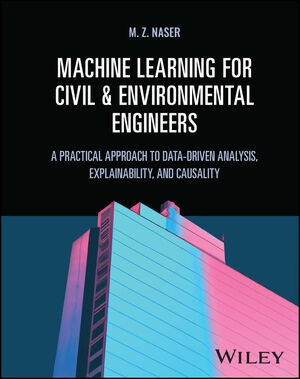
Introduces engineers and engineering students to the applications of artificial intelligence (AI), machine learning (ML), and machine intelligence (MI) in relation to civil and environmental engineering projects and problems, presenting state-of-the-art methodologies and techniques to develop and implement algorithms in the engineering domain.
Recent studies highlight the application of artificial intelligence, machine learning, and simulation techniques in engineering. This book covers the successful implementation of different intelligent techniques in various areas of engineering focusing on common areas between mechatronics and civil engineering. The power of artificial intelligence and machine learning techniques in solving some examples of real-life problems in engineering is highlighted in this book. The implementation process to design the optimum intelligent models is discussed in this book.
This collection of formulas constitutes a compendium of mathematics for eco nomics and business. It contains the most important formulas, statements and algorithms in this significant subfield of modern mathematics and addresses primarily students of economics or business at universities, colleges and trade schools. But people dealing with practical or applied problems will also find this collection to be an efiicient and easy-to-use work of reference. First the book treats mathematical symbols and constants, sets and state ments, number systems and their arithmetic as well as fundamentals of com binatorics. The chapter on sequences and series is followed by mathematics of finance, the representation of functions of one and several independent vari ables, their differential and integral calculus and by differential and difference equations. In each case special emphasis is placed on applications and models in economics. The chapter on linear algebra deals with matrices, vectors, determinants and systems of linear equations. This is followed by the representation of struc tures and algorithms of linear programming. Finally, the reader finds formu las on descriptive statistics (data analysis, ratios, inventory and time series analysis), on probability theory (events, probabilities, random variables and distributions) and on inductive statistics (point and interval estimates, tests). Some important tables complete the work.
Fundamental Approximation Methods. Machine Learning -- Deep Neural Nets -- Chebyshev Tensors -- The toolkit - plugging in approximation methods. Introduction: why is a toolkit needed -- Composition techniques -- Tensors in TT format and Tensor Extension Algorithms -- Sliding Technique -- The Jacobian projection technique -- Hybrid solutions - approximation methods and the toolkit.
When applying the statistical theory of long range dependent (LRD) processes to economics, the strong complexity of macroeconomic and financial variables, compared to standard LRD processes, becomes apparent. In order to get a better understanding of the behaviour of some economic variables, the book assembles three different strands of long memory analysis: statistical literature on the properties of, and tests for, LRD processes; mathematical literature on the stochastic processes involved; models from economic theory providing plausible micro foundations for the occurence of long memory in economics. Each chapter of the book will give a comprehensive survey of the state of the art and the directions that future developments are likely to take. Taken as a whole the book provides an overview of LRD processes which is accessible to economists, econometricians and statisticians.

Although modern location theory is now more than 90 years old, the focus of researchers in this area has been mainly problem oriented. However, a common theory, which keeps the essential characteristics of classical location models, is still missing. This monograph addresses this issue. A flexible location problem called the Ordered Median Problem (OMP) is introduced. For all three main subareas of location theory (continuous, network and discrete location) structural properties of the OMP are presented and solution approaches provided. Numerous illustrations and examples help the reader to become familiar with this new location model.

Florian Zainhofer uses the theory of life cycle investing, i.e. how we should optimally choose our savings rate and risky asset share throughout our lives, as a framework to study the implications of a potential BVG individualization. Following an introduction on the Swiss system of old-age provision, the author reviews recent life cycle models of portfolio choice and covers their numerical solution algorithms in depth. He presents an empirical analysis of Swiss workers’ earnings dynamics since these are important determinants of life cycle investment behavior. To further investigate the implications of a flexible contribution rate and risky asset share in the mandatory BVG, the author proposes a model adapted to Swiss conditions and parameterized with the estimated earnings dynamics.
As the field of Supply Chain Management has matured, maintaining the precise flow of goods to maintain schedules (hence, minimizing inventories) on a just-in-time basis still remains as a major challenge. This problem or challenge has resulted in a fair amount of quantitative research in the area, producing an array of models and algorithms to help ensure the precise flow of components and final products into inventories to meet just-in-time requirements.The scheduling models and algorithms presented and illustrated in the book will be done so in the context of extensive use of computer systems in a "real time context.
This monograph presents a general equilibrium methodology for microeconomic policy analysis. It is intended to serve as an alternative to the now classical, axiomatic general equilibrium theory as exposited in Debreu`s Theory of Value (1959) or Arrow and Hahn`s General Competitive Analysis (1971). The methodology proposed in this monograph does not presume the existence of market equilibrium, accepts the inherent indeterminancy of nonparametric general equlibrium models, and offers effective algorithms for computing counterfactual equilibria in these models. It consists of several essays written over the last decade, some with colleagues or former graduate students, and an appendix by Charles Steinhorn on the elements of O-minimal structures, the mathematical framework for our analysis.
This book deals with such complex scheduling problems and methods to solve them. It consists of three parts: The ?rst part (Chapters 1 and 2) contains a description of basic scheduling models with applications and an introduction into discrete optimization (covering complexity, shortest path algorithms, linear programming, network ?ow algorithms and general optimization methods). In the second part (Chapter 3) resource-constrained project scheduling problems are considered. Especially, methods like constraint propagation, branch-a- bound algorithms and heuristic procedures are described. Furthermore, lower bounds and general objective functions are discussed.

CELLULAR GENETIC ALGORITHMS defines a new class of optimization algorithms based on the concepts of structured populations and Genetic Algorithms (GAs). The authors explain and demonstrate the validity of these cellular genetic algorithms throughout the book. This class of genetic algorithms is shown to produce impressive results on a whole range of domains, including complex problems that are epistatic, multi-modal, deceptive, discrete, continuous, multi-objective, and random in nature. The focus of this book is twofold. On the one hand, the authors present new algorithmic models and extensions to the basic class of Cellular GAs in order to tackle complex problems more efficiently. On the other hand, practical real world tasks are successfully faced by applying Cellular GA methodologies to produce workable solutions of real-world applications.
Credit risk analysis is one of the most important topics in the field of financial risk management. Due to recent financial crises and regulatory concern of Basel II, credit risk analysis has been the major focus of financial and banking industry. Especially for some credit-granting institutions such as commercial banks and credit companies, the ability to discriminate good customers from bad ones is crucial. The need for reliable quantitative models that predict defaults accurately is imperative so that the interested parties can take either preventive or corrective action. Hence credit risk analysis becomes very important for sustainability and profit of enterprises. In such backgrounds, this book tries to integrate recent emerging support vector machines and other computational intelligence techniques that replicate the principles of bio-inspired information processing to create some innovative methodologies for credit risk analysis and to provide decision support information for interested parties.
Services requiring parts has become a $1.5 trillion business annually worldwide, creating a tremendous incentive to manage the logistics of these parts efficiently by making planning and operational decisions in a rational and rigorous manner. This book provides a broad overview of modeling approaches and solution methodologies for addressing service parts inventory problems found in high-powered technology and aerospace applications. The focus in this work is on the management of high cost, low demand rate service parts found in multi-echelon settings. This unique book, with its breadth of topics and mathematical treatment, begins by first demonstrating the optimality of an order-up-to policy [or (s-1,s)] in certain environments. This policy is used in the real world and studied throughout the text. The fundamental mathematical building blocks for modeling and solving applications of stochastic process and optimization techniques to service parts management problems are summarized extensively. A wide range of exact and approximate mathematical models of multi-echelon systems is developed and used in practice to estimate future inventory investment and part repair requirements.
An excellent reference to both the learning, and empirical literature in finance." (Krzysztof Piasecki, Zentralblatt MATH, Vol. 1141, 2008) "Norman Ehrentreich was one of the daring few to take on the model, and he has summarized his work and findings in this excellent book. … It is useful primer for anyone interested in getting started in the area of agent-based finance. … It is essential reading for anyone interested in the dynamics of the SFI market in particular, but I also recommend it for others as a useful resource on agent-based financial market design as well." (Blake LeBaron, Journal of Artificial Societies and Social Simulation, Vol. 12 (2), March, 2009)
This book covers the fundamental concepts of data mining, to demonstrate the potential of gathering large sets of data, and analyzing these data sets to gain useful business understanding. The book is organized in three parts. Part I introduces concepts. Part II describes and demonstrates basic data mining algorithms. It also contains chapters on a number of different techniques often used in data mining. Part III focusses on business applications of data mining. Methods are presented with simple examples, applications are reviewed, and relativ advantages are evaluated.

Covers: Payment cards and protocols / EMV contact chip and contactless transactions / Disputes, arbitration, and compliance / Data security standards in the payment card industry / Validation algorithms / Code tables / Basic cryptography / Pin block formats and algorithms

Daraa Highway - Ghabagheb - Syria
+963-15 2050 - 15 860 380 /1/2/3 - 11 662 3900