



Page 68
Page 68

Autoimmunity : Methods and protocols
Brings together a comprehensive and up-to-date collection of protocols that reflect the diverse experimental strategies. Chapters detail T-cell, macrophage characterization, neutrophil functional assays, organoid culture methods, spatial transcriptomics, RNA FISH, microRNA profiling, and ribosome profiling. Written in the highly successful Methods in Molecular Biology series format, chapters include introductions to their respective topics, lists of the necessary materials and reagents, step-by-step, readily reproducible laboratory protocols, and key tips on troubleshooting and avoiding known pitfalls.

Austenitic TRIP/TWIP steels and steel-zirconia composites : Design of tough, transformation-strengthened composites and structures
This book presents a collection of the most up-to-date research results in the field of steel development with a focus on pioneering alloy concepts that result in previously unattainable materials properties.
Atomistic modeling of materials failure
Atomistic Modeling of Materials Failure is an introduction to molecular and atomistic modeling techniques applied to solid deformation and fracture. Focusing on a variety of brittle, ductile and geometrically confined materials, this detailed overview includes computational methods at the atomic scale, and describes how these techniques can be used to model the dynamics of cracks, dislocations and other deformation mechanisms.

Atomistic approaches in modern biology : From quantum chemistry to molecular simulations
This volume of Topics in Current Chemistry presents an overview of atomistic theoreticalmethodsapplied tomolecular biologicalsystems. Itthus repesents abottom-upview of chemistryonbiologyfroma theoreticalperspective. The chapters arearrangedsuchthat important issuesareconsidered startingfrom a quantum mechanical perspective and proceeding to a molecular mechanics and molecular dynamics descriptiono fthemotionoftheelementaryparticles involved.which are responsible for the properties and function of biomolecules. Depending on the length and time scales relevant for a given phenomenon to be investigated, tailored theoretical methods are required to account for these. If one is interested in large scale motions of molecules, a molecul- mechnanics-based description willbeappropriate.

Atomic structure theory : Lectures on atomic physics
This is a textbook for students with a background in quantum mechanics. The text is designed to give hands-on experience with atomic structure calculations. Material covered includes angular momentum methods, the central field Schrödinger and Dirac equations, Hartree-Fock and Dirac-Hartree-Fock equations, multiplet structure, hyperfine structure, the isotope shift, dipole and multipole transitions, basic many-body perturbation theory, configuration interaction, and correlation corrections to matrix elements.
Atomic Force Microscopy, Scanning Nearfield Optical Microscopy and Nanoscratching : Application to Rough and Natural Surfaces
Making a clear distinction is made between nano- and micro-mechanical testing for physical reasons, this monograph describes the basics and applications of the supermicroscopies AFM and SNOM, and of the nanomechanical testing on rough and technical natural surfaces in the submicron range down to a lateral resolution of a few nm. New or improved instrumentation, new physical laws and unforeseen new applications in all branches of natural sciences (around physics, chemistry, mineralogy, materials science, biology and medicine) and nanotechnology are covered as well as the sources for pitfalls and errors.

Atomic and Nuclear Analytical Methods : XRF, Mössbauer, XPS, NAA and Ion-Beam Spectroscopic Techniques
This book is a blend of analytical methods based on the phenomenon of atomic and nuclear physics. It comprises comprehensive presentations about X-ray Fluorescence (XRF), Mössbauer Spectroscopy (MS), X-ray Photoelectron Spectroscopy (XPS), Neutron- Activation Analysis (NAA), Particle Induced X-ray Emission Analysis (PIXE), Rutherford Backscattering Analysis (RBS), Elastic Recoil Detection (ERD), Nuclear Reaction Analysis (NRA), Particle Induced Gamma-ray Emission Analysis (PIGE), and Accelerator Mass Spectrometry (AMS). These techniques are commonly applied in the fields of medicine, biology, environmental studies, archaeology or geology et al. and pursued in major international research laboratories.

Atmospheric and Oceanic
This volume contains many original findings on mesoscale processes in atmospheric and oceanic systems through mathematical modeling, numerical simulations and field experiments. These scientific papers examine and provide the latest developments on a range of topics that include tropical cyclones/hurricanes, mesoscale variability and modeling, seasonal monsoons and land surface processes including atmospheric boundary layer. This volume will be useful as a reading material in graduate level courses dealing with mesoscale systems, weather, climate, monsoon variability and boundary layer.

Asymmetric metal catalysis in Enantioselective Domino reactions
Collects the major progress in the field of enantioselective one-, two-, and multicomponent domino reactions promoted by chiral metal catalysts. It clearly illustrates how enantioselective metal-catalyzed processes constitute outstanding tools for the development of a wide variety of fascinating one-pot asymmetric domino reactions, thereby allowing many complex products to be easily generated from simple materials in one step. The book also strictly follows the definition of domino reactions by Tietze as single-, two-, as well as multicomponent transformations.
Asymmetric Cell Division
Cell biologists have recently become aware that the asymmetry of cell division is an important regulatory phenomenon in the fate of a cell. During development, cell diversity originates through asymmetry; in the adult organism asymmetric divisions regulate the stem cell reservoir and are a source of the drift that contributes to the aging of organisms with renewable cell compartments. Because of the concept of semi-conservative DNA synthesis, it was thought that the distribution of DNA between daughter cells was symmetric. The analysis of the phenomenon in cells during mitosis, however, revealed the asymmetry in the distribution of the genetic material that creates the drift contributing to aging of mammals. On the other hand, cancer cells can originate from a deregulation of asymmetry during mitosis in particular during stem cell expansion. The book describes the phenomenon in different organisms from plants to animals and addresses its implications for the development of the organism, cell differentiation, human aging and the biology of cancers.
Astronomical image and data analysis
With information and scale as central themes, this comprehensive survey explains how to handle real problems in astronomical data analysis using a modern arsenal of powerful techniques. It treats those innovative methods of image, signal, and data processing that are proving to be both effective and widely relevant. The coverage includes chapters or appendices on: detection and filtering; image compression; multichannel, multiscale, and catalog data analytical methods; wavelets transforms, Picard iteration, and software tools. This second edition of Starck and Murtagh's highly appreciated reference again deals with topics that are at or beyond the state of the art. It presents material which is more algorithmically oriented than most alternatives and broaches new areas like ridgelet and curvelet transforms. Throughout the book various additions and updates have been made.
Assertion-Based Design
Chapter 3 Specifying RTL Properties 61 3. 3 Declarative versus procedural 67 3. 3 RTL assertion specification techniques 68 RTL invariant assertions 69 3. 2 Declaring properties with PSL 72 RTL cycle related assertions 73 3. 3 3. 1 Immediate assertions 84 3. 3 System functions 95 3. 3 Assertions across simulation time slots 111 4.

Asphaltenes, heavy oils, and petroleomics
Petroleomics is the prediction of all properties of petroleum based on the Petroleome, or complete listing of all components in a given crude oil. As it is developed, petroleomics will lead petroleum science into a bright new future, and it is the major focus of this book. A necessary step has been to resolve the molecular size and structure of asphaltene and its hierarchical aggregate structures, as well as the dynamics of asphaltenes. This is especially important for heavy oils. Flow assurance concerns and interfacial science are also treated. The technological development of downhole fluid analysis addresses the most important issues in deepwater production of oil.

Artificial neural networks : Recent advances, new perspectives and applications
This book explores the potential of ANNs for applications in different fields. Itincludes eight chapters that discuss deep learning, ANN tools, and other cutting-edgetechnologies. It also suggests avenues for further research into ANN techniques formedical imaging to detect breast tumors, classification of COVID-19 surveillancedatasets, health management, estimation of materials processing parameters, solarenergy management, and control of a petrochemical unit.

Artificial intelligence based cancer nanomedicine : Diagnostics, therapeutics and bioethics
Nanomedicine is evolving with novel drug formulations devised for multifunctional approaches towards diagnostics ad therapeutics. Nanomedicine-based drug therapy is normally explored at a fixed dose. The drug action is time-dependent, dose-dependent and patient-specific. To overcome challenges of nanomedicine testing, artificial intelligence (AI) serves as a helping tool for optimizing the drug and dose parameters. Real time conversions between these two features enables upgradation of patient data acquisition and improved design of nanomaterials. In this scenario, AI-based pattern analysis and algorithms models can greatly improve accuracy of diagnostics and therapeutics.
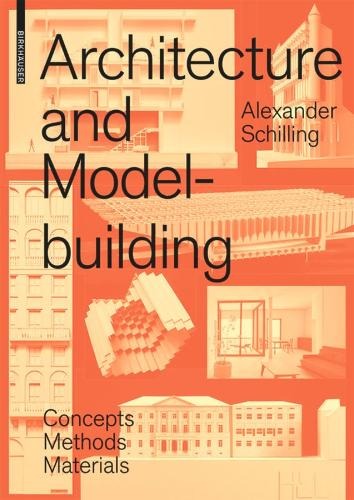
Architecture and modelbuilding : Concepts, methods, materials
Provides in-depth information Numerous practical tips, clear explanations, concrete examples Aims and Scope Architectural models are used at various stages of a project. As working models they support the design process: they are made up from time to time using simple materials, such as cardboard, without any attempt at accuracy, and continue to be adjusted and added to as the ideas and the design progress. The point here is to swiftly check a design idea, to allow it to be continued or dismissed. Presentational models are more involved; at this stage the design has been completed and the purpose of the model is to convey the ideas to the potential user in a clear and easy-to-understand way.
Architectural tiles : Conservation and restoration
It not only contains new and up to date information on materials, practical methods, and historical research but also reflects changes in the attitudes, outlook and perceptions within the wider conservation, architectural heritage and construction communities which give a new dimension to the conservation and restoration. The growing interest in the preservation of post war ceramic tile murals and the subsequent demand for information pertaining specifically to this era is a welcome and useful addition.
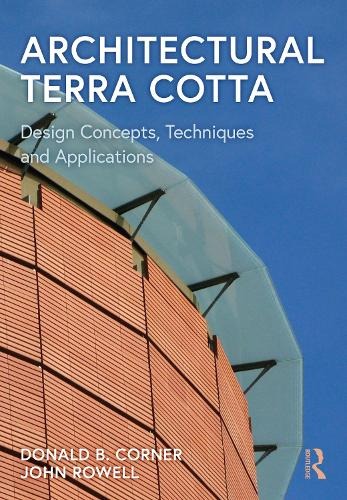
Architectural Terra Cotta : Design concepts, techniques and applications
Examines the evolution of terra cotta and prepares architects and builders to make new, creative uses of the timeless material. Terra cotta is among the oldest of manufactured building products, yet it has once again become a material of choice in contemporary façade design. From the walls of Babylon to high performance rainscreens, terra cotta claddings have repeatedly proven to be technically superior and aesthetically triumphant. Understanding the evolution of terra cotta prepares architects to add new, creative chapters to a rich history.
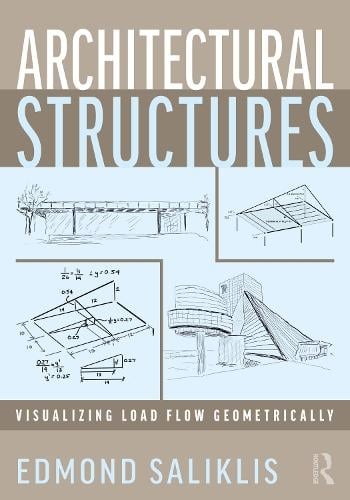
Architectural structures : Visualizing load flow geometrically
Presents an alternative approach to understanding structural engineering load flow using a visually engaging and three-dimensional format. This book presents a ground-breaking new way of establishing equilibrium in architectural structures using the Modern Müller-Breslau method. Includes approachable coverage of parametric modeling of two-dimensional and three-dimensional structures, as well as more advanced topics such as indeterminate structural analysis and plastic analysis. Hundreds of detailed drawings created by the author are included throughout to aid understanding. Architecture and structural engineering students can employ this novel method by hand sketching, or by programming in parametric design software.

Architectural interior lighting
Essential guide to creating well-lit, visually appealing interior spaces. The book begins with an overview of light and color theory, lighting fundamentals, and design principles. It then covers artificial, natural, decorative, and professional lighting in interior design, as well as standards and regulations, controls and systems, sustainable lighting, energy efficiency, light pollution reduction, and the use of environmentally friendly materials. With a focus on practical applications and real-world examples, this book provides readers with the tools and knowledge necessary to achieve their design goals while considering the latest trends and techniques in the field. A valuable resource for professionals and students in architecture and lighting design, it will also appeal to anyone interested in creating visually stunning and functional interior spaces.
