



Page 62
Page 62
Bioinformatics and the cell : Modern computational approaches in genomics, proteomics and transcriptomics
"Xuhua Xia’s Bioinformatics and the Cell is a welcome addition to the bourgeoning field of bioinformatics text books. Xia stakes out a too-often neglected middle ground in bioinformatics by presenting a work that emphasizes methods’ biological utility without eschewing algorithmic formalism. Readers will find a well-rounded presentation of bioinformatics techniques employed in genomics, transcriptomics and proteomics – unified throughout by the common theme of molecular evolution."
Bioinformatics
In this textbook present mathematical models in bioinformatics and they describe the biological problems that inspire the computer science tools used to handle the enormous data sets involved. The first part of the book covers the mathematical and computational methods, while the practical applications are presented in the second part. The mathematical presentation is descriptive and avoids unnecessary formalism, and yet remains clear and precise. Emphasis is laid on motivation through biological problems and cross applications. Each of the four chapters in the first part is accompanied by exercises and problems to support an understanding of the techniques presented. Each of the six chapters of the second part is devoted to some specific application domain: sequence alignment, molecular phylogenetics and coalescence theory, genomics, proteomics, RNA, and DNA microarrays. Each chapter concludes with a problems and projects section, to deepen the reader's understanding and to allow for the design of derived methods. Many of the projects involve publicly available software and/or Web-based bioinformatics depositories. Finally, the book closes with a thorough bibliography, reaching from classic research results to very recent findings, providing many pointers for future research.Overall, this volume is ideally suited for a senior undergraduate or graduate course on bioinformatics, with a strong focus on its mathematical and computer science background.
Biogeography and Ecology of Bulgaria
The book includes 22 chapters by 28 authors united by the single theme: biogeography and ecology of Bulgaria. From the single-celled organisms in the Black Sea sand to the endemic cave crustaceans, from the mountain glacial relict insects to the most diverse bird fauna in Europe, the unique fauna of Bulgaria has been a subject of study of mostly Bulgarian zoologists for more than a century. This is the first monograph in English broadly addressing all vertebrate and many key invertebrate groups of Bulgaria, their faunistics, origin, geographical and ecological distribution, and conservation issues are addressed by the experts on each group.

Bio-fillers
Aims to systematically examine the preparation on biofillers, the core constituents of biofillers, elucidating their mechanism of action and contribution to tissue repair and regeneration and biofillers applications in aesthetic and regenerative medicine
Bioenergetics : Energy conservation and conversion
The present book addresses fundamental questions of biological energy transformation and conservation, with a focus on those processes which can now be understood on a structural basis.Current knowledge of selected examples of the biological energy conservation machinery such as cellular oxygen respiration, light-driven energy converters, and fermentation is reviewed. The machinery is highly variable, particularly that within microorganisms, but all of these devices universally rely on one unique underlying physico-chemical principle. The book is a rich source for specialists interested in recent developments in bioenergetics research and novices in the field alike.
Bioelectromagnetics current concepts : The mechanisms of the biological effect of extremely high power pulses
Proceedings of the NATO Advanced Research Workshop on The Mechanisms of the Biological Effect on Extra High Power Pulses (EHPP), Yerevan, Armenia 3 - 5 March 2005
Biodiversity of angola : Science & conservation : A modern synthesis
The book identifies Angola as one of the most biologically diverse countries in Africa, but notes that its fauna, flora, habitats and the processes that drive the dynamics of its ecosystems.
Biodiversity and Ecophysiology of Yeasts
In the last few decades more and more yeast habitats that were not investigated earlier, spanning cold climates to tropical regions and dry deserts to rainforests, have been explored. As a result, a large body of ecological data has been accumulated and the number of known yeast species has increased rapidly. This book provides an overview of the biodiversity of yeasts in different habitats. The recent advances achieved by the application of molecular biological methods in the field of yeast taxonomy and ecology are also incorporated in the book. Wherever possible, the interaction between yeasts and the surrounding environment is discussed.
Biochemistry of Atherosclerosis
Advances in Biochemistry in Heath and Disease presents state-of-the-art discussions in cutting-edge biochemical research, offering exciting developments that impact healthcare and disease research. Volumes in the series focus on cross-disciplinary biomedical research and examine various topics in biochemistry, cell biology, molecular biology, and biomedicine. Biochemistry of Atherosclerosis examines atherosclerosis in great detail, focusing on the risk of atherosclerosis, and the biochemical pathways involved. It provides a breadth of knowledge as well as new insights into a variety of topics relating to atherosclerosis from leading scientists around the world who are at the forefront of atherosclerosis research. Biochemistry of Atherosclerosis is essential reading for biomedical and clinical researchers.

Biochemistry
Biochemistry and the organization of cells -- Water : the solvent for biochemical reactions -- Amino acids and peptides -- The three-dimensional structure of proteins -- Protein purification and characterization techniques -- The behavior of proteins : enzymes -- The behavior of proteins : enzymes, mechanisms, and control -- Lipids and proteins are associated in biological membranes -- Nucleic acids : how structure conveys information -- Biosynthesis of nucleic acids : replication -- Transcription of the genetic code : the biosynthesis of RNA -- Protein synthesis : translation of the genetic message -- Nucleic acid biotechnology techniques -- Viruses, cancer, and immunology -- The importance of energy changes and electron transfer in metabolism -- Carbohydrates -- Glycolysis
Biochemical Mechanisms of Detoxification in Higher Plants : Basis of Phytoremediation
Plants play a key role in purifying the biosphere of the toxic effects of industrial activity. This book shows how systematic application of the results of investigations into the metabolism of xenobiotics (foreign, often toxic substances) in plants could make a vastly increased contribution to planetary well-being. Deep physiological knowledge gained from an accumulation of experimental data enables the great differences between the detoxifying abilities of different plants for compounds of different chemical nature to be optimally exploited. Hence planting could be far more systematically adapted to actual environmental needs than is actually the case at present.
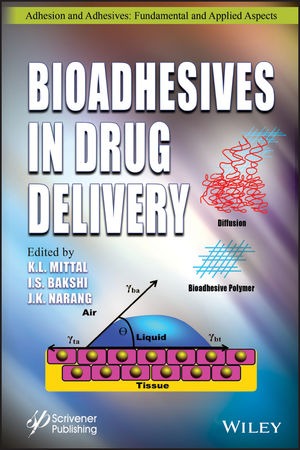
Bioadhesives in Drug Delivery
The topics covered include: Theories and mechanisms of bioadhesion; bioadhesive polymers for drug delivery applications; methods for characterization of bioadhesiveness of drug delivery systems; bioadhesive films and drug delivery applications; bioadhesive nanoparticles; and bioadhesive hydrogels and applications ocular biodhesive drug delivery systems; buccal bioadhesive drug delivery systems; gastrointestinal bioadhesive drug delivery systems ; nasal bioadhesive drug delivery systems; vaginal drug delivery systems; pulmonary bioadhesive drug delivery systems.
Bioactive Molecules and Medicinal Plants
Use of medicinal plants is as old as human civilization and continuous efforts are being made to improve medicinal plants or produce their products in high amounts through various technologies. About 200,000 natural products of plant origin are known and many more are being identifed from higher plants and microorganisms. Some plant-based drugs have been used for centuries and there is no alternative medicine for many drugs, such as cardiac glycosides. However, natural products research was sidelined to pave the way for com- natorial chemistry, which was expected to produce large numbers of synthetic compounds for high-throughput screening (HTS). This line of work has failed to deliver desirable results. Moreover, it is not possible for all pharmaceutical companies and institutions to adopt costly HTS technology. Therefore, medi- nal plants and their bioactive molecules are always in demand and are a central point of research. While planning this book, we endeavored to incorporate - ticles that cover the entire gamut of current medicinal plants research.
Bioactive Marine Natural Products
Bioactive Marine Natural Products is the first book available that covers all aspects of bioactive marine natural products. It fills the void in the literature for bioactive marine natural products. The book covers various aspects of marine natural products and it is hoped that all the major classes of bioactive compounds are included. Different classes of marine organisms and the separation and isolation techniques are discussed. The chemistry and biology of marine toxins, peptides, alkaloids, nucleosides and prostanoids are discussed in detail. Biological, toxicological and clinical evaluations are also dealt with to ensure that the book may be adopted at any stage by any practicing organic chemist or biologist, working in academia or in R&D divisions of pharmaceutical companies. Each chapter in the book includes an abstract to highlight the major points discussed in the text and concluding remarks are given. References to books, monographs, review articles and original papers are provided at the end of each chapter.
Bioactive Heterocycles IV
This volume contains nine more contributions from expert researchers of the?eld, providing readers with in depth and current research results regarding therespective topics. In the?rst chapter, Flemming et al. review the chemistry, biosynthesis, metabolism and biological activities of tetrahydrocannabinol and its deri- tives. Hansch and Verma contribute to the quantitative structure-activity re- tionship (QSAR) analysis of heterocyclic topoisomerase I and II inhibitors. These inhibitors, knowntoinhibit either enzyme, actasantitumoragentsand are currently used in chemotherapy and in clinicaltrials. In the third chapter, Khan reviews some aspects of molecular modeling studies on biologically active alkaloids.
Binocular astronomy
Anyone who has used a binocular telescope or even wide-field binoculars to look at the night sky will know just how breathtakingly beautiful the view can be when you observe with both eyes. Observing galaxies and nebulae with ‘regular’ prismatic binoculars is just a beginning. Binocular eyepieces and adapters can be added to almost any commercially-made astronomical telescope, and of course specialized astronomical binoculars can be assembled or purchased complete. These range from modest instruments to giants that are basically two large telescopes mounted together. Binocular Astronomy contains everything you’ll need to know about this exciting branch of astronomical observing.
Binary Rare Earth Oxides
The book begins with a brief introduction to binary rare earth oxides, their physical and chemical stabilities, polymorphism, crystal structures and phase transformation and the association with current applications. The book goes on to present the band structure of the oxides using several quantum chemical calculations, which belong to a newly developed area in the binary rare earth oxides. Central to this chapter are the characterizations of electrical, magnetic and optical properties, as well as details of single crystal growth and particle preparation methods that have progressed in recent years. Later chapters concentrate on thermo-chemical properties and trace determination techniques. The final chapter contains a variety of useful applications in various fields such as phosphors, glass abrasives, automotive catalysts, fuel cells, solid electrolytes, sunscreens, iron steels, and biological materials.
Big Data in Energy Economics
Combines energy economics and big data modeling analysis in energy conversion and management and comprehensively introduces the relevant theories, key technologies, and application examples of the smart energy economy. With the help of time series big data modeling results, energy economy managers develop reasonable and feasible pricing mechanisms of electricity price and improve the absorption capacity of the power grid. In addition, they also carry out scientific power equipment scheduling and cost–benefit analysis according to the results of data mining, so as to avoid the loss caused by accidental damage of equipment. Energy users adjust their power consumption behavior through the modeling results provided and achieve the effect of energy saving and emission reduction while reasonably reducing the electricity expenditure.

Beyond global food supply chains : Crisis, disruption, regeneration
Through a set of incisive essays, this incredibly timely book shows how much the COVID-19 pandemic has exposed both vulnerabilities and opportunities - for (racial) capitalism and its discontents alike to intervene in food supply chains. A most welcome publication! This book takes the upheaval of the global COVID-19 pandemic as a springboard from which to interrogate a larger set of structural, environmental and political fault lines running through the global food system. In a context in which disruptions to the production, distribution, and consumption of food are figured as exceptions to the smooth, just-in-time efficiencies of global supply chains, these essays reveal the global food system as one that is inherently disruptive of human lives and flourishing, and of relationships between people, places, and environments. The pandemic thus represents a particular, acute moment of disruption, offering a lens on a deeper, longer set of systemic processes, and shining new light on transformational possibilities.
Beyond Cartesian Dualism : Encountering affect in the teaching and learning of science.
There is surprisingly little known about affect in science education. Despite periodic forays into monitoring students’ attitudes-toward-science, the effect of affect is too often overlooked. Beyond Cartesian Dualism gathers together contemporary theorizing in this axiomatic area. In fourteen chapters, senior scholars of international standing use their knowledge of the literature and empirical data to model the relationship between cognition and affect in science education. Their revealing discussions are grounded in a broad range of educational contexts including school classrooms, universities, science centres, travelling exhibits and refugee camps, and explore an array of far reaching questions. What is known about science teachers’ and students’ emotions? How do emotions mediate and moderate instruction? How might science education promote psychological
