



Page 617
Page 617

Engineering Knowledge in the Age of the Semantic Web ; 15th International Conference, EKAW 2006, Podebrady, Czech Republic, October 6-10, 2006, Proceedings
The 15th International Conference on Knowledge Engineering and Knowledge Management (2006), held on October 6-10, 2006 in Pod? ebrady,Czech Republic, followed a long tradition of European Knowledge Acquisition Workshops (from 1987),whicheventuallyacquiredtheformatofconference(in2000)whilekeeping their open-minded and interactive spirit. During the nearly 20 year lifespan of the series, the discipline of knowledge engineering (KE) evolved greatly. While knowledge acquisition (KA) techniques dominated in the very ?rst years, formal approaches to knowledge-based inf- ence and variousnew streamssuch as knowledgediscoveryfrom data/textslater cameinto play. During thelate1990sandafterwards,EKAWbecamea founding community for ontology and Semantic Web Research, which was also re?ected in the sub-titles of the 2002 and 2004 editions: “Ontologies and the Semantic Web” and “Engineering Knowledge in the Age of the Semantic Web,” resp- tively.

Engineering Interactive Systems ; EIS 2007 Joint Working Conferences, EHCI 2007, DSV-IS 2007, HCSE 2007, Salamanca, Spain, March 22-24, 2007. Selected Papers
This book constitutes the post-conference proceedings of the WG2.7/13.4 10th Conference on Engineering Human Computer Interaction (EHCI 2007), the WG 13.2 First Conference on Human Centred Software Engineering (HCSE 2007), and the 14th Conference on Design Specification and Verification of Interactive Systems (DSV-IS 2007); jointly held as EIS 2007, the international event on Engineering Interactive Systems, in Salamanca, Spain, in March 2007 - under the auspices of IFIP.

Engineering Interactive Systems ; 2nd Conference on Human-Centered Software Engineering, HCSE 2008, and 7th International Workshop on Task Models and Diagrams, TAMODIA 2008, Pisa, Italy, September 25-26, 2008. Proceedings
This book constitutes the combined proceedings of the second working conference on Human-Centred Software Engineering (HCSE 2008) and the 6th International Workshop on TAsk MOdels and DIAgrams (TAMODIA 2008); jointly held as EIS 2008, the international event on Engineering Interactive Systems, in Pisa, Italy, in September 2008.

Engineering human computer interaction and interactive systems ; Joint Working Conferences EHCI-DSVIS 2004, Hamburg, Germany, July 11-13, 2004, Revised Selected Papers
As its name suggests, the EHCI-DSVIS conference has been a special event, merging two different, although overlapping, research communities: EHCI (Engineering for Human-Computer Interaction) is a conference organized by the IFIP 2.7/13.4 working group, started in 1974 and held every three years since 1989. The group’s activity is the scientific investigation of the relationships among the human factors in computing and software engineering. DSVIS (Design, Specification and Verification of Interactive Systems) is an annual conference started in 1994, and dedicated to the use of formal methods for the design of interactive systems. Of course these two research domains have a lot in common, and are informed by each other’s results.
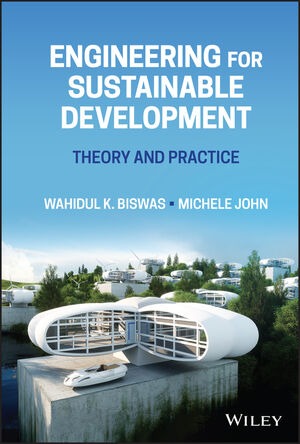
Engineering for Sustainable Development : Theory and Practice
Offers a wide range of civil, mechanical, electrical, and chemical engineering industry applications. Readers will also benefit from: A thorough introduction to contemporary sustainability challenges in the engineering discipline Comprehensive discussions of sustainability assessment tools, including triple bottom line assessment (TBL) and the environmental life cycle assessment (LCA) In-depth examinations of sustainable engineering strategies, including cleaner production and eco-efficiency methods and environmental management systems Detailed review of green engineering principles and industrial symbiosis in engineering application. A link between product stewardship and the design for the environment

Engineering Fluid Mechanics
The intended purpose of this book is to provide the fundamental and physical aspects of fluid mechanics and to develop engineering practice for fluid machineries. The subject of fluid engineering is most often approached at the senior undergraduate or postgraduate level of study.

Engineering Fluid Mechanics
Guides students from theory to application, emphasizing critical thinking, problem solving, estimation, and other vital engineering skills. Clear, accessible writing puts the focus on essential concepts, while abundant illustrations, charts, diagrams, and examples illustrate complex topics and highlight the physical reality of fluid dynamics applications.

Engineering Evolutionary Intelligent Systems
This edited volume 'Engineering Evolutionary Intelligent Systems' deals with the theoretical and methodological aspects, as well as various evolutionary algorithm applications to many real world problems originating from science, technology, business or commerce.

Engineering Environment-Mediated Multi-Agent Systems ; International Workshop, EEMMAS 2007, Dresden, Germany, October 5, 2007. Selected Revised and Invited Papers
This book constitutes the thoroughly refereed proceedings of the International Workshop on Engineering Environment-Mediated Multi-Agent Systems, held in Dresden,The volume includes 16 thoroughly revised papers, selected from the lectures given at the workshop, together with 2 papers resulting from invited talks by prominent researchers in the field. The papers are organized in sections on engineering self-organizing applications, stigmergic interaction, modeling and structuring mediating environments, and environment-based support for context and organizations.

Engineering electromagnetics
Electromagnetics' is a classic text that has been updated for electromagnetics education today. It stresses fundamental concepts and problem solving, and discusses the material in an understandable and readable way

Engineering Design : A Systematic Approach
Engineering Design (3rd edition) describes a systematic approach to engineering design. The authors argue that such an approach, applied flexibly and adapted to a particular task, is essential for successful product development. The design process is first broken down into phases and then into distinct steps, each with its own working methods. The third edition of this internationally-recognised text is enhanced with new perspectives and the latest thinking. These include extended treatment of product planning; new sections on organisation structures, simultaneous engineering, leadership and team behaviour; and updated chapters on quality methods and estimating costs. New examples have been added and existing ones extended, with additions on design to minimise wear, design for recycling, mechanical connections, mechatronics, and adaptronics.

Engineering Damage Mechanics : Ductile, Creep, Fatigue and Brittle Failures
Engineering Damage Mechanics is deliberately oriented toward applications of Continuum Damage Mechanics to failures of mechanical and civil engineering components in ductile, creep, fatigue and brittle conditions depending upon the thermomechanical loading and the materials: metals and alloys, polymers, elastomers, composites, concretes. Nevertheless, to help engineers, researchers, beginners or not, the first two chapters are devoted to the main concepts of damage mechanics and to the associated computational tools.

Engineering Asset Management ; Proceedings of the First World Congress on Engineering Asset Management (WCEAM) 2006
This text represents state-of-the-art trends and developments in the emerging field of engineering asset management as presented at the First World Congress on Engineering Asset Management (WCEAM) held in Australia in July 2006.

Engineering and Managing Software Requirements
This book provides an exploration of key issues in requirements engineering, the book is organized in three parts. Part 1 presents surveys of state-of-the art requirements engineering process research along with critical assessments of existing models, frameworks and techniques. Part 2 addresses key areas in requirements engineering, such as market-driven requirements engineering, goal modeling, requirements ambiguity, and others. Part 3 concludes the book with articles that present empirical evidence and experiences from practices in industrial projects. Its broader perspective gives this book its distinct appeal and makes it of interest to both researchers and practitioners, not only in software engineering but also in other disciplines such as business process engineering and management science.

Engineering and health in compressed air work : Proceedings of the 2nd International conference on engineering and health in compressed air Work held at St Catherine's College, Oxford, from 25th to 27th September, 2002
Presents the proceedings of theSecond International Conference on Engineering and Health in Compressed Air Work, Heald at St Catherine's College, Oxford from 25th to 27th September 2002. The 35 papers in this volume cover a range of subjects, including experience with oxygen decompressionnin the UK and research related tothe introduction of oxygen decompression, which will be of interest to everyone involved with the engineering, medical or regulatory aspects of compressed air working and all those with an interest in hyperbaric exposure.

Engineering a Better Future : Interplay between Engineering, Social Sciences, and Innovation
Examines how the social sciences can be integrated into the praxis of engineering and science, presenting unique perspectives on the interplay between engineering and social science. Motivated by the report by the Commission on Humanities and Social Sciences of the American Association of Arts and Sciences, which emphasizes the importance of social sciences and Humanities in technical fields, the essays and papers collected in this book were presented at the NSF-funded workshop ‘Engineering a Better Future: Interplay between Engineering, Social Sciences and Innovation’, which brought together a singular collection of people, topics and disciplines.

Engineered Bamboo Structures
Bamboo is in the spotlight as a potential building material in the current pursuit of a CO2-neutral society, due to its rapid maturation and excellent mechanical properties. Despite the growing interest in bamboo in academia and society, there is a lack of systematic understanding of the fabrication, design and construction processes using bamboo as a modern industrial material. Describes a new category of structural systems constructed with engineered bamboo. It gives a definition of engineered bamboo (glubam) in an analogy with steel structures and wood structures. Structural systems and components have been designed using glubam; then industrialized production processes of glubam are described.

Engaged Learning with Emerging Technologies
The major purpose of this book is to present and discuss current thinking, theories, conceptual frameworks, models and promising examples of engaged learning with emerging technologies. Contributions come from distinguished academics in the USA, Canada, the Netherlands, United Kingdom, Germany, Australia, New Zealand, China, Korea and Singapore. Following from a constructivist orientation, coupled with social cultural dimensions of learning, this volume documents how emerging learning technologies are appropriated into meaningful and engaged learning and instructional situations. The field of learning technologies is grounded on the theoretical constructs of the learning sciences and thus the chapters in this book balance between theory and practice and prepositions and solutions.

Engaged Fatherhood for Men, Families and Gender Equality : Healthcare, Social Policy, and Work Perspectives
This aim of this book is to launch an international, cross-disciplinary conversation on fatherhood engagement. By integrating perspective from three sectors—Health, Social Policy, and Work in Organizations—the book offers a novel perspective on the benefits of engaged fatherhood for men, for families, and for gender equality. The chapters are crafted to engaged broad audiences, including policy makers and organizational leaders, healthcare practitioners and fellow scholars, as well as families and their loved ones.

Energy-efficient and semi-automated truck platooning : Research and evaluation
This book presents research and evaluation results of the Austrian flagship project “Connecting Austria,” illustrating the wide range of research needs and questions that arise when semi-automated truck platooning is deployed in Austria. The work presented is introduced in the context of work in similar research areas around the world. This interdisciplinary research effort considers aspects of engineering, road-vehicle and infrastructure technologies, traffic management and optimization, traffic safety, and psychology, as well as potential economic effects.
