



Page 6
Page 6

Object-Based Image Analysis : Spatial Concepts for Knowledge-Driven Remote Sensing Applications
This book discusses means, technologies and approaches related to the processing and analysis of multi-sensor, multi-resolution data with a focus on the generation, modelling and classification of objects. The applications also address the integration of Geographic Information and the concurrent developments of GIScience and vanquish limitations of pixelwise image processing by exploiting image information context-driven and "intelligently".

Object detection with deep learning models : Principles and applications
Discusses recent advances in object detection and recognition using deep learning methods, which have achieved great success in the field of computer vision and image processing. It provides a systematic and methodical overview of the latest developments in deep learning theory and its applications to computer vision, illustrating them using key topics, including object detection, face analysis, 3D object recognition, and image retrieval / A structured overview of deep learning in object detection / A diversified collection of applications of object detection using deep neural networks / Emphasize agriculture and remote sensing domains / Exclusive discussion on moving object detection

Obesity Management in Family Practice
With guidelines backed by the best scientific data, the book is about application, not just theory. The reader is given the commonsense tools that patients need in order to have ownership of their disease. Ultimately, patients are empowered to control their obesity, resulting in positive interaction between providers and patients.

Obesity and Diabetes
The increasing prevalence of diabetes and obesity in western societies today makes these two diseases the leading epidemics of the 21st century. Closely linked with the development of serious complications, including cardiovascular disease and several malignancies, the morbidity and mortality associated with obesity and diabetes will continue to escalate as the population ages and becomes more sedentary. In Obesity and Diabetes, international experts from world-renowned medical schools comprehensively review for practicing clinicians and scientists alike the latest understanding of the epidemiology, causation, and consequences of diabetes and obesity.

Obesity and Cancer
This book highlights the concordance between signaling pathways that are involved in obesity and cancer cross-talks. It describes the role of cytokines, chemokines, growth factors, insulin, and adipokines in the development of obesity-associated cancers. The book reviews the role of inflammatory signaling pathways such as estrogen-mediated signaling, mTOR and AMP-activated protein kinase pathway and the involvement of adaptive and innate immunity, oxidative stress, gene polymorphism, dietary phytochemicals, and miRNAs in obesity and cancer. In addition, it covers the latest research on the drugs and natural therapeutic agents that target obesity-induced cancers and discusses various in vivo models for studying obesity and obesity-associated cancer. Lastly, it analyses the role of genetic polymorphisms in the obesity-related genes that influence cancer development.

Nuucleic acids in medicinal chemistry and chemical biology : Drug development and clinical applications
Delivers a comprehensive overview of the chemistry and biology of nucleic acids and their therapeutic applications. The book emphasizes the latest research in the field, including new technologies like CRISPR that create novel possibilities to edit mutated genes at the genomic DNA level and to treat inherited diseases and cancers. The authors explore the application of modified nucleosides and nucleotides in medicinal chemistry, a variety of current topics on nucleic acid chemistry and biology, nucleic acid drugs used to treat disease, and more. They also probe new domains of pharmaceutical research, offering the reader a wealth of new drug discovery opportunities emerging in this dynamic field

Nutritional psychiatry : A primer for clinicians
There is increasing evidence that mental health problems such as schizophrenia, depression and anxiety are linked with poor nutrition. At present, very few psychiatrists provide nutritional advice for their patients, despite such advice complimenting drug and psychological therapies. This edited volume is the first book to provide a comprehensive overview of the relationship between nutrition and mental health, for mental health professionals. Featuring contributions from leading authorities in the field, the book examines the link between diet and the microbiome-gut brain axis and how this correlates with a variety of psychiatric disorders. The book explores how enhancing the beneficial bacteria in the gut, through the use of psychobiotics, prebiotics or dietary change can improve mood and reduce anxiety.

Nutritional Management of the Surgical Patient
Provides the first comprehensive evidence-based overview of the nutritional and dietary therapies for surgical patients. It takes clinicians through every stage of surgery, from pre-operative and immediate post-operative care, through to long term recovery and survivorship. This book describes the impact of surgical procedures and their complications and the effect these have on nutritional status as well as the nutritional strategies utilised to manage patients in these settings.

Nutrition, diet and healthy aging
Over the last 100 years, the numerous advances in science, the improved sanitary conditions and a decline in poverty have led to an increase in life expectancy. As a result, in the coming years, the number of over-65s will triple, and the over-80s will be the fastest growing portion of the population. However, an increased lifespan is associated with an increase in chronic diseases, such as cardiovascular disease, diabetes, cancer, sarcopenia, and degenerative disorders. Therefore, ideally, increased lifespan should be associated to a better healthspan, which is the period one individual is living in good health

Nutrition, chemistry, and health effects of sugar, salt, and milkfat
Covers sugar, salt and milk fat from a chemical perspective, and presents an overview of the role of these ingredients in our food, focusing on their flavors, satiety-inducing properties, nutritional impact, and health effects. The book begins with a chapter devoted to the chemical composition of these taste enhancers and satiety-inducing components, followed by a chapter that sheds light on the persuasive tactics employed by the food industry and their impact on consumer behavior, ultimately discussing the complex relationship between marketing strategies and public health. In Chapter 3, the author presents case studies and explores the nutritional requirements of these ingredients, while considering their physiological effects ad potential implications for human health. In Chapter 4, the author evaluates current consumption patterns and their implications, analyzing trends, policies, and opportunities to shape healthier dietary choices.

Nutrition of cancer patient
According to world statistics, nutrition is estimated to contribute to about one-third of preventable cancers, nearly the same amount as the contribution of smoking. It is defined as the processes by which living organisms' intake of food and drink is used by the body for fuel, growth, reproduction, and the overall maintenance of health. Thus, sufficient nutritional consumption is essential for well-being. Consequently, it is an important part of life, cancer treatment, recovery, and prevention; eating the necessary nutrients prior to, during, and after a cancer treatment would aid the patient in the recovery process. A healthy diet means a stable nourishment, and includes obtaining sufficient amounts of essential nutrients (vitamins, minerals, protein, carbohydrates, fat, and water) the body needs. Inadequate intake of essential vitamins and minerals might explain the epidemiological findings that people who eat only small amounts of fruits and vegetables have an increased risk of developing cancer.

Nutrition in Kidney Disease
The field of kidney disease has evolved over the years to encompass a broad and sophisticated knowledge base. There has been a proliferation of scientific information and technical advances in the field. In Nutrition in Kidney Disease, the authors provide a comprehensive perspective of the emerging science in nutrition in kidney disease. This important book is written by a collaborative group of distinguished dietitians and physicians in the specialized field of kidney disease and clinical nutrition, who have devoted their careers to the care of patients with kidney disease. At the end of key chapters, case studies assess knowledge of the subject within the context of didactic curriculums.

Nutrition and Rheumatic Disease
It is difficult, if not impossible, for health care providers to remain at the forefront of knowledge for all aspects of nutrition and rheumatic diseases. In Nutrition and Rheumatic Disease, experts provide a comprehensive review of current knowledge regarding nutrition and dietary management for the complex set of rheumatic conditions. Within the disease-specific chapters, the authors present a historical perspective, a discussion of the major clinical features, current management and treatment, a review of the literature related to nutritional status and diet, and dietary recommendations, based on current scientific evidence. The field of rheumatic diseases includes a wide variety of pathologic processes. Adequate reviews of the scientific literature on each of the rheumatic diseases in Nutrition and Rheumatic Disease alleviate the inherent confusion surrounding the risks and benefits of various dietary therapies.

Nutrition and Oral Health
Explores in depth the relationships between nutrition and oral health across all age groups. Discusses the latest knowledge on the consequences of poor diet for tooth loss and progression of oral diseases . Explains the importance of a disease-free and functional dentition for nutritional well-being
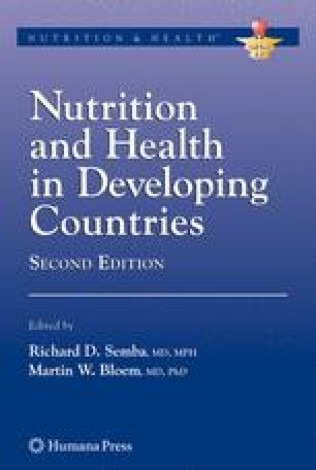
Nutrition and Health in Developing Countries
Nutrition and Health in Developing Countries, Second Edition was written with the underlying conviction that global health and nutrition problems can only be solved through a firm understanding of the different levels of causality and the interactions between the various determinants. This volume provides policy makers, nutritionists, students, scientists, and professionals with the most recent and up-to-date knowledge regarding major health and nutritional problems in developing countries.

Nutrition and dietary interventions in cancer
Presents the most up-to-date information on the effects of nutrition and food on cancer prevention and management. The book will provide clinicians and other healthcare practitioners with an educational source on how to educate cancer patients and their families on nutrition and dietary during cancer treatment. Recent nutritional epidemiology studies have occasionally produced controversial or unexpected results and highlight the need for additional research on diet and cancer risk. Chapters within the book focus among others on the role of natural antioxidants in cancer, the importance of micronutrients in cancer prevention and nutritional genomics and their role in cancer prevention.

Nutrition and diet in health: Principles and applications
Food provides us with essential nutrients involved in many physiological activities and biological processes in the body including growth and development, metabolism, immune function, and overall well-being. Nutrition and Diet in Health: Principles and Applications reviews and discusses the issues related to the roles of nutrition and diets in human health and diseases. The book contains two sections - one section features principles, the other, covers applications. Part One provides information on sustainable use of nutrition and diets in health and diseases; advanced biotechnological approaches to improve nutritional content of food; trace elements in nutrition; drug and nutrient interactions; functional foods and nutraceuticals in health maintenance; and Bio markers of functional foods and nutraceuticals in health maintenance. Part Two discusses the significance of nutrition in selected human diseases, including cardiovascular diseases, cancer, infection, neurodegenerative diseases, and metabolic co-morbidities. It also discusses optimal nutrition for wellness, fitness, pregnancy, mental health, aging, and longevity.

Nutrigenomics and nutraceuticals
Provides an authoritative and comprehensive overview of the field of nutraceuticals and genomics—also called nutrigenomics, a rapidly growing field. It discusses both nutrigenomic and nutrigenetic techniques to investigate the nutritional basis of several health disorders because scientists have found that diet can affect gene expression. The book covers the nutrigenomic tools for the prevention of disease conditions such as cancer, viral infection, microbial infection, COVID-19, HIV/AIDS, tuberculosis, hypertension, neurodegenerative disease, obesity, baldness, and anemia. Some nutrigenomic tools that can also be used for brain health, weight loss, human nutrition, skin care, and maintaining health during pregnancy are also explored.

Nutrient Cycling in Terrestrial Ecosystems
The first part of the book presents the fundamentals of nutrient cycling. Topics included are cycling of carbon, nitrogen, phosphorus, sulphur and micronutrients. The second part discusses nutrient cycling at an ecosystem scale, covering cropping systems, pastures, natural grasslands, arid lands, tundras and forests. The final chapter reviews current models of nutrient cycling.

Nutrient Acquisition by Plants : An Ecological Perspective
Adaptation and evolution of terrestrial plants depend, to a large extent, on their ability to acquire nutrients. This is a modern and integrative treatment of the mechanisms controlling plant nutrient uptake and how plants respond to changes in the environment. The following key topics are covered: soil nutrient bioavailability; root responses to variations in nutrient supply; nitrogen fixation; regulation of nutrient uptake by internal plant demand; root characteristics; kinetics of nutrient uptake; root architecture; life span; mycorrhizae; responses to climate change. This integrated view helps us to understand the mechanisms that govern present-day plant communities and is indispensable in models designed to predict the response of plants to a changing climate.
