



Page 6
Page 6
Cancer Gene Therapy
the authors comprehensively review the anticancer genes and gene delivery methods currently available for cancer gene therapy, including the transfer of genetic material into the cancer cells, stimulation of the immune system to recognize and eliminate cancer cells, and the targeting of the nonmalignant stromal cells that support their growth. They also thoroughly examine the advantages and limitations of the different therapies and detail strategies to overcome obstacles to their clinical implementation
Cancer du sein avancé : 29es Journées de la Société Française de Sénologie et Pathologie Mammaire (SFSPM) Avignon, 14–16 novembre 2007 = Advanced breast cancer : 29th Days of the French Society of Senology and Breast Pathology (SFSPM) Avignon, November 14–16, 2007
These days are an opportunity to remind and persuade those less convinced that the treatment of this very particular phase of the disease is not limited to a score played by a few speakers or even by medical oncologists alone; but on the contrary, we must bring into play a truly philharmonic polyphonic ensemble, united around the patient and comprising all the players in multidisciplinary care: general practitioner, surgeon, radiotherapist, imaging specialist, gynecologist, general practitioner, psychologist, algologist, supportive care workers ...
Cancer Chemotherapy in Clinical Practice
This book summarises the whole range of systemic cancer therapies, explaining their mode of action and potential side-effects, as well as their clinical applications.
Brain Repair
Brain Repair, addresses all relevant issues underlying the mechanisms of brain damage, brain plasticity and post-traumatic reorganisation after CNS lesions. This book is divided the three major sections that follow; cellular and molecular basis of brain repair, plasticity and reorganisation of neural networks, and experimental therapy strategies. Brain Repair is written by high profile, international experts who describe in detail the newest results from basic research and highlight new model systems, techniques and therapy approaches. Based on a careful analysis of the cellular and molecular reaction patterns of the CNS to lesions, the contributions cover possibilities for endogenous reorganisation and repair as well as exciting new therapies emerging from basic research, some of which have already been introduced into the clinics.
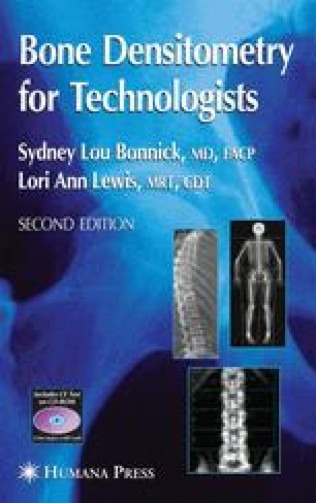
Bone densitometry for technologists
Radiologic technologists, nurse practitioners, physician assistants, and dedicated densitometry technologists can find new guidelines for bone density testing, new therapies for osteoporosis, and new treatment guidelines for osteoporosis, as well as new chapters on pediatric densitometry body composition assessments, and the use of skeletal morphometry in diagnosis and fracture risk prediction. The twelve appendices have also been updated to reflect the most current information available, including contacts for densitometry equipment manufacturers and organizations, guidelines for bone density testing and CPT codes, definitions of terms, and new conversion equations.

Blood Pressure Monitoring in Cardiovascular Medicine and Therapeutics
In this newly updated second edition of Blood Pressure Monitoring in Cardiovascular Medicine and Therapeutics, William B. White, MD, and a panel of highly distinguished clinicians give a critical review of every aspect of the evaluation of high blood pressure. This includes home and ambulatory blood pressure monitoring, the relationship between whole-day blood pressure and the cardiovascular disease process, and the effects of antihypertensive therapies on these blood pressure parameters. World-class contributors describe the significant advances in our understanding of the circadian pathophysiology of cardiovascular disorders and demonstrate that ambulatory blood pressure values are independent predictors of cardiovascular morbidity and mortality.

Biopharmaceutical drug design and development
Biopharmaceutical Drug Design and Development, Second Edition, updates the widely successful first edition, published in 1999. This new, expanded edition investigates the dozens of new biopharmaceutical drugs that have become available since the publication of the first edition. Among the drugs discussed are ones in the categories of monoclonal antibodies for in-vivo use, cytokines, growth factors, enzymes, immunomodulators, thrombolytics, and immonotherapies including vaccines. Additionally, the volume examines new and emerging technologies, such as bioinformatics, DNA microarrays, transgenics, therapeutic gene delivery, stem cells, nucleic acid-based therapeutics, and macromolecular drug delivery. Authors also study pharmacogenetics in the clinic and changes in biologic drug approval at the FDA. Biopharmaceutical Drug Design and Development, Second Edition, is a worthy sequel in the discussion on the dynamic, exciting field of biotechnology.

Best diagnostic tools and supportive medication for cancer patients
Cancer is still a lethal disease despite the development of new effective therapies; therefore the purpose of our study was to improve the patient's outcome by looking for the best diagnostic tools, secondly to improve radiotherapy resistance since about 50% of all cancer patients are treated with it. The fir st par t of our study will be per formed in Alkhatib center and the selection of that hospital was upon its highly sensitive diagnostic tools, in which PET/ CT scan was playing a major role to improve survival as shown in few repor ts in our study, and it’s the only safe diagnostic tool for a per son who has a metal fragments after injury in the war which increased the number of such patients in our country dur ing the last decade. This diagnostic tool is based on FDGin which we can define the tumor by using sugar more than normal tissue.
Auriculothérapie : Acupuncture auriculaire = Auriculotherapy : Auricular acupuncture
The auricle is a privileged place to observe and treat patients reflexively. It is endowed with both a particularly rich innervation, and brief connections with the higher nervous centers. It constitutes both a reading pavilion, to observe information coming from the organs and nerve endings of the skin, and a control pavilion to help correct abnormal information. It is a lookout post, placed bypassing the brainstem, on the path connecting the organs and the brain. It thus allows a fair control and an effective intervention. In this medical treatise on Auriculotherapy, historical and scientific data, medical explanations and bibliographical references are presented.

Atlas of fundus autofluorescence imaging
During recent years, FAF (Fundus autofluorescence) imaging has been shown to be useful in various retinal diseases with regard to diagnostics, documentation of changes, identification of disease progression, and monitoring of novel therapies. Hereby, FAF imaging gives additional information above and beyond conventional imaging tools.This unique atlas provides a comprehensive and up-to-date overview of FAF imaging in retinal diseases. It also compares FAF findings with other imaging techniques such as fundus photograph, fluorescein- and ICG angiography as well as optical coherence tomography. General ophthalmologists as well as retina specialists will find this a very useful guide which illustrates typical FAF characteristics of various retinal diseases.

Atlas of clinical hematology
The volume covers all the microscopic methods in hematology that form the basis of diagnosis as well as the results of modern immunologic, cytogenetic and molecular-genetic investigation. Special emphasis is placed on the cytogenetic and molecular-genetic characterization of biological entities that might form the basis for innovative therapies.

Arum palaestenium in cancer therapies
Cancer is a very complicated sequence of disease conditions progressing gradually with a generalized loss of growth control.1–3 There were only a few options of cancer treatment for patients for many decades which include surgery, radiation therapy, and chemotherapy as single treatments or in combination.4,5 But recently, many pathways involved in cancer therapy progression and how they can be targeted has improved dramatically, with combinatorial strategies, involving multiple targeted therapies or “traditional” chemotherapeutics, such as the taxanes and platinum compounds, being found to have a synergistic effect.6 New approaches, such as drugs, biological molecules, and immune-mediated therapies, are being used for treatment.
Apoptotic pathways as targets for novel therapies in cancer and other diseases
The book attempts to review, summarize, and speculate on the apoptotic pathways, how are they regulated and how targeted therapies are being used to treat a wide variety of diseases. Special emphasis is placed on cancer since new treatments either being developed or currently in the clinical setting are showing great promise to increase survival rates for cancer patients.

Antiangiogenic Agents in Cancer Therapy
Antiangiogenesis remains a dynamic and evolving field in oncology. New therapeutic targets continue to emerge followed by the rapid development of new therapeutic agents to be investigated in clinical trials. Optimizing the therapeutic potential of antiangiogenic agents in combination with the other therapies in the armamentarium to fight cancer will be an on-going challenge. Antiangiogenic Agents in Cancer Therapy, Second Edition provides a current, up-dated perspective on the state of the art of angiogenesis and therapy with a compendium of scientific findings and approaches to the study of angiogenesis in cancer. Leaders in the field present chapters on such topics as the environmental influences and the genetic and physiologic abnormalities that mediate angiogenesis and its role in the progression of malignant disease, working models of tumor angiogenesis, and the role of angiogenesis inhibition in the therapy of malignant disease in humans. Comprehensive and cutting-edge, Antiangiogenic Agents in Cancer Therapy, Second Edition is an ideal, valuable guide to the most recent advances in the field, and a collection that will be useful for many years to come.

Angiogenesis in Inflammation : Mechanisms and Clinical Correlates
This volume relates the lessons learned from tumour biology applied to inflammation. This issue of Angiogenesis in Inflammation: Mechanisms and Clinical Correlates develops current knowledge on the mechanisms at the molecular and cellular levels as they relate to inflammation, including acute and chronic inflammation, neurogenic initiation, and the role of the multiple cellular components that comprise inflammation: granulocytes, macrophages, fibroblasts, dendritic cells and lymphocytes. This is related to inflammatory disease: not only the familiar angiogenesis dependent diseases of rheumatoid arthritis and psoriasis, but also loci such as the lung, gastric ulcers, the eye with uveitis, wound healing and periodontal disease and their therapy, how this knowledge may be used in the discovery of novel therapeutics. The volume brings together experts in each of these fields to link the molecular and cellular processes in angiogenesis to those of inflammation and disease, culminating in a discourse on areas for future therapies.

Alzheimer's disease : Peptide vaccine and immunotherapy
Peptide vaccines and immunotherapies against aggregating proteins involved in the pathogenesis and progression of Alzheimer's disease (AD) the ẞ-amyloid peptide (Aẞ) and tau are promising therapeutic avenues against AD. Two decades of effort has led to the controversial United States Food and Drug Administration (FDA) approval of the monoclonal antibody Aducamumab (Aduhelm), which has subsequentially sparked the revival and expedited review of promising monoclonal antibody immunotherapies that target Aẞ.

Alzheimer's Disease
Alzheimer is a disease which has not a cure yet, and about 10% of the population worldwide will suffer from it. However younger people may also develop this disease mainly at 45 years old mainly women who has double the rate of incidence since 1 if five women will certainly develop it. Therefore the goal of our research is to study first of all the history of such popular disease and its risk factors and current therapies or iagnostic tools and more important we will introduce a test which was discovered few months ago to predict the risk of developing Alzheimer few decades before it occurs and we will apply it in our laboratories in Syria as well. Beside this preventive test we will add also a very important diet to follow up by people who has a family history.

Alternative medicine and it's uses in the treatment of kidney disease
The aim of this article was to review some of the new and commonly and alternative medicine in the treatment of kidney used medicinal plants , pharmacological activity, and research study of disease, kidney stones medicinal plants. Renal stones are a common problem worldwide with rden substantial morbidities and economic costs. The high economic bu associated with kidney stones is linked mainly with healthcare costs. In vitro and in vivo studies on alternative treatment of kidney stones have been searched by using words such as phytotherapy of kidney stones,. lithotriptic activity of plantss, and medicinal plants used in kidney stone Medicinal plants may be useful in treatment of kidney stones.

Advances in psoriasis : A multisystemic guide
Provides an up-to-date and highly informative textbook on psoriasis. The understanding of the mechanisms behind the disease and the available treatment options have continued to develop rapidly in recent times, with this vital resource covering the latest in these management options, including targeted T-cell therapy, the use of immunomodulators, systemic therapies, and ultraviolet and laser therapy. In addition, it provides a detailed overview of the pathophysiology, comorbidities, epidemiology and triggers of the disease.
Advances in multiple Sclerosis and Experimental Demyelinating Diseases
Challenging Charcot’s hypothesis that inflammatory response is the primary contributor to demyelination, Dr. Rodriguez and colleagues take a fresh, bold look at the causes and possible treatments of MS.Assuming oligodendrocyte injury as a prerequisite to MS, the authors explore viruses, toxins and genetic defects as possible culprits. They present novel methods to interrupt and reverse demyelination. This book examines the correlation between axonal loss and clinical deficits, including the implied role of the CD8+ T cell and perforin. It assesses proteases, specifically, kallikrein 6, which are strongly associated with active demyelination. By directing natural autoantibodies against oligodendrocytes that demonstrate remyelination in animal models, the authors envision clinical trials for remyelination enhancement.
