


Refine Results
Sort By
From
To


The book explains the security architecture model and the practice of building data sharing from the blockchain infrastructure, allowing readers to understand the importance of data sharing security based on the blockchain framework, as well as the threats to security and privacy. Further, by presenting specific data sharing case studies, it offers insights into solving data security sharing problems in more practical fields. The book is intended for readers with a basic understanding of the blockchain infrastructure, consensus mechanisms, smart contracts, secure multiparty computing, homomorphic encryption and image retrieval technologies.
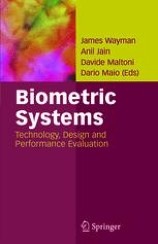
The use of computers to recognize humans from physical and behavioral traits dates back to the digital computer evolution of the 1960s. But even after decades of research and hundreds of major deployments, the field of biometrics remains fresh and exciting as new technologies are developed andoldtechnologiesareimprovedandfieldedinnewapplications.Wor- wide over the past few years,there has been a marked increase in both g- ernment and private sector interest in large-scale biometric deployments for accelerating human–machine processes, efficiently delivering human services, fighting identity fraud and even combating terrorism. The p- pose of this book is to explore the current state of the art in biometrics- tems and it is the system aspect that we have wished to emphasize. By their nature, biometric technologies sit at the exact boundary of the human–machineinterface.Butlikealltechnologies,bythemselvestheycan provide no value until deployed in a system with support hardware, n- work connections, computers, policies and procedures, all tuned together to work withpeople to improve some real business process within a social structure.
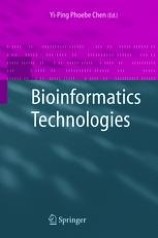
Solving modern biological problems requires advanced computational methods. Bioinformatics evolved from the active interaction of two fast-developing disciplines, biology and information technology. The central issue of this emerging field is the transformation of often distributed and unstructured biological data into meaningful information. This book describes the application of well-established concepts and techniques from areas like data mining, machine learning, database technologies, and visualization techniques to problems like protein data analysis, genome analysis and sequence databases. Chen has collected contributions from leading researchers in each area. The chapters can be read independently, as each offers a complete overview of its specific area, or, combined, this monograph is a comprehensive treatment that will appeal to students, researchers, and R&D professionals in industry who need a state-of-the-art introduction into this challenging and exciting young field.
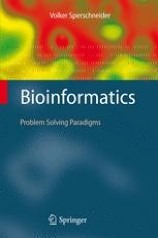
This book highlights basic paradigms of problem analysis and algorithm design in the context of core bioinformatics problems. Mathematically demanding themes are put across to the reader by properly chosen representations with the aid of lots of illustrations.

This book is for anyone who wants to write good Visual Basic 2008 code, even if you have never programmed before. Writing good code can be a challenge, there are so many options, especially in a language like Visual Basic. If you want to really get the best from a programming language you need to know which features work best in which situations and understand their strengths and weaknesses. It is this understanding that makes the difference between coding and coding well.
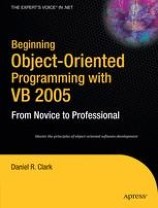
Beginning Object-Oriented Programming with VB 2005 is a comprehensive resource of correct coding procedures. Author Daniel Clark takes you through all the stages of a programming project, including analysis, modeling, and development, all using object-oriented programming techniques and Visual Basic .NET. Clark explores the structure of classes and their hierarchies, as well as inheritance and interfaces. He also introduces the .NET Framework and the Visual Studio integrated development environment, or IDE. A real-world case study walks you through the design of a solution. You can then transform the design into a functional VB .NET application. The application includes a graphical user interface (GUI), a business logic class library, and integration with a back-end database. Throughout the book, you'll explore the fundamentals of software design, object-oriented programming, Visual Basic .NET 2.0, and the Unified Modeling Language (UML).
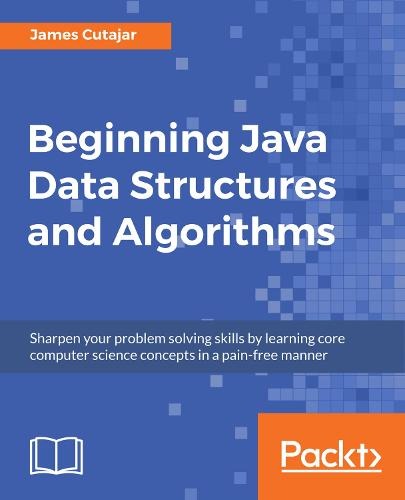
Teaches you tools that you can use to build efficient applications. It starts with an introduction to algorithms and big O notation, later explains bubble, merge, quicksort, and other popular programming patterns. You’ll also learn about data structures such as binary trees, hash tables, and graphs. The book progresses to advanced concepts, such as algorithm design paradigms and graph theory. By the end of the book, you will know how to correctly implement common algorithms and data structures within your applications.
If you work at all with Internet-facing solutions, you know that the lack of an identity metasystem is a critical vulnerability in the design. Various consortiums have worked to define a system of identity—a platform-agnostic way of communicating and validating claims of identity. If you work with identity solutions or structures, you will find Beginning Information Cards and CardSpace: From Novice to Professional essential to understanding and successfully implementing CardSpace solutions.
Beginning HTML with CSS and XHTML: Modern Guide and Reference incorporates practical examples that will show you how to structure your data correctly using (X)HTML, along with styling and layout basics using Cascading Style Sheets (CSS). Youll also learn how to add dynamic behavior to your data using the JavaScript™ language.
IBM’s DB2 Express Edition is one of the most capable of the free database platforms available in today’s marketplace. In Beginning DB2, author Grant Allen gets you started using DB2 Express Edition for web sites, desktop applications, and more. The author covers the basics of DB2 for developers and database administrators, shows you how to manage data in both XML and relational form, and includes numerous code examples so that you are never in doubt as to how things work.
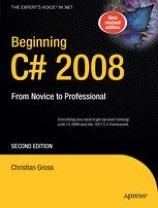
This book is for anyone who wants to write good C# code—even if you have never programmed before. Writing good code can be a challenge—there are so many options, especially in a .NET language like C#. If you want to really get the best from a programming language, you need to know which features work best in which situations, and understand their strengths and weaknesses. It is this understanding that makes the difference between coding and coding well. Beginning C# 2008: From Novice to Professional, Second Edition has been written to teach you how to use the C# programming language to solve problems. From the earliest chapters and the first introductory concepts, you'll be looking at real–world programming challenges and learning how C# can be used to overcome them.
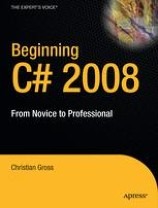
This book is for anyone who wants to write good C# 2008 code—even if you have never programmed before. Beginning C# 2008 has been written to teach you how to use the C# programming language to solve problems. Christian Gross is dedicated to helping his readers understand every detail of Beginning C# 2008.

Probabilistic graphical models and decision graphs are powerful modeling tools for reasoning and decision making under uncertainty. As modeling languages they allow a natural specification of problem domains with inherent uncertainty, and from a computational perspective they support efficient algorithms for automatic construction and query answering. This includes belief updating, finding the most probable explanation for the observed evidence, detecting conflicts in the evidence entered into the network, determining optimal strategies, analyzing for relevance, and performing sensitivity analysis. The book introduces probabilistic graphical models and decision graphs, including Bayesian networks and influence diagrams.It contians two parts. The first part focuses on probabilistic graphical models. Compared with the previous book, the new edition also includes a thorough description of recent extensions to the Bayesian network modeling language, advances in exact and approximate belief updating algorithms, and methods for learning both the structure and the parameters of a Bayesian network. The second part deals with decision graphs, and in addition to the frameworks described in the previous edition, it also introduces Markov decision processes and partially ordered decision problems.
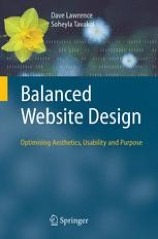
Balanced Website Design (BWD) is a new methodology that fuses the strengths of traditional structured, stepped, and iterative approaches with a sharp focus on defining and achieving the desired characteristics of purpose, usability and aesthetics – absolutely essential requirements for any website. The book includes discussions of new perspectives on usability and aesthetics in the special context of website design. BWD is suitable for all types of websites, for individual and/or team projects, and should prove to be of significant value for even the most experienced of website designers. BWD provides guidance, structure and detailed documentation/process support for the activity of designing and implementing your next website – helping you to maximise its effectiveness and relevance.
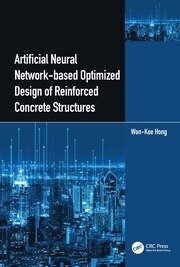
Introduces AI-based Lagrange optimization techniques that can enable more rational engineering decisions for concrete structures while conforming to codes of practice. It shows how objective functions including cost, CO2 emissions, and structural weight of concrete structures are optimized either separately or simultaneously while satisfying constraining design conditions using an ANN-based Lagrange algorithm. Any design target can be adopted as an objective function. Many optimized design examples are verified by both conventional structural calculations and big datasets. Uniquely applies the new powerful tools of AI to concrete structural design and optimization Multi-objective functions of concrete structures optimized either separately or simultaneously Design requirements imposed by codes are automatically satisfied by constraining conditions Heavily illustrated in color with practical design examples
Discusses the evolution of future generation technologies through Internet of Things (IoT) in the scope of Artificial Intelligence (AI). The main focus of this volume is to bring all the related technologies in a single platform, so that undergraduate and postgraduate students, researchers, academicians, and industry people can easily understand the AI algorithms, machine learning algorithms, and learning analytics in IoT-enabled technologies. This book uses data and network engineering and intelligent decision support system-by-design principles to design a reliable AI-enabled IoT ecosystem and to implement cyber-physical pervasive infrastructure solutions. This book brings together some of the top IoT-enabled AI experts throughout the world who contribute their knowledge regarding different IoT-based technology aspects. Addresses the complete functional framework workflow in AI-enabled IoT ecosystem; Presents intelligent object identification and object discovery through the IoT ecosystem and its implications to the real world ;Explores security and privacy issues and trustworthy machine learning related to data-intensive technologies in AI-based IoT ecosystems.
Provides a structured and analytical guide to the use of artificial intelligence in medicine. Covering all areas within medicine, the chapters give a systemic review of the history, scientific foundations, present advances, potential trends, and future challenges of artificial intelligence within a healthcare setting.
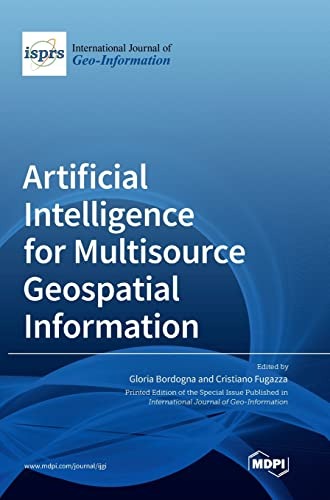
Collects 10 original research contributions published in the Special Issue entitled “Artificial Intelligence for Multisource Geospatial Information” of the ISPRS International Journal of Geo-Information. The focus is on different methods of Geospatial Artificial Intelligence (GeoAI) based on deep learning using different network architectures, clustering, soft computing, and semantic approaches. They are proposed to deal with a variety of Geospatial Big Data (GBD), such as georeferenced texts and photos in social networks, remote sensing images, cartographic maps, multidimensional geo databases, metadata in spatial data infrastructures, and for different tasks, such as for multisource georeferenced text integration and geodata flexible querying, for social sensing by applying sentiment analysis, clustering and geo analysis, for segmentation of roads, clouds and snow, and for detection of small targets and people on the streets.
As software systems become increasingly ubiquitous, the issues of dependability become more and more crucial. Given that solutions to these issues must be considered from the very beginning of the design process, it is reasonable that dependability is addressed at the architectural level. This book was born of an effort to bring together the research communities of software architectures and dependability.
Membrane computing is a branch of natural computing which investigates computing models abstracted from the structure and functioning of living cells and from their interactions in tissues or higher-order biological structures. The models considered, called membrane systems (P systems), are parallel, distributed computing models, processing multisets of symbols in cell-like compartmental architectures. In many applications membrane systems have considerable advantages – among these are their inherently discrete nature, parallelism, transparency, scalability and nondeterminism.

Daraa Highway - Ghabagheb - Syria
+963-15 2050 - 15 860 380 /1/2/3 - 11 662 3900