


Refine Results
Sort By
From
To

Presents logical foundations for rule-based systems, as seen by the Author. An attempt has been made to provide an in-depth discussion of logical and other aspects of such systems, including languages for knowledge representation, inference mechanisms, inference control, design and verification.
Local Newforms for GSp(4) describes a theory of new- and oldforms for representations of GSp(4) over a non-archimedean local field. This theory considers vectors fixed by the paramodular groups, and singles out certain vectors that encode canonical information, such as L-factors and epsilon-factors, through their Hecke and Atkin-Lehner eigenvalues. While there are analogies to the GL(2) case, this theory is novel and unanticipated by the existing framework of conjectures. An appendix includes extensive tables about the results and the representation theory of GSp(4).

A fuzzy system is, in a very broad sense, any fuzzy logic-based system where fuzzy logic can be used either asthebasisfor the representation of different forms of system knowledge or the model for the interactions and relationships among the system variables. Fuzzy systems have proven to be an important tool for modeling complex systems for which, due to complexity or imprecision, classical tools are unsuccessful. There have been diverse fields of applications of fuzzy technology from medicine to management, from engineering to behavioral science, from vehicle control to computational linguistics, and so on. Fuzzy modeling is a conjunction to understand the s- tem’s behavior and build useful mathematical models. Different types of fuzzy models have been proposed in the literature, among which the Takagi-Sugeno (T-S) fuzzy model is a rule-based one suitable for the accurate approximation and identi?cation of a wide class of nonlinear systems.
Linear systems theory plays a broad and fundamental role in electrical, mechanical, chemical and aerospace engineering, communications, and signal processing. A thorough introduction to systems theory with emphasis on control is presented in this self-contained textbook. The book examines the fundamental properties that govern the behavior of systems by developing their mathematical descriptions. Linear time-invariant, time-varying, continuous-time, and discrete-time systems are covered. Rigorous development of classic and contemporary topics in linear systems, as well as extensive coverage of stability and polynomial matrix/fractional representation, provide the necessary foundation for further study of systems and control.
Begins with a reflection on the history of test design--the core activity of all educational and psychological testing. It then presents a standard language for modeling test design problems as instances of multi-objective constrained optimization. The main portion of the book discusses test design models for a large variety of problems from the daily practice of testing, and illustrates their use with the help of numerous empirical examples. The presentation includes models for the assembly of tests to an absolute or relative target for their information functions, classical test assembly, test equating problems, item matching, test splitting, simultaneous assembly of multiple tests, tests with item sets, multidimensional tests, and adaptive test assembly. Two separate chapters are devoted to the questions of how to design item banks for optimal support of programs with fixed and adaptive tests. Linear Models for Optimal Test Design, which does not require any specific mathematical background, has been written to be a helpful resource on the desk of any test specialist.
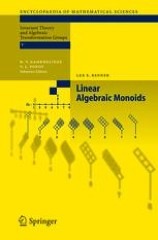
The theory of linear algebraic monoids culminates in a coherent blend of algebraic groups, convex geometry, and semigroup theory. The book discusses all the key topics in detail, including classification, orbit structure, representations, universal constructions, and abstract analogues. An explicit cell decomposition is constructed for the wonderful compactification, as is a universal deformation for any semisimple group. A final chapter summarizes important connections with other areas of algebra and geometry. The book will serve as a solid basis for further research. Open problems are discussed as they arise and many useful exercises are included.
Linear Algebra Thoroughly Explained provides a comprehensive introduction to the subject suitable for adoption as a self-contained text for courses at undergraduate and postgraduate level. The clear and comprehensive presentation of the basic theory is illustrated throughout with an abundance of worked examples. The book is written for teachers and students of linear algebra at all levels and across mathematics and the applied sciences, particularly physics and engineering.
What is life? Has molecular biology given us a satisfactory answer to this question? And if not, why, and how to carry on from there? This book examines life not from the reductionist point of view, but rather asks the question: what are the universal properties of living systems and how can one construct from there a phenomenological theory of life that leads naturally to complex processes such as reproductive cellular systems, evolution and differentiation? The presentation has been deliberately kept fairly non-technical so as to address a broad spectrum of students and researchers from the natural sciences and informatics.
It focuses on two fundamental questions in the theory of semisimple Lie groups: the geometry of Riemannian symmetric spaces and their compactifications; and branching laws for unitary representations, i.e., restricting unitary representations to (typically, but not exclusively, symmetric) subgroups and decomposing the ensuing representations into irreducibles.Ji's introductory chapter motivates the subject of symmetric spaces and their compactifications with carefully selected examples. A discussion of Satake and Furstenberg boundaries and a survey of the geometry of Riemannian symmetric spaces in general provide a good background for the second chapter, namely, the Borel–Ji authoritative treatment of various types of compactifications useful for studying symmetric and locally symmetric spaces. Borel–Ji further examine constructions of Oshima, De Concini, Procesi, and Melrose, which demonstrate the wide applicability of compactification techniques. Kobayashi examines the important subject of branching laws. Important concepts from modern representation theory, such as Harish–Chandra modules, associated varieties, microlocal analysis, derived functor modules, and geometric quantization are introduced. Concrete examples and relevant exercises engage the reader.
Van den Ban’s introductory chapter explains the basic setup of a reductive symmetric space along with a careful study of the structure theory, particularly for the ring of invariant differential operators for the relevant class of parabolic subgroups. Advanced topics for the formulation and understanding of the proof are covered, including Eisenstein integrals, regularity theorems, Maass–Selberg relations, and residue calculus for root systems. Schlichtkrull provides a cogent account of the basic ingredients in the harmonic analysis on a symmetric space through the explanation and definition of the Paley–Wiener theorem. Approaching the Plancherel theorem through an alternative viewpoint, the Schwartz space, Delorme bases his discussion and proof on asymptotic expansions of eigenfunctions and the theory of intertwining integrals.
Lie groups has been an increasing area of focus and rich research since the middle of the 20th century. Procesi's masterful approach to Lie groups through invariants and representations gives the reader a comprehensive treatment of the classical groups along with an extensive introduction to a wide range of topics associated with Lie groups: symmetric functions, theory of algebraic forms, Lie algebras, tensor algebra and symmetry, semisimple Lie algebras, algebraic groups, group representations, invariants, Hilbert theory, and binary forms with fields ranging from pure algebra to functional analysis.
This book, designed for advanced graduate students and post-graduate researchers, provides an introduction to Lie algebras and some of their applications to the spectroscopy of molecules, atoms, nuclei and hadrons. In the first part, a concise exposition is given of the basic concepts of Lie algebras, their representations and their invariants. The second part contains a description of how Lie algebras are used in practice in the treatment of bosonic and fermionic systems. Physical applications considered include rotations and vibrations of molecules (vibron model), collective modes in nuclei (interacting boson model), the atomic shell model, the nuclear shell model, and the quark model of hadrons. One of the key concepts in the application of Lie algebraic methods in physics, that of spectrum generating algebras and their associated dynamic symmetries, is also discussed. The book contains many examples that help to elucidate the abstract algebraic definitions. It provides a summary of many formulas of practical interest, such as the eigenvalues of Casimir operators and the dimensions of the representations of all classical Lie algebras.
This book is intended to be a thorough introduction to the subject of ordered sets and lattices, with an emphasis on the latter. It can be used for a course at the graduate or advanced undergraduate level or for independent study. Prerequisites are kept to a minimum, but an introductory course in abstract algebra is highly recommended, since many of the examples are drawn from this area. The book has an excellent choice of topics, including a chapter on well ordering and ordinal numbers, which is not usually found in other texts. The approach is user-friendly and the presentation is lucid. There are more than 240 carefully chosen exercises.
Lasers and Nuclei describes the generation of high-energy-particle radiation with high-intensity lasers and its application to nuclear science. A basic introduction to laser--matter interaction at high fields is complemented by detailed presentations of state of the art laser particle acceleration and elementary laser nuclear experiments. The text also discusses future applications of lasers in nuclear science, for example in nuclear astrophysics, isotope generation, nuclear fuel physics and proton and neutron imaging.
This is the first one-volume work to provide a thorough and comprehensive description of the physical background, rigorous theory and applications of Kramers-Kronig relations in the fields of linear and nonlinear optical spectroscopy. Currently, Kramers-Kronig relations have become basic tools in the investigation of the optical properties of materials. A brief presentation of the related data-retrieval technique, the maximum entropy method, is also given. The contents and style potentially make this a standard text for physicists, chemists and engineers interested in optical-materials research and development.
Knowledge-Driven Computing constitutes an emerging area of intensive research located at the intersection of Computational Intelligence and Knowledge Engineering with strong mathematical foundations. It embraces methods and approaches coming from diverse computational paradigms, such as evolutionary computation and nature-inspired algorithms, logic programming and constraint programming, rule-based systems, fuzzy sets and many others. The use of various knowledge representation formalisms and knowledge processing and computing paradigms is oriented towards the efficient resolution of computationally complex and difficult problems.
The basis for the material in this book centers around a long term research project with autonomous unmanned aerial vehicle systems. One of the main research topics in the project is knowledge representation and reasoning. The focus of the research has been on the development of tractable combinations of approximate and nonmonotonic reasoning systems. The techniques developed are based on intuitions from rough set theory. Efforts have been made to take theory into practice by instantiating research results in the context of traditional relational database or deductive database systems.
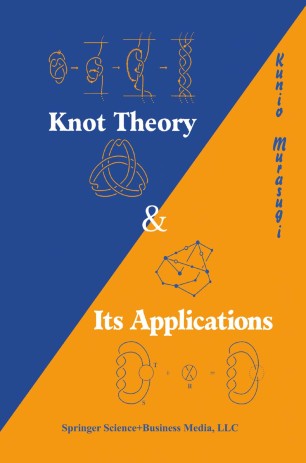
The book contains most of the fundamental classical facts about the theory, such as knot diagrams, braid representations, Seifert surfaces, tangles, and Alexander polynomials; also included are key newer developments and special topics such as chord diagrams and covering spaces. The work introduces the fascinating study of knots and provides insight into applications to such studies as DNA research and graph theory. In addition, each chapter includes a supplement that consists of interesting historical as well as mathematical comments.
In the city republics of Renaissance Italy, it was a common practice among the merchant class to send sons for a two-year course of study at an "abbacus school", where they learned practical, mostly commercial mathematics, known as abbaco. From this school institution, several hundred manuscripts survive, all in Italian, often containing not only what the masters needed in their teaching but also algebra or other advanced mathematical material. A signal feature of the book by Jens Høyrup is the first translation of one of these abbacus manuscripts into English.
By highlighting relations between experimental and theoretical work, this volume explores new ways of addressing one of the central challenges in the study of language and cognition. The articles bring together work by leading scholars and younger researchers in psychology, linguistics and philosophy. An introductory chapter lays out the background on concept composition, a problem that is stimulating much new research in cognitive science. Researchers in this interdisciplinary domain aim to explain how meanings of complex expressions are derived from simple lexical concepts and to show how these meanings connect to concept representations.

Daraa Highway - Ghabagheb - Syria
+963-15 2050 - 15 860 380 /1/2/3 - 11 662 3900