


Refine Results
Sort By
From
To


This book provides the most in-depth study of capital punishment in Scotland between the mid-eighteenth and early nineteenth century to date. Based upon an extensive gathering and analysis of previously untapped resources, it takes the reader on a journey from the courtrooms of Scotland to the theatre of the gallows. It introduces them to several of the malefactors who faced the hangman’s noose and explores the traditional hallmarks of the spectacle of the scaffold. It demonstrates that the period between 1740 and 1834 was one of discussion, debate and fundamental change in the use of the death sentence and how it was staged in practice. In addition, the study provides an innovative investigation of the post-mortem punishment of the criminal corpse. It offers the reader an insight into the scene at the foot of the gibbets from which criminal bodies were displayed, and around the dissection tables of Scotland’s main universities where criminal bodies were used as cadavers for anatomical demonstration. In doing so it reveals an intermediate stage in the long-term disappearance of public bodily punishment.
Deals with business criminal law from the perspective of Germany, Austria, Liechtenstein and Switzerland. It primarily addresses students in business and economics (master's programme) as well as business practitioners, but is also meant for lawyers and law students. As criminal law legislators exert considerable influence on economic life, raising and growing awareness in the area of criminal law seems compulsory for future managers and executives. This textbook approaches the legal field less normatively and rather in a practical and entrepreneurial way. Its contents are based on the master level class "Business Criminal Law
This book uses Pierre Bourdieu’s field theory as a lens through which to examine military operations. Novel in its approach, this innovative text provides a better, more nuanced understanding of the modern ‘battlespace’, particularly in instances of prolonged low-intensity conflict. Formed in two parts, this book primarily explores the scope of Bourdien theory before secondly providing a detailed case study of the Yugoslavian succession war of 1990-1992. Gunneriusson suggests that although theories do not necessarily provide answers, they do help us ask better questions. This volume suggests news lines of interdisciplinary investigation that will be of interest to members of armed forces, practitioners from NGOs, and policymakers.
proposes a framework for assessing countries’ levels of compliance with international space law and norms. It begins by exploring the development of two movements – the evidence-based policymaking and programming movement, and the rise of ratings and rankings research – and their growth across various disciplines. The analysis suggests that such efforts are useful in gauging the behavior of countries in space according to how well they adhere to existing space law and norms. To date, there is no comprehensive, periodic, and systematic measure of countries’ efforts to comply with space law and norms; this work endeavors to fill that gap by offering a framework in which to assess compliance.
This exceptional book explains fundamentals in detail, supported by realistic examples, while most other books on the market do not properly cover such basics. If you work with relational databases you need to understand the SQL language. And you will gain full competence to define, access, and manipulate data in an Oracle database, if you do so following this book's guidance.
Examine the evolving enterprise security landscape and discover how to manage and survive risk. While based primarily on the author’s experience and insights at major companies where he has served as CISO and CSPO, the book also includes many examples from other well-known companies and provides guidance for a management-level audience. Managing Risk and Information Security provides thought leadership in the increasingly important area of enterprise information risk and security. It describes the changing risk environment and why a fresh approach to information security is needed. Because almost every aspect of an enterprise is now dependent on technology not only for internal operations but increasing as a part of product or service creation, the focus of IT security must shift from locking down assets to enabling the business while managing and surviving risk. This edition discusses business risk from a broader perspective, including privacy and regulatory considerations. It describes the increasing number of threats and vulnerabilities and offers strategies for developing solutions. These include discussions of how enterprises can take advantage of new and emerging technologies—such as social media and the huge proliferation of Internet-enabled devices—while minimizing risk.
Managing Humans is a selection of the best essays from Michael Lopp's web site, Rands in Repose. Drawing on Lopp's management experiences at Apple, Netscape, Symantec, and Borland, this book is full of stories based on companies in the Silicon Valley where people have been known to yell at each other. It is a place full of dysfunctional bright people who are in an incredible hurry to find the next big thing so they can strike it rich and then do it all over again. Among these people are managers, a strange breed of people who through a mystical organizational ritual have been given power over your future and your bank account.
Brings together the latest techniques for managing cyber threats, developed by some of the world’s leading experts in the area. The book includes broad surveys on a number of topics, as well as specific techniques. It provides an excellent reference point for researchers and practitioners in the government, academic, and industrial communities who want to understand the issues and challenges in this area of growing worldwide importance.
This open access book presents the outcomes of the “Design for Future – Managed Software Evolution” .The different lifecycles of software and hardware platforms lead to interoperability problems in such systems. Instead of separating the development, adaptation and evolution of software and its platforms, as well as aspects like operation, monitoring and maintenance, they should all be integrated into one overarching process. Accordingly, the book is split into three major parts, the first of which includes an introduction to the nature of software evolution, followed by an overview of the specific challenges and a general introduction to the case studies used in the project. The second part of the book consists of the main chapters on knowledge carrying software, and cover tacit knowledge in software evolution, continuous design decision support, model-based round-trip engineering for software product lines, performance analysis strategies, maintaining security in software evolution, learning from evolution for evolution, and formal verification of evolutionary changes. In turn, the last part of the book presents key findings and spin-offs. The individual chapters there describe various case studies, along with their benefits, deliverables and the respective lessons learned. An overview of future research topics rounds out the coverage.

Malware Detection, based on the Special ARO/DHS Workshop on Malware Detection at Rosslyn, VA, in 2005, captures the state of the art research in the area of malicious code detection, prevention and mitigation.
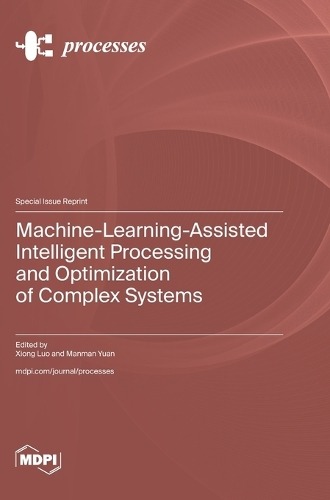
Focuses on the most recent developments in intelligent optimization methods and their applications in various test cases. The reprint covers various topics, including distributed multiagent modeling, metaheuristic algorithms, multisource data fusion, mobile computing and mobile sensing, machine learning-based intelligent processing for modeling complex manufacturing systems, and data-driven intelligent modeling
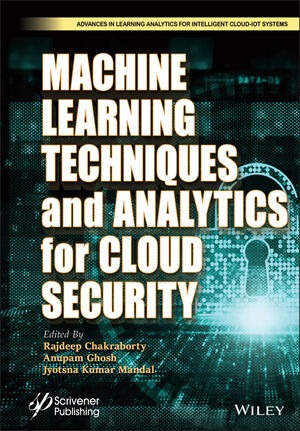
covers new methods, surveys, case studies, and policy with almost all machine learning techniques and analytics for cloud security solutions
Discusses how to build various ML algorithms and how they can be applied to improve healthcare systems. Healthcare applications of AI are innumerable: medical data analysis, early detection and diagnosis of disease, providing objective-based evidence to reduce human errors, curtailing inter- and intra-observer errors, risk identification and interventions for healthcare management, real-time health monitoring, assisting clinicians and patients for selecting appropriate medications, and evaluating drug responses. Extensive demonstrations and discussion on the various principles of machine learning and its application in healthcare is provided, along with solved examples and exercises.
Challenges in complexity and variability of multimedia data have led to revolutions in machine learning techniques. Multimedia data, such as digital images, audio streams and motion video programs, exhibit richer structures than simple, isolated data items. A number of pixels in a digital image collectively conveys certain visual content to viewers. A TV video program consists of both audio and image streams that unfold the underlying story. To recognize the visual content of a digital image, or to understand the underlying story of a video program, we may need to label sets of pixels or groups of image and audio frames jointly.
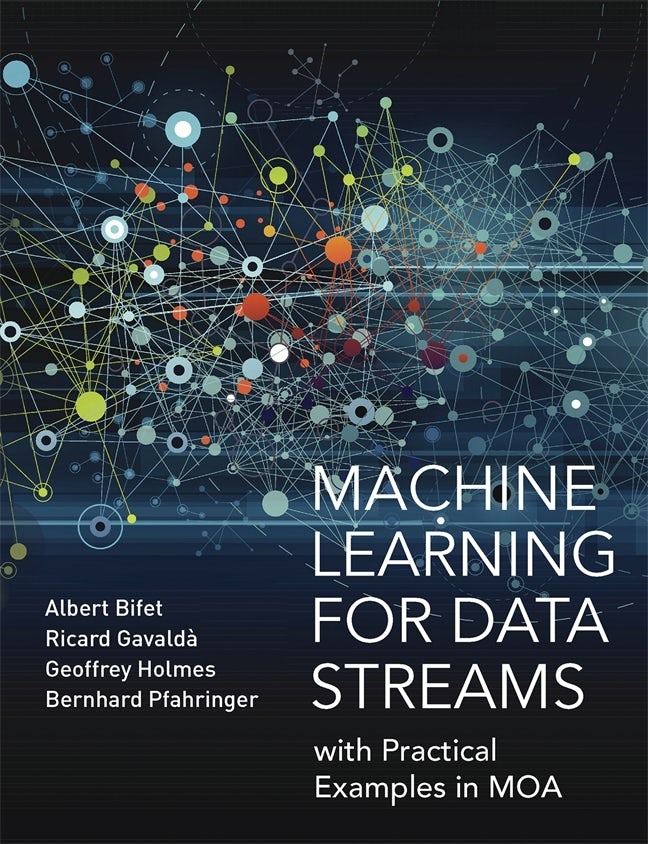
The book first offers a brief introduction to the topic, covering big data mining, basic methodologies for mining data streams, and a simple example of MOA. More detailed discussions follow, with chapters on sketching techniques, change, classification, ensemble methods, regression, clustering, and frequent pattern mining. Most of these chapters include exercises, an MOA-based lab session, or both. Finally, the book discusses the MOA software, covering the MOA graphical user interface, the command line, use of its API, and the development of new methods within MOA.
Contains selected papers from the international conference ML4CPS – Machine Learning for Cyber-Physical Systems, which was held in Hamburg (Germany), from 29 to 31 March 2023. Cyber-physical systems are adaptive and learning: they analyze their environment and, based on observations, learn patterns, associations and predictive models. Typical applications are condition monitoring, predictive maintenance, image processing and diagnostics. Machine learning is the key technology for these developments.
Presents new approaches to Machine Learning for Cyber Physical Systems, experiences and visions. It contains selected papers from the fifth international Conference ML4CPS – Machine Learning for Cyber Physical Systems, which was held in Berlin, March 12-13, 2020.
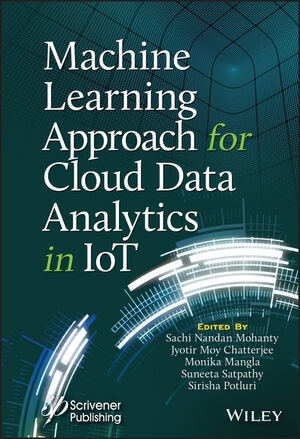
Covers the multidimensional perspective of machine learning through the perspective of cloud computing and Internet of Things ranging from fundamentals to advanced applications. Elucidates some of the best practices and their respective outcomes in cloud and fog computing environments. It focuses on all the various research issues related to big data storage and analysis, large-scale data processing, knowledge discovery and knowledge management, computational intelligence, data security and privacy, data representation and visualization, and data analytics. The featured technologies presented in the book optimizes various industry processes using business intelligence in engineering and technology. Light is also shed on cloud-based embedded software development practices to integrate complex machines so as to increase productivity and reduce operational costs. The various practices of data science and analytics which are used in all sectors to understand big data and analyze massive data patterns are also detailed in the book.

These two fields, ML and turbulent combustion, have large body of work and knowledge on their own, and this book brings them together and explain the complexities and challenges involved in applying ML techniques to simulate and study reacting flows. This is important as to the world’s total primary energy supply (TPES), since more than 90% of this supply is through combustion technologies and the non-negligible effects of combustion on environment. Although alternative technologies based on renewable energies are coming up, their shares for the TPES is are less than 5% currently and one needs a complete paradigm shift to replace combustion sources. The book covers the current state of the art in these two topics and outlines the challenges involved, merits and drawbacks of using ML for turbulent combustion simulations including avenues which can be explored to overcome the challenges.

Offers the first systematic guide to machine ethics, bridging between computer science, social sciences and philosophy. Based on a dialogue between an AI scientist and a novelist philosopher, the book discusses important findings on which moral values machines can be taught and how. In turn, it investigates what kind of artificial intelligence (AI) people do actually want.

Daraa Highway - Ghabagheb - Syria
+963-15 2050 - 15 860 380 /1/2/3 - 11 662 3900