


Refine Results
Sort By
From
To

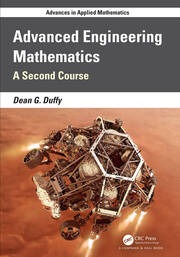
Presents a wide variety of topics needed by today's engineers. The fifth edition of that book, available now, has been broken into two parts: topics currently needed in mathematics courses and a new stand-alone volume presenting topics not often included in these courses and consequently unknown to engineering students and many professionals.
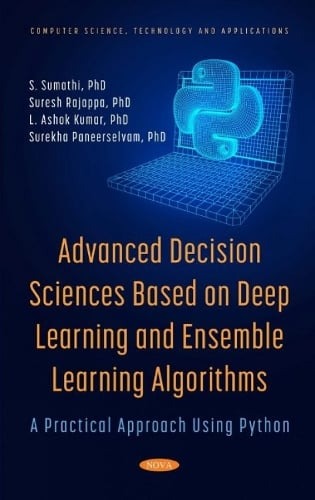
Describes the deep learning models and ensemble approaches applied to decision-making problems. The authors have addressed the concepts of deep learning, convolutional neural networks, recurrent neural networks, and ensemble learning in a practical sense providing complete code and implementation for several real-world examples. The authors of this book teach the concepts of machine learning for undergraduate and graduate-level classes and have worked with Fortune 500 clients to formulate data analytics strategies and operationalise these strategies.
This book serves as an introduction to the state of the art on data warehouse design, with many references to more detailed sources. Providing a clear and a concise presentation of the major concepts and results of data warehouse design, it can also be used as the basis of a graduate or advanced undergraduate course.
This book presents a comprehensive reference of state-of-the-art efforts and early results in the area of autonomic networking and communication.
The field of artificial intelligence (AI) has undergone enormous expansion since its inception in the mid-20th century, as demonstrated by its application across an array of engineering and scientific challenges. Particularly in the last decade, AI has witnessed a significant breakthrough with the advent of deep learning, which has facilitated the employment of various AI models across a multitude of domains. This reprint features ten papers accepted for publication in the Special Issue titled "Advanced Artificial Intelligence Models and Their Applications," published in the MDPI Mathematics journal. These papers explore numerous facets of advanced artificial intelligence models and their applications, covering areas such as cybersecurity, image classification, logistics optimization, automatic music generation, human capital investment, writer recognition, remote sensing image indexing, target tracking, and more.
introduces a collection of algorithms for complex programming challenges in data analysis, machine learning, and graph computing. You’ll discover cutting-edge approaches to a variety of tricky scenarios. You’ll even learn to design your own data structures for projects that require a custom solution. What's inside Build on basic data structures you already know Profile your algorithms to speed up application Store and query strings efficiently Distribute clustering algorithms with MapReduce Solve logistics problems using graphs and optimization algorithms
Surpassing any white papers, specialist documents and other documentationthis book features in-depth coverage of the .NET Remoting Framework. The text is organized into three main parts, and this revised, second edition features 150 pages of entirely new material! Part one includes a guide to the 1.1 framework and its capabilities in real-world applications. Part two presents .NET remoting internals, and provides real-world code and development strategies. Finally, part three looks at futuristic remoting tools and their present implementation in Visual Studio .NET 2005. You will come to see how remoting procedures will change within the new IDE and revised framework.
Explains the important concepts and principles of image processing to implement the algorithms and techniques to discover new problems and applications. It contains numerous fundamental and advanced image processing algorithms and pattern recognition techniques to illustrate the framework. It presents essential background theory, shape methods, texture about new methods, and techniques for image processing and pattern recognition. It maintains a good balance between a mathematical background and practical implementation. This book also contains the comparison table and images that are used to show the results of enhanced techniques. This book consists of novel concepts and hybrid methods for providing effective solutions for society. It also includes a detailed explanation of algorithms in various programming languages like MATLAB, Python, etc.
This book provides theoretical and practical knowledge for develop ment of algorithms that infer linear and nonlinear models. It offers a methodology for inductive learning of polynomial neural network mod els from data. The design of such tools contributes to better statistical data modelling when addressing tasks from various areas like system identification, chaotic time-series prediction, financial forecasting and data mining. The main claim is that the model identification process involves several equally important steps: finding the model structure, estimating the model weight parameters, and tuning these weights with respect to the adopted assumptions about the underlying data distrib ution. When the learning process is organized according to these steps, performed together one after the other or separately, one may expect to discover models that generalize well.
In the modern information era, managers must recognize the competitive opportunities represented by decision-support tools. Adaptive business intelligence systems combine prediction and optimization techniques to assist decision makers in complex, rapidly changing environments. These systems address the fundamental questions: What is likely to happen in the future? And what is the best decision right now? Adaptive Business Intelligence includes elements of data mining, predictive modeling, forecasting, optimization, and adaptability.
Adaptive agents and multi-agent systems is an emerging and exciting interdisciplinary area of research and development involving artificial intelligence, software engineering, and developmental biology, as well as cognitive and social science. This book presents 17 revised and carefully reviewed papers taken from two workshops on the topic as well as 2 invited papers by leading researchers in the area. The papers deal with various aspects of machine learning, adaptation, and evolution in the context of agent systems and autonomous agents.
This book nuds new things to do with an old idea. The proofs-as-programs paradigm constitutes a set of approaches to developing programs from proofs in constructive logic. there is increasingly active research in applying constructive techniques to industrial-scale, complex software engineering problems. Thismonographdetailsseveralimportantadvancesinthisdirectionofpr- tical proofs-as-programs. One of the central themes of the book is a general, abstract framework for developing new systems of program synthesis by adapting proofs-as-programs to new contexts. Framework-oriented approaches that facilitate analogous - proaches to building systems for solving particular problems have been popular and successful. Thesemethodsarehelpful asthey providea formal toolbox that enablesa“roll-your-own”approachtodevelopingsolutions.Itishopedthatour framework will have a similar impact. The framework is demonstrated by example. We will give two novel - plications of proofs-as-programs to large-scale, coarse-grain software engine- ing problems: contractual imperative program synthesis and structured p- gram synthesis.
This volume contains a collection of the papers presented during the 1st International ACM-L Workshop, which was held on November 8, 2006 during the 25th International Conference on Conceptual Modeling, ER 2006, held November 6–9,2006, in Tucson, Arizona, plus several invited papers.These papers plus the invited papers represent the current thinking in conceptual modeling research, The active model can only be realized through technology integration (e.g., AI, software engineering, information technology,cognitive science, art and sciences, philosophy, etc.)
This book addresses action research (AR), one of the main research methodologies used for academia-industry research collaborations. It elaborates on how to find the right research activities and how to distinguish them from non-significant ones. Further, it details how to glean lessons from the research results, no matter whether they are positive or negative. Lastly, it shows how companies can evolve and build talents while expanding their product portfolio.
In that book we tried very hard not to simply list everything that we knew about the product. Instead we tried to act as intelligent filters, presenting only the essential information that you need to get started. Every screen shot has been retaken and every section has been re-checked to ensure, not only that it still works, but also that it is actually still relevant. We have re-written parts where the product has changed and also added some. For example, there is a new section on Object Dependencies and a whole new chapter about Data Access Pages - helping you to put your Access database onto an intranet.
Access Control Systems: Security, Identity Management and Trust Models provides a thorough introduction to the foundations of programming systems security, delving into identity management, trust models, and the theory behind access control models. The book details access control mechanisms that are emerging with the latest Internet programming technologies, and explores all models employed and how they work. The latest role-based access control (RBAC) standard is also highlighted.
Presents cybersecurity aspects of ubiquitous and growing IoT and Cyber Physical Systems. It also introduces a range of conceptual, theoretical, and foundational access control solutions. This was developed by the authors to provide an overall broader perspective and grounded approach to solve access control problems in IoT and CPS.
Visual Basic 2008 offers powerful new features, and Accelerated VB 2008 is the fastest path to mastering them, and the rest of Visual Basic, for both experienced Visual Basic programmers moving to VB 2008 and programmers moving to Visual Basic from another object–oriented language. Many books introduce VB, but very few also explain how to use it optimally with the .NET common language runtime (CLR). This book teaches both core Visual Basic language concepts and how to wisely employ VB idioms and object–oriented design patterns to exploit the power of VB and the CLR.
The expert tuition and approach to rapid learning in Accelerated SQL Server 2008, one of the first SQL Server 2008 books available, will enable SQL Server and other database professionals to make the leap to the 2008 release of Microsoft's flagship database management system quickly. Take full advantage of the features of SQL Server 2008, know what tools are available, and quickly realize the power and ease of use that SQL Server 2008 has to offer.
Ajax is a web development technique that takes advantage of JavaScript to display and interact dynamically with information embedded into a web page. Its emergence has made it possible to create web applications that closely resemble their desktop–based brethren. With this exciting new ability came several challenges; not only did developers have to learn JavaScript, but they were also forced to use inefficient development processes, not to mention deal with cross–platform and browser difficulties. But with the release of Google Web Toolkit (GWT), Java developers are able to continue using their favorite language to write powerful Ajax applications while using not only the Java language, but also the very same development tools they're already using on a daily basis!

Daraa Highway - Ghabagheb - Syria
+963-15 2050 - 15 860 380 /1/2/3 - 11 662 3900