



Page 50
Page 50

Machine Learning for Cyber Agents : Attack and Defence
The cyber world has been both enhanced and endangered by AI. On the one hand, the performance of many existing security services has been improved, and new tools created. On the other, it entails new cyber threats both through evolved attacking capacities and through its own imperfections and vulnerabilities. Moreover, quantum computers are further pushing the boundaries of what is possible, by making machine learning cyber agents faster and smarter.
Machine learning for brain disorders
Organized into five parts. Part One presents the fundamentals of ML. Part Two looks at the main types of data used to characterize brain disorders, including clinical assessments, neuroimaging, electro- and magnetoencephalography, genetics and omics data, electronic health records, mobile devices, connected objects and sensors. Part Three covers the core methodologies of ML in brain disorders and the latest techniques used to study them. Part Four is dedicated to validation and datasets, and Part Five discusses applications of ML to various neurological and psychiatric disorders.
Machine Learning Approaches in Cyber Security Analytics
Introduces various machine learning methods for cyber security analytics. With an overwhelming amount of data being generated and transferred over various networks, monitoring everything that is exchanged and identifying potential cyber threats and attacks poses a serious challenge for cyber experts. Further, as cyber attacks become more frequent and sophisticated, there is a requirement for machines to predict, detect, and identify them more rapidly. Machine learning offers various tools and techniques to automate and quickly predict, detect, and identify cyber attacks.
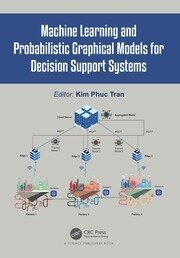
Machine Learning and Probabilistic Graphical Models for Decision Support Systems
Presents recent advancements in research, a review of new methods and techniques, and applications in decision support systems (DSS) with Machine Learning and Probabilistic Graphical Models, which are very effective techniques in gaining knowledge from Big Data and in interpreting decisions. It explores Bayesian network learning, Control Chart, Reinforcement Learning for multicriteria DSS, Anomaly Detection in Smart Manufacturing with Federated Learning, DSS in healthcare, DSS for supply chain management, etc. Researchers and practitioners alike will benefit from this book to enhance the understanding of machine learning, Probabilistic Graphical Models, and their uses in DSS in the context of decision making with uncertainty. The real-world case studies in various fields with guidance and recommendations for the practical applications of these studies are introduced in each chapter.

Machine Learning and Knowledge Extraction ; 5th IFIP TC 5, TC 12, WG 8.4, WG 8.9, WG 12.9 International Cross-Domain Conference, CD-MAKE 2021, Virtual Event, August 17–20, 2021, Proceedings
Constitutes the refereed proceedings of the 5th IFIP TC 5, TC 12, WG 8.4, WG 8.9, WG 12.9 International Cross-Domain Conference, CD-MAKE 2021, held in virtually in August 2021. The 20 full papers and 2 short papers presented were carefully reviewed and selected from 48 submissions. The cross-domain integration and appraisal of different fields provides an atmosphere to foster different perspectives and opinions; it will offer a platform for novel ideas and a fresh look on the methodologies to put these ideas into business for the benefit of humanity.

Machine Learning and Knowledge Discovery in Databases ; European Conference, ECML PKDD 2008, Antwerp, Belgium, September 15-19, 2008, Proceedings, Part II
Constitutes the refereed proceedings of the joint conference on Machine Learning and Knowledge Discovery in Databases: ECML PKDD 2008, held in Antwerp, Belgium, in September 2008.The 100 papers presented in two volumes, together with 5 invited talks, were carefully reviewed and selected from 521 submissions. In addition to the regular papers the volume contains 14 abstracts of papers appearing in full version in the Machine Learning Journal and the Knowledge Discovery and Databases Journal of Springer.

Machine learning and its application to reacting flows: ml and combustion
These two fields, ML and turbulent combustion, have large body of work and knowledge on their own, and this book brings them together and explain the complexities and challenges involved in applying ML techniques to simulate and study reacting flows. This is important as to the world’s total primary energy supply (TPES), since more than 90% of this supply is through combustion technologies and the non-negligible effects of combustion on environment. Although alternative technologies based on renewable energies are coming up, their shares for the TPES is are less than 5% currently and one needs a complete paradigm shift to replace combustion sources. The book covers the current state of the art in these two topics and outlines the challenges involved, merits and drawbacks of using ML for turbulent combustion simulations including avenues which can be explored to overcome the challenges.
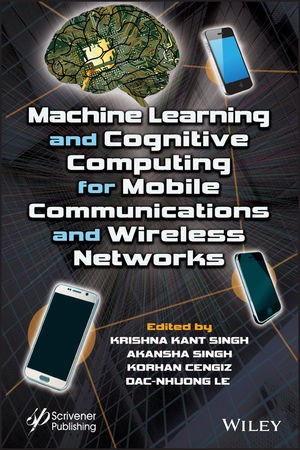
Machine Learning and Cognitive Computing for Mobile Communications and Wireless Networks
Communication and network technology has witnessed recent rapid development and numerous information services and applications have been developed globally. These technologies have high impact on society and the way people are leading their lives. The advancement in technology has undoubtedly improved the quality of service and user experience yet a lot needs to be still done. Some areas that still need improvement include seamless wide-area coverage, high-capacity hot-spots, low-power massive-connections, low-latency and high-reliability and so on. Thus, it is highly desirable to develop smart technologies for communication to improve the overall services and management of wireless communication. Machine learning and cognitive computing have converged to give some groundbreaking solutions for smart machines. With these two technologies coming together, the machines can acquire the ability to reason similar to the human brain. The research area of machine learning and cognitive computing cover many fields like psychology, biology, signal processing, physics, information theory, mathematics, and statistics that can be used effectively for topology management. Therefore, the utilization of machine learning techniques like data analytics and cognitive power will lead to better performance of communication and wireless systems.

Machine Learning : ECML 2005 ; 16th European Conference on Machine Learning, Porto, Portugal, October 3-7, 2005, Proceedings
The European Conference on Machine Learning (ECML) and the European Conference on Principles and Practice of Knowledge Discovery in Databases (PKDD) were jointly organized this year for the ?fth time in a row, after some years of mutual independence before. After Freiburg (2001), Helsinki (2002), Cavtat (2003) and Pisa (2004), Porto received the 16th edition of ECML and the 9th PKDD in October 3–7. Having the two conferences together seems to be working well: 585 di?erent paper submissions were received for both events, which maintains the high s- mission standard of last year. Of these, 335 were submitted to ECML only, 220 to PKDD only and 30 to both. Such a high volume of scienti?c work required a tremendous e?ort from Area Chairs, Program Committee members and some additional reviewers. On average, PC members had 10 papers to evaluate, and Area Chairs had 25 papers to decide upon. We managed to have 3 highly qualified independent reviews per paper (with very few exceptions) and one additional overall input from one of the Area Chairs. After the authors’ responses and the online discussions for many of the papers, we arrived at the ?nal selection of 40 regular papers for ECML and 35 for PKDD. Besides these, 32 others were accepted as short papers for ECML and 35 for PKDD. This represents a joint acceptance rate of around 13% for regular papers and 25% overall.

Low Power Methodology Manual : For System-on-Chip Design
"Tools alone aren't enough to reduce dynamic and leakage power in complex chip designs - a well-planned methodology is needed. Following in the footsteps of the successful Reuse Methodology Manual (RMM), authors from ARM and Synopsys have written this Low Power Methodology Manual (LPMM) to describe [such] [a] low-power methodology with a practical, step-by-step approach." "Excellent compendium of low-power techniques and guidelines with balanced content spanning theory and practical implementation. The LPMM is a very welcome addition to the field of low power SoC implementation that has for many years operated in a largely ad-hoc fashion."

Low Molecular Mass Gelators : Design, Self-Assembly, Function
Chapter 1 presents the physical principles of the growth mechanism of fiber and fiber network with LMGs, as treated on the basis of the heterogeneous nucleation model. in Chaps. 2 and 3, respectively. These chapters are intended to outline useful synthetic guidelines for the generation of an ever-increasing variety of molecular architectures within these two families of gelators. Recent developments in the chemistry of nucleobase-containing LMGs are described in Chap. 4. Hydrogen-bonding within these molecular systems involves complementary base pair formation, a process relevant to DNA double-helix formation The self-assembly of chiral organo- or hydrogelators is the subject of Chap. 5. result from the orthogonal self-assembly of liquid crystals and LMGs are presented in Chap. 6. The volume concludes with Chap. 7, a review of the emerging field of dendritic gels.

Logos of phenomenology and phenomenology of the logos ; Book Two : The Human Condition in-the-Unity-of-Everything-there-is-alive Individuation, Self, Person, Self-determination, Freedom, Necessity
The Human Condition-in-the-unity-of-everything-there-is-alive, under whose aegis the present selection of essays falls, offers the urgently needed new approach to reinvestigating humanness. While recent advances in the neurosciences, genetics and bio-engineering challenge the traditional abstract conception of "human nature", indicating its transformability, thus putting in question the main tenets of traditional philosophical anthropology, in the new perspective of the Human Creative Condition the human individual is seen in its emergence and unfolding within the dynamic networks of the logos of life, and within the evolution of living types.

Logos of phenomenology and phenomenology of the logos ; Book Four : The logos of scientific interrogation, participating in nature-Life-saring in life
Prompted and ever diversified by the specifically human interrogative logos, scientific inquiries seek a common system of links in order to mutually confirm and rectify their results. Coming closer and closer to phenomenology, the sciences of life find the common ground of the reality in the ontopoiesis of life.Could it not be that the interrogative logos of science, participating in human creative inventiveness will bring together also the divergent scientific methods in a common network? A network which comprises natural processes, societal sharing-in-life, and existential communication.

Logical approaches to computational barriers ; 2nd Conference on Computability in Europe, CiE 2006, Swansea, UK, June 30-July 5, 2006, Proceedings
The sources of new ideas and methods include practical developments in areas such as neural networks, quantum computation, natural computation, molecular computation, and computational learning. Applications are everywhere, especially, in algebra, analysis and geometry, or data types and programming. This volume, Logical Approaches to Computational Barriers, is the proce- ings of the second in a series of conferences of CiE that was held at the Depa- ment of Computer Science, Swansea University, 30 June - 5 July, 2006.

Logical and Relational Learning
This textbook covers logical and relational learning in depth, and hence provides an introduction to inductive logic programming (ILP), multirelational data mining (MRDM) and (statistical) relational learning (SRL). These subfields of data mining and machine learning are concerned with the analysis of complex and structured data sets that arise in numerous applications, such as bio- and chemoinformatics, network analysis, Web mining, natural language processing, within the rich representations offered by relational databases and computational logic.

Location Theory : A Unified Approach
Although modern location theory is now more than 90 years old, the focus of researchers in this area has been mainly problem oriented. However, a common theory, which keeps the essential characteristics of classical location models, is still missing. This monograph addresses this issue. A flexible location problem called the Ordered Median Problem (OMP) is introduced. For all three main subareas of location theory (continuous, network and discrete location) structural properties of the OMP are presented and solution approaches provided. Numerous illustrations and examples help the reader to become familiar with this new location model.

Location Based Services and TeleCartography
Provides for the first time a general overview of research activities related to location and map-based services. These activities have emerged over the last years, especially around issues of positioning, spatial modelling, cartographic communication as well as in the fields of ubiquitious cartography, geo-pervasive services, user-centered modelling and geo-wiki activities. Topics cover an enormous range with heterogenous relationships to the main book issues. Whilst contemporary cartography aims at looking at new and efficient ways for communicating spatial information the development and availability of technologies like mobile networking, mobile devices or short-range sensors lead to interesting new possibilities for achieving this aim.

Location- and Context-Awareness ; Vol. 3987 ; 2nd International Workshop, LoCA 2006, Dublin, Ireland, May 10-11, 2006, Proceedings
Contain the papers presented at the 2 International Workshop on Location- and Context-Awareness in May of 2006. As computing moves increasingly into the everyday world, the importance of location and context knowledge grows. The range of contexts encountered while sitting at a desk working on a computer is very limited compared to the large variety of situations experienced away from the desktop. For computing to be relevant and useful in these situations, the computers must have knowledge of the user’s activity, resources, state of mind, and goals, i.e., the user’s context, of which location is an important indicator. This workshop was intended to present research aimed at sensing, inferring, and using location and context data in ways that help the user.

Location- and Context-Awareness ; Vol. 3479 ; First International Workshop, LoCA 2005, Oberpfaffenhofen, Germany, May 12-13, 2005, Proceedings
The workshop was organized by the Institute of Communications and Navigation of the German Aerospace Center (DLR) in Oberpfa?enhofen, and the Mobile and Distributed Systems Group of the University of Munich. During the workshop, novel positioning algorithms and location sensing techniques were discussed, comprising not only enhancements of singular systems, like positioning in GSM or WLAN, but also hybrid technologies, such as the integration of global satellite systems with inertial positioning. Furthermore, improvements in sensor technology, as well as the integration and fusion of sensors, were addressed both on a theoretical and on an implementation level. Personal and confidential data, such as location data of users, have p- found implications for personal information privacy. Thus privacy protection, privacy-oriented location-aware systems, and how privacy aspects the feasibility and usefulness of systems were also addressed in the workshop.

Local Elites, Political Capital and Democratic Development : Governing Leaders in Seven European Countries
This book helps to understand in which ways local governing elites are important for the success or failure of national democratic development. Although we know a great deal about the general importance of civil society and social capital for the development of sustainable democracy, we still know little about what specific local governing qualities or political capital that interact with democratic development. The collected data covers time series of surveys from between 15 to 30 political and administrative leaders in over a hundred middle-sized European and Eurasian cities. The study takes us across the 1980s and 1990s, going from cities in Sweden and the Netherlands - through the Baltic cities - to the cities of Belarus and Russia.
