


Refine Results
Sort By
From
To

Provides a tailored overview of what AI specifically means for financial services, a highly regulated yet also disrupted industry. it investigates the current state of AI applications in financial services today along with the state of funding and partnerships between tech and banking industries. it also examines the key pillars of responsible AI and the importance of keeping humans in the loop. the book takes a deep dive into the use cases in the financial services industry, the challenges and opportunities, and the fragmented regulatory landscape. how can we effectively assess risks, and balance innovation and customer centricity with trust in AI in financial services? can smaller organizations reap the benefits of the technology? how can institutions deploy AI responsibly and securely, and promote a fairer and more equitable future for more people?
The aim of this study is to contribute to this understanding by answering the following questions: How do banks adjust capital and risk after an increase in capital requirements? How do banks adjust their regulatory capital buffer over the business cycle? And what is the impact of banks' charter value on the regulatory capital buffer?

Covers the basics of business-to-business (B2B) eCommerce, where similar principles of customer targeting can be observed as in B2C eCommerce. Gerrit Heinemann highlights the specifics and business models of B2B eCommerce, analyzes the digital challenges and shows the consequences and opportunities for online sales in B2B. Recognised best-practice examples illustrate how successful B2B eCommerce can work and which risks have to be considered.
The book has three parts. Part I describes the characteristics and historical origins of these markets. Part II examines the contemporary bond markets and shows how they contribute to general welfare, describes the relationship between the banking sector and capital markets, and assesses prospects for reform in Asia's governmental and corporate debt markets. Part III explains the micro-level impediments and obstacles that must be the first targets of any reform efforts, provides an appraisal of attempts at regional cooperation to stimulate structural reform, and lastly contributes proposals to accelerate the growth and reach of bond markets throughout Asia.
The topics addressed in this book are of vital importance to the survival of humankind. Agricultural biodiversity, encompassing genetic diversity as well as human knowledge, is the base upon which agricultural production has been built, and protecting this resource is critical to ensuring the capacity of current and future generations to adapt to unforeseen challenges. Agricultural biodiversity underpins the productivity of all agricultural systems and is particularly important for poor and food-insecure farmers, who maintain highly diverse production systems in response to the marginal and risky production conditions they operate under. Understanding the importance of agricultural biodiversity in the livelihoods of the food insecure and enhancing its performance through the use of a variety of tools, including biotechnology, is a critically important issue in the world today
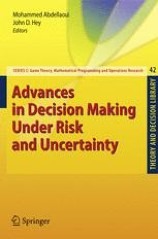
Whether we like it or not we all feel that the world is uncertain. From choosing a new technology to selecting a job, we rarely know in advance what outcome will result from our decisions. Unfortunately, the standard theory of choice under uncertainty developed in the early forties and fifties turns out to be too rigid to take many tricky issues of choice under uncertainty into account. The good news is that we have now moved away from the early descriptively inadequate modeling of behavior. This book brings the reader into contact with the accomplished progress in individual decision making through the most recent contributions to uncertainty modeling and behavioral decision making. It also introduces the reader into the many subtle issues to be resolved for rational choice under uncertainty.
This book provides an investor-friendly presentation of the premises and applications of the quantitative finance models governing investment in one asset class of publicly traded stocks, specifically real estate investment trusts (REITs). The models provide highly advanced analytics for REIT investment, including: portfolio optimization using both historic and predictive return estimation; model backtesting; a complete spectrum of risk assessment and management tools with an emphasis on early warning systems, risk budgeting, estimating tail risk, and factor analysis; derivative valuation; and incorporating ESG ratings into REIT investment.
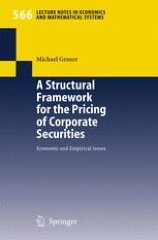
This book is the first comprehensive treatment, of structural credit risk models for the simultaneous and consistent pricing of corporate securities. Through the development of a flexible economic framework based on the firm's EBIT, the reader is taken from the economic principles of firm value models to the empirical implementation. Analytical solutions are provided, if EBIT follows an arithmetic or geometric Brownian motion.

Ordinarily, only the interests of shareholders, debtholders, and corporate management are taken into account when analyzing corporate financial decisions while the interests of non-financial stakeholders are often neglected. Gregor Gossy develops a so-called stakeholder rationale for risk management arguing that firms which are more dependent on implicit claims from their non-financial stakeholders, such as customers, suppliers, and employees, prefer conservative financial policies. In order to perform panel data analyses of the determinants of corporate financial decisions, the author uses data from Austrian and German industrial companies. He shows that variables for a firm’s most important non-financial stakeholders explain the firm’s capital structure and cash holding decisions. His findings suggest that a firm’s choice of accounting standards have a moderating effect on the determinants of corporate finance decisions.
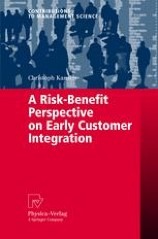
Customer integration in the early innovation phase has been considered the method of choice in theory and practice. Growing experience with the concept has shown unexpected side effects that may even outweigh its recognized advantages. Therefore, management needs to be able to assess in advance whether the involvement of customers will add overall value to each particular innovation project. To support but not to replace the final managerial decision, a mathematical formula is developed. It can be applied to all kinds of process structures, takes into account the risks and benefits contingent on a company's situation as well as risk-reducing and benefit-increasing measures and translates them into numerical values. The resulting figure indicates the prospective value of customer integration in a specific project.
Organizations need to identify risks and chances of environmental changes in order to adapt to or possibly even to influence them. Early warning which comprises scanning and interpretation plays an important role in this process. Whereas the traditional contingency approach considers early warning as a part of the organizational structure, the extended contingency theory assumes the additional influence of an individual’s personality on early warning. Andreas Kirschkamp empirically analyses the early warning behavior of Chief Executive Officers in German medium-sized companies. First, he presents the design variables of early warning, then the influencing contingency variables. On the basis of the scholarly research on psychological and contingency theory, the author deduces hypotheses and tests them. The results show that early warning behavior is not only influenced by traditional contingency variables but also by personal attitudes.

This book provides a holistic, interdisciplinary overview of offshore wind energy, and is a must-read for advanced researchers. Topics, from the design and analysis of future turbines, to the decommissioning of wind farms, are covered. The scope of the work ranges from analytical, numerical and experimental advancements in structural and fluid mechanics, to novel developments in risk, safety & reliability engineering for offshore wind. The core objective of the current work is to make offshore wind energy more competitive, by improving the reliability, and operations and maintenance (O&M) strategies of wind turbines.

Mathematics needs Sustainable Development. When science was gradually reinvented in European medieval societies, it was legitimised as contributing to the disclosure of God’s divine creation. The conflicts that emerged became well known as a result of the clash between Galileo and the Church. Science found a new legitimacy through recognition that it was a powerful force against superstition. In the Enlightenment the argument was pushed forward by attributing Progress to the advancement of science: science could produce a better world by promoting rationality. In our modern society, science has become intimately linked to technology. Science for its own sake unfortunately rarely has positive outcomes in terms of research grant applications. Meanwhile, science and technology, and the progress they are supposed to produce, meet with wide scale scepticism. We all know of the current global problems: climate change, resource depletion, a thinning ozone layer, space debris, declining biodiversity, malnutrition, dying ecosystems, global inequity, and the risk of unprecedented nuclear wars
It is a challenging task to read the balance sheet of an insurance company. This derives from the fact that different positions are often measured by different yardsticks. Assets, for example, are mostly valued at market prices whereas liabilities are often measured by established actuarial methods. Market-Consistent Actuarial Valuation presents powerful methods to measure liabilities and assets in the same way. The mathematical framework that leads to market-consistent values for insurance liabilities is explained in detail by the authors. Topics covered are Stochastic discounting, Valuation portfolio in life and non-life insurance, Asset and liability management, Financial risks, Insurance technical risks, and Solvency.
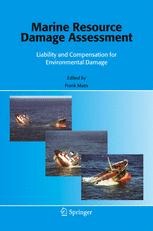
MARE-DASM research focused on: (i) the estimation and distribution of marine contaminants in order to assess their long term effects (ecotoxicology); (ii) the integration of these result into a Biological Effects SubModel and a mathematical model assessing the risks associated with accidental spillage of oil at sea and the damage this can cause (modelling); (iii) the assessment of the willingness to pay for ecological damage, based on the Contingent Valuation Method (economics); (iv) the development and evaluation of measures to be taken in order to guarantee a sustainable use of the Belgian part of the North Sea, taking into account the economic and social interests and values (social economics); (v) the potential to develop technical and legal procedures that allow ecological damage to the marine environment to be evaluated and compensated, taking into account constraints in national and international liability legislation (legal).
In many parts of the world, weather and climate are one of the biggest production risks and uncertainty factors impacting on agricultural systems performance and management. Both structural and non-structural measures can be used to reduce the impacts of the variability (including extremes) of climate resources on crop production. While the structural measures include strategies such as irrigation, water harvesting, windbreaks etc., the non-structural measures include use of seasonal to interannual climate forecasts, improved application of medium-range weather forecasts and crop insurance. This book based on an International Workshop held in New Delhi, India should be of interest to all organizations and agencies interested in improved risk management in agriculture.
This book summarizes work being pursued in the context of the CIPRNet (Critical Infrastructure Preparedness and Resilience Research Network) research project, co-funded by the European Union under the Seventh Framework Programme (FP7). The project is intended to provide concrete and on-going support to the Critical Infrastructure Protection (CIP) research communities, enhancing their preparedness for CI-related emergencies, while also providing expertise and technologies for other stakeholders to promote their understanding and mitigation of the consequences of CI disruptions, leading to enhanced resilience.

Many coastal areas and human activities are subject to increasing risks from natural and man-induced hazards such as flooding resulting from major changes in hydrology of river systems that has reached a global scale. Changes in the hydrological cycle coupled with changes in land and water management alter fluxes of materials transmitted from river catchments to the coastal zone, which have a major effect on coastal ecosystems. The increasing complexity of underlying processes and forcing functions that drive changes on coastal systems are witnessed at a multiplicity of temporal and spatial scales.
At the beginning of each year, there is a deluge of top-10 lists on just about every subject you can imagine. A top-10 list of biggest news stories, best-selling books, most popular music and movies, richest companies, and best places to visit or live. It seems everyone has his or her own top-10 list, reflecting, perhaps, differences in regional, national, and cultural values. Companies and governments most often tend to focus their top-10 lists on economic priorities, or priorities related to national defense, security, public health, and new infrastructure. This year, 2007, was no exception. Yet, increasingly, we see governments, private organizations, and companies advocating a new type of prioritization. This framework needs to reach beyond the realms of economics, world trade, and corporate management to include the environment, stakeholders, public preferences, and social goals. Moreover, corporations and individuals are not only interested in generic 10-best lists; they want lists tailored to their values, goals, and current economic and social state. For example, the U. S.
The goals of the workshop included a discussion of the state of the science in identification of new research and approaches for water pollution events and communication of the management of water pollution and sustainability of water resources. Critical to management of accidental and intentional pollution events is the assessment of the risk, an understanding of the hazards and lessons learned from events which may lead to preventative management and control strategies. Public health protection will ultimately be improved by the ability to develop management frameworks which are flexible and adaptable to the specific region, country or watershed problems and concerns and allow for prioritization in the decision making. The integration of scientific information regarding the types of hazards the environmental fate of the chemical/biological, exposure pathways and human and ecosystem impacts may be implemented from both a qualitative or descriptive approach or using a more classical quantitative risk assessment paradigm. Thus the frameworks for assessing the risk and managing the risk may be seen as preventive, early warning and responsive.

Daraa Highway - Ghabagheb - Syria
+963-15 2050 - 15 860 380 /1/2/3 - 11 662 3900