



Page 5
Page 5

Mitigation of Natural Hazards and Disasters : International Perspectives
This book examines the aspects of prevention, mitigation, and management of environmental hazards and disasters from an international perspective. In light of the recent debate on climate change and the possible effects of such a change upon increasing frequency and magnitude of extreme environmental events, this publication overviews various policy and response discourse. Several case studies, from various countries and world regions, depicting recent experience in mitigation policy and program development and implementation and establishing interlinks between vulnerability and mitigation are presented to provide further insights.

Mission AI: the new system technology
Offers a strategic perspective on AI and the process of embedding it in society. After decades of research, Artificial Intelligence (AI) is now entering society at large. Due to its general purpose character, AI will change society in multiple, fundamental and unpredictable ways. Therefore, the Netherlands Scientific Council for Government Policy (WRR) characterizes AI as a system technology: a rare type of technologies that have a systemic impact on society. Earlier system technologies include electricity, the combustion engine and the computer. The history of these technologies provides us with useful insights about what it takes to direct the introduction of AI in society.

Mindset matters : Developing mental agility and resilience to thrive in uncertainty
Resilience is the skill to master for the future of work. The capacity to overcome adversity and, crucially, to learn from experiences and grow, resilience is the tool to have in your business leadership arsenal. From an individual perspective, it will lead to better performance and wellbeing, and for your team, you can positively affect change and build a culture of resilience that permeates your business.

Migration and Environmental Change in Morocco : In search for Linkages Between Migration Aspirations and (Perceived) Environmental Changes
This book studies the migration aspirations and trajectories of people living in two regions in Morocco that are highly affected by environmental change or emigration, namely Tangier and Tinghir, as well as the migration trajectories of immigrants coming from these regions currently living in Belgium
Microplastic in the Environment : Pattern and Process
This book examines global plastic pollution, an issue that has become a critical societal challenge with implications for environmental and public health. This volume provides a comprehensive, holistic analysis on the plastic cycle and its subsequent effects on biota, food security, and human exposure. Importantly, global environmental change and its associated, systems-level processes, including atmospheric deposition, ecosystem complexity, UV exposure, wind patterns, water stratification, ocean circulation, etc., are all important direct and indirect factors governing the fate, transport and biotic and abiotic processing of plastic particles across ecosystem types.

Micrometeorology
This book focuses on atmospheric processes which directly effect human environments within the lowest 100-1000 meters of the atmosphere over regions of only a few kilometers in extent. The book is the English translation of the second edition of the German book "Applied Meteorology – Micrometeorological Methods".

Microgravity Two-phase Flow and Heat Transfer
Multiphase thermal systems (involving more than one phase or one component) have numerous applications in aerospace, heat-exchanger, transport of contaminants in environmental systems, and energy transport and energy conversion systems. Advances in understanding the behaviour of multiphase thermal systems could lead to higher efficiency energy production systems, improved heat-exchanger design, and safer and enhanced treatment of hazardous waste. But such advances have been greatly hindered by the strong effect of gravitational acceleration on the flow. Depending on the flow orientation and the phase velocities, gravitational forces could significantly alter the flow regime, and hence the pressure-drop and heat-transfer coefficients associated with the flow. A reduced gravity environment (or "microgravity"), provides an excellent tool to study the flow without the masking effects of gravity. This book presents for the first time a comprehensive coverage of all aspects of two-phase flow behaviour in the virtual absence of gravity.

Microflows and Nanoflows : Fundamentals and Simulation
This book provides a comprehensive summary of these changes describing fluid flow in micro and nano configurations. Where as in their previous book entitled Microflows: Fundamentals and Simulation. In this new book they discuss length scales from angstroms to microns (and beyond). While still maintaining the emphasis on fundamental concepts with a mix of semianalytical, experimental, and numerical results, this book outlines their relevance to modeling and analyzing functional devices.

Microcirculation in Cardiovascular Diseases
This book offers an extensive review of the most recent data on the pathophysiological role of structural and functional alterations in the microcirculation, particularly focusing on hypertension and diabetes. It covers several relevant and innovative aspects, including the possible mechanisms involved in the development of microvascular remodeling and rarefaction, the technical approaches available for the detection of microvascular alterations, including non-invasive evaluations, the prognostic role of changes in small resistance artery structure, the possibility of preventing or regressing such alterations with appropriate treatment, and the potential clinical advantages of such intervention.

Microbial Activity in the Rhizosphere
The rhizosphere is a very complex environment in which the effects of the plant on soil microorganisms and the effects of the microorganisms on the plant are interacting and are interdependent. Plant root exudates and breakdown products attract microbes and feed them and, in turn, the plants often benefit from the microbes. Interactions among microorganisms and plant roots are essential for nutritional requirements of the plant. Plant growth, development and productivity are largely dependent on the soil environment in the root region rhizosphere. The new techniques of studying the rhizosphere enables us to get a much better understanding of the dynamics of the rhizosphere population, such rhizosphere studies being of interest to agriculturists, soilbiologists, chemists, microbiologists and molecular biologists. The rhizosphere microbes in?uence the root environment in several ways. They may change the oxidation-reduction potential, influence the availability of moisture and nutrients, produce growth inhibiting or growth promoting substances in the form of exudates, provide competition and possibly induce many other effects. My corrhizal associations are beneficial in mineral uptake and in increasing root surface area for effective ion absorption. Antagonism, ompetition and synergism in soil and the rhizoplane (rhizosphere) are the most important microbial interactions to consider in the study of rhizosphere biology. With the growing information on the production of growth regulators, competitiveness of the microbes in the rhizosphere, microsymbionts, and other factors, their effect upon plant growth will become more evident. Experiments on the introduction of microbes or their products in the rhizosphere will help to improve our understandingofthebiologyoftherhizosphere.
Methods of Celestial Mechanics ; Vol. II : Application to Planetary System, Geodynamics and Satellite Geodesy
G. Beutler's Methods of Celestial Mechanics is a coherent textbook for students as well as an excellent reference for practitioners. Volume II is devoted to the applications and to the presentation of the program system CelestialMechanics. Three major areas of applications are covered: (1) Orbital and rotational motion of extended celestial bodies. The properties of the Earth-Moon system are developed from the simplest case (rigid bodies) to more general cases, including the rotation of an elastic Earth, the rotation of an Earth partly covered by oceans and surrounded by an atmosphere, and the rotation of an Earth composed of a liquid core and a rigid shell (Poincaré model). (2) Artificial Earth Satellites. The oblateness perturbation acting on a satellite and the exploitation of its properties in practice is discussed using simulation methods (CelestialMechanics) and (simplified) first order perturbation methods. The perturbations due to the higher-order terms of the Earth's gravitational potential and resonant perturbations are considered thereafter. Special attention is paid to satellites of the Global Navigation Satellite Systems and to geostationary satellites. The characteristics of and models for the two most important non-gravitational forces, atmospheric drag and radiation pressure, are presented as well as the most relevant forces acting on high- and low-orbiting satellites. (3) Evolution of the Planetary System. The outer planetary system consisting of the planets Jupiter to Pluto is studied over long time intervals using simulation methods and spectral analysis (CelestialMechanics). The properties of the inner systems, in particular of the Earth's orbit, are made visible by integrating the entire system over long time intervals relevant for climate change. The distribution of minor planets and their orbital properties, regular orbits, and chaotic orbits are easily generated and analyzed using CelestialMechanics. The volume concludes with the discussion of important mathematical tools of the program system and of the principles of spectral analysis.

Methods in Gut microbial ecology for ruminants
As a result of various human activities, such as increase in human population,decrease in arable land due to soil degradation, urbanization, industrialization and associated increase in the demand for livestock products, dramatic changes are occurring in the global ruminant livestock sector. These changes includeshift inthesize of regional livestock populations and in the types of management and feeding systems under which ruminant livestock are held, and increased demand of a wider range of quality attributes from animal agriculture, not just of the products themselves but also of the methods used in their production. The livestock sector will need to respond to new challenges of increasing live stock productivity while protecting environment and human health and conservingbiodiversity and natural resources. The micro-organisms in the digestive tracts of ruminant livestock have a profound in?uence on the conversion offeedinto end products, which can impact on the- imal and theenvironment. As the livestock sector grows particularly in developing countries, there will be an increasing need to understand these processes for b- ter management and use ofbothfeed and other natural resources that underpinthe development of sustainable feeding systems.
Methods for measuring greenhouse Gas balances and evaluating mitigation options in smallholder agriculture
This book provides standards and guidelines for quantifying greenhouse gas emissions and removals in smallholder agricultural systems and comparing options for climate change mitigation based on emission reductions and livelihood trade-offs. Globally, agriculture is directly responsible for about 11% of annual greenhouse gas (GHG) emissions and induces an additional 17% through land use change, mostly in developing countries. Farms in the developing countries of sub-Saharan Africa and Asia are predominately managed by smallholders, with 80% of land holdings smaller than ten hectares. However, little to no information exists on greenhouse gas emissions and mitigation potentials in smallholder agriculture.

Methodological approaches to societies in transformation : How to make sense of change
This book provides methodological devices and analytical frameworks for the study of societies in transformation. It explores a central paradox in the study of change: making sense of change requires long-term perspectives on societal transformations and on the different ways people experience social change, whereas the research carried out to study change is necessarily limited to a relatively short space of time. This volume offers a range of methodological responses to this challenge by paying attention to the complex entanglement of qualitative research and the metanarratives generally used to account for change.

Metamorphoses of Hamiltonian Systems with Symmetries
Modern notions and important tools of classical mechanics are used in the study of concrete examples that model physically significant molecular and atomic systems. The parametric nature of these examples leads naturally to the study of the major qualitative changes of such systems (metamorphoses) as the parameters are varied. The symmetries of these systems, discrete or continuous, exact or approximate, are used to simplify the problem through a number of mathematical tools and techniques like normalization and reduction. The book moves gradually from finding relative equilibria using symmetry, to the Hamiltonian Hopf bifurcation and its relation to monodromy and, finally, to generalizations of monodromy.

Metal-Catalysed Reactions of Hydrocarbons
This unique book, drawing on the author’s lifetime experience, critically evaluates the extensive literature on the field of Metal-Catalysed Reactions of Hydrocarbons. Emphasis is placed on reaction mechanisms involving hydrogenation, hydrogenolysis, skeletal and positional isomerisation, and exchange reactions. The motivation for fundamental research in heterogeneous catalysis is to identify the physicochemical characteristics of active centres for the reaction being studied, to learn how these may be modified or manipulated to improve the desired behavior of the catalyst, and to recognize and control those aspects of the catalyst's structure that limit its overall performance. By restricting the subject of the book to hydrocarbons, Bond has progressively developed the subject matter to include areas of importance both to researchers and to those working in the industry.

Messenger RNA therapeutics
Focuses on the fundamentals and applications of messenger RNA (mRNA)-based therapeutics and discusses the strengths and key challenges of this emerging class of drugs. In the past 30 years, extensive research and technological development in many areas have contributed to the emergence of in vitro transcribed mRNA as a therapeutic that has now reached clinical testing. Formulations that protect the mRNA from nucleases and accelerate its cellular uptake, combined with improvements to the mRNA molecules themselves, have been critical advancements for mRNAs to become viable therapeutics. Though once regarded as a serious impediment, the transient nature of mRNA technology is now considered a major advantage in making mRNA therapies safe and, ultimately, a potential game changer in the field of medicine. This new book in the RNA Technologies series provides a state-of-the-art overview on the emerging field of mRNA therapeutics covering essential strategies for formulation, delivery, and application. It also reviews the promising role in cancer immunotherapy, respiratory diseases, and chronic HBV infection and discusses RNA vaccines in light of the current COVID-19 pandemic. mRNA-based approaches have great potential to revolutionize molecular biology, cell biology, biomedical research, and medicine.
Meshfree Methods for Partial Differential Equations IV
The numerical treatment of partial differential equations with particle methods and meshfree discretization techniques is a very active research field both in the mathematics and engineering community. Due to their independence of a mesh, particle schemes and meshfree methods can deal with large geometric changes of the domain more easily than classical discretization techniques. Furthermore, meshfree methods offer a promising approach for the coupling of particle models to continuous models. This volume of LNCSE is a collection of the proceedings papers of the Fourth International Workshop on Meshfree Methods held in September 2007 in Bonn. The articles address the different meshfree methods (SPH, PUM, GFEM, EFGM, RKPM, etc.) and their application in applied mathematics, physics and engineering. The volume is intended to foster this very active and exciting area of interdisciplinary research and to present recent advances and results in this field.

Mediterranean Land-surface Processes Assessed from Space
1. 1 Space View and Ground Observations 1 1. 2 Mediterranean Climatic Environment 2 1. 3 Processes at Surfaces 10 1. 3. 1 Deforestation and Land-use Changes 10 1. 3. 2 Water Related Problems 16 1. 3. 3 Fire, Grazing, and Land Degradation 19 1. 3. 4 Drought, Floods, Frost, and Desertification 21 1. 3. 5 Coupling Between Surface and Atmosphere: The Role of the Atmospheric Boundary Layer 25 1. 4 Role and Capabilities of Measurements Made From Space 30 1. 4. 1 Research Programmes 30 1. 4. 2 Expected Information 32 1. 4. 3 Research Strategy 33 1. 4. 4 Observation of Changes in Heterogeneous Landscapes: Spatial and Temporal Scales 35 1. 4. 5 Land-surface Change Indicators Observable from Space 36 Spectral Characteristics of Vegetation and Soils (36); Responses of Remote Sensing Signals to Changes of Land-surface Properties (40) 1. 5 About this Book 48 Chapter 2 Processing and Archiving of Satellite and Ancillary Data 51 2. 1 Introduction 51 2. 2 The Remote Sensing Data Base 55 2. 2. 1 Satellite Instruments 55 The NOAA Observing System (55); Meteosat (57); Nimbus-7 (59); Landsat (59); SPOT (61); DMSP (62); ERS-1 and ERS-2 (62); TRMM (63); Terra (64); Envisat (65); Aqua (66) 2. 2. 2 Aircraft Instruments 66 The Use of Aircraft for Land-surface Process Studies (66); AVIRIS (67); TMS (68); AIRSAR (68); DIAL (69) 2. 3 Reception, Acquisition and Availability of Satellite Data 70 2. 3.
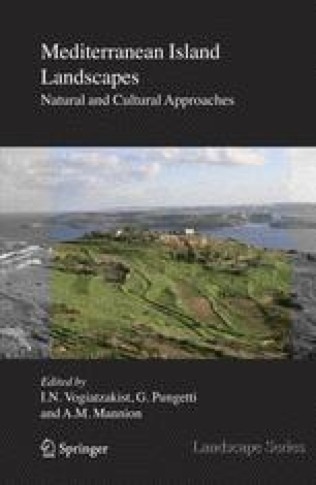
Mediterranean Island Landscapes : Natural and Cultural Approaches
Mediterranean islands exhibit many similarities in their biotic ecological, physical and environmental characteristics. There are also many differences in terms of their human colonization and current anthropogenic pressures. This book addresses in three sections these characteristics and examines the major environmental changes that the islands experienced during the Quaternary period. The first section provides details on natural and cultural factors which have shaped island landscapes. It describes the environmental and cultural changes of the Holocene and their effects on biota, as well as on the current human pressures that are now threats to the sustainability of the island communities. The second section focuses on the landscapes of the largest islands namely Sicily, Sardinia, Corsica, Cyprus, Crete, Malta and the Balearics. Each island chapter includes a special topic reflecting a particular characteristic of the island. Part three presents strategies for action towards sustainability in Mediterranean islands and concludes with a comparison between the largest islands.
