


Refine Results
Sort By
From
To

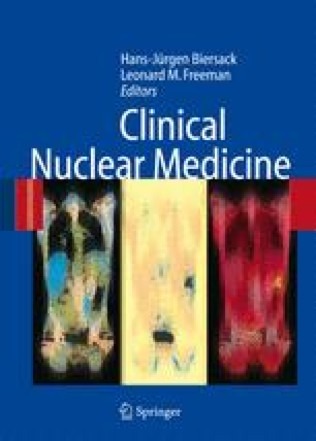
Clinical Nuclear Medicine … focuses on the universal state of the art in both diagnostic and therapeutic radionuclide methodology. … This book is easily readable, with presentation of essential points and plentiful references, and the quality of the figures and tables is excellent. … is a useful guide to students, technologists, and practitioners in nuclear medicine and radiology, as well as to general physicians who request nuclear diagnosis or treatment. … will be a welcome contribution to the bookshelf of nuclear medicine or radiology clinics.

Clinical Neuro-Ophthalmology is a challenge for residents and experienced clinicians alike. This book covers all relevant techniques of diagnosis as well as interpretations of clinical signs. All information is highly structured, highlighting ‘definition’, ‘note’ and ‘pearl’, so that it can also be used by the physician during the patient encounter. The included flow chart posters remind the physician of the most important information.
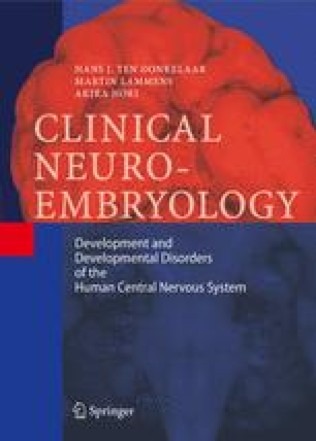
Combines data from human embryology, animal research and developmental neuropathology. This book provides an overview of the development of the human Central Nervous System (CNS) in the context of its many developmental disorders due to genetic, environmental and hypoxic causes. It highlights numerous clinical cases and contains over 400 figures.

Is a brief, clear, thorough, and updated approach to clinical microbiology, brimming with mnemonics, humor, summary charts, and illustrations. Topics include Ebola, AIDS, flesh-eating bacteria, mad cow disease, hantavirus, anthrax, smallpox, and tuberculosis; the latest antibiotics; pandemic flu, including H7N9; SARS-like coronavirus; hepatitis C treatment options; HIV diagnostics and approved HIV meds; Zika virus; measles; and a new chapter on the latest emerging infectious diseases and drug-resistant bacteria. The major update to this book is the addition of a new chapter on the SARS-COV-2 virus and COVID-19 disease, which delves into the nature of the virus such as infectivity within the body, transmission between individuals, timeline of infectivity, symptoms, risk factors, therapeutics, and vaccines approved for use.

The present volume documents and analyzes facial features in preparation for aesthetic surgery and orthodontic treatment. It takes a multidisciplinary approach, emphasizing the relationships between different parts of the face. At the end of each of the central chapters, the reader will find a multiple-choice checklist that will help him perform a step-by-step regional facial analysis.
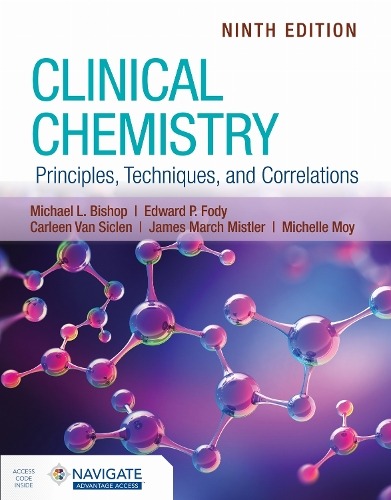
Keeps students at the forefront of what continues to be one of the most rapidly advancing areas of laboratory medicine with clear explanations that balance analytic principles, techniques, and correlation of results with coverage of disease states. The book not only demonstrates the how of clinical testing, but also the what, why, and when of testing correlations to help students develop the knowledge and interpretive and analytic skills they'll need in their future careers.
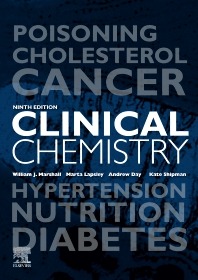
Clinical Chemistry considers what happens to the body’s chemistry when affected by disease. It provides introductory coverage of the scientific basis for biochemistry tests routinely used in medicine - including tests for the assessment of organ function, diagnosis and monitoring disease activity and therapy efficacy. Each topic area begins with a concise description of the underlying physiological and biochemical principles and then applies them to patient investigation and management. The regular use of case histories helps further emphasise clinical relevance and chapter key points, as well as provide a useful starting point for examination revision.
MRI has become the preferred noninvasive imaging modality for the heart and great vessels. The substantial technological progress achieved in recent years has provided the user with state of the art MRI systems, but their optimal use can be limited by restricted awareness of the potential patient benefit and the necessity for teaching. This extensively illustrated volume, has been specifically compiled to meet these needs. Essential theoretical background information is provided, and imaging acquisition and potential pitfalls are considered in detail. Most importantly, structured guidelines are provided on the interpretation of clinical data in the wide range of cardiac pathology that can be encountered. Throughout, the emphasis is on the implementation of cardiac MRI in clinical practice.
This volume focuses on the practical aspects of clinical electrophysiology of cardiac arrhythmias in the young as practiced by current and former faculty and fellows in the Department of Pediatric Cardiology at the University of Michigan.
MR Angiography covers the basic techniques, safety, efficacy, image processing and pharmaco-economic details to successfully implement a new level of MRA image quality with this new contrast agent.

This book offers a cross-sectoral reference for both managers and scientists interested in climate-smart forestry, focusing on mountain regions. It provides a comprehensive analysis on forest issues, facilitating the implementation of climate objectives. CLIMO has provided scientific analysis on issues including criteria and indicators, growth dynamics, management prescriptions, long-term perspectives, monitoring technologies, economic impacts, and governance tools.

Timely coverage of cleaning validation for the pharmaceutical industry, a dynamic area in terms of health-based limits. Encourages pharmaceutical manufacturers, and particularly upper management, to meet the challenges of the science-based and riskbased approaches to cleaning validation. Draws on the author’s vast experience in the field of cleaning validation and hazardous materials. Discusses EMA vs. ISPE on Cleaning Limits and revised Risk-MaPP for highly hazardous products in shared facilities. A diverse list of topics from protocol limits for yeasts and molds to cleaning validation for homeopathic drug products.
This book gives a clearly structured, well-defined compendium of classifications and scores of the shoulder for use in everyday clinical life to improve and simplify the communication between physicians and physiotherapists.
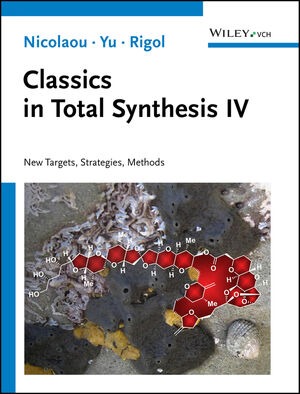
A compilation of highly important synthetic methods which lead to complex molecules with valuable properties. From the complex architectures of natural products to the streamlined synthesis of functional molecules, each chapter in Classics in Total Synthesis IV unfolds a unique story. The interplay of mechanisms, reactivity, selectivity, and stereochemical aspects is thoroughly examined, echoing the pedagogical format that has become synonymous with this series. Well-designed graphics are included throughout, and all important parts of the reaction sequences are highlighted.

Every medical specialty has a core of classic papers that reflect both the historical development of the discipline and point the way to present and future developments. The Editors of Classic Papers in Coronary Angioplasty have assembled a distinguished team of international contributors, to identify, analyze and bring together in a single volume the most important articles from a broad range of publications that have become recognized as the defining articles in coronary angioplasty.

Springer Handbook of Enzymes provides data on enzymes sufficiently well characterized. It offers concise and complete descriptions of some 5,000 enzymes and their application areas. Data sheets are arranged in their EC-Number sequence and the volumes themselves are arranged according to enzyme classes. This new, second edition reflects considerable progress in enzymology: many enzymes are newly classified or reclassified. Each entry is correlated with references and one or more source organisms. New datafields are created: application and engineering (for the properties of enzymes where the sequence has been changed). The total amount of material contained in the Handbook has more than doubled so that the complete second edition consists of 39 volumes as well as a Synonym Index.

Springer Handbook of Enzymes provides data on enzymes sufficiently well characterized. It offers concise and complete descriptions of some 5,000 enzymes and their application areas. Data sheets are arranged in their EC-Number sequence and the volumes themselves are arranged according to enzyme classes. This new, second edition reflects considerable progress in enzymology: many enzymes are newly classified or reclassified. Each entry is correlated with references and one or more source organisms. New datafields are created: application and engineering (for the properties of enzymes where the sequence has been changed). The total amount of material contained in the Handbook has more than doubled so that the complete second edition consists of 39 volumes as well as a Synonym Index.

This new, second edition reflects considerable progress in enzymology: many enzymes are newly classified or reclassified. Each entry is correlated with references and one or more source organisms. New datafields are created: application and engineering (for the properties of enzymes where the sequence has been changed). The total amount of material contained in the Handbook has more than doubled so that the complete second edition consists of 39 volumes as well as a Synonym Index. In addition, starting in 2009, all newly classified enzymes are treated in Supplement Volumes. Springer Handbook of Enzymes is an ideal source of information for researchers in biochemistry, biotechnology, organic and analytical chemistry, and food sciences, as well as for medicinal applications

This new, second edition reflects considerable progress in enzymology: many enzymes are newly classified or reclassified. Each entry is correlated with references and one or more source organisms. New datafields are created: application and engineering (for the properties of enzymes where the sequence has been changed). The total amount of material contained in the Handbook has more than doubled so that the complete second edition consists of 39 volumes as well as a Synonym Index. In addition, starting in 2009, all newly classified enzymes are treated in Supplement Volumes. Springer Handbook of Enzymes is an ideal source of information for researchers in biochemistry, biotechnology, organic and analytical chemistry, and food sciences, as well as for medicinal applications.

This new, second edition reflects considerable progress in enzymology: many enzymes are newly classified or reclassified. Each entry is correlated with references and one or more source organisms. New datafields are created: application and engineering (for the properties of enzymes where the sequence has been changed). The total amount of material contained in the Handbook has more than doubled so that the complete second edition consists of 39 volumes as well as a Synonym Index. In addition, starting in 2009, all newly classified enzymes are treated in Supplement Volumes. Springer Handbook of Enzymes is an ideal source of information for researchers in biochemistry, biotechnology, organic and analytical chemistry, and food sciences, as well as for medicinal applications.

Daraa Highway - Ghabagheb - Syria
+963-15 2050 - 15 860 380 /1/2/3 - 11 662 3900