



Page 42
Page 42

Governing knowledge : A study of continuity and change in higher education : A Festschrift in Honour of Maurice Kogan
In this book, an international group of leading higher education researchers draw on a wealth of social theory and comparative, empirical research to analyse current developments and their implications. Different contributions focus on different levels of higher education, the system, the institution and the academic practitioner, in different national and international contexts. However, strong common themes bind these contributions together. They include not only the significance of massification, globalisation, neo-liberalism and managerialism for the governance of higher education, its knowledge and values, but also the complexities of change processes, the importance of context and history and the strength of the stabilities that remain.

Governance as a trialogue
Focusing specifically on water, this book talks about the core elements of governance, and analyses the linkages between key variables in an effort to increase our understanding of what makes governance good. It is useful for any professional tasked with the responsibility of implementing Integrated Environmental and Water Resource Management.

Google Maps Mashups with Google Mapplets
Have a Google Maps mashup that you'd like to expose to millions of users on maps.google.com? New to the mapping craze, but have an idea for a killer map–based application? Want to learn how to create GeoRSS and KML feeds with your geotagged content, exposing your customer to new ways of exploring and navigating your content? Google Maps Mashups with Google Mapplets Is the first book to cover Google's Mapplet technology Shows you how to create Google Maps–based applications and publish to maps.google.com Provides a single–source resource and practical guide to Mapplets and mashups Teaches you how to mash up Mapplets using location–specific data

Good work : How to build a career that makes a difference in the world
Packed with useful tools and exercises, this step-by-step guide will help you figure out your passion and purpose, and how to effectively harness it to make real and positive change - on the world, and on your career. Whether you want to battle climate change, promote diversity and inclusion, work in sustainability - or if you're not sure, but just want to leave things a little better at the end of every work day - let this book support you in turning that passion into action.

Good pharmacovigilance practice (GVP) : Focus on risk mangement plan (RMP)
Pharmacovigilance which is the science and activities relating to the detection, assessment, understanding and prevention of adverse drug reactions or any other possible drug related problems and Risk Management Strategies which provides a structured and coherent approach to identifying, assessing and managing risk and builds in a process for regularly updating and reviewing the assessment based on new developments or actions taken, conference provides the foundation for strong strategic planning and practical decision-making in pharmacovigilance programs. Stakeholders from medicines research, global regulation, and healthcare will join together to analyse the challenges for safety and pharmacovigilance efforts in this uncertain environment and examine effective strategies for addressing gaps and needs.

Glucoszmine and Chondroitin between reality and tllusion
Despite the development of cancer treatments and the introduction of new treatments other than traditional treatments, the death rate is still high around the world for each type of cancer. Although conventional treatments are still common, as a first method in treatment, advanced new treatments have opened new horizon and have shown good efficacy in inhibiting cancer, either by treating them alone or in combination with conventional treatments, such as chemotherapy and radiation therapy. We mention in this research the latest methods of cancer treatment, such as targeted therapies in the treatment of solid cancers and leukemia. and will also mention the annual incidence rates of lines around the world. In cooperation with the head of the hematology division at the Mouwasat Hospital, Dr. Amin Suleiman, we studied cases of CML and MM patients being treated with modern therapies.

Globalization from the Bottom Up : A Blueprint for Modern Capitalism
This book argues that concentration of wealth is not sustainable. It offers an alternative model, a philosophy of "social capitalism" that is grounded in a bottom-up approach to wealth creation and presents a view of a more inclusive and sustainable future.
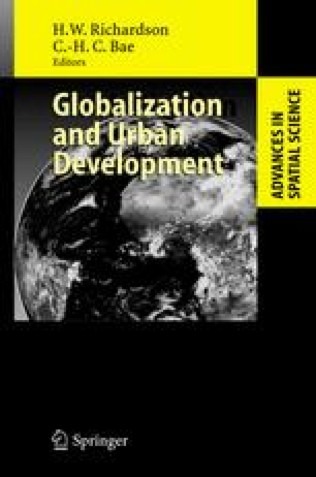
Globalization and Urban Development
Most research on globalization has focused on macroeconomic and economy-wide consequences. This book explores an under-researched area, the impacts of globalization on cities and national urban hierarchies, especially but not solely in developing countries. Most of the globalization-urban research has concentrated on the "global cities" (e.g. New York, London, Paris, Tokyo) that influence what happens in the rest of the world. In contrast, this research looks at the cities at the receiving end of the forces of globalization. The general finding is that large cities, on balance, benefit from globalization, although in some cases at the expense of widening spatial inequities.

Globalization and Sustainable Development : Environmental Agendas
A characteristic of the present global ecological situation is increasing instability or— put another way—a crisis in the civilization system, the global scale of which is expressed through a deterioration of human and animal habitats. The most sub stantial features of global ecodynamics of the late 20th and early 21st centuries include the rapid increase in world population (mainly in developing countries), increase in the size of the urban population (considerable growth in the number of megalopolises), and increase in the scales of such dangerous diseases as HIV/AIDS, hepatitis, tuberculosis, etc.

Globalization and Summit Reform : An Experiment in International Governance
This account of the 'L-20 project' describes and analyses a 3-year mobilization designed as an alternative to the political deadlocks preventing progress on critical global issues. The L-20 would include leaders from the existing G-countries, augmented by key regional powers such as China, Brazil, India, South Africa and Egypt. The book traces the origins and findings of the project, which generated a broad array of cutting-edge research and over twenty substantive, action-oriented workshops involving hundreds of experts and practitioners around the world. The workshop series examined in detail the operational possibilities for a Leaders Group addressing a range of issues, including infectious disease control, climate change/global warming, energy security, nuclear proliferation, management of international financial crises, and the provision of safe drinking water and sanitation, to name just a few.

Globalization and Regional Economic Modeling
Globalization is affecting regional economies in a broad spectrum of aspects, from labor market conditions and development policies to climate change. To understand better how this works, we need both conceptual and methodological contributions. We need new schemes to organize our thinking, direct our attention, and frame thought experiments on the basis of which guidance may be offered. And we need methodological innovations that enable us to carry out studies and thought experiments at levels of spatial and temporal resolution and formal complexity adequate to capture and account for the phenomena that characterize globalization. The chapters of this volume, written by an international cast of eminent regional scientists, represent contributions of both types, in many cases introducing and demonstrating the use of new tools for analyzing and understanding enormous changes underway in regional economies around the world.

Globalization and Environmental Challenges : Reconceptualizing Security in the 21st Century
This book contiants chapters address the theoretical, philosophical, ethical and religious and spatial context of security; discuss the relationship between security, peace, development and environment; review the reconceptualization of security in philosophy, international law, economics and political science and for the political, military, economic, social and environmental security dimension and the adaptation of the institutional security concepts of the UN, EU and NATO; analyze the reconceptualization of regional security and alternative security futures and draw conclusions for future research and action.

Globalization and culture at work : Exploring their combined glocality
Behaviour at work can no longer be stereotyped as global or local – modern or traditional – with very little in-between. Instead work behaviour is a complex interplay between Global and Local values. It takes place in a Glocality. Thus individual achievement co-exists with group aspirations, pay diversity takes place in a social context, teamwork reflects cultural narrative, and labour mobility is bound by community bias. Globalization and Culture at Work: Exploring their Combined Glocality breaks new ground by exploring such glocalities, and the implications they create for managing human potential better. The volume is essential reading for researchers, managers, culturalists and consultants of work behaviour alike.

Globalisation, Poverty and Conflict : A Critical 'Development' Reader
Is ‘development’ passé? Is it merely a by-product or a ‘trickle down’ effect of economic growth, spurred by globalisation? Will poverty simply diminish with increased global markets? This state-of-the-art critical ‘development’ reader deals with these and related questions. Globalisation, Poverty and Conflict examines the inter-relationships between globalisation, poverty and conflict. It complements current debates in the field of development studies and, in an era in which development fatigue seems to have become more profound than ever before, it brings the importance of development once again to the forefront. Achieving the Millennium Development Goals by 2015 is a concrete target which many governments have agreed to work towards.Whether these goals can be realised is another issue. Nonetheless, the Millennium Development Goals have brought more focused attention to development in the past few years and renewed debate about the relationships between the process of globalisation and widespread poverty and the emergence of violent conflicts. The authors in this edited volume discuss these inter-related and highly controversial topical elements of development in a number of chapters organised around three sets of issues: (1) globalisation, inequality and poverty; (2) governance, civil society and poverty; and (3) resource degradation, institutions and conflict. The contributions represent current thinking on (and practice of) development policy, poverty reduction, the need for multi-level democratic institutions, and the containing and prevention of conflicts. The authors confront the predominant mainstream ideas on ‘development’ and propose alternatives.

Global Risk Governance : Concept and Practice Using the IRGC Framework
This book innovative risk governance framework, the careful reviews it received from internationally recognized scientists, and the results of several case studies in which the framework has been applied to a number of significant but different risks.

Global Product : Strategy, Product Lifecycle Management and the Billion Customer Question
In the early years of the 21st Century, as a result of many changes, it has become possible for the first time for tens of thousands of companies to offer manufactured products to customers across six continents. For many of these "global products", there are potentially more than a billion customers. In 2007, Wall Street hit new highs as the enormous opportunity for increased sales and profits became clear. However the new environment is not easy to manage and the risks are high. Meeting the various requirements of customers from a range of countries, choosing the most suitable locations for the different stages of development and manufacturing, deciding what can be global and what must be local, implementing suitable processes and systems, accommodating different national regulations, and efficiently dividing the workload between diverse sites are among the many challenges faced by providers of global products.

Global perspectives on recognising non-formal and Informal Learning : Why recognition matters
This book deals with the relevance of recognition and validation of non-formal and informal learning in education and training, the workplace and society. In an increasing number of countries, it is at the top of the policy and research agenda ranking among the possible ways to redress the glaring lack of relevant academic and vocational qualifications and to promote the development of competences and certification procedures which recognise different types of learning, including formal, non-formal and informal learning. The aim of the book is therefore to present and share experience, expertise and lessons in such a way that enables its effective and immediate use across the full spectrum of country contexts, whether in the developing or developed world. It examines the importance of meeting institutional and political requirements that give genuine value to the recognition of non-formal and informal learning; it shows why recognition is important and clarifies its usefulness and the role it serves in education, working life and voluntary work; it emphasises the importance of the coordination, interests, motivations, trust and acceptance by all stakeholders.
Global perspectives on AI, ethics, and business economics : Charting the future
Offers an in-depth exploration of the complex and rapidly evolving world of artificial intelligence (AI), focusing on its ethical, economic, and business dimensions. it provides a comprehensive analysis that intertwines historical context, philosophical ethics, global economic impacts, regulatory landscapes, workforce dynamics, corporate governance, consumer behavior, data ethics, and the use of AI for the good of society. after reviewing the evolution of AI, it offers insights into its historical milestones and the trajectory it may take in the future. this sets the stage for a broader discussion on how AI is not just a technological phenomenon but also a catalyst for ethical, economic, and societal transformation. the book emphasizes the importance of understanding AI’s historical development in order to gauge its potential impacts on our future.

Global mobile satellite communications : For maritime, Land and aeronautical applications
This book is important for modern shipping, truck, train and aeronautical societies because GMSC in the present millennium provides more effective business and trade, with emphasis on safety and commercial communications. Global Mobile Satellite Communications is written to make bridges between potential readers and current GMSC trends, mobile system concepts and network architecture using a simple mode of style with understandable technical information, characteristics, graphicons, illustrations and mathematics equations

Global History and New Polycentric Approaches : Europe, Asia and the Americas in a World Network System
Examines how the discipline had evolved in various historiographies, from Anglo Saxon to southern European, and its emergence in Asia with the rapid development of the Chinese economy motivation to legitimate the current uniqueness of the history and economy of the nation. It contributes to the revitalization of the field of global history in Chinese historiography, which have been dominated by national narratives and promotes a debate to open new venues in which important features such as scholarly mobility, diversity and internationalization are firmly rooted, putting aside national specificities.
