



Page 4
Page 4
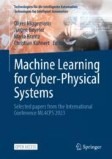
Machine learning for cyber-physical systems: selected papers from the international conference ML4CPS 2023
Contains selected papers from the international conference ML4CPS – Machine Learning for Cyber-Physical Systems, which was held in Hamburg (Germany), from 29 to 31 March 2023. Cyber-physical systems are adaptive and learning: they analyze their environment and, based on observations, learn patterns, associations and predictive models. Typical applications are condition monitoring, predictive maintenance, image processing and diagnostics. Machine learning is the key technology for these developments.

Machine Learning : ECML 2005 ; 16th European Conference on Machine Learning, Porto, Portugal, October 3-7, 2005, Proceedings
The European Conference on Machine Learning (ECML) and the European Conference on Principles and Practice of Knowledge Discovery in Databases (PKDD) were jointly organized this year for the ?fth time in a row, after some years of mutual independence before. After Freiburg (2001), Helsinki (2002), Cavtat (2003) and Pisa (2004), Porto received the 16th edition of ECML and the 9th PKDD in October 3–7. Having the two conferences together seems to be working well: 585 di?erent paper submissions were received for both events, which maintains the high s- mission standard of last year. Of these, 335 were submitted to ECML only, 220 to PKDD only and 30 to both. Such a high volume of scienti?c work required a tremendous e?ort from Area Chairs, Program Committee members and some additional reviewers. On average, PC members had 10 papers to evaluate, and Area Chairs had 25 papers to decide upon. We managed to have 3 highly qualified independent reviews per paper (with very few exceptions) and one additional overall input from one of the Area Chairs. After the authors’ responses and the online discussions for many of the papers, we arrived at the ?nal selection of 40 regular papers for ECML and 35 for PKDD. Besides these, 32 others were accepted as short papers for ECML and 35 for PKDD. This represents a joint acceptance rate of around 13% for regular papers and 25% overall.

Legitimacy In European Nature Conservation Policy : Case Studies In Multilevel Governance
Focuses on the issue of legitimacy in the context of European nature conservation policy. It provides insights in the way in which democratic legitimacy is being ‘produced’ at different levels of governance. Building forth upon recent developments in democracy theory that have identified multiple forms of legitimacy, the volume observes a EU-wide shift from output legitimacy to input and throughput legitimacy. Top down policy making is increasingly meeting

Knowledge Discovery in Databases : PKDD 2005 ; 9th European Conference on Principles and Practice of Knowledge Discovery in Databases, Porto, Portugal, October 3-7, 2005, Proceedings
585 different paper submissions were received for both events, which maintains the high s- mission standard of last year. Of these, 335 were submitted to ECML only, 220 to PKDD only and 30 to both. Such a high volume of scientific work required a tremendous effort from Area Chairs, Program Committee members and some additional reviewers. On average, PC members had 10 papers to evaluate, and Area Chairs had 25 papers to decide upon. We managed to have 3 highly qua- ?ed independent reviews per paper (with very few exceptions)and one additional overall input from one of the Area Chairs. After the authors’ responses and the online discussions for many of the papers, we arrived at the final selection of 40 regular papers for ECML and 35 for PKDD. Besides these, 32 others were accepted as short papers for ECML and 35 for PKDD. This represents a joint acceptance rate of around 13% for regular papers and 25% overall. We thank all involved for all the e?ort with reviewing and selection of papers. Besides the core technical program, ECML and PKDD had 6 invited speakers, 10 workshops, 8 tutorials and a Knowledge Discovery Challenge.

Kinetics of Water-Rock Interaction
Systems at the surface of the Earth are continually responding to energy inputs derived from solar radiation or from the radiogenic heat in the interior. These energy inputs drive plate movements and erosion, exposing metastable mineral phases at the Earth’s surface. In addition, these energy fluxes are harvested and transformed by living organisms. As long as these processes persist, chemical disequilibrium at the Earth’s surface will be perpetuated. Chemical disequilibrium is also driven by human activities related to production of food, extraction of water and energy resources, and burial of wastes. To understand how the surface of the Earth will change over time, we must understand the rates at which reactions occur and the chemical feedbacks that relate these reactions across extreme temporal and spatial scales. This book addresses fundamental and applied questions concerning the rates of water-rock interactions driven by tectonic, climatic, and anthropogenic forcings.

Java : how to program. Late objects : Introducing Jshell
Introduction to Computers, the Internet and Java / Introduction to Java Applications; Input/Output and Operators / Control Statements: Part 1; Assignment, ++ and Operators / Control Statements: Part 2; Logical Operators / Methods / Arrays and ArrayLists / Introduction to Classes and Objects / Classes and Objects: A Deeper Look / Object-Oriented Programming: Inheritance / Object-Oriented Programming: Polymorphism and Interfaces / Exception Handling: A Deeper Look / JavaFX Graphical User Interfaces / JavaFX GUI / Strings, Characters and Regular Expressions / Files, Input/Output Streams, NIO and XML Serialization / Generic Collections / Lambdas and Streams / Recursion / Searching, Sorting and Big O / Generic Classes and Methods: A Deeper Look / Custom Generic Data Structures / JavaFX Graphics and Multimedia / Concurrency / Accessing Databases with JDBC / Introduction to JShell: Java 9's REPL for Interactive Java

Classical Biological Control of Bemisia tabaci in the United States : A Review of Interagency Research and Implementation
This book reviews the interagency research and development effort on classical biological control in the USA from 1992-2002. The successful exploration, importation, screening, evaluation, rearing, and establishment of at least five exotic Bemisia. tabaci natural enemies in rapid response to the devastating infestations in the USA is a landmark in interagency cooperation and coordination of multiple disciplines. In this volume, the various authors present detailed reviews of natural enemy exploration, introduction, and evaluation efforts that will serve as a guide to support and encourage classical biological control inputs into other integrated pest management systems.

Carbonate Reservoir Characterization : An Integrated Approach
One principal need in petroleum recovery from carbonate reservoirs is the description of the three-dimensional distribution of petrophysical properties in order to improve performance predictions by means of fluid-flow computer simulations. The book focuses on a rock based approach for the integration of geological, petrophysical, and geostatistical methods to construct a reservoir model suitable to input into flow simulation programs. This second edition includes a new chapter on model construction and new examples of limestone, dolostone, and touching-vug reservoir models as well as improved chapters on basic petrophysical properties, rock-fabric/petrophysical relationships, calibration of wireline logs, and sequence stratigraphy.

Capillary Forces in Microassembly : Modeling, Simulation, Experiments, and Case Study
Capillary Forces in Microassembly discusses the use of capillary forces as a gripping principle in microscale assembly. Clearly written and well-organized, this text brings together physical concepts at the microscale with practical applications in micromanipulation. Throughout this work, the reader will find a review of the existing gripping principles, elements to model capillary forces as well as descriptions of the simulation and experimental test bench developed to study the design parameters. Using well-known concepts from surface science (such as surface tension, capillary effects, wettability, and contact angles) as inputs to mechanical models, the amount of effort required to handle micro-components is predicted. These developments are then applied in a case study concerning the pick and place of balls in a watch ball bearing.

Biology and mechanics of blood flows ; Part II : Mechanics and medical aspects
Biology and Mechanics of Blood Flows presents the basic knowledge and state-of-the-art techniques necessary to carry out investigations of the cardiovascular system using modeling and simulation. Part II of this two-volume sequence, Mechanics and Medical Aspects, refers to the extraction of input data at the macroscopic scale for modeling the cardiovascular system, and complements Part I, which focuses on nanoscopic and microscopic components and processes. This volume contains chapters on anatomy, physiology, continuum mechanics, as well as pathological changes in the vasculature walls including the heart and their treatments. Methods of numerical simulations are given and illustrated in particular by application to wall diseases. This authoritative book will appeal to any biologist, chemist, physicist, or applied mathematician interested in the functioning of the cardiovascular system.
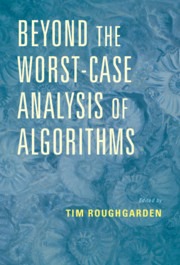
Beyond the Worst-Case Analysis of Algorithms
There are no silver bullets in algorithm design, and no single algorithmic idea is powerful and flexible enough to solve every computational problem. Nor are there silver bullets in algorithm analysis, as the most enlightening method for analyzing an algorithm often depends on the problem and the application. However, typical algorithms courses rely almost entirely on a single analysis framework, that of worst-case analysis, wherein an algorithm is assessed by its worst performance on any input of a given size. The purpose of this book is to popularize several alternatives to worst-case analysis and their most notable algorithmic applications, from clustering to linear programming to neural network training. Forty leading researchers have contributed introductions to different facets of this field, emphasizing the most important models and results, many of which can be taught in lectures to beginning graduate students in theoretical computer science and machine learning.

Basic principles of drug discovery and development ; 2nd ed.
Presents the multifaceted process of identifying a new drug in the modern era, which requires a multidisciplinary team approach with input from medicinal chemists, biologists, pharmacologists, drug metabolism experts, toxicologists, clinicians, and a host of experts from numerous additional fields. Enabling technologies such as high throughput screening, structure-based drug design, molecular modeling, pharmaceutical profiling, and translational medicine are critical to the successful development of marketable therapeutics. Given the wide range of disciplines and techniques that are required for cutting edge drug discovery and development, a scientist must master their own fields as well as have a fundamental understanding of their collaborator’s fields.

Avalanche Dynamics : Dynamics of Rapid Flows of Dense Granular Avalanches
Avalanches, debris, mudflows and landslides are common and natural phenomena that occur worldwide, predominantly in mountainous regions. With an emphasis on snow avalanches, this book sets out to provide a survey and discussion about the motion of avalanche-like flows from initiation to run out. An important aspect of this book is the formulation and investigation of a simple but appropriate continuum mechanical model for the realistic prediction of geophysical flows of granular material. This will help the practitioners in the field to better understand the physical input and provide them with a tool for their work. Originating from many lectures the authors have given over the years, this instructive volume brings the reader to the forefront of research - an aim also supported by an extensive bibliogrpahy of almost 500 entries.
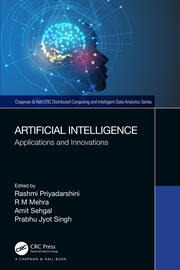
Artificial Intelligence : Applications and innovations
It's about the science of artificial intelligence (AI). AI is the study of the design of intelligent computational agents. This book provides a valuable resource for researchers, scientists, professionals, academicians and students dealing with the new challenges and advances in the areas of AI and innovations. This book also covers a wide range of applications of machine learning such as fire detection, structural health and pollution monitoring and control. Provides insight into prospective research and application areas related to industry and technology / Discusses industry- based inputs on success stories of technology adoption / Discusses technology applications from a research perspective in the field of AI / Provides a hands- on approach and case studies for readers of the book to practice and assimilate learning

Approximate and noisy realization of discrete-time dynamical systems
This monograph deals with approximation and noise cancellation of dynamical systems which include linear and nonlinear input/output relations. It will be of special interest to researchers, engineers and graduate students who have specialized in ?ltering theory and system theory. This monograph provides new results and their extensions which can also be applied to nonlinear dynamical systems.

Android smart health monitoring system
Recent years have witnessed an increasing interest in the application of machine learning to clinical informatics and healthcare system never forgetting that the data also states that half of the world's population uses mobile devices. Despite of the existence of tons of applications, algorithms, and systems, the achievement of prescribing proper food that is suitable for patient health case based on face health status, height, weight, daily calories etc.., wasn’t achieved yet because of the lack of knowledge in food therapy process. Our system provides the service of food suggestion based on the input that is inserted by the user in sign-up form which are (height, weight, age, etc….).

An Introduction to Meshfree Methods and Their Programming
This book aims to present meshfree methods in a friendly and straightforward manner, so that beginners can very easily understand, comprehend, program, implement, apply and extend these methods. It provides first the fundamentals of numerical analysis that are particularly important to meshfree methods. Typical meshfree methods, such as EFG, RPIM, MLPG, LRPIM, MWS and collocation methods are then introduced systematically detailing the formulation, numerical implementation and programming. Many well-tested computer source codes developed by the authors are attached with useful descriptions. The application of the codes can be readily performed using the examples with input and output files given in table form. These codes consist of most of the basic meshfree techniques, and can be easily extended to other variations of more complex procedures of meshfree methods. Readers can easily practice with the codes provided to effective learn and comprehend the basics of meshfree methods.

AI virtual mouse system
Even today, many people still find interacting with computers and hardware to be an unpleasant experience, despite the development of input devices over decades. Computers and hardware should be tailored to our natural modes of communication: Body language and speech. Intelligent machines that can work alongside computers are now being developed, allowing for friendlier Human-Computer Interaction (HCI). this project, intends a hand gesture-based system that allows users to control virtual keyboard, desktop mouse movements and connect it with mobile phone in order to monitor and control.
Advances in cryptology - CRYPTO -87 ; Conference on the theory and applications of cryptographic techniques : Proceedings
Zero-knowledge interactive proofsystems are a new technique which can be used as a cryptographic tool for designing provably secure protocols. Goldwasser, Micali, and Rackoff originally suggested this technique for controlling the knowledge released in an interactive proof of membership in a language, and for classification of languages. In this approach, knowledge is defined in terms of complexity to convey knowledge if it gives a computational advantage to the receiver, theory, and a message is said for example by giving him the result of an intractable computation. The formal model of interacting machines is described in. A proof-system (for a language L) is an interactive protocol by which one user, the prover, attempts to convince another user, the verifier, that a given input x is in L. We assume that the verifier is a probabilistic machine which is limited to expected polynomial-time computation, while the prover is an unlimited probabilistic machine.

Advanced strategies in control systems with Input and Output Constraints
The different techniques described throughout the book are particularly attractive for industrial applications not only in aeronautical or space domains but also in the context of biological systems domain. Such methods are well suited for the development of tools that help engineers to solve analysis and synthesis problems in the context of control systems with input and output constraints
