


Refine Results
Sort By
From
To

Presents some of the most recent research results in the area of machine learning and robot perception. The chapters represent new ways of solving real-world problems. This book will appeal to researchers, senior undergraduate/postgraduate students, application engineers and scientists.
Good computer books make assumptions about the reader: what they do and don't know when they pick up the book, and what they want to know when they put it down. For each reader this could be very different; therefore, a book that suits one person may not be the best for another. Mac OS X Leopard: Beyond the Manual makes some assumptions too, ones that tend to differ from other Mac OS X books. First of all, we assume that you have used a computer in that past: that you know how to use a mouse and you know the proper place to stick a DVD to get it to play in your computer. We won't be showing you these things. (We will, however, demonstrate to our Mac converts how to “right click” on a trackpad with only one button!).
Inaugurates the new FoLLI LNAI subline. It constitutes the refereed proceedings of the 5th International Conference on Logical Aspects of Computational Linguistics, LACL 2005, held in Bordeaux, France in April 2005. The 25 revised full papers presented were carefully reviewed and selected from over 40 submissions. The papers address a wide range of logical and formal methods in computational linguistics with studies of particular grammar formalisms and their computational properties, language engineering, and traditional topics about the syntax/semantics interface.
Shows the use of statistical tools for forecasting and analyzing implications of land-use decisions. The idea is that la- use on a map is necessarily a consequence of individual, and often conflicting, siting decisions over time.
LNA-ESD Co-Design for Fully Integrated CMOS Wireless Receivers fits in the quest for complete CMOS integration of wireless receiver front-ends. With a combined discussion of both RF and ESD performance, it tackles one of the final obstacles on the road to CMOS integration.
Every C# programmer needs to learn about LINQ (Language–Integrated Query), Microsoft's breakthrough technology for simplifying and unifying data access from any data source. With LINQ, you can write more elegant and flexible code—not just to access databases and files, but to manipulate data structures and XML. This book is a short, yet comprehensive guide to the major features of LINQ and the significant enhancements introduced with .NET 3.5. There is no better source for getting a head–start on the future of these technologies than this book.

Presents a modern and self-contained treatment of the Liapunov method for stability analysis, in the framework of mathematical nonlinear control theory. A Particular focus is on the problem of the existence of Liapunov functions (converse Liapunov theorems) and their regularity, whose interest is especially motivated by applications to automatic control.
As part of this objective, ICT (information and communication technologies) services should become available for every citizen, and for all schools, homes and businesses. The book you have in front of you is about Semantic Web technology and law. Law is something omnipresent; all citizens — at some points in their lives — have to deal with it. In addition, law involves a large group of professionals, and is a mul- billion business world wide. Information technology is important because it that can improve citizens’ interaction with law, as well as improve legal professionals’ work environment. Legal professionals dedicate a significant amount of their time to finding, reading, analyzing and synthesizing information in order to take decisions, and prepare advice and trials, among other tasks. As part of the “Semantic-Based Knowledge and Content Systems” Strategic Objective, the European Commission is funding projects to construct technology to make the Semantic Web vision come true. 1 The articles in this book are related to two current foci of the Strategic Objective : • Knowledge acquisition and modelling, capturing knowledge from raw information and multimedia content in webs and other distributed repositories to turn poorly structured information into machi- processable knowledge.
The IFIP series publishes state-of-the-art results in the sciences and technologies of information and communication. The scope of the series includes: foundations of computer science; software theory and practice; education; computer applications in technology; communication systems; systems modeling and optimization; information systems; computers and society; computer systems technology; security and protection in information processing systems; artificial intelligence; and human-computer interaction. Proceedings and post-proceedings of referred international conferences in computer science and interdisciplinary fields are featured. These results often precede journal publication and represent the most current research. The principal aim of the IFIP series is to encourage education and the dissemination and exchange of information about all aspects of computing.
Explores knowledge and skill chains in engineering and manufacturing in the age of global communications. Information infrastructure involves a range of activities from product planning, engineering, and manufacturing trough transportation, marketing, and repair/upgrade to returns and recycling/disposal. Distinct from the traditional engineering database, life-cycle support information has its own characteristic requirements, -- flexible extensibility, distributed architecture, multiple viewpoints, long-time archiving, and product usage information. Several authors address the architecture of the information infrastructure, its services and its requirements. Other papers focus on the knowledge and skill chains that develop in a variety of situations: the supply chain, the factory floor, the man-system interaction, etc. For each of these, state-of-the-art and state-of-research scenarios for various industrial sectors address both engineering and operations requirements in the current socio-economic environment.
Combines clear explanations of data structure and algorithm theory with practical code samples, examples and exercises, all specifically relevant to JavaScript Provides background information on object-oriented programming and native JavaScript concepts to help understand how everything fits together Illustrates how these theoretical computer science concepts ties back to practical applications in software engineering
This book is structured around the main theories and models used by practitioners to engineer finance and investment tools. The methods developed and implemented in the text are organized as chapters which cover the core areas.
The purpose of this book is to present current status of this technology by looking at its application in different domains, such as electronic markets, e-tourism, ambience intelligence, and complex system analysis.It starts by discussing software engineering issues for the development of multi-agent systems, how much it costs to build a multi-agent system, and which methods and tools are currently available. Next chapters present some of the most relevant aspects that are considered for the development of multi-agent systems.
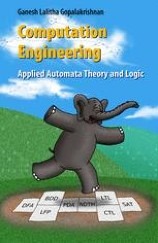
This book covers automata in depth, providing good intuitions along the way, and culminating with applications that are used every day in the field. In this respect, it is a departure from the conventional textbooks on complexity and computability, although these 'tradtional' aspects remain well represented.

Component-based software development regards software construction in terms of conventional engineering disciplines where the assembly of systems from readily-available prefabricated parts is the norm. Because both component-based systems themselves and the stakeholders in component-based development projects are different from traditional software systems, component-based testing also needs to deviate from traditional software testing approaches. Gross first describes the specific challenges related to component-based testing like the lack of internal knowledge of a component or the usage of a component in diverse contexts. He argues that only built-in contract testing, a test organization for component-based applications founded on building test artifacts directly into components, can prevent catastrophic failures like the one that caused the now famous ARIANE 5 crash in 1996. This book is the first comprehensive treatment of the intricacies of testing component-based software systems. With its strong modeling background, it appeals to researchers and graduate students specializing in component-based software engineering. Professionals architecting and developing component-based systems will profit from the UML-based methodology and the implementation hints based on the XUnit and JUnit frameworks.
Embedded systems are ubiquitous. They appear in cell phones, microwave ovens, refrigerators, consumer electronics, cars, and jets. Some of these embedded s- tems are safety- or security-critical such as in medical equipment, nuclear plants, and X-by-wire control systems in naval, ground and aerospace transportation - hicles. With the continuing shift from hardware to software, embedded systems are increasingly dominated by embedded software. Embedded software is complex. Its engineering inherently involves a mul- disciplinary interplay with the physics of the embedding system or environment. Embedded software also comes in ever larger quantity and diversity. The next generation of premium automobiles will carry around one gigabyte of binary code. The proposed US DDX submarine is e?ectively a ?oating embedded so- ware system, comprising 30 billion lines of code written in over 100 programming languages. Embedded software is expensive. Cost estimates are quoted at around US$15– 30 per line (from commencement to shipping). In the defense realm, costs can range up to $100, while for highly critical applications, such as the Space Shuttle, the cost per line approximates $1,000. In view of the exponential increase in complexity, the projected costs of future embedded software are staggering.

Modern cryptology employs mathematically rigorous concepts and methods from complexity theory. Conversely, current research in complexity theory often is motivated by questions and problems arising in cryptology. This book takes account of this trend, and therefore its subject is what may be dubbed "cryptocomplexity,'' some sort of symbiosis of these two areas. This textbook is suitable for undergraduate and graduate students of computer science, mathematics, and engineering, and can be used for courses on complexity theory and cryptology, preferably by stressing their interrelation. Starting from scratch, it is an accessible introduction to cryptocomplexity and works its way to the frontiers of current research. It provides the necessary mathematical background, has numerous figures, exercises, and examples, and presents some central, up-to-date research topics and challenges. Due to its comprehensive bibliography and subject index, it is also a valuable source for researchers, teachers, and practitioners working in these fields.
Learn all the algorithmic techniques and programming skills you need from two experienced coaches, problem setters, and jurors for coding competitions. The authors highlight the versatility of each algorithm by considering a variety of problems and show how to implement algorithms in simple and efficient code. What to expect: * Master 128 algorithms in Python. * Discover the right way to tackle a problem and quickly implement a solution of low complexity.
Discusses advances in smart and sustainable development of smart environments. The authors discuss the challenges faced in developing sustainable smart applications and provide potential solutions. The solutions are aimed at improving reliability and security with the goal of affordability, safety, and durability. Topics include health care applications, sustainable smart transportation systems, intelligent sustainable wearable electronics, and sustainable smart building and alert systems. Authors are from both industry and academia and present research from around the world. Addresses problems and solutions for sustainable development of smart cities; Includes applications such as healthcare, transportation, wearables, security, and more ; Relevant for scientist and researchers working on real time smart city development.
This book provides a gentle, software engineering oriented introduction to category theory. Assuming only a minimum of mathematical preparation, this book explores the use of categorical constructions from the point of view of the methods and techniques that have been proposed for the engineering of complex software systems: object-oriented development, software architectures, logical and algebraic specification techniques, models of concurrency, inter alia. After two parts in which basic and more advanced categorical concepts and techniques are introduced, the book illustrates their application to the semantics of CommUnity – a language for the architectural design of interactive systems. "For computer scientists, this unique book presents Category Theory in a manner tailored to their interests and with examples to which they can relate." Ira Forman, IBM "This book applies little-known yet quite powerful formal tools from category theory to software structures: designs, architectures, patterns, and styles. Rather than focus on issues at the level of computational models and semantics, it instead applies these tools to some of the problems facing the sophisticated software architect.

Daraa Highway - Ghabagheb - Syria
+963-15 2050 - 15 860 380 /1/2/3 - 11 662 3900