


Refine Results
Sort By
From
To


Digital technology determines today’s world and will be one of the key technologies of the future. Successful technology development, introduction and management are not only a question of technical issues; due to their complexity a close cooperation between different scientific disciplines is required to discuss various consequences, chances and risks from manifold points of view as a starting point for the design of adequate solutions. The ability to integrate business and technology decisions will become a crucial core competence.
Analyses and integrates existing approaches to managing and coordinating a digital transformation in order to identify relevant success factors of a digital transformation, serving as a basis for the development of a systematic framework for a management model of digital transformation. The analysis reveals ten success-critical focus areas of a digital transformation, which comprise numerous success factors: ‘Vision, goals, and strategies’, ‘Leadership’, ‘Communication’, ‘Digital culture and mindset’, ‘Digital platform’, ‘Partnership network’, ‘Capabilities, talents, and skills’, ‘Organization, coordination, and roles’, ‘Management methodologies’, and ‘Governance’.
Provides a comprehensive overview of the essential topics in the field of management in marketing communication. these substantial topics are examined and addressed by scholars from the marketing and management discipline. beginning with the role of culture as a crucial element in marketing communication, the book delves into various matters within the scope of marketing communication. consequently, social media and its significance in modern marketing strategies are examined together with the topic of transition from offline to online marketing, emphasizing the impact of accelerated digitalization and its onset during the third decade of the twenty-first century. furthermore, the book discusses the rapid digital transformation stimulated by the COVID-19 pandemic and thus creates room for further exploration and research.
With the widespread transformation of information into digital form throughout society – firms and organisations are embracing this development to adopt multiple types of IT to increase internal efficiency and to achieve external visibility and effectiveness – we have now reached a position where there is data in abundance and the challenge is to manage and make use of it fully. This book addresses this new managerial situation, the post-digitalisation era, and offers novel perspectives on managing the digital landscape.

The ongoing digitization process affects all areas of the media industry. Within the scientific discussion, movie production is little observed although it currently faces crucial structural developments. The change to digital production processes allows new ways of cooperation and coordination in the project networks. Marcus Pankow examines the specifics of the movie production industry and its value-creating processes, reflecting the digitization and its impact on the information systems strategy. An empirical case study analysis forms the basis for the development of a reference model for a company-wide application system to support the entire movie production process. Following the concept of a Service Oriented Architecture (SOA), he encapsulates established applications in services and integrates them on one platform.
Aims to revisit the “traditional” interaction between channel strategies and the marketing mix in a connected world. In particular, it focuses on the following four dimensions in this context: Consumers, Products, Value Proposition and Sustainability. Keeping in mind the growing digitalization of business processes in the retail world and the move towards omni-channel retailing.

Provides a set of integrated frameworks—capital, systems, and objects—that transcend managerial or technology hype by focusing on the long-term fundamentals that sustain organizational success. Many organizations are currently addressing two important transformational issues: ecological sustainability and digitization. Sustainability is a goal, an end, and digitization is a process, a means to achieve a goal. This book introduces a flexible model that can be applied to current and future organizational challenges, including sustainability and digitization, because the fundamentals are constant.

This book reveals the psychology behind how we feel about businesses, their communications and their leaders in a digital world. From understanding the new dynamics shaping online behaviour, to the evolving expectations driving employees and consumers, Business Unusual will teach you how to build a resilient business - one that is built on trust, an engaged and fulfilled workforce, and the brand values that can empower you to craft resonant communications and relationships.
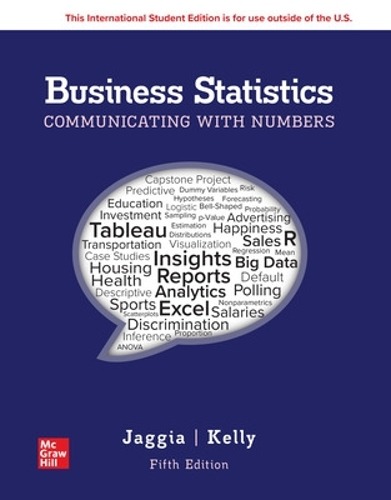
Takes a comprehensive and contemporary approach that aims to bridge the gap between how statistics is taught and applied in the business world. this title not only prepares students in basic statistics but also gets them excited about further exploration of data analytics. the authors emphasize communicating with numbers rather than number crunching, through relatable case studies with relevant statistical methods and takeaways. this title incorporates timely examples from various fields, reinforces core features from previous editions, uses Excel and R to analyze data and solve problems, and includes new improvements, such as a revised chapter on data visualization, an exclusive chapter on logistic regression, and digital enhancements such as a big data capstone project with algorithmic exercises that span across multiple chapt.
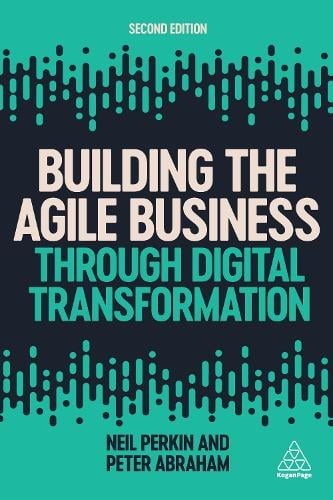
Building the Agile Business through Digital Transformation is an in-depth guide for all those needing to better understand, implement and lead digital transformation in the workplace. It sets aside traditional thinking and outdated strategies to explain what steps need to be taken for an organization to become truly agile, embed innovation and develop talent to succeed.

This is a critical study of the changing relationship between media and marketing communications in the digital age. It examines the growth of content funded by brands, including brands’ own media, native advertising, and the integration of branded content across film, television, journalism and publishing, online, mobile, and social media.

Focuses on the concept of “brand hate” and consumer negativity in today’s digital markets. It explores the emotional detachment consumers generate against valued brands and how negative experiences affect their and other consumers' loyalty. The book defines consumer brand hate and discusses its dimensions, antecedents, and consequences as well as the semiotics and legality of such brand hate activities based on current brand dilution arguments. It describes the situations which lead to anti-branding and how consumers choose to express their dissatisfaction with a company on individual and social levels. This newly updated edition discusses recent research findings from brand hate literature with new cases and extended managerial analysis.
Aims to explore the aspects of strategic leadership in a digital context together with the cyber-physical relationships whilst performing business activities. Furthermore, this book looks to investigate the interactions from both the organization strategy including the cross-functional actors/stakeholders whom are operating within the organization and the various characteristics of operating in a cyber secure ecosystem.
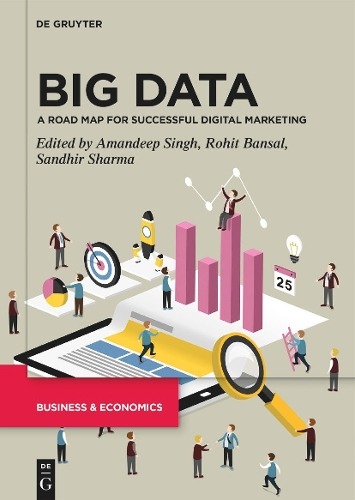
Explores recent trends in the use of big data to predict consumer behavior, strategies to engage online customers, integration of big data with other data sources, and its applications in social media analytics, mobile marketing, search engine optimization and customer relationship management.
Explores recent trends in the use of big data to predict consumer behavior, strategies to engage online customers, integration of big data with other data sources, and its applications in social media analytics, mobile marketing, search engine optimization and customer relationship management.
Shedding new light on the human side of big data through the lenses of emotional and social intelligence competencies, this book advances the understanding of the requirements of the different professions that deal with big data. It also illustrates the empirical evidence collected through the application of the competency-based methodology to a sample of data scientists and data analysts, the two most in-demand big data jobs in the labor market.
Covers the basics of business-to-business (B2B) eCommerce, where similar principles of customer targeting can be observed as in B2C eCommerce. Gerrit Heinemann highlights the specifics and business models of B2B eCommerce, analyzes the digital challenges and shows the consequences and opportunities for online sales in B2B. Recognised best-practice examples illustrate how successful B2B eCommerce can work and which risks have to be considered.

Examines the corporate asset market and the mechanisms of asset sale transactions. The book then focuses on the theory of finance in asset sales (the efficiency and financing theory) and the extensive empirical literature now available. In light of recent and rapid technological and digital advances, the last section presents new perspectives on analyzing asset sales transactions. Chiefly intended as a primer for PhD students and academics, the book offers a road map of the empirical research landscape and suggests future research directions.

Explores the past, present, and future of artificiality and sustainability in entrepreneurship – the unforeseen consequences and ways to advance to a sustainable future. In particular, it connects artificiality, sustainability and entrepreneurship, intertwining artificial with the specific phenomenon of those novel digital technologies that provoke continuous and significant change in our lives and business. Unlike digital entrepreneurship research, which focuses on digital technology development and management, this book covers processes and mechanisms of sustainable adaptability of entrepreneurs, the business logic of start-ups, and the collaborative behaviours under the mass digital transformation, including the prevalence of artificial intelligence. Some of the questions that this book answers are as follows: How has entrepreneurship reacted to such challenges previously? What lessons have been learned and need to be carried forward? How can entrepreneurship and the artefacts of entrepreneurship respond to current challenges? What should be the mindset of the entrepreneur to assure sustainable adaptation? How to embrace and embed the new business logic?

With the continuing dispersion of the global digital network and performance improvements of information and communication technologies, resource-poor start-ups with online business models have emerged in large numbers. These firms are able to deploy their competitive advantages across their country borders early in their life-cycle and engage in international commerce at a fast pace. An increased immediacy between the firms and the globally accessible customer is observed. Julia Christofor’s study aims to analyze the conditions of the initial internationalization decision in the Net Economy. Based on Information Systems, International Entrepreneurship, and Entrepreneurship literature, factors, which constitute the internationalization propensity, are derived. The results of this study suggest that a holistic perspective including the founder, business model and the firm level should be considered when explaining the internationalization propensity of entrepreneurs.

Daraa Highway - Ghabagheb - Syria
+963-15 2050 - 15 860 380 /1/2/3 - 11 662 3900