



Page 381
Page 381

Agent communication ; International workshop on agent communication, AC 2004, New York, NY, July 19, 2004
In this book, we present a collection of papers around the topic of agent com- nication. The communication between agents has been one of the major topics of research in multiagent systems. The current work can therefore build on a number of previous Workshops of which the proceedings have been published in earlier volumes in this series. The basis of this collection is formed by the accepted submissions of the Workshop on Agent Communication held in c- junction with the AAMAS Conference in July 2004 in New York. the current collection comprises a very good and quite complete overview of the state of the art in this area of research and gives a good indication of the topics that are of major interest at the moment. The papers can roughly be divided over the following ?ve themes: – social commitments – multiparty communication – content languages – dialogues and conversations – speech acts Although these themes are of course not mutually exclusive they indicate some main directions of research. We therefore have arranged the papers in the book according to the topics indicated above.

Agent and Multi-Agent Systems : Technologies and Applications ; 2nd KES International Symposium, KES-AMSTA 2008, Incheon, Korea, March 26-28, 2008. Proceedings
The KES-AMSTA Symposium Series is a sub-series of the KES Conference Series. The aim of the symposium was to provide an international forum for scientific research into the technologies and applications of agent and multi-agent systems.

Agent and multi-agent systems : Technologies and applications ; 1st KES International Symposium, KES-AMSTA 2007, Wroclaw, Poland, May 31-June 1, 2007, Proceedings
The aim of the symposium was to provide an international forum for scientific - search in the technologies and applications of agent and multi-agent systems. Agents and multi-agent systems are related to the modern software which has long been r- ognized as a promising technology for constructing autonomous, complex and intel- gent systems. A key development in the field of agent and multi-agent systems has been the specification of agent communication languages and formalization of - tologies. Agent communication languages are intended to provide standard decla- tive mechanisms for agents to communicate knowledge and make requests of each other, whereas ontologies are intended for conceptualization of the knowledge - main.

Agency and causal explanation in economics
This book provides an exploration of the consequences of the ontological differences between natural and social objects (sometimes described as objects of nature and objects of thought) in the workings of causal and agency relationships.
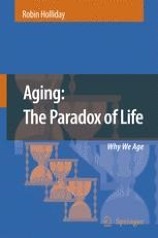
Ageing : The Paradox of Life : Why We Age
For centuries people have been puzzled by the inevitability of human aging. For most of the second half of the twentieth century aging remained a mystery, or an unsolved biological problem. At the end of the 20th century a remarkable scientific discovery emerged. It was not a single discovery in the usual sense, because it was based on a series of important interconnected insights over quite a long period of time. These insights made it possible for the very first time to understand the biological reasons for aging in animals and man. It can already be said, however, that the many observations and insights that explain aging will not be accepted as established knowledge for a long time.

After Bourdieu : Influence, Critique, Elaboration
Intellectual origins & orientations We begin by providing an overview of Bourdieu’s life as a scholar and a public intellectual. The numerous obituaries and memorial tributes that have appeared following Bourdieu’s untimely death have revealed something of his life and career, but few have stressed the intersection of his social origins, career trajectory, and public intellectual life with the changing political and social context of France. This is precisely what David Swartz’s “In memoriam” attempts to accomplish. In it he emphasizes the coincidence of Bourdieu’s young and later adulthood with the period of decolonization, the May 1968 French university crisis, the opening up of France to privatization of many domains previously entrusted to the state (l’état providence), and, most threatening to post-World War II reforms, the emergence of globalization as the hegemonic structure of the 21st century.

African Handbook of Climate Change Adaptation
discusses current thinking and presents the main issues and challenges associated with climate change in Africa. It introduces evidences from studies and projects which show how climate change adaptation is being - and may continue to be successfully implemented in African countries. Thanks to its scope and wide range of themes surrounding climate change, the ambition is that will be a lead publication on the topic, which may be regularly updated and hence capture further works.
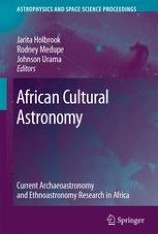
African Cultural Astronomy : Current Archaeoastronomy and Ethnoastronomy research in Africa
Astronomy is the science of studying the sky using telescopes and light collectors such as photographic plates or CCD detectors. However, people have always studied the sky and continue to study the sky without the aid of instruments this is the realm of cultural astronomy. This is the first scholarly collection of articles focused on the cultural astronomy of Africans. It weaves together astronomy, anthropology, and Africa. The volume includes African myths and legends about the sky, alignments to celestial bodies found at archaeological sites and at places of worship, rock art with celestial imagery, and scientific thinking revealed in local astronomy traditions including ethnomathematics and the creation of calendars. Authors include astronomers Kim Malville, Johnson Urama, and Thebe Medupe; archaeologist Felix Chami, and geographer Michael Bonine, and many new authors.

African Biodiversity : molecules, organisms, ecosystems
BIOTA is an interdisciplinary research project focusing on sustainable use and conservation of biodiversity in Africa (http://www.biote-africa.de). Session titles were Biogeography and Speciation Processes, Phylogenetic Patterns and Systematics, Diversity Declines and Conservation, and Applied Biodiversity Informatics

Africa-Europe Research and Innovation Cooperation : Global Challenges, Bi-regional Responses
Concerned with the evolution and achievements of cooperation in research and innovation between Africa and Europe, and points to the need for more diversified funding and finance mechanisms, and for novel models of collaboration to attract new actors and innovative ideas. It reflects on the political, economic, diplomatic and scientific rationale for cooperation, while also examining practical developments, illustrated with examples, in the fields of food security, health, and climate change. The need to mobilise scientific knowledge and to ensure equality and fairness in the cooperation are recurrent themes. Africa-Europe Cooperation in Research and Innovation is essential reading for policy makers and researchers in international relations and science diplomacy.

Africa-EU Renewable Energy Research and Innovation Symposium 2018 (RERIS 2018) ; 23–26 January 2018, National University of Lesotho On occasion of NULISTICE 2018
This open access book presents the proceedings of the 2nd Africa-EU Renewable Energy Research and Innovation Symposium (RERIS 18), held in Maseru, Lesotho in January 2018. The symposium aimed to foster research cooperation on renewable energy between Africa and Europe – in academia, as well as the private and public sectors. Addressing thematic areas such as • Grid-connected renewable energy; • Decentralised renewable and household energy solutions; • Energy ocioeconomics; and • Promotion of energy research, innovation, education and entrepreneurship.

Affordable housing for smart villages
Initiates a fresh discussion of affordability in rural housing set in the context of the rapidly shifting balance between rural and urban populations. It conceptualises affordability in rural housing along a spectrum that is interlaced with cultural and social values integral to rural livelihoods at both personal and community level. Developed around four intersecting themes: explaining houses and housing in rural settings; exploring affordability in the context of aspirations and vulnerability; rural development agendas involving housing and communities; and construction for resilience in rural communities, the book provides an overview of some of the little understood and sometimes counter-intuitive best practices on rural affordability and affordable housing that have emerged in developing economies over the last thirty years.

Affective computing and intelligent interaction ; 2nd International Conference, ACII 2007, Lisbon, Portugal, September 12-14, 2007, Proceedings
Organized in topical sections on affective facial expression and recognition, affective body expression and recognition, affective speech processing, affective text and dialogue processing, recognising affect using physiological measures, computational models of emotion and theoretical foundations, affective databases, annotations, tools and languages, affective sound and music processing, affective interactions: systems and applications, as well as evaluating affective systems.

Affective computing and intelligent interaction ; 1st international conference, ACII 2005, Beijing, China, October 22-24, 2005, Proceedings
Traditionally, the machine end of human–machine interaction has been very passive, and certainly has had no means of recognizing or expressing a?ective information. But without the ability to process such information, computers cannot be expected to communicate with humans in a natural way. The ability to recognize and express a?ect is one of the most important features of - man beings. We therefore expect that computers will eventually have to have the ability to process a?ect and to interact with human users in ways that are similar to those in which humans interact with each other. A?ective computing and intelligent interaction is a key emerging technology that focuses on m- iad aspects of the recognition, understanding, and expression of a?ective and emotional states by computers.

Affect and Mathematics Education : Fresh Perspectives on Motivation, Engagement, and Identity
Presents the latest trends in research in the area. Following an introduction and a survey chapter providing a concise overview of the state-of-art in the field of mathematics-related affect, the book is divided into three main sections: motivation and values, engagement, and identity in mathematics education. Each section comprises several independent chapters based on original research, as well as a reflective commentary by an expert in the area. Collectively, the chapters present a rich methodological spectrum, from narrative analysis to structural equation modelling.

Aesthetics in digital photography
Aesthetics in Digital Photography presents theories developed over the last 25 centuries by philosophers and art critics, who have sometimes been governed by the objectivity of perception, and other times, of course, by the subjectivity of human judgement. It explores the advances that have been made in neuro-aesthetics and their current limitations.

Aesthetics and philosophy of art ; Vol. 9
The present volume is a continuation of the series Contemporary Philosophy (International Institute of Philosophy). As with the earlier volumes in the series, the present chronicles purport to give a survey of significant trends in contemporary philosophy. This volume on Aesthetics, containing nineteen surveys, shows the variety of approaches to Aesthetics in various cultures. The close connection between aesthetics and religion and between aesthetics and ethics is emphasized in several contributions.
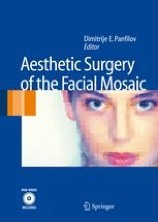
Aesthetic Surgery of the Facial Mosaic
This authoritative reference book assembles the experience of an international faculty of authors, each of whom has performed several thousand facelifts, i.e. procedures to rejuvenate and harmonize the human face. All procedures in this regard are covered and the text is accompanied by extensive artwork and photographs. The authors share their experience, including tips and tricks, as well as ways to avoid complications and pitfalls. Special emphasis is given to the concept of looking at the face as a mosaic, i.e. treating its individual parts in a harmonic way and maintaining mimic units. Combining different methods.

Aesthetic Surgery of the Abdominal Wall
We have come a long way since the days when abdominal wall contouring was p- formed by simple dermolipectomies, with no attention to diastasis correction and muscular reinforcement, and little regard for the final aesthetic result. Nowadays, an abdominoplasty may be indicated for even the most demanding of patients. Details such as placement of the incision and umbilicoplasty are meticulously planned so as to conceal undesirable scars. Since the advent of suction-assisted lipectomy, in as- ciation with a classical operation or as an isolated procedure, the plastic surgeon has become capable of remodeling the entire trunk, assuring removal of considerable amounts of adipose tissue.
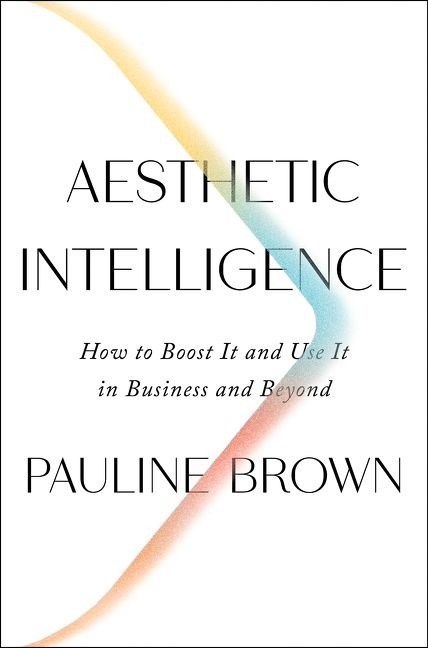
Aesthetic Intelligence : How to boost it and use it in business and beyond
Aesthetic Intelligence can be learned. Indeed, people are born with far more capacity than they use, but even those that are naturally gifted must continue to refine their skills, lest their aesthetic advantage atrophy. Through a combination of storytelling and practical advice, the author shows how aesthetic intelligence creates business value and how executives, entrepreneurs and others can boost their own AI and successfully apply it to business. Brown offers research, strategies and practical exercises focused on four essential AI skills.
