



Page 36
Page 36

Environmental Bioremediation Technologies
Environmental contamination from both natural and anthropogenic sources is, today, a major environmental concern due to pervasiveness and persistence of many toxicants. It is considered as an inevitable evil of our progress and modernization. To decontaminate the soils, sediments and waters, polluted by anthropogenic activities, the scientists and technologists have evolved different technologies over the years. Although we have to pay high cost for physical and chemical environmental technologies, but they are not eco-friendly and safe. Hence, it was deeply realized to develop viable technologies employing microbes and plants to remediate not only metallic residues and radionuclides, but also the xenobiotic compounds like PCBs, PAHs, PCPs, petroleum sludge and the military wastes. No doubt, the scientists have also got some success in this endeavour and as the result, many companies are in place today to promote the sale of plant or microbe-based technologies to deal with specific environmental contamination challenges. Besides, these technologies are se- driven and do not disturb the sites in cleaning process.

Environmental and Resource Valuation with Revealed Preferences : A Theoretical Guide to Empirical Models
Environmental and Resource Valuation with Revealed Preferences: A Theoretical Guide to Empirical Models provides a systematic review of those economic approaches for valuing the environment and natural resources that use information on what people do, not what they say.

Environmental and Microbial Relationships
After the publication of Volume IV in 1997, the introduction of molecular methods into ecology led to significant new findings. Emphasizing these advances, the chapters for the second edition have been completely updated and revised. This volume provides insight into current research on fungal populations and communities. It focuses on fungal responses to the physical environment, interactions with other fungi, microorganisms and invertebrates, the role of fungi in ecosystem processes such as decomposition and nutrient cycling, and aspects of biogeography and conservation. Several chapters deal with various applications in, e.g. biological pest control, natural products discovery, and the degradation of toxic organic compounds. This is an invaluable source of information both for scientists who wish to update their knowledge of current progress and for graduate students interested in obtaining a first overview of this field of research.

Environmental and Health Risk Assessment and Management : Principles and Practices
The book covers the essential aspects of environmental and health law, environmental economics, applied statistical and probabilistic methods, fundamental notions of applied epidemiology and toxicology, as well as decision analysis, to provide an integrated overview of how risk assessment and management combine to produce sound societal outcomes. Risk-based methods play a pivotal role in identifying and ranking alternative, sustainable choices, while accounting for uncertainty and variability. Specifically, most reductions in risks require a balancing of the costs and benefits associated with the action to reduce exposure to a hazard and thus risk. This balancing necessarily involves linking exposure and response through causation. Fundamentally, in risk assessment and management, science and law intersect through legal and scientific causation to the point that the failure to provide a sound causal argument can make an otherwise beneficial law or regulation invalid.

Environment Learning for Indoor Mobile Robots : A Stochastic State Estimation Approach to Simultaneous Localization and Map Building
This monograph covers theoretical aspects of simultaneous localization and map building for mobile robots, such as estimation stability, nonlinear models for the propagation of uncertainties, temporal landmark compatibility, as well as issues pertaining the coupling of control and SLAM. One of the most relevant topics covered in this monograph is the theoretical formalism of partial observability in SLAM. The authors show that the typical approach to SLAM using a Kalman filter results in marginal filter stability, making the final reconstruction estimates dependant on the initial vehicle estimates. However, by anchoring the map to a fixed landmark in the scene, they are able to attain full observability in SLAM, with reduced covariance estimates.

Entrepreneurial Strategy : Starting, Managing, and Scaling New Ventures
This book focuses on explaining differences amongst organizations regarding various attributes, forms, and outcomes. By focusing on the “how” of new venture creation and management to produce well-established organizations, the authors aim to increase our understanding of the antecedents of most management research assumptions. New ventures are the source of most newly created jobs generated in an economy, new industries and markets, innovative products and services, and new solutions to economic, social, and environmental problems. However, most management research assumes a well-established organization as the starting point of their theorizing.

Entrepreneurial cognition : Exploring the mindset of entrepreneurs
This open access book investigates the inter-relationship between the mind and a potential opportunity to explore the psychology of entrepreneurship. Building on recent research, this book offers a broad scope investigation of the different aspects of what goes on in the mind of the (potential) entrepreneur as he or she considers the pursuit of a potential opportunity, the creation of a new organization, and/or the selection of an entrepreneurial career. This book focuses on individuals as the level of analysis and explores the impact of the organization and the environment only inasmuch as they impact the individual’s cognitions. Readers will learn why some individuals and managers are able to able to identify and successfully act upon opportunities in uncertain environments while others are not. This book applies a cognitive lens to understand individuals’ knowledge, motivation, attention, identity, and emotions in the entrepreneurial process.

Entertainment computing – ICEC 2007 ; 6th International Conference, Shanghai, China, September 15-17, 2007, Proceedings
This book are organized in topical sections on augmented, virtual and mixed reality, computer games, image processing, mesh and modeling, digital storytelling and interactive systems, sound, music and creative environments, video processing, rendering, computer animation and networks, game based interfaces, as well as robots and cyber pets.

Enterprising worlds : A geographic perspective on economics, environments & ethics
Enterprising World represents the culmination of several years of work by geographers, planners, and economists. The chapters included in this volume represent the collective efforts of the International Geographical Union’s Commission on the Dynamics of Economic Spaces. This collection is the result of the 2005 annual meeting in Toledo, Ohio (USA). The chapters have been selected based on their contribution to the broader community of economic geographers and policymakers and to demonstrate the inherent interconnectedness of these themes (and at times the conceptual tension that exists between ethics, economics, and the environment) insofar as these important issues shape the contours and cleavages of contemporary regional development.

Enterprise Knowledge Infrastructures
Success of an organization is increasingly dependent on its capability to create an environment to improve the productivity of knowledge work. This book focuses on the concepts, models and technologies that are used to design and implement such an environment. It develops the vision of a modular, yet highly integrated enterprise knowledge infrastructure and presents an ideal architecture replete with current technologies and systems. The most important streams of technological development that are covered in the book are computer-supported cooperative work, document and content management, e-learning, enterprise portals, information life cycle management, knowledge management, mobile computing, and the Semantic Web. It includes learning goals, exercises and case examples that help the reader to easily understand and practice the concepts.

Enhancing urban environment by environmental upgrading and restoration ; Proceedings of the NATO Advanced Research Workshop on enhancing urban environment : environmental upgrading of municipal pollution control facilities and restoration of urban waters, Rome, Italy from 6 - 9 November 2003.
As urban areas keep growing, water infrastructure ages, and the requirements on environmental protection become more rigorous, there is a continual need for upgrading water pollution control facilities and restoring degraded urban waters. Such issues are addressed in this book by focusing on five major topics: (a) Upgrading stormwater management facilities, (b) Retrofitting / upgrading combined sewer overflow (CSO) facilities, (c) Optimising/upgrading sewage treatment plant performance, (d) Urban stream restoration, and (e) Challenges in restoring urban environment. Each chapter contains some overview papers followed by research or case study papers. Besides presentations of new approaches and accomplishments in the field of upgrading and restoration, several papers provide analysis of vast needs in this field in several countries of Central and Eastern Europe, which either recently joined the European Union (EU) or are preparing for accession, and need to comply with the existing EU directives dealing with environmental protection. As such, this book will be of primary interest to researchers and university lecturers dealing with environmental upgrading and restoration, environmental planners from all levels of government, municipal engineers and politicians, and finally the private industry representatives (consultants, private utilities and environmental technology suppliers) searching for new business opportunities among the new or aspiring members of EU.

Enhanced Radio Access Technologies for Next Generation Mobile Communication
Enhanced Radio Access Technologies for Next Generation Mobile Communication presents a comphrenhensive overview of the latest technology developments in the field Mobile Communications. This monograph focuses on the fundamentals of mobile communications technology and systems, including the history and service evolution of mobile communications and environments. Further to this, CDMA technology including spread spectrum, orthogonal and PN codes are introduced. Other important aspects include fundamentals of single carrier CDMA technologies, DS CDMA, Broadband CDMA with frequency domain equalizer, and multi-carrier CDMA technology for high speed data transmission including MC-DS/CDMA, MC-CDMA. Finally aspects of modern cellular systems such as cdma2000/1xEv-Do/1xEv-Dv and WCDMA/HSDPA are introduced and existing and developing wireless data services, such as Wi-Fi, Bluetooth, UWB, WiBro/Mobile WiMAX, and digital broadcasting services like DVB, DMB, ISDBT are described.
Enhanced Living Environments : Algorithms, Architectures, Platforms, and Systems
Ambient Assisted Living (AAL) is an area of research based on Information and Communication Technologies (ICT), medical research, and sociological research. AAL is based on the notion that technology and science can provide improvements in the quality of life for people in their homes, and that it can reduce the financial burden on the budgets of the healthcare providers. The concept of Enhanced Living Environments (ELE) refers to the AAL area that is more related with ICT. Effective ELE solutions require appropriate ICT algorithms, architectures, platforms, and systems, having in view the advance of science in this area and the development of new and innovative solutions. The aim of this book is to become a state-of-the-art reference, discussing progress made, as well as prompting future directions on theories, practices, standards, and strategies related to the ELE area.

Engineering Statics
Focusing on practical applications knowledge, with numerous real-world examples, practice problems, and case studies throughout. It covers theory concisely and uses plain language and coverage that can be completed in a one-semester course. It also covers the related concepts required to take the Fundamentals of Engineering (FE) exam.

Engineering Societies in the Agents World VI ; 6th International Workshop, ESAW 2005, Kusadasi, Turkey, October 26-28, 2005, Revised Selected and Invited Papers
ESAW 2005 took place at the Pine Bay Hotel in Kusadasi, Turkey at the end of the October 2005. It was organized as a stand-alone event as were ESAW 2004and ESAW 2003.Following the initial ESAW vision,which wasset in 1999, by the members of the working group on “Communication, Coordination and Collaboration” of Agentlink, ESAW 2005 continued to focus on the engineering of complex software systems in terms of multi-agent societies, especially the social and environmental aspects of such societies.

Engineering self-organising systems Vol. 3910 ; 3rd International Workshop, ESOA 2005, Utrecht, The Netherlands, July 25, 2005, Revised Selected Papers
This book contains recent work from a broad range of areas with the common theme of utilising self-organisation productively. As distributed information infrastructures continue to spread (such as the Internet, wireless and mobile systems), new challenges have arisen demanding robust and scalable solutions. In these new challenging environments the - signers and engineers of global applications and services can seldom rely on centralised control or management, high reliability of devices, or secure en- ronments. At the other end of the scale, ad-hoc sensor networks and ubiquitous computing devices are making it possible to embed millions of smart computing agents into the local environment.

Engineering self-organising systems ; Vol. 3464 : Methodologies and applications
Self-organisation, self-regulation, self-repair, and self-maintenance are promising conceptual approaches to deal with the ever increasing complexity of distributed interacting software and information handling systems. Self-organising applications are able to dynamically change their functionality and structure without direct user intervention to respond to changes in requirements and the environment. This book comprises revised and extended papers presented at the International Workshop on Engineering Self-Organising Applications, ESOA 2004, held in New York, NY, USA in July 2004 at AAMAS as well as invited papers from leading researchers. The papers are organized in topical sections on state of the art, synthesis and design methods, self-assembly and robots, stigmergy and related topics, and industrial applications.

Engineering Geology for Underground Rocks
This book clearly and systematically explains underground engineering geology principles, methods, theories and case studies, depicts engineering problems in underground rock engineering and how to study and solve them. It specially emphasizes mechanical and hydraulic couplings in rock engineering for wellbore stability, mining near aquifers and other underground structures where inflow is a problem. Using the methods and models given in this book, the reader is able to analyse underground geological engineering problems and also for the design of underground structures.
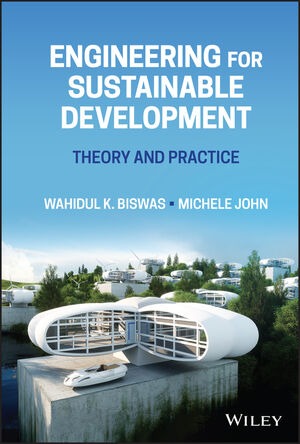
Engineering for Sustainable Development : Theory and Practice
Offers a wide range of civil, mechanical, electrical, and chemical engineering industry applications. Readers will also benefit from: A thorough introduction to contemporary sustainability challenges in the engineering discipline Comprehensive discussions of sustainability assessment tools, including triple bottom line assessment (TBL) and the environmental life cycle assessment (LCA) In-depth examinations of sustainable engineering strategies, including cleaner production and eco-efficiency methods and environmental management systems Detailed review of green engineering principles and industrial symbiosis in engineering application. A link between product stewardship and the design for the environment

Engineering Environment-Mediated Multi-Agent Systems ; International Workshop, EEMMAS 2007, Dresden, Germany, October 5, 2007. Selected Revised and Invited Papers
This book constitutes the thoroughly refereed proceedings of the International Workshop on Engineering Environment-Mediated Multi-Agent Systems, held in Dresden,The volume includes 16 thoroughly revised papers, selected from the lectures given at the workshop, together with 2 papers resulting from invited talks by prominent researchers in the field. The papers are organized in sections on engineering self-organizing applications, stigmergic interaction, modeling and structuring mediating environments, and environment-based support for context and organizations.
