



Page 3
Page 3

Innovative Medicine : Basic Research and Development
Devoted to innovative medicine, comprising the proceedings of the Uehara Memorial Foundation Symposium 2014. It remains extremely rare for the findings of basic research to be developed into clinical applications, and it takes a long time for the process to be achieved. The task of advancing the development of basic research into clinical reality lies with translational science, yet the field seems to struggle to find a way to move forward. To create innovative medical technology, many steps need to be taken: development and analysis of optimal animal models of human diseases, elucidation of genomic and epidemiological data, and establishment of “proof of concept”.

Innovations in Intelligent Machines - 1
This book includes a collection of chapters on the state of art in the area of intelligent machines. This research would provide a sound basis to make autonomous systems human-like. The contributions include: An introduction to intelligent machines / Supervisory control of multiple UAVs / Intelligent autonomous UAV task allocation / UAV path planning / Dynamic path planning / Routing in UAVS State estimation of micro air vehicles / Architecture for soccer playing robots / Robot perception / Application engineers scientists and researchers will find this book useful.

Innovation Cell : Agile Teams to Master Disruptive Innovation
This book gives you a picture of disruptive innovation and how to master it. Special attention is given to the management task in innovation, the development of the mindset for innovation and setting up of the conditions for self organisation.
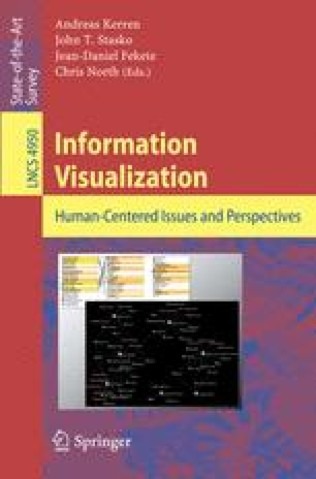
Information visualization : Human-centered issues and perspectives
This book is the outcome of the Dagstuhl Seminar on "Information Visualization -- Human-Centered Issues in Visual Representation, Interaction, and Evaluation" held at Dagstuhl Castle, Germany, from May 28 to June 1, 2007.Information Visualization (InfoVis) is a relatively new research area, which focuses on the use of visualization techniques to help people understand and analyze data.This book documents and extends the findings and discussions of the various sessions in detail.
Information processing in medical imaging ; 19th International conference, IPMI 2005, Glenwood Springs, CO, USA, July 10-15, 2005, Proceedings
The nineteenth biennial International Conference on Information Processing in Medical Imaging (IPMI) was held July 11–15, 2005 in Glenwood Springs, CO, USA on the Spring Valley campus of the Colorado Mountain College. Following the successful meeting in beautiful Ambleside in England, this year’s conference addressed important recent developments in a broad range of topics related to the acquisition, analysis and application of biomedical images. Interest in IPMI has been steadily growing over the last decade. This is p- tially due to the increased number of researchers entering the ?eld of medical imagingasaresultoftheWhitakerFoundationandtherecentlyformedNational Institute of Biomedical Imaging and Bioengineering. This year, there were 245 full manuscripts submitted to the conference which was twice the number s- mitted in 2003 and almost four times the number of submissions in 2001. Of these papers, 27 were accepted as oral presentations, and 36 excellent subm- sions that could not be accommodated as oral presentations were presented as posters. Selection of the papers for presentation was a di?cult task as we were unable to accommodate many of the excellent papers submitted this year. All accepted manuscripts were allocated 12 pages in these proceedings.

Industrial Robots Programming : Building Applications for the Factories of the Future
Industrial Robots Programming focuses on designing and building robotic manufacturing cells, and explores the capabilities of today’s industrial equipment as well as the latest computer and software technologies. Special attention is given to the input devices and systems that create efficient human-machine interfaces, and how they help non-technical personnel perform necessary programming, control, and supervision tasks.

Identities at Work
This edited volume on Identities at Work brings together international theory and empirical research that deals with continuity and change of identity formation processes at work under conditions of modern working processes and labour market flexibility. Modern work processes in manufacturing and service organisations increasingly rely upon responsible and competent employees who are willing and able to engage in the tasks that their job requires and in continuous learning. That employees are able to engage in taking up new forms of responsibility and master complex work situations is, on the one hand, dependent upon employees’ skills and how well they are trained. On the other hand, it requires that employees identify with what they do and commit to their work and the performance of tasks.

Hypertension in the Elderly
Topics range from basic concepts, epidemiology and trials, and evaluation and management, to pharmacological treatment, special populations, and adherence, all presented with an emphasis on the optimal management of patients. The authors examine in detail the mechanisms of hypertension in the elderly, particularly age-related changes in vascular stiffness, and methodically review the lifestyle and outcomes trials that were conducted in older persons. The problems of clinical evaluation, secondary hypertension, and target organ damage are also fully addressed, and a practical approach is provided for correctly determining blood pressure, one of the most important tasks in evaluating an older patient. Extensive discussions of pharmacological therapy detail the role of individual drug classes, including diuretics and b-blockers, angiotensin-converting enzyme inhibitors, angiotensin receptor blockers, calcium antagonists, a-1 blockers, and combination drug therapies. Additional chapters focus on special populations, such as African Americans, patients with diabetes, and patients with arthritis, as well as on the clinician's role in improving therapeutic adherence in older patients. Offers family practitioners and general internists an up-to-date, user-friendly reference on the diagnosis, treatment, and complications of hypertension in the elderly.

Human-computer interaction Symposium ; IFIP 20th World Computer Congress, Proceedings of the 1st TC 13 Human-Computer Interaction Symposium (HCIS 2008), September 7-10, 2008, Milano, Italy
The IFIP series publishes state-of-the-art results in the sciences and technologies of information and communication. The scope of the series includes: foundations of computer science; software theory and practice; education; computer applications in technology; communication systems; systems modeling and optimization; information systems; computers and society; computer systems technology; security and protection in information processing systems; artificial intelligence; and human-computer interaction. Proceedings and post-proceedings of refereed international conferences in computer science and interdisciplinary fields are featured.
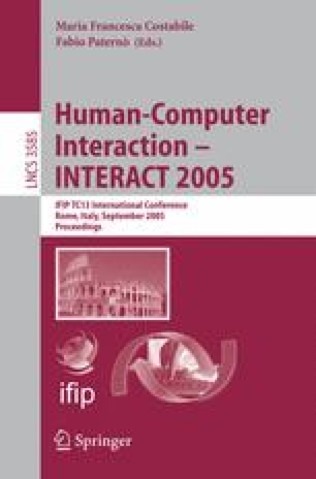
Human-computer interaction – INTERACT 2005 ; IFIP TC 13 International Conference, Rome, Italy, September 12-16, 2005, Proceedings
We will be, sooner or later, not only handling personal computers but also mul- purpose cellular phones, complex personal digital assistants, devices that will be context-aware, and even wearable computers stitched to our clothes…we would like these personal systems to become transparent to the tasks they will be performing. In fact the best interface is an invisible one, one giving the user natural and fast access to the application he (or she) intends to be executed. The working group that organized this conference (the last of a long row!) tried to combine a powerful scientific program (with drastic refereeing) with an entertaining cultural program, so as to make your stay in Rome the most pleasant one all round: I do hope that this expectation becomes true. July 2005 Stefano Levialdi, IEEE Life Fellow INTERACT 2005 General Chairman [1] Peter J. Denning, ACM Communications, April 2005, vol. 48, N° 4, pp. 27-31. Editors’ Preface INTERACT is one of the most important conferences in the area of Human-Computer Interaction at the world-wide level. We believe that this edition, which for the first time takes place in a Southern European country, will strengthen this role, and that Rome, with its history and beautiful setting provides a very congenial atmosphere for this conference. The theme of INTERACT 2005 is Communicating Naturally with Computers.

How to Organize Yourself : Simple Ways to Take Control, Save Time and Work More Efficiently
How to Organize Yourself will help you to dramatically improve the way you work. With great tips on how to determine your goals, prioritize your tasks and manage your time, it also includes practical advice on how to: focus on the things that produce results; overcome distractions; build positive work habits; avoid information overload and make effective use of technology.

Higher Education and Graduate Employment in Europe : Results from Graduates Surveys from Twelve Countries
The book indicates a noteworthy variety among economically advanced countries in the competences fostered by Higher Education and the emphasis placed either on laying a broad basis of knowledge or direct preparation for professional tasks. While universities in some countries are strongly involved in ensuring a rapid transition from study to employment, in other countries a long period after graduation is widespread for the search of a suitable career. Graduates from some countries appreciate their study experiences though they criticize a weak preparation for their subsequent assignments, while others less satisfied with higher education in their retrospective view note a satisfying preparation for the world of work. Study often turns out useful to lead to challenging tasks even though remuneration and status remain below expectations.

Hazardous Chemicals in Products and Processes : Substitution as an Innovative Process
ubstitution of hazardous substances is a prioritised objective in chemical regulation and risk management. However, it is experienced as a tough task with often inconsistent results. Based on thirteen case studies, this book analyzes substitution as an innovation process and attempts to give answers to the following questions: Why and under which circumstances are companies able and willing to substitute hazardous substances? What are the main drivers and the main barriers? In which way can communication along the supply chain support environmental innovation? How can risk management appropriately deal with the lack of knowledge, with uncertainties and incomplete knowledge about the possible effects of different substances?

Hardware Verification with SystemVerilog : An Object-Oriented Framework
Verification is increasingly complex, and SystemVerilog is one of the languages that the verification community is turning to. However, no language by itself can guarantee success without proper techniques. Object-oriented programming (OOP), with its focus on managing complexity, is ideally suited to this task. With this handbook—the first to focus on applying OOP to SystemVerilog—we’ll show how to manage complexity by using layers of abstraction and base classes. By adapting these techniques, you will write more "reasonable" code, and build efficient and reusable verification components. Both a learning tool and a reference, this handbook contains hundreds of real-world code snippets and three professional verification-system examples.

Hands-on question answering systems with BERT : Applications in neural networks and natural language processing
Begins with an overview of the technology landscape behind BERT. It takes you through the basics of NLP, including natural language understanding with tokenization, stemming, and lemmatization, and bag of words. Next, you’ll look at neural networks for NLP starting with its variants such as recurrent neural networks, encoders and decoders, bi-directional encoders and decoders, and transformer models. Along the way, you’ll cover word embedding and their types along with the basics of BERT. After this solid foundation, you’ll be ready to take a deep dive into BERT algorithms such as masked language models and next sentence prediction. You’ll see different BERT variations followed by a hands-on example of a question answering system. You will: Examine the fundamentals of word embeddings / Apply neural networks and BERT for various NLP tasks / Develop a question-answering system from scratch / Train question-answering systems for your own data

Handbook of Normal Frames and Coordinates
This book provides the first comprehensive and complete overview on results and methods concerning normal frames and coordinates in differential geometry, with emphasis on vector and differentiable bundles. The book can be used as a reference manual, for reviewing the existing results and as an introduction to some new ideas and developments. Virtually all essential results and methods concerning normal frames and coordinates are presented, most of them with full proofs, in some cases using new approaches.All classical results are expanded and generalized in various directions. For example, normal frames and coordinates are defined and investigated for different kinds of derivations, in particular for (possibly linear) connections on manifolds, with or without torsion, in vector bundles and on differentiable bundles; they are explored also for (possibly parallel) transports along paths in vector bundles. Theorems of existence, uniqueness and, possibly, holonomicity of normal frames and coordinates are proved; mostly, the proofs are constructive and some of their parts can be used independently for other tasks.

Handbook of Mathematical Models in Computer Vision
In this edited volume we present the most prominent mathematical models that are considered in computational vision. To this end, tasks of increasing complexity are considered and we present the state-of-the-art methods to cope with such tasks. The volume consists of six thematic areas that provide answers to the most dominant questions of computational vision: Image reconstruction, Segmentation and object extraction, Shape modeling and registration, Motion analysis and tracking, 3D from images, geometry and reconstruction Applications in medical image analysis

Handbook of Disaster Research
"The Handbook of Disaster Research will generate considerable excitement amongst international disaster research and management professionals. Finally, a volume that takes on the task of articulating and unpacking the many social complexities of modern disasters and catastrophes. By taking a multi-disciplinary perspective, the Handbook addresses the very pressing need to better understand the social dimensions of disaster. ... offers a very balanced set of analyses that will undoubtedly appeal to not only the researcher, but the practitioner and the policy-maker alike."

Guide to Effective Grant Writing : How to Write a Successful NIH Grant Application
Guide to Effective Grant Writing: How to Write a Successful NIH Grant is written to help the 100,000+ post-graduate students and professionals who need to write effective proposals for grants. There is little or no formal teaching about the process of writing grants for NIH, and many grant applications are rejected due to poor writing and weak formulation of ideas. Procuring grant funding is the central key to survival for any academic researcher in the biological sciences; thus, being able to write a proposal that effectively illustrates one's ideas is essential. Covering all aspects of the proposal process, from the most basic questions about form and style to the task of seeking funding, this volume offers clear advice backed up with excellent examples. Included are a number of specimen proposals to help shed light on the important issues surrounding the writing of proposals. The Guide is a clear, straight-forward, and reader-friendly tool.

Grouping Multidimensional Data : Recent Advances in Clustering
Clustering is one of the most fundamental and essential data analysis techniques. Clustering can be used as an independent data mining task to discern intrinsic characteristics of data, or as a preprocessing step with the clustering results then used for classification, correlation analysis, or anomaly detection.
