


Refine Results
Sort By
From
To

Macro-engineering involves the large-scale modification and manipulation of natural systems for the benefit of mankind. The primary goals of some Earth-based macroprojects described in this book are power production, land reclamation, food production, climate change, environment, water, transport and coastal protection. Other Earth or space projects considered here have a more futuristic ring, but our present-day technical skill makes their realization possible. Earth-based macroprojects usually combine different aspects and aims. They have a major impact on the ecology of a region and the inhabitants' means of living (like tourism, fishing, shipping). Its effects may be felt worldwide, like the rise in global sea level after the damming and evaporation of large ocean gulfs for power production, or the change in climate following the regional reduction of solar insolation.
Written by leading experts in optical radar, or lidar, this book brings all the recent practices up-to-date and covers a multitude of applications, from atmospheric sciences to environmental protection. Its broad cross-disciplinary scope should appeal to both the experienced scientist and the novice in the field. The Foreword is by one of the early pioneers in the area, Herbert Walther.

Annotation This book examines the present state of harmonization of unfair competition law in Europe. It discusses the particular approach to unfair competition law in the 10 new Member States and the possible impact on the future development of European unfair competition law. The book presents new insight in the importance of unfair competition law, especially in countries with a developing market economy.
Landscapes of Mars is essentially a picture book that provides a visual tour of Mars. All the major regions and topographical features will be shown and supplemented with chapter introductions and extended captions. In a way, think of it as a visual tourist guide. Other topics covered are Martian uplands on the order of the elevation of Mt. Everest, Giant volcanoes and a rift system, the Grand Canyon of Mars, craters and the absence of craters over large regions (erosion), and wind shadows around craters, sand dunes, and dust devils.
The book gives readers in animal ethics an accessible introduction to Kant’s views on our duties to others, and his view that we have only ‘indirect’ duties regarding animals. It then investigates how one would have to depart from Kant in order to recognise that animals matter morally for their own sake. The result is a deliberately amended version of Kantianism which nevertheless remains faithful to central aspects of Kant’s thought. The book’s final part illustrates the framework’s use in applied contexts, addressing the issues of using animals as mere means, the ethics of veganism and vegetarianism, and environmental protection.
In This book, Compendium of Chemical Warfare Agents, author Steven L. Hoenig provides all the necessary information that First Responders, Hospitals, HazMat Teams, Fire and Rescue Services, and other First Responders need to know when dealing with dangerous chemical agents.Coverage includes health effects, physical characteristics, hazards from reactivity, protection of personnel, and general first aid for each agent. The book provides quick and easy access to critical data on chemical warfare agents, both at the scene of release and in the laboratory.
The subject is described and discussed in three main chapters and different case studies.All topics in this book are complimentary and contribute to a comprehensive understanding of the interactions between global climate change, world water cycle and water resources. A valuable and meaningful interdisciplinary mixture of topics is combined in this book.

Explores how children, parents, and survivors reshaped the politics of child protection in late twentieth-century England. Activism by these groups, often manifested in small voluntary organisations, drew upon and constructed an expertise grounded in experience and emotion that supported, challenged, and subverted medical, social work, legal, and political authority. New forms of experiential and emotional expertise were manifested in politics – through consultation, voting, and lobbying – but also in the reshaping of everyday life, and in new partnerships formed between voluntary spokespeople and media. While becoming subjects of, and agents in, child protection politics over the late twentieth century, children, parents, and survivors also faced barriers to enacting change, and the book traces how long-standing structural hierarchies, particularly around gender and age, mediated and inhibited the realisation of experiential and emotional expertise.
Child Maltreatment and the Law is a must-read for psychologists, developmentalists, sociologists, social workers, criminologists, and researchers focusing on family life as well as policymakers and advocates working within the legal system. The book is particularly useful for courses relating to child welfare law or child abuse and neglect.
Twenty million people have been exposed to Chernobyl radionuclides through the Dnieper River aquatic pathways. This book presents a 20-year historical overview and comprehensive study results of the aquatic environment affected by the 1986 Chernobyl nuclear accident. During this time, many water quality management practices and countermeasures were enacted. The book presents in-depth analyses of these water remediation actions, using current science and mathematical modeling, and discusses why some were successful, but many others failed. The chapter entitled Where Do We Go From Here? incorporates a comprehensive discussion of the planned New Safe Confinement (NSC) structure to cover the Chernobyl plant. The book closes with a summary and conclusions drawn from these analyses, making it a valuable reference tool for the future. This book will be of interest to engineers, scientists, decision-makers, and those involved in radiation protection and radioecology, environmental protection and risk assessment, water remediation and mitigation measures, and radioactive waste disposal. In addition, the detailed, almost day-to-day, emergency responses to the Chernobyl accident described in this book will also be useful to people developing emergency and long-term responses to accidental or intentional (by terrorists) releases of radionuclides, toxic chemicals and biological agents.
This volume is the proceedings of the first CPE conference in the new millennium and the thirteenth in a well-established series of conferences on Chemistry for the Protection of the Environment, first established in 1976. With support of the U.S. EPA, the series of conferences provides an opportunity for interdisciplinary exchange of ideas among international specialists, from diverse fields and backgrounds, on the chemical aspects of environmental protection. Over the years, the CPE conferences have gathered participants from more and more countries, and the scope of interests have been broadened. Held in Hilo, Hawaii, this was the first of these international conferences to take place in the United States. The Organizing Committee attracted to the conference a wide range of talented scientists and engineers who have useful ideas to contribute on how to clean our environment.
Specifically covered are the following aspects: exposure from the environment and the diet; biomarkers of exposure; risk assessment; epidemiology; mechanism of formation in food; biological alkylation of amino acids, peptides, proteins, and DNA by acrylamide and its epoxide metabolite glycidamide; neurotoxicity, reproductive toxicity, and carcinogenicity; protection against adverse effects; and possible approaches to reducing levels in food. Cross-fertilization of ideas among several disciplines in which an interest in acrylamide has developed, including food science, pharmacology, toxicology, and medicine, will provide a better understanding of the chemistry and biology of acrylamide in food, and can lead to the development of food processes to decrease the acrylamide content of the diet.
The book contains fields of ecology, chemistry, medicine, epidemiology, public health, toxicology, risk assessment, environmental protection and management, modelling, environmental remediation technologies came together to discuss the chemicals threats for the global environment. The intentional or accidental release of chemicals into environment poses a global threat to public health and security.
The book covers radiation protection and nuclear safety supervision of installations built during the cold war, particularly in relation to regulatory strategies for safe decommissioning of unique or unusual nuclear facilities and remediation
Tissue engineering is gaining interest as it is applied for regeneration of organs to attain their lost function. Although resorbable scaffolds and progenitor cell types are required principles to engineer a functional tissue locally, the inductive signal is a prerequisite to trigger the growth and differentiation of responding cells in space and time. Bone morphogenetic proteins (BMPs), also called growth and differentiation factors (GDFs), originally identified from bone have been successfully used to regenerate the bone in humans. Most recent preclinical data suggests that BMPs have a potential to provide protection against inflammation and fibrosis in acute and chronic injury of parenchymal tissues when applied systemically to sustain the function of kidney and liver. The application of BMPs from a local to systemic utility is a rapidly growing field, gaining interest among researchers and biotech entrepreneurs.
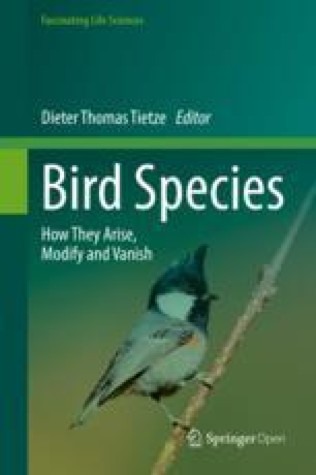
The average person can name more bird species than they think, but do we really know what a bird “species” is? This open access book takes up several fascinating aspects of bird life to elucidate this basic concept in biology. From genetic and physiological basics to the phenomena of bird song and bird migration, it analyzes various interactions of birds – with their environment and other birds. Lastly, it shows imminent threats to birds in the Anthropocene, the era of global human impact.This book brings together various disciplines involved in observing bird species come into existence, modify, and vanish. It is a rich resource for bird enthusiasts who want to understand various processes at the cutting edge of current research in more detail. At the same time it offers students the opportunity to see primarily unconnected, but booming big-data approaches such as genomics and biogeography meet in a topic of broad interest. Lastly, the book enables conservationists to better understand the uncertainties surrounding “species” as entities of protection.
This book shows how humankind can ‘prevent dangerous interference with the c- mate system’ without dangerous interference with the global economic system. In the two underlying studies on behalf of the Ministry of Environment and Transport of i the German federal state of Baden-Württemberg, the results have been elaborated through scientific evaluation of different climate protection systems and intensive developmental work on an efficient climate protection system. The results will be presented in nine chapters according to the following nine basic R&D steps: 1. Quantifying the ‘ultimate climate objective’ of the world community in order ‘to prevent dangerous interference with the climate system,’ thus achieving climate sustainability; 2. Development of a comprehensive standard system for evaluating the prospect of success for different climate protection systems; 3. Based on this scientific standard system, evaluation of the current Kyoto system and of the most important proposals for ‘incremental regime evolution’ of the Kyoto system. Unfortunately, it must be noted that these systems are incapable of achi- ing climate sustainability; 4. Evaluating three proposals for ‘structural regime change’ of the Kyoto system. Following this objective evaluation process and numeric comparison of the diff- ent proposals, 5. Description of the eight basic elements of GCCS and its in-depth ‘critical asse- ment;’ 6.
This book is the biography of one of Britain’s foremost animal welfare campaigners and of the world of activism, science, and politics she inhabited. In 1964, Ruth Harrison’s bestseller Animal Machines triggered a gear change in modern animal protection by popularising the term ‘factory farming’ alongside a new way of thinking about animal welfare.
The chapters of the book attempt to answer a number of essential questions in relation to global warming and climate change. He begins by showing how the earth’s climate has varied in the past, discussing ice ages, the Holocene period since the end of the last ice age, particularly during the past 1000 years. He investigates the reliability of "proxies" for historical temperatures and assesses the hockey stick version of global temperatures for the past millennium. To do this effectively he looks carefully at how well near surface temperatures of land and ocean on earth have been monitored during the past 100 years or more, and looks at the utility and significance of a single global average temperature
It is only in the past few years that methods of adequate sensitivity have become available for true ultra-trace metal determinations in water. In the case of organics in seawater it has now become possible to resolve the complex mixtures of organics in seawater and achieve the required very low detection limits. Fortunately, the interest in micro-constituents in the seawater both from the environmental and the nutrient balance points of view has coincided with the availability of advanced instrumentation capable of meeting the analytical needs. This complete and up-to-date compilation of the currently employed proven methods for the chemical analysis of seawaters includes 45 tables and 48 figures.

Daraa Highway - Ghabagheb - Syria
+963-15 2050 - 15 860 380 /1/2/3 - 11 662 3900