



Page 3
Page 3

Field and Service Robotics ; Vol. 25 : Results of the 5th International Conference
Field robots are robots which operate in outdoor, complex, and dynamic environments. Service robots are those that work closely with humans, with particular applications involving indoor and structured environments. There are a wide range of topics presented in this issue on field and service robots including: Agricultural and Forestry Robotics, Mining and Exploration Robots, Robots for Construction, Security & Defence Robots, Cleaning Robots, Autonomous Underwater Vehicles and Autonomous Flying Robots.

Field and Service Robotics ; Vol. 24 : Recent Advances in Research and Applications
This unique collection is the post-conference proceedings of the 4th FSR in Lake Yamanaka, Japan at July 2003. This book edited by Shin’ichi Yuta, Hajime Asama, Sebastian Thrun, Erwin Prassler and Takashi Tsubouchi is rich by topics and authoritative contributors and presents the current developments and new directions in field and service robotics. The contents of these contributions represent a cross-section of the current state of robotics research from one particular aspect: field and service applications, and how they reflect on the theoretical basis of subsequent developments. Pursuing technologies aimed at realizing skilful, smart, reliable, robust field and service robots is the big challenge running throughout this focused collection.

Field and service robotics : Results of the 6th international conference
This book presents the results of the sixth edition of Field and Service Robotics, FSR07, held in Chamonix, France, on 9th - 12th July 2007. The conference provided a forum for researchers, professionals and robot manufacturers to exchange up-to-date technical knowledge and experience. This book offers a collection of a broad range of topics including: Underwater Robots and Systems, Autonomous Navigation for Unmanned Aerial Vehicles, Simultaneous Localization and Mapping, Climbing Robotics, Sensor Fusion.

Exploring Ancient Skies : An Encyclopedic Survey of Archaeoastronomy
Exploring Ancient Skies brings together the methods of archaeology and the insights of modern astronomy to explore the science of astronomy as it was practiced in various cultures prior to the invention of the telescope. The book reviews an enormous and growing body of literature on the cultures of the ancient Mediterranean, the Far East, and the New World (particularly Mesoamerica), putting the ancient astronomical materials into their archaeological and cultural contexts. The authors begin with an overview of the field and proceed to essential aspects of naked-eye astronomy, followed by an examination of specific cultures. The book concludes by taking into account the purposes of ancient astronomy: astrology, navigation, calendar regulation, and (not least) the understanding of our place and role in the universe. Skies are recreated to display critical events as they would have appeared to ancient observers - events such as the supernova of 1054, the 'lion horoscope' or the 'Star of Bethlehem.'

Expert Spring MVC and Web Flow
Expert Spring MVC and Web Flow provides in-depth coverage of Spring MVC and Spring Web Flow, two highly customizable and powerful web frameworks brought to you by the developers and community of the Spring Framework. Spring MVC is a modern web application framework built upon the Spring Framework, and Spring Web Flow is a new project that compliments Spring MVC for building reusable web controller modules that encapsulate rich page navigation rules. Along with detailed analysis of the code and functionality, plus the first-published coverage of Spring Web Flow, this book includes numerous tips and tricks to help you get the most out of Spring MVC, Spring Web Flow, and web development in general.

Experimental Robotics : The 10th International Symposium on Experimental Robotics
The goal of ISER is to provide a forum for research in robotics that focuses on novelty of theoretical contributions validated by experimental results. The meetings are conceived to bring together, in a small group setting, researchers from around the world who are in the forefront of experimental robotics research.

European Robotics Symposium 2006
This unique reference represents a cross-section of forefront robotics research, ranging from robotics and systems to learning, autonomy and failure detection, from vision and navigation to localization and mapping, which are based on the papers presented at the 1st European Robotics Symposium (EUROS-06) held in Palermo, Italy from 16-18 March, 2006. The European Robotics Symposium (EUROS) is a brand-new International scientific event promoted by EURON, the European Robotics Network. Since its inception in 2000, EURON links most of the European robotics research teams and today (2006) involves more than 165 universities and companies across all of its member states. The EUROS meeting will be held in Europe every other year, but international participation at all levels is strongly encouraged making it a meeting place for high-quality presentation of interesting international research on robotics.
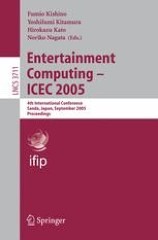
Entertainment Computing - ICEC 2005 ; 4th International Conference, Sanda, Japan, September 19-21, 2005, Proceedings
First of all, we appreciate the hard work of all the authors who contributed to ICEC 2005 by submitting their papers. ICEC 2005 attracted 95 technical paper submissions, 8 poster submissions and 7 demo submissions, in total 110. This number is nearly equal to ICEC 2004. Based on a thorough review and selection process carried out by 76 international experts from academia and industry as members of the senior and international program committees, a high-quality program was compiled. The program committee consisted of experts from all over the world: 1 from Austria, 3 from Bulgaria, 2 from Canada, 4 from China, 1 from Finland, 4 from France, 10 from Germany, 1 from Greece, 1 from Ireland, 1 from Israel, 1 from Italy, 26 from Japan, 1 from Korea, 4 from The Netherlands, 1 from New Zealand, 1 from Norway, 1 from Singapore, 1 from Thailand, 4 from the UK, and 8 from the USA. In this number, reviewers are included. The final decision was made at the senior program committee meeting based on three reviewers' feedback, available online via the conference management tool. Through earnest and fair discussion at the meeting, 25 technical papers were accepted as long papers and 32 technical papers were accepted as short papers from 95 submitted technical papers. Moreover, 3 poster papers and 5 demo papers were accepted.

Endoscopic Anatomy of the Third Ventricle : Microsurgical and Endoscopic Approaches
In this atlas anatomical aspects important for combinations of microsurgical and endoscopic approaches are presented and illustrated. Modern imaging techniques are necessary for the three-dimensional orientation but do not show enough details for endoscopic interventions. The small visual fields need a combination of the depiction of fine details and of the three-dimensional presentation of large areas. Furthermore, problems with little known anatomical standard variants of the target areas may arise. Therefore, numerous common anatomical variants are demonstrated with reference to their impact for the surgical technique.

Encyclopaedia of the History of Science, Technology, and Medicine in Non-Western Cultures
The second edition of this landmark encyclopaedia will contain approximately 1000 entries dealing in depth with the history of the scientific, technological and medical accomplishments of cultures outside of the United States and Europe. The entries consist of fully updated articles together with hundreds of entirely new topics.This unique reference work includes: Intercultural articles on broad topics such as Mathematics and Astronomy Philosophical articles on concepts and ideas related to the study of non-Western Science, such as Rationality, Objectivity, and Method, Religion and Science, East and West, and Magic and Science Articles on topics such as Native American Mathematics, Polynesian Navigation, Korean Maps, and African Metallurgy Biographical articles for those cultures where individual scientists are known to us, such as China and the Islamic world.

Emergent Intelligence of Networked Agents
his book is based on communications given at the Workshop on Emergent Intelligence of Networked Agents (WEIN 06) at the Fifth International Joint Conference on Autonomous Agents and Multi-agent Systems (AAMAS 2006), which was held at Future University, Hakodate, Japan, from May 8 to 12, 2006. WEIN 06 was especially intended to increase the awareness of researchers in these two fields sharing the common view on combining agent-based modeling and complex networks in order to develop insight and foster predictive methodologies in studying emergent intelligence on of networked agents. From the broad spectrum of activities, leading experts presented important paper and numerous practical problems appear throughout this book. The papers contained in this book are concerned with emergence of intelligent behaviors over networked agents and fostering the formation of an active multi-disciplinary community on multi-agent systems and complex networks.

Embedded Security in Cars : Securing Current and Future Automotive IT Applications
Lemke, Paar, and Wolf collect in this volume a state-of-the-art overview on all aspects relevant for IT security in automotive applications. After an introductory chapter written by the editors themselves, the contributions from experienced experts of different disciplines are structured into three parts. "Security in the Automotive Domain" describes applications for which IT security is crucial, like immobilizers, tachographs, and software updates. "Embedded Security Technologies" details security technologies relevant for automotive applications, e.g., symmetric and asymmetric cryptography, and wireless security. "Business Aspects of IT Systems in Cars" shows the need for embedded security in novel applications like location-based navigation systems and personalization.
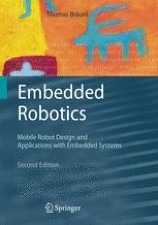
Embedded Robotics : Mobile Robot Design and Applications with Embedded Systems
This book presents a unique examination of mobile robots and embedded systems, from introductory to intermediate level. It is structured in three parts, dealing with Embedded Systems (hardware and software design, actuators, sensors, PID control, multitasking), Mobile Robot Design (driving, balancing, walking, and flying robots), and Mobile Robot Applications (mapping, robot soccer, genetic algorithms, neural networks, behavior-based systems, and simulation).

Embedded Robotics : Mobile Robot Design and Applications with Embedded Systems
The EyeBot controller and mobile robots have evolved over more than a decade. This book gives an in-depth introduction to embedded systems and autonomous mobile robots, using the EyeBot controller (EyeCon) and the EyeBot mobile robot family as application examples. This book combines teaching and research material and can be used for courses in Embedded Systems as well as in Robotics and Automation.

Embedded robotics : From mobile robots to autonomous vehicles with Raspberry Pi and Arduino
Presents a unique examination of mobile robots and autonomous vehicles using embedded systems, from introductory to advanced level. It is structured in four parts, dealing with Embedded Systems (processors, sensors, actuators, control, multitasking and communication), Robot Hardware (driving and walking robots, autonomous boats and planes, as well as robot manipulators), Robot Software (localization, navigation, image processing and automotive systems), and Artificial Intelligence (neural networks, genetic algorithms and deep learning). The book is organized for ease of use, with numerous figures, photographs, and worked example programs. The book is written as a text for courses in computer science, computer engineering, IT, electronics engineering, and mechatronics, as well as a guide for robot hobbyists and researchers.

Dynamical Vision ; ICCV 2005 and ECCV 2006 Workshops, WDV 2005 and WDV 2006, Beijing, China, October 21, 2005, Graz, Austria, May 13, 2006, Revised Papers
Classical multiple-view geometry studies the reconstruction of a static scene - served by a rigidly moving camera. However, in many real-world applications the scene may undergo much more complex dynamical changes. For instance, the scene may consist of multiple moving objects (e.g., a trafic scene) or arti- lated motions (e.g., a walking human) or even non-rigid dynamics (e.g., smoke, fire, or a waterfall). In addition, some applications may require interaction with the scene through a dynamical system (e.g., vision-guided robot navigation and coordination). To study the problem of reconstructing dynamical scenes, many new al- braic, geometric, statistical, and computational tools have recently emerged in computer vision, computer graphics, image processing, and vision-based c- trol.

DSP for In-Vehicle and Mobile Systems
DSP for In-Vehicle and Mobile Systems is focused on digital signal processing strategies for improving information access, command and control, and communications for in-vehicle environments. It is expected that the next generation of human-to-vehicle interfaces will incorporate speech, video/image, and wireless communication modalities to provide more comfortable and safer driving ambiance

Distributed Autonomous Robotic System 6
DARS is now a well-established conference that gathers every two years the main researchers in Distributed Robotics systems. Even if the field is growing, it has been maintained a one-track conference in order to enforce effective exchanges between the main researchers in the field. It now a well-established tradition to publish the main contributions as a book from Springer. There are already 5 books entitled "Distributed Autonomous Robotic Systems" 1 to 5.

Digital Dilemmas : Exploring Social Media Ethics in Organizations
This book categorizes the dilemmas organizations across a range of industries can face when they implement social media to communicate with stakeholders. This book provides a systematic framework for analyzing these ethical dilemmas in social media using the Navigation Wheel. This tool leads the decision-maker through a series of considerations such as legal questions, corporate identity, morality, reputation, and ethics. Finally, the author considers implications for leaders and presents potential solutions to these dilemmas.

Database and XML Technologies ; Vol. 4156 ; 4th International XML Database Symposium, XSym 2006, Seoul, Korea, September 10-11, 2006, Proceedings
The theme of the XML Database Symposium (XSym) is the convergence of database technology with XML technology. Since the first International XML Symposium in 2003, XSym has continued to provide a forum for academics, practitioners, users and vendors to discuss the use of and synergy between advanced XML technologies. XSym 2006 received 32 full paper submissions. Each submitted paper underwent a rigorous review by independent referees. These proceedings represent a collection of eight excellent research papers. Their focus is on building XML repositories and covers the following topics: XML query processing, caching, indexing and navigation support, structural matching, temporal XML, and XML updates.
