



Page 3
Page 3

Drug target selection and validation
Focuses on the computational aspects of early drug discovery, drug target identification, and validation. It revises current classical paradigms in target and phenotypic-based drug design with still ingrained approximations and concepts and discusses the research in the new network approach concept that include kinetic selectivity and metabolic analysis. Many often-overlooked approximations and concepts in drug discovery are fully covered. Drug Target Selection and Validation includes both introductory sections and research-based sections to be of use to both students and research scientists in drug discovery, design, kinetics and metabolic analysis. Pharmaceutical scientists, pharmaceutics, drug developers, pharmacologists, biomedical researchers in computer science, medicinal chemists, and precision medicine developers benefit from the information provided. The book concludes with a chapter on chemical and structural databases.

Drug Selectivity : An Evolving Concept in Medicinal Chemistry
Provides a current overview and comprehensive compilation for medicinal chemists that discusses the effects of aiming for multiple targets on the entire drug development process. The result is a broad survey of current and future strategies for drug selectivity in medicinal chemistry with theoretical but also practical aspects. Different strategies are presented and evaluated, such as various design approaches, merged multiple ligands, discovery technologies and a broad range of successful examples of unselective drugs taken from all major disease areas. With its wide-ranging view of an emerging new paradigm in drug development, this handbook is of prime importance for every medicinal and pharmaceutical chemist.

Drug Metabolism: Current Concepts
The user-friendly text focuses on concepts rather than extraneous details and is supported by many illustrated examples of biotransformations as well as frequent references to current critical reviews and articles highlighting the nature of research objectives in this vibrant area of medicinal development.

Drug discovery with privileged building Blocks : Tactics in medicinal chemistry
Drug Discovery with Privileged Building Blocks traces back PharmaBlock’s founding philosophy of designing privileged building blocks. High-quality building blocks are crucial not only to biological activities of different molecules but also to ADMET properties, which eventually will impact the success rate of drug discovery projects. A thorough study of how building blocks perform in drug molecules and a regular analysis of new building block structures in the latest researches have proven to be a fruitful strategy to generate novel building blocks. Using this strategy, PharmaBlock has supplied the drug industry with a great number of building blocks, which are increasingly being adopted by drug hunters, and these are identified in this book.

Drug discovery and development
Presents up-to-date scientific information for maximizing the ability of a multidisciplinary research team to discover and bring new drugs to the marketplace. It explores many scientific advances in new drug discovery and development for areas such as screening technologies, biotechnology approaches, and evaluation of efficacy and safety of drug candidates through preclinical testing. This book also greatly expands the focus on the clinical pharmacology, regulatory, and business aspects of bringing new drugs to the market and offers coverage of essential topics for companies involved in drug development. Historical perspectives and predicted trends are also provided.

Drug delivery technology : Herbal bioenhancers in pharmaceuticals
Bioenhancers have been used in Ayurveda historically and are now being investigated for their pharmacological effi cacy. Herbal bioenhancers work on the gastrointestinal tract to improve absorption and drug bioavailability by acting on the drug metabolic process. Many herbal drugs show low activity due to their poor lipid solubility or improper molecular size. Piperine, gingerol, naringin, quercetin, niaziridin, glycyrrhizin, allicin, curcumin, genistein and others are able to enhance the bioavailability of active pharmaceuticals. This book details various facets of herbal bio-enhancers in a single comprehensive text.

Drug delivery systems using quantum computing
Drug delivery systems (DDS) are defined as methods by which drugs are delivered to desired tissues, organs, cells, and subcellular organs for drug release and absorption through a variety of drug carriers. By controlling the precise level and/or location of a given drug in the body, side effects are reduced, doses are lowered, and new therapies are possible. Nevertheless, there are still significant obstacles to delivering certain medications to particular cells. Drug delivery methods change pharmacokinetic, pharmacodynamic, and drug release patterns to enhance product efficacy and safety, as well as patient convenience and compliance.

Drug delivery approaches and nanosystems ; Vol.1 : Novel drug carriers
Presents a full picture of the state-of-the-art research and development in drug delivery systems using nanotechnology and its applications. It addresses the ever-expanding application of nanotechnology or nano-sized materials in the medical field and the real-world challenges and complexities of current drug delivery methodologies and techniques.

Drug Delivery Approaches : Perspectives from Pharmacokinetics and Pharmacodynamics
Delivers a thorough discussion of drug delivery options to achieve target profiles and approaches as defined by physical and pharmacokinetic models. The book offers an overview of drug absorption and physiological models, chapters on oral delivery routes with a focus on both PBPK and multiple dosage form options. It also provides an explanation of the pharmacokinetics of the formulation of drugs delivered by systemic transdermal routes.

Dendrimer Catalysis
catalytically active dendrimers have emerged as a class of molecular catalysts that has substantially enriched the field of homogeneous (and in part heterogeneous) catalysis. A general survey of transition metal dendrimer catalysts and the way they have developed is followed by in-depth discussions of dendritic transition metal catalysis based on non-covalent catalyst-support interaction and an overview of the rapidly growing field of stereoselective dendrimer catalysis. The development of dendrimer-encapsulated bimetallic nanoparticles has provided the interface with heterogeneous colloid catalysis. As cheaper and readily accessible alternatives to regular dendrimers, hyperbranched polymers are increasingly being used as catalyst platforms. These topics are complemented by a review of metallodendritic exoreptors for the redox recognition of oxo-anions and halides.

Current Drug Synthesis
Delivers an authoritative and comprehensive discussion of the medicinal chemistry of current drugs, as well as the cutting-edge science involved in their synthesis. The book demystifies the process of modern drug discovery for both industry practitioners and students, while capturing the state-of-the-art techniques used to discover some of the most impactful medicines on the market today. Covering six different disease areas – including infectious disease, cancer, cardiovascular and metabolic disease, the central nervous system, anti-inflammatory disease, and a miscellaneous section – the book explores 18 different drugs before concluding with chapters on computational drug discovery and peptide drugs.

Creative Chemical Sensor Systems
Schrader has compiled an excellent set of articles that present a current snapshot of chemical sensing utilizing state-of-the-art approaches ranging from combinatorial receptor libraries to artificial membrane pores. This volume is an excellent read for the budding and seasoned bioorganic chemist, chemical biologist, or supramolecular chemist as well as for those in allied fields who wish to apply emerging chemical techniques to solve current problems in chemical sensing.This book provides an overview of recent creative new approaches which use chemical means of detection and quantification of important analytes. Creative chemical sensor systems is a rapidly growing subject.

Contrast Agents III : Radiopharmaceuticals - From Diagnostics to Therapeutics
The series Topics in Current Chemistry presents critical reviews of the present and future trends in modern chemical research. The scope of coverage includes all areas of chemical science including the interfaces with related disciplines such as biology, medicine and materials science. The goal of each thematic volume is to give the nonspecialist reader, whether at the university or in industry, a comprehensive overview of an area where new insights are emerging that are of interest to a larger scientific audience.This volume on radiopharmaceutical contrast agents, which also covers new developments on radiopharmaceuticals used as therapeutic drugs is the third of a series on diagnostics following a volume that was exclusively dedicated to magnetic resonance imaging and a “mixed” volume on optical, ultrasound, X-ray and radiopharmaceutical agents

Contemporary Accounts in Drug Discovery and Development
Drug discovery is a lengthy and complex process that typically involves identifying an unmet medical need, determining a biological target, chemical library screening to identify a lead, chemical optimization, preclinical studies and clinical trials. This process often takes many years to complete, and relies on practitioners’ knowledge of chemistry and biology, but also—and perhaps more importantly—on experience. Improving the success rate in discovery and development through a thorough knowledge of drug discovery principles and advances in technology is critical for advancement in the field.

Collagen : Primer in Structure, Processing and Assembly
This volume of Topics in Current Chemistry is an attempt to update and compile the biochemical, molecular knowledge of the still growing family of collagenous proteins. Its intention is to provide a comprehensive summary of all mechanisms known to be involved in synthesis, processing and deposition of collagen molecules, all of which are apparently shared by any known collagen type as part of a common biosynthetic route. From the intracellular initiation of protein translation to the extracellular deposition of mature molecules into the scaffold of the preformed tissue texture, collagen biosynthesis exhibits a profile of mechanisms absolutely unique when compared to other proteins

Co- and post-translational modifications of therapeutic antibodies and proteins
A Comprehensive Guide to Crucial Attributes of Therapeutic Proteins in Biological Pharmaceuticals With this book, Dr. Raju offers a valuable resource for professionals involved in research and development of biopharmaceutical and biosimilar drugs. This is a highly relevant work, as medical practitioners have increasingly turned to biopharmaceutical medicines in their search for safe and reliable treatments for

Clinical Pharmacology ; 12th ed.
Balancing science and practice for improved evidence-based drug therapy and good prescribing in therapeutic settings increasingly complicated by intercurrent disease and polypharmacy.
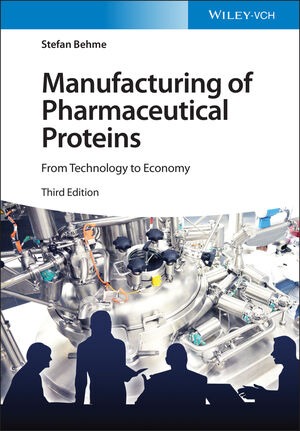
Manufacturing of Pharmaceutical Proteins: From Technology to Economy
Manufacturing of Pharmaceutical Proteins: From Technology to Economy, renowned chemical engineer Dr. Stefan Behme delivers a comprehensive text covering all aspects of biopharmaceutical manufacturing, including legal and regulatory considerations, production facility design, quality assurance, supply chain management, emerging market regulations, and cost control.
Clinical biochemistry and drug development : From fundamentals to output
Focuses on clinical biochemistry fundamentals, cell culture techniques, and drug discovery and development concepts. It deals with three different fields of clinical research: cell culture, clinical biochemistry, and drug discovery and development.
Chromatography for Sustainable Polymeric Materials : Renewable, Degradable and Recyclable
This volume is a valuable contribution to sustainability research. … This interesting, well-written book provides the reader with an excellent resource on how to effectively use simple chromatographic techniques to aid in determining processing conditions, additive formulations, quality control, service life, degradation pathways, and more.
