



Page 3
Page 3

Integrating Data Science and Earth Science : Challenges and Solutions
This book presents the results of three years collaboration between earth scientists and data scientist, in developing and applying data science methods for scientific discovery. The book will be highly beneficial for other researchers at senior and graduate level, interested in applying visual data exploration, computational approaches and scientifc workflows.

Integrated System-Level Modeling of Network-on-Chip enabled Multi-Processor Platforms
Integrated System-Level Modeling of Network-on-Chip Enabled Multi-Processor Platforms first gives a comprehensive update on recent developments in the area of SoC platforms and ESL design methodologies. The main contribution is the rigorous definition of a framework for modeling at the timing approximate level of abstraction. Subsequently this book presents a set of tools for the creation and exploration of timing approximate SoC platform models.

Insecticides Design Using Advanced Technologies
Among the highlights of this book are the use of nanotechnology to increase potency of available insecticides, the use of genetic engineering techniques for controlling insect pests, the development of novel insecticides that bind to unique biochemical receptors, the exploration of natural products as a source for environmentally acceptable insecticides, and the use of insect genomics and cell lines for determining biological and biochemical modes of action of new insecticides.

Information context : Nature, impact, and role ; 5th International conference on Conceptions of Library and Information Sciences, CoLIS 2005, Glasgow, UK, June 4-8, 2005 Proceedings
.CoLIS examinesthehistorical,theoretical,empiricalandtechnicalissuesrelatingtoour understanding and use of information, promoting an interdisciplinary approach to research. CoLIS seeks to provide a broad platform for the examination of context as it relates to our theoretical, empirical and technical development of information-centered disciplines. The theme for CoLIS 5 was the nature, impact and role of context within information-centered research. Context is a complex, dynamic and multi- - mensional concept that in?uences both humans and machines: how they behave individually and how they interact with each other. In CoLIS 5 we took an interdisciplinary approach to the issue of context to help us understand and the theoretical approaches to modelling and understanding context, incorporate contextual reasoning within technology, and develop a shared framework for promoting the exploration of context.

Indigenous Life Projects and Extractivism : Ethnographies from South America
Exploring indigenous life projects in encounters with extractivism, the present volume discusses how current turbulences actualise questions of indigeneity, difference and ontological dynamics in the Andes and Amazonia. While studies of extractivism in South America often focus on wider national and international politics, this contribution instead provides ethnographic explorations of indigenous politics, perspectives and worlds, revealing loss and suffering as well as creative strategies to mediate the extralocal. Seeking to avoid conceptual imperialism or the imposition of exogenous categories

In Silico Dreams : How Artificial Intelligence and Biotechnology Will Create the Medicines of the Future
In Silico Dreams: How Artificial Intelligence and Biotechnology Will Create the Medicines of the Future delivers an illuminating and fresh perspective on the convergence of two powerful technologies: AI and biotech. Accomplished genomics expert, executive, and author Brian Hilbush offers readers a brilliant exploration of the most current work of pioneering tech giants and biotechnology startups who have already started disrupting healthcare.

Human Rights and the Moral Responsibilities of Corporate and Public Sector Organisations
All students and advocates of human rights will be interested in this concerted exploration of the human rights moral obligations that fall, not directly on states, but on private and public organisations. Such an approach to human rights opens up the possibility of holding corporations and bureaucracies to account for human rights violations even when they have acted in accordance with the law. This interdisciplinary and international project brings together eminent philosophers, lawyers, social scientists and practitioners to articulate theoretically and develop in practical contexts the moral implications of human rights for non-state actors. What emerges from the book as a whole is a distinctive contemporary vision of the emerging moral impact of human rights and its significance for organisational behaviour and performance.

Human Missions to Mars : Enabling Technologies for Exploring the Red Planet
In Human Missions to Mars Donald Rapp looks at human missions to Mars from an engineering perspective. He begins by describing the pros and cons of robotic exploration versus human exploration and then examines the ideas for sending humans to Mars from the point of view of both the enthusiast and the skeptic. Chapter 2 describes how space missions are planned and how they may be achieved as a sequence of separate steps. Chapter 3 deals with the complex issues relating to the outward journey to Mars and the return leg. The author deals with propulsion systems and with the analysis of the.

How Apollo flew to the moon
Out of the technological battlefield of World War II came a team of gifted German engineers and designers who developed the vengeance weapon, the V-2, which evolved into the peaceful, powerful Saturn V rocket to take men to the Moon. David Woods tells the exciting story, starting from America’s post war astronautical research facilities, that used the V-2 for the development of the robust, resilient and reliable Saturn V launcher. He describes the initial launches through manned orbital spaceflights, comprehensively detailing each step, including computer configuration, the role of ground control, trajectory planning, lunar orbiting, separation of the lander, walking and working on the Moon, retrieval of the lunar astronauts and returning to Earth in this massive technical accomplishment.

History Education and Conflict Transformation : Social Psychological Theories, History Teaching and Reconciliation
This volume discusses the effects, models and implications of history teaching in relation to conflict transformation and reconciliation from a social-psychological perspective. Bringing together a mix of established and young researchers and academics, from the fields of psychology, education, and history, the book provides an in-depth exploration of the role of historical narratives, history teaching, history textbooks and the work of civil society organizations in post-conflict societies undergoing reconciliation processes, and reflects on the state of the art at both the international and regional level. As well as dealing with the question of the ‘perpetrator-victim’ dynamic, the book also focuses on the particular context of transition in and out of cold war in Eastern Europe and the post-conflict settings of Northern Ireland, Israel and Palestine and Cyprus.

Healthcare design basics
Delivers an up-to-date text covering the critical aspects of healthcare design, preparing students for a specialty rapidly growing in importance and size. includes: Step by step studio guidance outlining the basic design elements required for a wide range of ambulatory healthcare facilities and rooms Comprehensive explorations of the demands of new and improved healthcare facilities that meet the needs of an aging population Practical discussions of the space planning challenges involved in designing rooms and facilities for use during public health crises, including pandemics Dozens of full-color images that illustrate and highlight important concepts, examples, and design solutions

Handbook on Interactive Storytelling
You will find a comprehensive discussion of the latest research covering the creation of interactive narratives that allow users to experience a dramatically compelling story that responds directly to their actions and choices. Readers will also enjoy: A thorough introduction to interactive storytelling, including discussions of narrative, plot, story, interaction, and a history of the phenomenon, from improvisational theory to role-playing games A rigorous discussion of the background of storytelling, from Aristotle’s Poetics to Joseph Campbell and the hero’s journey Compelling explorations of different perspectives in the interactive storytelling space, including different platforms, designers, and interactors, as well as an explanation of storyworlds

Handbook of neurochemistry and molecular neurobiology : Neurotransmitter Systems
The brain is the organ that collects information from the environment, processes and stores the information, and generates behavior as and when needed. In essence, the brain makes us who we are. For this reason, understanding the biology of brain function is a great challenge and a major goal of modern science. The brain is one of the last great frontiers in science, and the unraveling of its mysteries is comparable in complexity to efforts in space exploration. A fundamental goal of neuroscience is to understand how neurons generate behavior and the pathophysiology of different mental and neurological diseases. This requires, among other things, information about where these neurons are located, how they are connected, and how they communicate with each other in various physiological and pathophysiological conditions. Our aim is to describe recent discoveries about the basic operations of the brain and to provide an introduction to the adaptations for specific types of information processing.

Handbook of Mathematical Geosciences : Fifty Years of IAMG
Presents a compilation of invited path-breaking research contributions by award-winning geoscientists who have been instrumental in shaping the IAMG. It contains 45 chapters that are categorized broadly into five parts (i) theory, (ii) general applications, (iii) exploration and resource estimation, (iv) reviews, and (v) reminiscences covering related topics like mathematical geosciences, mathematical morphology, geostatistics, fractals and multifractals, spatial statistics, multipoint geostatistics, compositional data analysis, informatics, geocomputation, numerical methods, and chaos theory in the geosciences.

Guide to Deep Learning Basics : Logical, Historical and Philosophical Perspectives
This stimulating text/reference presents a philosophical exploration of the conceptual foundations of deep learning, presenting enlightening perspectives that encompass such diverse disciplines as computer science, mathematics, logic, psychology, and cognitive science. The text also highlights select topics from the fascinating history of this exciting field, including the pioneering work of Rudolf Carnap, Warren McCulloch, Walter Pitts, Bulcsú László, and Geoffrey Hinton.
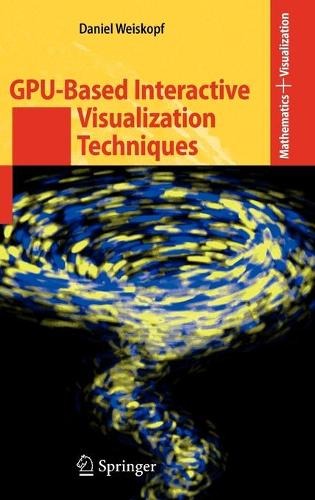
GPU-Based Interactive Visualization Techniques
This book focuses on efficient visualization techniques, which are the prerequisite for the interactive exploration of complex data sets. High performance is primarily achieved by devising algorithms for the fast graphics processing units (GPUs) of modern graphics hardware. Other aspects discussed in the book include parallelization on cluster computers with several GPUs, adaptive rendering methods, multi-resolution models, and non-photorealistic rendering techniques for visualization. Covering both the theoretical foundations and practical implementations of algorithms, this book provides the reader with a basis to understand and reproduce modern GPU-based visualization approaches.

Governance of automated decision-making and EU law
Presents a multifaceted exploration of the intersection between technological innovation and democratic governance in Europe. It rigorously examines the profound impact of information technologies on rule-making and decision-making processes, emphasizing the preservation of constitutional values within the European Union (EU). Simultaneously, the book seeks to devise future-proof regulatory strategies to navigate the challenges of rapid technological advancements.
Global perspectives on AI, ethics, and business economics : Charting the future
Offers an in-depth exploration of the complex and rapidly evolving world of artificial intelligence (AI), focusing on its ethical, economic, and business dimensions. it provides a comprehensive analysis that intertwines historical context, philosophical ethics, global economic impacts, regulatory landscapes, workforce dynamics, corporate governance, consumer behavior, data ethics, and the use of AI for the good of society. after reviewing the evolution of AI, it offers insights into its historical milestones and the trajectory it may take in the future. this sets the stage for a broader discussion on how AI is not just a technological phenomenon but also a catalyst for ethical, economic, and societal transformation. the book emphasizes the importance of understanding AI’s historical development in order to gauge its potential impacts on our future.

Giant Metallic Deposits : Future Sources of Industrial Metals
Geological characteristics of giant metallic deposits and their setting and the politico-economic constraints of access to and exploitation in prospective areas have been a "hot topic" in the past fifteen years, but the knowledge generated and published has been one-sided, scattered and fragmented. This is the first comprehensive book on the subject that provides body of solid facts rather than rapidly changing theories, written by author of the Empirical Metallogeny book series and founder of the Data Metallogenica visual knowledge system on mineral deposits of the world, who has had an almost 40 years long international academic and industrial experience. The book will provide abundant material for comparative research in metallogeny, practical information for the explorationists as to where to look for the "elephants", and some inspiration for commodity investors.

Geo-spatial technologies in urban environments : Policy, practice, and pixels
The purpose of this book is to investigate and develop alternate methodological approaches to understand urban environments and urban change. In particular, the study demonstrates the application of remote-sensing data and geographic information systems to the exploration of issues often ignored by the mainstream community of geo-technical specialists such as urban forestry, urban traffic, migration or quality of life in urban areas. Case studies show how disciplines like environmental science and planning, sociology, landscape ecology and architecture, regional science and policy design, and assessment can benefit from employing remote-sensing data and GIS.
