



Page 3
Page 3

Precision Motion Control : Design and Implementation
Precision Motion Control (second edition) focuses on enabling technologies for precision engineering - issues of direct importance to be addressed in the overall system design and realization: precision instrumentation and measurement, geometrical calibration and compensation, and motion control. It is a compilation of the most important results and publications from a major project that develops a state-of-the-art, high-speed, ultra-precision robotic system.

Positive Systems ; Proceedings of the third Multidisciplinary International Symposium on Positive Systems : Theory and Applications (POSTA 2009) Valencia, Spain, September 2-4, 2009
This volume contains the proceedings of the "Third Multidisciplinary Symposium on Positive Systems: Theory and Applications (POSTA09)" held in Valencia, Spain, September 2–4, 2009. This is the only world congress whose main topic is focused on this field.

Polynomial and Rational Matrices : Applications in Dynamical Systems Theory
Matrices are effective tools for the modelling and analysis of dynamical systems. Professor Kaczorek gives an overview of new results in the application of polynomial and rational matrices to continuous- and discrete-time systems. The book is self-contained, beginning with important basics such as the Cayley–Hamilton theorem and definitions and elementary operations of polynomial and rational matrices and moving on to cover such topics as: Normal matrices (including their realisation); rational and algebraic polynomial matrix equations / perfect observers for and realisation of linear systems; and / new results on positive linear discrete- and continuous-time systems with delays.

Points fixes, zéros et la méthode de Newton = Fixed points, zeros and Newton's method
This work is devoted to the fixed points of differentiable applications, to the zeros of non-linear systems and to Newton's method. It is aimed at masters students or preparing for the aggregation of mathematics and confirmed researchers. The first part is devoted to the method of successive approximations and confronts a “dynamical systems” point of view (Grobman-Hartman theorems, of the stable manifold) with examples resulting from numerical analysis. The second part of this work presents Newton's method and its most recent developments (Smale's alpha theory, under- or over-determined systems). It presents a new approach to this subject and a set of original results published for the first time in a French-language work. This is an advanced text on fixed points, zeros of nonlinear systems and the Newton method. Its first part, devoted to fixed points, includes the Grobman-Hartman and the stable manifold theorems. The second part describes the Newton method from a modern point of view: Smale's alpha theory, underdetermined and overdetermined systems of equations. These results are illustrated by various examples from numerical analysis.

Piecewise-smooth Dynamical Systems : Theory and Applications
The primary purpose of this book is to present a coherent framework for understanding the dynamics of piecewise-smooth and hybrid systems. An informal introduction asserts the ubiquity of such models with examples drawn from mechanics, electronics, control theory and physiology. The main thrust is to classify complex behavior via bifurcation theory in a systematic yet applicable way. The key concept is that of a discontinuity-induced bifurcation, which generalizes diverse phenomena such as grazing, border-collision, sliding, chattering and the period-adding route to chaos. The results are presented in an informal style and illustrated with copious examples, both theoretical and experimental.
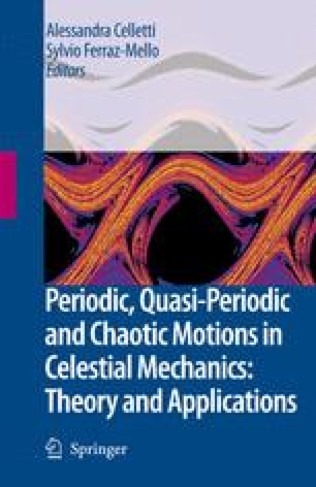
Periodic, quasi-periodic and chaotic motions in Celestial Mechanics : Theory and Applications
The book provides the most recent advances of Celestial Mechanics, as provided by high-level scientists working in this field. It covers theoretical investigations as well as applications to concrete problems. Outstanding review papers are included in the book and they introduce the reader to leading subjects, like the variational approaches to find periodic orbits, the stability theory of the N-body problem, the spin-orbit resonances and chaotic dynamics, the space debris polluting the circumterrestrial space.

Pension Systems, Demographic Change, and the Stock Market
Studies the implications of the looming demographic transition on pension systems, the stock market and individual welfare. … Readers with an interest in the economic consequences of the looming demographic transition for pension systems and the stock market will find this book very interesting even if they are not doing active research in this area. … The book is a worthy contribution to the literature on pensions and demographic transitions.

Pedestrian Dynamics : Feedback Control of Crowd Evacuation
Provides various feedback control laws to accomplish the effective evacuation. The book uses the hydrodynamic hyperbolic PDE macroscopic pedestrian models since they are amenable to feedback control design. The control designs are obtained through different nonlinear techniques including Lyapunov functional techniques, feedback linearization in the distributed model, and some discretized techniques.

Patterns and Interfaces in Dissipative Dynamics
Gives in-depth descriptions of analytical methods elucidating the complex evolution of nonlinear dissipative systems, and brings the reader to the forefront of current research. The introductory chapter on the theory of dynamical systems is written with a view to applications of its powerful methods to spatial and spatio-temporal patterns. It is followed by two chapters treating moving interfaces, based largely on reaction-diffusion and phase-separating systems. The following two chapters on amplitude equations for patterns and waves describe universal phenomena generated by representative equations which can be derived for a variety of non-equilibrium systems originating in fluid mechanics, physical chemistry or nonlinear optics.

Organic Computing
In this book, the major ideas behind Organic Computing are delineated, together with a sparse sample of computational projects undertaken in this new field. Biological metaphors include evolution, neural networks, gene-regulatory networks, networks of brain modules, hormone system, insect swarms, and ant colonies. Applications are as diverse as system design, optimization, artificial growth, task allocation, clustering, routing, face recognition, and sign language understanding.

Optimization and Control with Applications
This book contains refereed papers which were presented at the 34th Workshop of the International School of Mathematics "G. Stampacchia,” the International Workshop on Optimization and Control with Applications. The book contains 28 papers that are grouped according to four broad topics: duality and optimality conditions, optimization algorithms, optimal control, and variational inequality and equilibrium problems. The specific topics covered in the individual chapters include optimal control, unconstrained and constrained optimization, complementarity and variational inequalities, equilibrium problems, semi-definite programs, semi-infinite programs, matrix functions and equations, nonsmooth optimization, generalized convexity and generalized monotinicity, and their applications.

Open Quantum Systems III : Recent Developments
Present in a self-contained way the mathematical theories involved in the modeling of such phenomena. They describe physically relevant models, develop their mathematical analysis and derive their physical implications. Volume III is devoted to recent developments and applications. The topics discussed include the non-equilibrium properties of open quantum systems, the Fermi Golden Rule and weak coupling limit, quantum irreversibility and decoherence, qualitative behaviour of quantum Markov semigroups and continual quantum measurements.
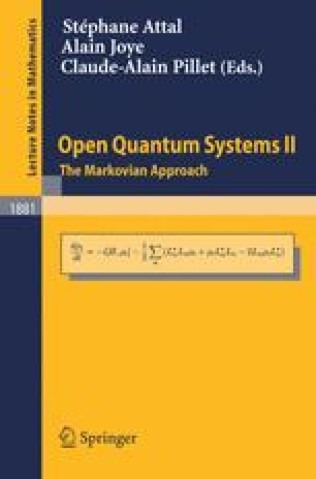
Open Quantum Systems II : The Markovian Approach
These books present in a self-contained way the mathematical theories involved in the modeling of such phenomena. They describe physically relevant models, develop their mathematical analysis and derive their physical implications. Volume II is dedicated to the Markovian formalism of classical and quantum open systems. A complete exposition of noise theory, Markov processes and stochastic differential equations, both in the classical and the quantum context, is provided. These mathematical tools are put into perspective with physical motivations and applications.
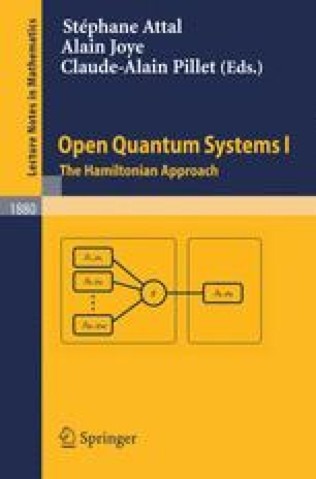
Open Quantum Systems I : The Hamiltonian Approach
These books present in a self-contained way the mathematical theories involved in the modeling of such phenomena. They describe physically relevant models, develop their mathematical analysis and derive their physical implications. This Volume, I the Hamiltonian description of quantum open systems is discussed. This includes an introduction to quantum statistical mechanics and its operator algebraic formulation, modular theory, spectral analysis and their applications to quantum dynamical systems.

Numerical Methods for Nonsmooth Dynamical Systems : Applications in Mechanics and Electronics
This book concerns the numerical simulation of dynamical systems whose trajectories may not be differentiable everywhere. They are named nonsmooth dynamical systems. They make an important class of systems, firstly because of the many applications in which nonsmooth models are useful, secondly because they give rise to new problems in various fields of science. Usually nonsmooth dynamical systems are represented as differential inclusions, complementarity systems, evolution variational inequalities, each of these classes being itself split into several subclasses.

Numerical Continuation Methods for Dynamical Systems : Path following and boundary value problems
The book opens with a foreword by Herbert B. Keller and lecture notes by Sebius Doedel himself that introduce the basic concepts of numerical bifurcation analysis. The other chapters by leading experts discuss continuation for various types of systems and objects and showcase examples of how numerical bifurcation analysis can be used in concrete applications. Topics that are treated include: interactive continuation tools, higher-dimensional continuation, the computation of invariant manifolds, and continuation techniques for slow-fast systems, for symmetric Hamiltonian systems, for spatially extended systems and for systems with delay. Three chapters review physical applications: the dynamics of a SQUID, global bifurcations in laser systems, and dynamics and bifurcations in electronic circuits.

Non-spectral Asymptotic Analysis of One-Parameter Operator Semigroups
In this book, non-spectral methods are presented and discussed that have been developed over the last two decades for the investigation of asymptotic behavior of one-parameter operator semigroups in Banach spaces. This concerns in particular Markov semigroups in L1-spaces, motivated by applications to probability theory and dynamical systems. Recently many results on the asymptotic behaviour of Markov semigroups were extended to positive semigroups in Banach lattices with order-continuous norm, and to positive semigroups in non-commutative L1-spaces. Related results, historical notes, exercises, and open problems accompany each chapter.

NonlinearWaves and Solitons on Contours and Closed Surfaces
The present volume is an introduction to nonlinear waves and soliton theory in the special environment of compact spaces such a closed curves and surfaces and other domain contours. It assumes familiarity with basic soliton theory and nonlinear dynamical systems.

Nonlinear Physical Oceanography : A Dynamical Systems Approach to the Large Scale Ocean Circulation and El Niño
Taken from a review of the first edition in SIAM:"This text is different from most others in that it combines several different disciplines and draws on many scientific studies in order to deduce mechanisms of ocean circulation.
Nonlinear Observers and Applications
The problem of state reconstruction in dynamical systems, known as observer problem, is undoubtedly crucial for controlling or just monitoring processes. For linear systems, the corresponding theory has been quite well established for several years now, and the purpose of the present book is to propose an overview on possible tools in that respect for nonlinear systems. Basic observability notions and observer structures are first recalled, together with ingredients for advanced designs on this basis. A special attention is then paid to the well-known high gain techniques with a summary of various corresponding recent results. A focus on the celebrated Extended Kalman filter is also given, in the perspectives of both nonlinear filtering and high gain observers, leading to so-called adaptive-gain observers. The more specific immersion approach for observer design is then emphasized, while optimization-based methods are also presented as an alternative to analytic observers.
