


Refine Results
Sort By
From
To

Solving modern biological problems requires advanced computational methods. Bioinformatics evolved from the active interaction of two fast-developing disciplines, biology and information technology. The central issue of this emerging field is the transformation of often distributed and unstructured biological data into meaningful information. This book describes the application of well-established concepts and techniques from areas like data mining, machine learning, database technologies, and visualization techniques to problems like protein data analysis, genome analysis and sequence databases. Chen has collected contributions from leading researchers in each area. The chapters can be read independently, as each offers a complete overview of its specific area, or, combined, this monograph is a comprehensive treatment that will appeal to students, researchers, and R&D professionals in industry who need a state-of-the-art introduction into this challenging and exciting young field.
This book constitutes the refereed proceedings of the Second International Bioinformatics Research and Development Conference, BIRD 2008, held in Vienna, Austria in July 2008.
This book highlights basic paradigms of problem analysis and algorithm design in the context of core bioinformatics problems. Mathematically demanding themes are put across to the reader by properly chosen representations with the aid of lots of illustrations.
In this textbook present mathematical models in bioinformatics and they describe the biological problems that inspire the computer science tools used to handle the enormous data sets involved. The first part of the book covers the mathematical and computational methods, while the practical applications are presented in the second part. The mathematical presentation is descriptive and avoids unnecessary formalism, and yet remains clear and precise. Emphasis is laid on motivation through biological problems and cross applications. Each of the four chapters in the first part is accompanied by exercises and problems to support an understanding of the techniques presented. Each of the six chapters of the second part is devoted to some specific application domain: sequence alignment, molecular phylogenetics and coalescence theory, genomics, proteomics, RNA, and DNA microarrays. Each chapter concludes with a problems and projects section, to deepen the reader's understanding and to allow for the design of derived methods. Many of the projects involve publicly available software and/or Web-based bioinformatics depositories. Finally, the book closes with a thorough bibliography, reaching from classic research results to very recent findings, providing many pointers for future research.Overall, this volume is ideally suited for a senior undergraduate or graduate course on bioinformatics, with a strong focus on its mathematical and computer science background.
Presents the latest discoveries in the field of machine intelligence and big data Proposes many case studies and applications of computational and Big data Combines theory and practice so that readers of the few books (beginners or experts)
The book is devoted to the analysis of big data in order to extract from these data hidden patterns necessary for making decisions about the rational behavior of complex systems with the different nature that generate this data. To solve these problems, a group of new methods and tools is used, based on the self-organization of computational processes, the use of crisp and fuzzy cluster analysis methods, hybrid neural-fuzzy networks, and others. The book solves various practical problems. In particular, for the tasks of 3D image recognition and automatic speech recognition large-scale neural networks with applications for Deep Learning systems were used.
There are no silver bullets in algorithm design, and no single algorithmic idea is powerful and flexible enough to solve every computational problem. Nor are there silver bullets in algorithm analysis, as the most enlightening method for analyzing an algorithm often depends on the problem and the application. However, typical algorithms courses rely almost entirely on a single analysis framework, that of worst-case analysis, wherein an algorithm is assessed by its worst performance on any input of a given size. The purpose of this book is to popularize several alternatives to worst-case analysis and their most notable algorithmic applications, from clustering to linear programming to neural network training. Forty leading researchers have contributed introductions to different facets of this field, emphasizing the most important models and results, many of which can be taught in lectures to beginning graduate students in theoretical computer science and machine learning.
Probabilistic graphical models and decision graphs are powerful modeling tools for reasoning and decision making under uncertainty. As modeling languages they allow a natural specification of problem domains with inherent uncertainty, and from a computational perspective they support efficient algorithms for automatic construction and query answering. This includes belief updating, finding the most probable explanation for the observed evidence, detecting conflicts in the evidence entered into the network, determining optimal strategies, analyzing for relevance, and performing sensitivity analysis. The book introduces probabilistic graphical models and decision graphs, including Bayesian networks and influence diagrams.It contians two parts. The first part focuses on probabilistic graphical models. Compared with the previous book, the new edition also includes a thorough description of recent extensions to the Bayesian network modeling language, advances in exact and approximate belief updating algorithms, and methods for learning both the structure and the parameters of a Bayesian network. The second part deals with decision graphs, and in addition to the frameworks described in the previous edition, it also introduces Markov decision processes and partially ordered decision problems.
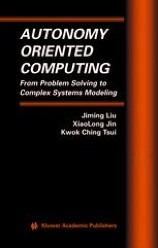
Autonomy Oriented Computing explores the important theoretical and practical issues in AOC, by analyzing methodologies and presenting experimental case studies. The book serves as a comprehensive reference source for researchers, scientists, engineers, and professionals in all fields concerned with this promising new development in computer science. It can also be used as a main or supplementary text in graduate and undergraduate programs across a broad range of computer-related disciplines, including Robotics and Automation, Amorphous Computing, Image Processing and Computer Vision, Programming Paradigms, Computational Biology, and many others. The first part of the book, Fundamentals, describes the basic concepts and characteristics of an AOC system, and then it enumerates the critical design and engineering issues faced in AOC system development. The second part of the book, AOC in Depth, provides a detailed analysis of methodologies and case studies to evaluate the use of AOC in problem solving and complex system modeling. The final chapter reviews the essential features of the AOC paradigm and outlines a number of possibilities for future research and development.
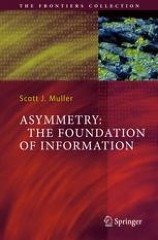
As individual needs have arisen in the fields of physics, electrical engineering and computational science, each has created its own theories of information to serve as conceptual instruments for advancing developments. This book provides a coherent consolidation of information theories from these different fields.It provides a versatile tool for quantifying complexity and information capacity in any physical system.
Discusses the evolution of future generation technologies through Internet of Things (IoT) in the scope of Artificial Intelligence (AI). The main focus of this volume is to bring all the related technologies in a single platform, so that undergraduate and postgraduate students, researchers, academicians, and industry people can easily understand the AI algorithms, machine learning algorithms, and learning analytics in IoT-enabled technologies. This book uses data and network engineering and intelligent decision support system-by-design principles to design a reliable AI-enabled IoT ecosystem and to implement cyber-physical pervasive infrastructure solutions. This book brings together some of the top IoT-enabled AI experts throughout the world who contribute their knowledge regarding different IoT-based technology aspects. Addresses the complete functional framework workflow in AI-enabled IoT ecosystem; Presents intelligent object identification and object discovery through the IoT ecosystem and its implications to the real world ;Explores security and privacy issues and trustworthy machine learning related to data-intensive technologies in AI-based IoT ecosystems.

Artificial intelligence technologies are also actively applied to broadcasting and multimedia processing technologies. A lot of research has been conducted in a wide variety of fields, such as content creation, transmission, and security, and these attempts have been made in the past two to three years to improve image, video, speech, and other data compression efficiency in areas related to MPEG media processing technology. Additionally, technologies such as media creation, processing, editing, and creating scenarios are very important areas of research in multimedia processing and engineering. This book contains a collection of some topics broadly across advanced computational intelligence algorithms and technologies for emerging multimedia signal processing as: Computer vision field, speech/sound/text processing, and content analysis/information mining.
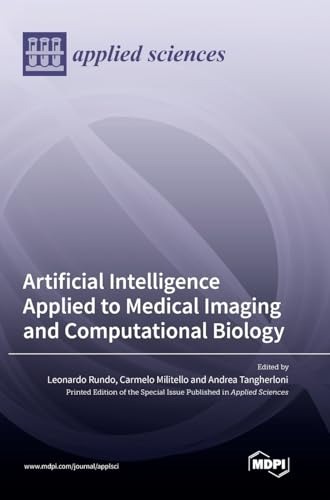
Medical imaging and computational biology continuously pose new fundamental medical and biological questions that often give rise to novel challenges in Artificial Intelligence. These research fields present an increasing need for the application of cutting-edge computational approaches that generally involve machine learning or computational intelligence techniques, which can effectively perform bioimage and biosignal processing in different clinical areas.
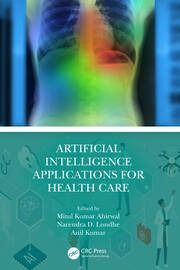
Covers topics on health care and artificial intelligence. Data sets related to biomedical signals (ECG, EEG, EMG) and images (X-rays, MRI, CT) are explored, analyzed, and processed through different computation intelligence methods. Applications of computational intelligence techniques like artificial and deep neural networks, swarm optimization, expert systems, decision support systems, clustering, and classification techniques on medial datasets are explained. Survey of medical signals, medial images, and computation intelligence methods are also provided.
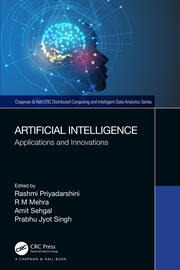
It's about the science of artificial intelligence (AI). AI is the study of the design of intelligent computational agents. This book provides a valuable resource for researchers, scientists, professionals, academicians and students dealing with the new challenges and advances in the areas of AI and innovations. This book also covers a wide range of applications of machine learning such as fire detection, structural health and pollution monitoring and control. Provides insight into prospective research and application areas related to industry and technology / Discusses industry- based inputs on success stories of technology adoption / Discusses technology applications from a research perspective in the field of AI / Provides a hands- on approach and case studies for readers of the book to practice and assimilate learning
Applies the functional OCaml programming language to numerical or computational weighted data science, engineering, and scientific applications. This book is based on the authors' first-hand experience building and maintaining Owl, an OCaml-based numerical computing library. You'll first learn the various components in a modern numerical computation library. Then, you will learn how these components are designed and built up and how to optimize their performance. After reading and using this book, you'll have the knowledge required to design and build real-world complex systems that effectively leverage the advantages of the OCaml functional programming language.
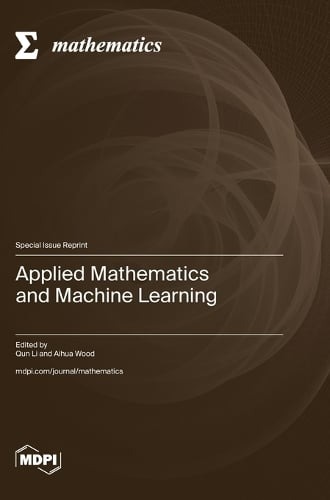
The simultaneous availability of large datasets and high-performance computing capability in recent years has enabled the rapid development of powerful machine learning algorithms. On the one hand, state-of-the-art machine learning techniques have transformed many areas of science and engineering; on the other hand, theoretical discoveries in mathematical algorithms, differential equations, and statistical inferences, to name a few, have provided the foundation for the exploration of new multidisciplinary models for solving practical problems. This Special Issue endeavors to continue the journey that started in our previous Special Issue (Applied Mathematics and Computational Physics) by providing a platform for researchers from both academia and industry, as well as government, to present their new computational methods that have engineering and physics applications.
Contains the 11 papers that were accepted and published in the Special Issue “Applied and Computational Mathematics for Digital Environments” of the MDPI Mathematics journal. The topics of interest include, among others, scientific research, applied tasks, and problems in the following areas: The construction of mathematical and information models of intelligent computer systems for monitoring and controlling the parameters of digital environments; The development of intelligent optimization algorithms that search for optimal parameter values of mathematical and information models in digital environments; Software and mathematical technologies in the implementation of intelligent monitoring and computer control of the parameters of digital environments; The development and application of mathematical and information models, machine learning methods, and artificial intelligence for the analysis and processing of big data in digital environments.
Computational intelligence (CI) is the theory, design, application, and development of biologically and linguistically motivated computational paradigms. Traditionally, the three main pillars of CI have been neural networks, fuzzy systems, and evolutionary computation. However, in time, many nature-inspired computing paradigms have evolved. Thus, CI is an evolving field, and, at present, in addition to the three main constituents, it encompasses computing paradigms such as ambient intelligence, artificial life, cultural learning, artificial endocrine networks, social reasoning, and artificial hormone networks. CI plays a major role in developing successful intelligent systems, including games and cognitive developmental systems.
Highlights the opportunities and challenges of artificial intelligence in business, education, and healthcare from institutional, environmental, social perspectives Includes empirical and theoretical research Presents applications of Artificial Intelligence in Business, Education and Healthcare

Daraa Highway - Ghabagheb - Syria
+963-15 2050 - 15 860 380 /1/2/3 - 11 662 3900