



Page 26
Page 26
Brain Repair
Brain Repair, addresses all relevant issues underlying the mechanisms of brain damage, brain plasticity and post-traumatic reorganisation after CNS lesions. This book is divided the three major sections that follow; cellular and molecular basis of brain repair, plasticity and reorganisation of neural networks, and experimental therapy strategies. Brain Repair is written by high profile, international experts who describe in detail the newest results from basic research and highlight new model systems, techniques and therapy approaches. Based on a careful analysis of the cellular and molecular reaction patterns of the CNS to lesions, the contributions cover possibilities for endogenous reorganisation and repair as well as exciting new therapies emerging from basic research, some of which have already been introduced into the clinics.

Boundary Integral Equations
This book is devoted to the basic mathematical properties of solutions to boundary integral equations and presents a systematic approach to the variational methods for the boundary integral equations arising in elasticity, fluid mechanics, and acoustic scattering theory. It may also serve as the mathematical foundation of the boundary element methods. The latter have recently become extremely popular and efficient computational tools in applications. The authors are well known for their fundamental work on boundary integral equations and related topics. This book is a major scholarly contribution to the modern theory of boundary integral equations and should be accessible and useful to a large community of mathematical analysts, applied mathematicians, engineers and scientists.
Blind Speech Separation
This is the first book to provide a cutting edge reference to the fascinating topic of blind source separation (BSS) for convolved speech mixtures. Through contributions by the foremost experts on the subject, the book provides an up-to-date account of research findings, explains the underlying theory, and discusses potential applications. The individual chapters are designed to be tutorial in nature with specific emphasis on an in-depth treatment of state of the art techniques. Blind Speech Separation is divided into three parts:Part 1 presents overdetermined or critically determined BSS. Here the main technology is independent component analysis (ICA). ICA is a statistical method for extracting mutually independent sources from their mixtures. Part 2 addresses underdetermined BSS, where there are fewer microphones than source signals. Here, the sparseness of speech sources is very useful; we can utilize time-frequency diversity, where sources are active in different regions of the time-frequency plane.Part 3 presents monaural BSS where there is only one microphone. Here, we can separate a mixture by using the harmonicity and temporal structure of the sources. We can build a probabilistic framework by assuming a source model, and separate a mixture by maximizing the a posteriori probability of the sources.
Bioterrorism and Infectious Agents : A New Dilemma for the 21st Century
Since the terrorist attack on the United States on September 11, 2001 and subsequent cases of anthrax in Florida and New York City, attention has been focused on the threat of b- logical warfare and bioterrorism. Biological warfare agents are de?ned as “living org- isms, whatever their nature, or infected material derived from them, which are used for h- tile purposes and intended to cause disease or death in man, animals and plants, and depend for their efforts on the ability to multiply in person, animal or plant attacked.” Biological warfare agents may be well suited for bioterrorism to create havoc and terror in a civilian population, because they are cheap and easy to obtain and dispense. Infectious or contagious diseases have played a major part in the history of warfare – deliberately or inadvertently – in restricting or assisting invading armies over the centuries. In 1346, the Tartars catapulted plaque-infected bodies into Kaffa in the Crimea to end a 3-year siege. Blankets contaminated with smallpox to infect North American Indians were used by British forces in the 18th century. More recently, the Japanese released ?eas infected with plaque in Chinese cities in the 1930s and 1940s. Biological research programs for both offensive and defensive strategies have been developed by the United States, Britain, the former Soviet Union, and Canada; several other nations are thought to have such programs.
Bionanotechnology : Proteins to Nanodevices
Bionanotechnology is the key integrative technology of the 21st century and aims to use the knowledge, gathered from the natural construction of cellular systems, for the advancement of science and engineering. Investigating the topology and communication processes of cell parts can lead to invention of novel biological devices with exciting applications. Though microscale to nanoscale research offers an excellent space for the development of futuristic technologies, a number of challenges must be overcome. Due to paucity of a dedicated literature on the protein based nanodevices we bring you this monograph that combines collective research works of scientists probing into this fascinating universe of bionanotechnology. The monograph has been written with an aim of surveying engineering design principles of biomolecular nanodevices, prototype nanodevices based on redox proteins, bacteriorhodopsins and natural fibers, and touching upon the future developments in the field.
Biomedical applications and toxicity of nanomaterials
Covers the recent trends on the biological applications of nanomaterials, methods for their preparation, and techniques for their characterization. Further, the book examines the fundamentals of nanotoxicity, methods to assess the toxicity of engineered nanomaterials, approaches to reduce toxicity during synthesis. It also provides an overview of the state of the art in the application of Artificial intelligence-based methodologies for evaluation of toxicity of drugs and nanoparticles. The book further discusses nanocarrier design, routes of various nanoparticle administration, nano based drug delivery systems, and the toxicity challenges associated with each drug delivery method. It presents the latest advances in the interaction of nanoparticles with the cellular environment and assess nanotoxicity of these engineered nanoparticles. The book also explores the comparative and mechanistic genotoxicity assessment of the nanomaterials. This book is useful source of information for industrial practitioners, policy makers, and other professionals in the fields of toxicology, medicine, pharmacology, food, and drugs.
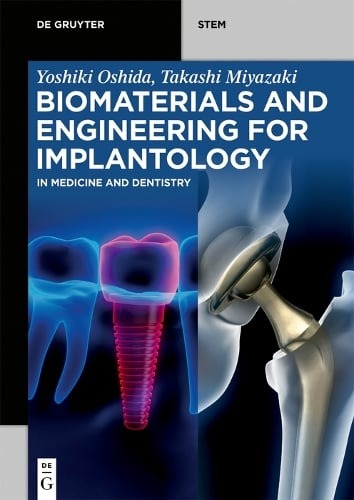
Biomaterials and engineering for implantology: in medicine and dentistry
Biomaterials are composed of metallic materials, ceramics, polymers, composites and hybrid materials. Biomaterials used in human beings require safety regulations, toxicity, allergic reaction, etc. When used as implantable materials their biological compatibility, biomechanical compatibility, and morphological compatibility must be acessed. This book explores the design and requirements of biomaterials for the use in implantology.
Biomarkers as targeted herbal drug discovery : A pharmacological approach to nanomedicines
Looks at the applications of biomarkers as important tools for herbal drug discovery, presenting research on phytoconstituents with advanced nanotechnological applications for healthcare benefits. Herbal drug discovery based on biomarkers is an emerging area in complementary and alternative medicine that has tremendous potential in healthcare. Conventional medications have limited efficacy and high toxicity, whereas herbal drugs are said to provide wide structural diversity that is not usually seen with conventional/synthetic drug molecules. Recognition of various herbal constituents, such as terpenoids, fatty acids, flavonoids and steroids, are well explored in the management and treatment of various disorders in this volume. These agents target various biomarkers such as nitric oxide (NO), cytokines, chemokines, adhesion molecules, NF- kβ, lipoxygenase (LOX), and arachidonic acid. Reviews the literature on inflammatory biomarkers in the treatment of diseases Looks at the development of herbal drug discovery based on biomarkers Explores emerging concepts of nanomedicines for herbal drug delivery Takes an interdisciplinary approach, with application to disciplines related to medical, pharmaceutical, biotechnological, Ayurvedic, Unani and biomedical engineering fields
Bioelectricity : A Quantitative Approach
"The authors’ goal in producing this book was to provide an introductory text to electrophysiology, based on a quantitative approach. In attempting to achieve this goal, therefore, the authors have opened the book with a useful, and digestible, introduction to various aspects of the mathematics relevant to this field, including vectors, introduction to Laplace, Gauss’s theorem, and Green’s theorem. This book will be useful for students in medical physics and biomedical engineering wishing to enter the field of electrophysiological investigation. It will also be helpful for biologists and physiologists who wish to understand the mathematical treatment of the processes and signals at the center of the interesting interdisciplinary field.
Bio-Applications of Nanoparticles
In this edited book, we highlight the central players in the Bionanotechnology field, which are the nanostructures and biomolecules. The book starts by describing how nanostructures are synthesized and by describing the wide variety of nanostructures available for biological research and applications. Also shown are the techniques used to synthesize a wide variety of biological molecules. Next, there is a focus on the assembly of nanostructures with biological molecules, which could lead to the design of multi-functional nanosystems. In the following chapters, examples of the unique properties of nanostructures are provided along with the current applications of these nanostructures in biology and medicine. Some applications include the use of gold nanoparticles in diagnostic applications, quantum dots and silica nanoparticles for imaging, and liposomes for drug delivery. In the final chapters of the book, the toxicity of nanostructures are described. This book provides broad examples of current developments in Bionanotechnology research and would be an excellent introduction to the field.
Bioanalytical aspects in biological therapeutics
The book discusses the challenges and considerations for bioanalytical support, covering a wide range of central topics in the field, including overview and basic immunology for testing of biological therapeutics, pharmacokinetic aspects, clinical immunogenicity prediction and testing, biomarker testing, biotransformation assessment for biologics, statistical aspects of bioanalytical testing, regulatory expectations, and more

Big little hotel : Small hotels designed by architects
This book showcases small hotels, all located in the United States, designed by architects who use light and materials in interesting and intentional ways. The designs also deliberately connect to their local history, context, or land – in many cases all three. Both the architecture and the operations harmonize with the place, whether that is a bustling city, small town, or natural area. Many are new buildings but some are adaptive reuse projects or renovations of historic properties, extending the connectivity of the place into the future.
Big Data Intelligence for Smart Applications
Presents the latest discoveries in the field of machine intelligence and big data Proposes many case studies and applications of computational and Big data Combines theory and practice so that readers of the few books (beginners or experts)
Big Data in Energy Economics
Combines energy economics and big data modeling analysis in energy conversion and management and comprehensively introduces the relevant theories, key technologies, and application examples of the smart energy economy. With the help of time series big data modeling results, energy economy managers develop reasonable and feasible pricing mechanisms of electricity price and improve the absorption capacity of the power grid. In addition, they also carry out scientific power equipment scheduling and cost–benefit analysis according to the results of data mining, so as to avoid the loss caused by accidental damage of equipment. Energy users adjust their power consumption behavior through the modeling results provided and achieve the effect of energy saving and emission reduction while reasonably reducing the electricity expenditure.
Barile's clinical toxicology : Principles and mechanisms ; 3rd ed.
Examines the complex interactions associated with clinical toxicological events as a result of therapeutic drug administration or chemical exposure. Special emphasis is placed on signs and symptoms of diseases and pathology caused by toxins and clinical drugs. Includes the source, pharmacological and toxicological mechanism of action, detection and identification in body fluids, and treatment of exposure. An overview of protocols for managing various toxic ingestions, and the antidotes and treatments associated with their pathology, are discussed. In addition, effect of toxins on a limited number of body systems and drug-induced adverse drug reactions are also covered

Barcelona : urban architecture and community since 2010
Highlights some of the most exciting structures built in Barcelona since 2010, bringing readers on a guided tour of surprising residential buildings, intriguing museums and extraordinary community spaces. The projects, including many additions to existing buildings, are documented with photos, floor plans and texts. Supplementary interviews introduce readers to key players in Barcelona’s architectural scene, while essays shed light on little-known aspects of the city’s urban development and transport planning.
Banking on (artificial) intelligence : Navigating the realities of ai in financial services
Provides a tailored overview of what AI specifically means for financial services, a highly regulated yet also disrupted industry. it investigates the current state of AI applications in financial services today along with the state of funding and partnerships between tech and banking industries. it also examines the key pillars of responsible AI and the importance of keeping humans in the loop. the book takes a deep dive into the use cases in the financial services industry, the challenges and opportunities, and the fragmented regulatory landscape. how can we effectively assess risks, and balance innovation and customer centricity with trust in AI in financial services? can smaller organizations reap the benefits of the technology? how can institutions deploy AI responsibly and securely, and promote a fairer and more equitable future for more people?
B 2007 : Formal Specification and Development in B ; 7th International Conference of B Users, Besancon, France, January 7-19, 2007, Proceedings
These proceedingsrecordthe papers presented at the Seventh InternationalC- ference of B Users (B 2007), held in the city of Besan¸ con in the east of France. All the submitted papers in these proceedings were peer reviewed by at least three reviewers drawn from the B committee, depending on the subject matter of the paper. The authorsof the papersforB 2007werefrom Australia,Canada, Finland, Germany, France, Switzerland, and the UK. The conference featured a rangeof contributions by distinguished invited speakers drawn from both ind- try and academia.
AVENUE21. Connected and Automated Driving : Prospects for Urban Europe
This publication examines the impact of connected and automated vehicles on the European city and the conditions that can enable this technology to make a positive contribution to urban development. The authors argue for two theses that have thus far received little attention in scientific discourse: as connected and automated vehicles will not be ready for use in all parts of the city for a long time, previously assumed effects – from traffic safety to traffic performance as well as spatial effects – will need to be re-evaluated.

Autonomic networking ; 1st International IFIP TC6 Conference, AN 2006, Paris, France, September 27-29, 2006, Proceedings
The autonomic communication paradigm has been defined mainly through the Autonomic Communications Forum (ACF) and particularly as follows: Autonomic communication is centered on selfware – an innovative approach to perform known and emerging tasks of a network control plane, both end-to-end and middle box communication-based. Selfware assures the capacity to evolve; however, it requires generic network instrumentation. Selfware principles and technologies borrow largely from well-established research on distributed systems, fault tolerance among others, from emerging research on non-conventional networking (multihop ad hoc, sensor, peer-to-peer, group communication, etc.
