



Page 24
Page 24

Advanced computational methods and geomechanics
Helps readers comprehensively grasp the intrinsic features of typical advanced computational methods. These methods are created in recent three decades for the understanding of the post-failure of geo-materials accompanied with discontinuous and finite deformation/dislocation, as well as the violent fluid-structure interaction accompanied with strong distortion of water surface. The strong points and weak points of the formalisms for governing equations, the discretization schemes, the nodal interpolation /approximation of field variables, and their connectivity (via support domains, covers, or enrichments), the basic algorithms, etc., are clarified.

Acoustics of Wood
From the reviews of the 1st edition: "It will surely remain the most comprehensive work in this field for a long time to come. It belongs on the bookshelf of every material scientist and structural engineer."

Acoustic Emission Testing : Basics for Research - Applications in Civil Engineering
Covers all levels from the description of AE basics for AE beginners (level of a student) to sophisticated AE algorithms and applications to real large-scale structures as well as the observation of the cracking process in laboratory specimen to study fracture processes.
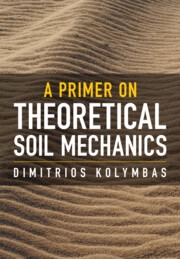
A primer on theoretical soil mechanics
A Primer to Theoretical Soil Mechanics is about adapting continuum mechanics to granular materials. The field of continuum mechanics offers many fruitful concepts and methods, however there is declining interest in the field due to its complex and fragmented nature. This book's purpose is therefore to facilitate the understanding of the theoretical principles of soil mechanics, as well as introducing the new theory of barodesy.

A New Foundation of Physical Theories
Written in the tradition of G. Ludwig’s groundbreaking works, this book aims to clarify and formulate more precisely the fundamental ideas of physical theories. By introducing a basic descriptive language of simple form, in which it is possible to formulate recorded facts, ambiguities of physical theories are avoided as much as possible. In this approach the field of physics that should be described by a theory is determined by basic concepts only, i.e. concepts that can be explained without a theory.In this context the authors introduce a new concept of idealization and review the process of discovering new concepts. They believe that, when the theories are formulated within an axiomatic basis, solutions can be found to many difficult problems such as the interpretation of physical theories, the relations between theories as well as the introduction of physical concepts.

A Guide to Fluid Mechanics
The theory is explained using ordinary and accessible language, where fluid mechanics is presented in analogy to solid mechanics to emphasize that they are all the application of Newtonian mechanics and thermodynamics. All the informative and helpful illustrations are drawn by the author, uniting the science and the art with figures that complement the text and provide clear understanding.
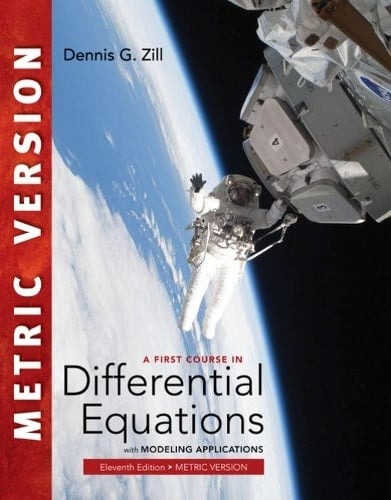
A first course in differential equations with modeling applications
A comprehensive treatment of ordinary differential equations, concisely presenting basic and essential results in a rigorous manner. Including various examples from physics, mechanics, natural sciences, engineering and automatic theory, Differential Equations is a bridge between the abstract theory of differential equations and applied systems theory.
A Comprehensible Universe : The Interplay of Science and Theology
Why is our world comprehensible? This question seems so trivial that few people have dared to ask it. In this book we explore the deep roots of the mystery of rationality. The inquiry into the rationality of the world began over two-and-a-half-thousand years ago, when a few courageous people tried to understand the world with the help of reason alone, rejecting the comforting fabric of myth and legend.

A Comparison of the Dynamical Evolution of Planetary Systems ; Proceedings of the Sixth Alexander von Humboldt Colloquium on Celestial Mechanics Bad Hofgastein (Austria), 21-27 March 2004
The papers in this volume cover a wide range of subjects covering the most recent developments in Celestial Mechanics from the theoretical point of nonlinear dynamical systems to the application to real problems. We emphasize the papers on the formation of planetary systems, their stability and also the problem of habitable zones in extrasolar planetary systems. A special topic is the stability of Trojans in our planetary system, where more and more realistic dynamical models are used to explain their complex motions: besides the important contribution from the theoretical point of view, the results of several numerical experiments unraveled the structure of the stable zone around the librations points. This volume will be of interest to astronomers and mathematicians interested in Hamiltonian mechanics and in the dynamics of planetary systems.
4th Kuala Lumpur International Conference on Biomedical Engineering 2008 ; BIOMED 2008 25–28 June 2008 Kuala Lumpur, Malaysia
The topics covered in the conference proceedings include: Artificial organs, bioengineering education, bionanotechnology, biosignal processing, bioinformatics, biomaterials, biomechanics, biomedical imaging, biomedical instrumentation, bioMEMS, clinical engineering, prosthetics.
3rd Kuala Lumpur International Conference on Biomedical Engineering 2006 ; Biomed 2006, 11-14 December 2006, Kuala Lumpur, Malaysia
The Kuala Lumpur International Conference on Biomedical Engineering (Biomed 2006) was held from 11 to 14 December 2006 at the Palace of the Golden Horses, Kuala Lumpur, Malaysia. This international conference was jointly organised by the Department of Biomedical Engineering, University of Malaya, Malaysia; Department of Biomedical Engineering, Inje University, Korea; and Malaysian Society of Medical and Biological Engineering. The papers presented at Biomed 2006 cover the following areas: artificial intelligence, biological effects of non-ionising electromagnetic fields, biomaterials, biomechanics, biomedical sensors, biomedical signal analysis, biotechnology, clinical engineering, human performance engineering, imaging, medical informatics, medical instruments and devices, physiological modelling, simulation, and control, prostheses and artificial organs, regulations and organisations, rehabilitation engineering, telemedicine, tissue engineering, and virtual reality in medicine.
14th Nordic-Baltic conference on biomedical engineering and medical physics : NBC 2008 16–20 June 2008 Riga, Latvia
The topics covered by the Conference Proceedings include: Biomaterials and Tissue Engineering; Biomechanics, Artificial Organs, Implants and Rehabilitation; Biomedical Instrumentation and Measurements, Biosensors and Transducers; Biomedical Optics and Lasers; Healthcare Management, Education and Training; Information Technology to Health; Medical Imaging, Telemedicine and E-Health; Medical Physics; Micro and Nanoobjects, Nanostructured Systems, Biophysics
