



Page 22
Page 22
Advances in Artificial Economics : The Economy as a Complex Dynamic System
Perceiving the economy as a complex dynamic system, generates a need for new tools for its study. As a constructive simulation method, Agent-Based Computational Economics (ACE) has in recent years proven its strength and extensive applicability. Fields of study are widely spread within economics, with a cluster around financial markets. This book is based on communications given at AE’2006 (Aalborg, Denmark) – the second symposium on Artificial Economics, and covers both wellknown questions of economics, like the existence of market efficiency, as well as new questions raised by the new tools, for example questions related to networks of social interaction.
Advances in 3D Geo Information Systems
The individual papers represent a valuable collection of information on the current state-of-the-art research in the field of 3D geoinformation. It covers a range of these challenges, collected under the themes of Applications, Acquisition, Modelling, Analysis and Visualisation. The main strength of the collection concerns the data modelling and DBMS implementation issues with 3D GIS.
Advanced Information Systems Engineering ; 20th International Conference, CAiSE 2008 Montpellier, France, June 16-20, 2008 Proceedings
This book constitutes the refereed proceedings of the 20th International Conference on Advanced Information Systems Engineering, CAiSE 2008, held in Montpellier, France, in June 2008.

Advanced Design Techniques for RF Power Amplifiers
Main aim is to provide the reader with a deep analysis of theoretical aspects, modelling, and design strategies of RF high-efficiency power amplifiers. Advanced Design Techniques for RF Power Amplifiers begins with an analytical review of current state of the problem. Then it moves to the theoretical analysis of BJT class-F power amplifier near transition frequency and presents the necessary realization conditions. The next part concerns the practical verification and demonstration of the theoretical results. It is followed by the part devoted to the output networks of high-efficiency power ampifiers. The novel type of photonic band-gap structure providing improved characteristics both in the pass and stop bands is proposed. Finally, the fifth-harmonic peaking class F power amplifier design based on the above structure is presented.
Advanced computational intelligence paradigms in healthcare 1
This book presents some of the most recent research results on the applications of computational intelligence in healthcare. The contents include: Information model for management of clinical content State-based model for management of type II diabetes Case-based reasoning in medicine Assessing the quality of care in artificial intelligence environment Electronic medical record to examine physician decisions Multi-agent systems for the management of community healthcare Assistive wheelchair navigation Modelling treatment processes using information extraction Neonatal pain detection using face classification techniques Medical education interfaces using virtual patients The book is directed to the computer scientists, medical practitioners, scientists, professors and students of health science, computer science and related disciplines.

Ad-Hoc, mobile, and wireless networks ; Vol.3738 ; 4th International conference, ADHOC-NOW 2005, Cancun, Mexico, October 6-8, 2005, Proceedings
This book constitutes the refereed proceedings of the 4th International Conference on Ad-Hoc Networks and Wireless, ADHOiNOW 2005, The papers discuss architectures, protocols, and algorithms for: access control, scheduling, ad hoc and sensor networks analytic methods and modelling for performance evaluation, characterization, optimization, auto-configuration, incentives and pricing, location awareness, discovery, dependence, and management, mesh networks, new applications, power management, power control, and energy-efficiency, quality-of-service, resource allocation, multimedia, routing (unicast, multicast, etc.), security and privacy, service discovery, systems and testbeds, wireless internet, and data management.

Adaptive Voltage Control in Power Systems : Modeling, Design and Applications
Adaptive Voltage Control in Power Systems, a self-contained blend of theory and novel application, is an in-depth treatment of such adaptive control schemes. The reader moves from power-system-modelling problems through illustrations of the main adaptive control systems (self-tuning, model-reference and nonlinearities compensation) to a detailed description of design methods: Kalman filtering, parameter-identification algorithms and discrete-time controller design are all represented. Case studies address applications issues in the implementation of adaptive voltage control.
Adaptive Learning of Polynomial Networks : Genetic Programming, Backpropagation and Bayesian Methods
This book provides theoretical and practical knowledge for develop ment of algorithms that infer linear and nonlinear models. It offers a methodology for inductive learning of polynomial neural network mod els from data. The design of such tools contributes to better statistical data modelling when addressing tasks from various areas like system identification, chaotic time-series prediction, financial forecasting and data mining. The main claim is that the model identification process involves several equally important steps: finding the model structure, estimating the model weight parameters, and tuning these weights with respect to the adopted assumptions about the underlying data distrib ution. When the learning process is organized according to these steps, performed together one after the other or separately, one may expect to discover models that generalize well.
Adaptive Information Systems and Modelling in Economics and Management Science
Learning and adaption are key features of "real economies". Studying interesting real phenomena like innovation, industry evolution or the role of expectation formulation in financial markets thus necessitates novel methods of data analysis and modelling. This title covers statistical models of heterogeneity, artificial consumer markets, models of adaptive expectation formulation in financial markets and agent-based models of industry evolution, product diversification and energy markets. The joint findings are presented in a manner that is interesting both for readers with a background in economics/management and mathematics and statistics and also for non-expert readers because it allows them to grasp the ideas of modern management science. This book thus provides a unique integrated toolbox for building realistic agent-based models of learning and adaption in a variety of settings based on sound data analysis.

Achieving the Paris Climate Agreement goals ; Part 2 : Science-based target setting for the finance industry — Net-Zero Sectoral 1.5˚C pathways for real economy sectors
Provides an in-depth analysis of industry sectors globally, and its purpose is to present emission reduction targets in 5-year steps (2025 to 2050) for the main twelve finance sectors per the Global Industry Classification System. This scientific analysis aims to support the United Nations Principles for Responsible Investment initiative to give sustainability guidance for the global finance industry. The industry sector pathways presented here are based on the latest global and regional 100% renewable energy and non-energy greenhouse gas Representative Concentration Pathways in order to keep climate change significantly under +1.5 C and thereby achieve the Paris Climate Agreement goals. The heart of this book is three chapters presenting the results of industry scenario modelling. These chapters cover twelve industry and service sectors as well as transportation and buildings. The specific energy demand and specific emissions are presented based on the emission accounting concept of “Scope 1, Scope 2 and Scope 3” emission pathways. This methodology has been developed to measure the climate and sustainability index for companies, and this research project expands the methodology to apply it to entire industry sectors ...

Achieving the Paris climate agreement goals : Global and regional 100% renewable energy scenarios with non-energy GHG Pathways for +1.5°C and +2°C
Presents detailed pathways to achieve 100% renewable energy by 2050, globally and across ten geographical regions. Based on state-of-the-art scenario modelling, it provides the vital missing link between renewable energy targets and the measures needed to achieve them. Bringing together the latest research in climate science, renewable energy technology, employment and resource impacts, the book breaks new ground by covering all the elements essential to achieving the ambitious climate mitigation targets set out in the Paris Climate Agreement. For example, sectoral implementation pathways, with special emphasis on differences between developed and developing countries and regional conditions, provide tools to implement the scenarios globally and domestically. Non-energy greenhouse gas mitigation scenarios define a sustainable pathway for land-use change and the agricultural sector. Furthermore, results of the impact of the scenarios on employment and mineral and resource requirements provide vital insight on economic and resource management implications.

Abstraction, Reformulation, and Approximation ; 7th International Symposium, SARA 2007, Whistler, Canada, July 18-21, 2007, Proceedings
This volume contains the proceedings of SARA 2007, the seventh symposium, held at Whistler Village, British Columbia, Canada, July 18-21. Three distinguished speakers were invited to give keynote presentations, and their abstracts are included herein,It has been recognized since the inception of artificial intelligence that abstractions, problem reformulations and approximations (AR&A) are central to human common-sense reasoning and problem solving and to the ability of systems to reason effectively in complex domains.AR&A techniques have been used in a variety of problem-solving settings, including automated reasoning, cognitive modelling.
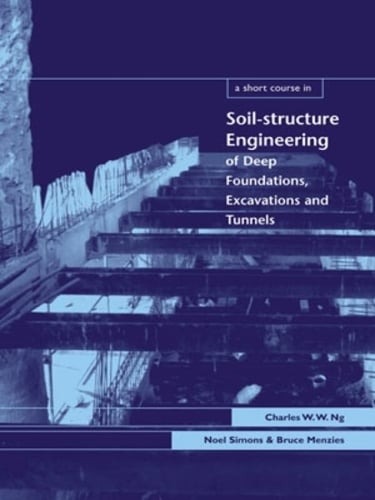
A Short Course in Soil–Structure Engineering of Deep Foundations, Excavations and Tunnels
A Short Course in Soil-structure Engineering of Deep Foundations, Excavations and Tunnels, focuses on the three major geotechnical challenges of static soil-structure interaction problems. Deep foundations - piles, barrettes, Multi-propped deep excavations and Bored and open face tunnels beneath cities. This book gives both students and practising civil engineers an authoritative review of the state-of-the-art of designing deep foundations, excavations and tunnels. In addition, the case studies and numerical modelling presented will give valuable insights into the challenges of soil-structure engineering.
A Modern Course in Aeroelasticity
In this new edition, the fundamental material on classical linear aeroelasticity has been revised. Also new material has been added describing recent results on the research frontiers dealing with nonlinear aeroelasticity as well as major advances in the modelling of unsteady aerodynamic flows using the methods of computational fluid dynamics and reduced order modeling techniques.
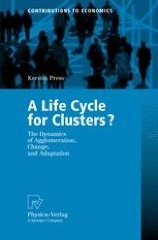
A life cycle for clusters? : The dynamics of agglomeration, change, and adaption
The phenomenon of non-random spatial concentrations of firms in one or few related sectors (clusters) is intensively debated in economic theory and policy. The euphoria about successful clusters however neglects that historically, many thriving clusters did deteriorate into old industrial areas. This book studies the determinants of cluster survival by analyzing their adaptability to change in the economic environment. Linking theoretic knowledge with empirical observations, a simulation model (based in the N/K method) is developed, which explains when and why the cluster's architecture assists or hampers adaptability. It is found that architectures with intermediate degrees of division of labour and more collective governance forms foster adaptability. Cluster development is thus path dependent as architectures having evolved over time impact on the likelihood of future survival.
A Guide to Graph Algorithms
Offers high-quality content in the research area of graph algorithms and explores the latest developments in graph algorithmics. The reader will gain a comprehensive understanding of how to use algorithms to explore graphs. It is a collection of texts that have proved to be trend setters and good examples of that. The book aims at providing the reader with a deep understanding of the structural properties of graphs that are useful for the design of efficient algorithms. These algorithms have applications in finite state machine modelling, social network theory, biology, and mathematics. The book contains many exercises, some up at present-day research-level. The exercises encourage the reader to discover new techniques by putting things in a clear perspective.
3rd Kuala Lumpur International Conference on Biomedical Engineering 2006 ; Biomed 2006, 11-14 December 2006, Kuala Lumpur, Malaysia
The Kuala Lumpur International Conference on Biomedical Engineering (Biomed 2006) was held from 11 to 14 December 2006 at the Palace of the Golden Horses, Kuala Lumpur, Malaysia. This international conference was jointly organised by the Department of Biomedical Engineering, University of Malaya, Malaysia; Department of Biomedical Engineering, Inje University, Korea; and Malaysian Society of Medical and Biological Engineering. The papers presented at Biomed 2006 cover the following areas: artificial intelligence, biological effects of non-ionising electromagnetic fields, biomaterials, biomechanics, biomedical sensors, biomedical signal analysis, biotechnology, clinical engineering, human performance engineering, imaging, medical informatics, medical instruments and devices, physiological modelling, simulation, and control, prostheses and artificial organs, regulations and organisations, rehabilitation engineering, telemedicine, tissue engineering, and virtual reality in medicine.

3D Recording and Interpretation for Maritime Archaeology
Includes recording and analysis of maritime archaeology through emerging technologies, including both practical and theoretical contributions. Topics include photogrammetric recording, laser scanning, marine geophysical 3D survey techniques, virtual reality, 3D modelling and reconstruction, data integration and Geographic Information Systems. This convergence of digital technologies such as underwater photography and photogrammetry, 3D sonar, 3D virtual reality, and 3D printing has highlighted a pressing need for these new methodologies to be considered together, both in terms of defining the state-of-the-art and for consideration of future directions.

3D printing in oral & maxillofacial surgery
A comprehensive guide to 3D printing and 3D bioprinting methods and their application in oral and maxillofacial surgeries. Among the 3D printing methods considered are fused deposition modeling, selective laser sintering, photopolymer jetting, powder binder printing, and stereolithography, while the coverage of 3D bioprinting encompasses inkjet, microextrusion, and laser techniques. In each case, the relevance of the technique to oral and maxillofacial surgery is explained. In addition, the available inks and bioinks for 3D printing are reviewed. The roles of soft and hard tissue printing in oral and maxillofacial tissue engineering and the use of 3D printing in multi- and interfacial tissue engineering are then examined in depth. The particular value of 3D printing in the treatment of critically sized defects is discussed separately. Finally, up-to-date information is provided on guided tissue/bone regeneration using 3D printing. The book will be of interest to both oral and maxillofacial surgeons and biomedical engineers.
3D Mesh processing and character animation : with examples using OpenGL, OpenMesh and Assimp
Focusses specifically on topics that are important in three-dimensional modelling, surface design and real-time character animation. It provides an in-depth coverage of data structures and popular methods used in geometry processing, keyframe and inverse kinematics animations and shader based processing of mesh objects. It also introduces two powerful and versatile libraries, OpenMesh and Assimp, and demonstrates their usefulness through implementations of a wide range of algorithms in mesh processing and character animation respectively. This Textbook is written for students at an advanced undergraduate or postgraduate level who are interested in the study and development of graphics algorithms for three-dimensional mesh modeling and analysis, and animations of rigged character models.
