


Refine Results
Sort By
From
To

This book provides an exploration of the consequences of the ontological differences between natural and social objects (sometimes described as objects of nature and objects of thought) in the workings of causal and agency relationships.

Intellectual origins & orientations We begin by providing an overview of Bourdieu’s life as a scholar and a public intellectual. The numerous obituaries and memorial tributes that have appeared following Bourdieu’s untimely death have revealed something of his life and career, but few have stressed the intersection of his social origins, career trajectory, and public intellectual life with the changing political and social context of France. This is precisely what David Swartz’s “In memoriam” attempts to accomplish. In it he emphasizes the coincidence of Bourdieu’s young and later adulthood with the period of decolonization, the May 1968 French university crisis, the opening up of France to privatization of many domains previously entrusted to the state (l’état providence), and, most threatening to post-World War II reforms, the emergence of globalization as the hegemonic structure of the 21st century.
Provides the first thorough and comprehensive treatment of irregular wavelet frames by introducing and employing a new notion of affine density as a highly effective tool for examining the geometry of sequences of time-scale indices.

Environmental issues continued to loom large in the last decade of the twentieth century,especially environmental problems related to rising levels of CO emissions and 2 other greenhouse gases on the planet’s average temperatures and, subsequently, storm patterns. Floods and droughts, in combination with unseasonably high and low temperatures became the norm rather than the exception for large expanses of Africa,Asia and Oceania. Even large areas of Europe and NorthAmerica were s- jected to recurrent floods and droughts and experienced unseasonable extremes of hot and cold temperatures associated with man-made intrusions into the natural environment. And, still, a global plan of action to haltman-related patterns of def- estation, desertification, and over-fishing of the seas has yet to come into being. At the same time, the number of regional conflicts and civil wars increased and, with them, the lives of many women, children, old people and other n- combatants were lost in these conflicts.
Advances of Computational Intelligence in Industrial Systems reports the exploration of CI frontiers with an emphasis on a broad spectrum of real-world applications. Section I – Theory and Foundation presents some of the latest developments in CI.
The new Web-related research directions include intelligent methods usually associated with the fields of computational intelligence, soft computing, and data mining. This book presents state-of-the-art developments in the area of computationally intelligent methods applied to various aspects and ways of Web exploration and Web mining. Some novel data mining algorithms that can lead to more effective and intelligent Web-based systems are also described. Scientists, engineers, and research students are expected to find many inspiring ideas in this volume.
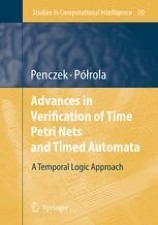
This monograph presents a comprehensive introduction to timed automata (TA) and time Petri nets (TPNs) which belong to the most widely used models of real-time systems. Some of the existing methods of translating time Petri nets to timed automata are presented, with a focus on the translations that correspond to the semantics of time Petri nets, associating clocks with various components of the nets. "Advances in Verification of Time Petri Nets and Timed Automata – A Temporal Logic Approach" introduces timed and untimed temporal specification languages and gives model abstraction methods based on state class approaches for TPNs and on partition refinement for TA. Moreover, the monograph presents a recent progress in the development of two model checking methods, based on either exploiting abstract state spaces or on application of SAT-based symbolic techniques.
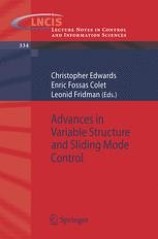
Sliding Mode Control is recognized as an efficient tool to design controllers which are robust with respect to uncertainty. The resulting controllers have low sensitivity to plant parameters and perturbations and allow the possibility of decoupling the original plant system into two components of lower dimension. In addition many controllers ensure finite time convergence to the switching surface and can be straightforwardly implemented. However, in addition to this traditional area of exploitation, sliding mode concepts are being increasingly deployed for the design of observers for estimation and identification.
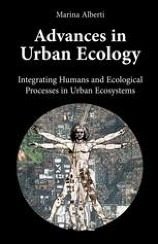
The future of Earth’s ecosystems is increasingly influenced by the pace and patterns of urbanization. One of the greatest challenges for natural and social scientists is to understand how urbanizing regions evolve through the complex interactions between humans and ecological processes. Questions and methods of inquiry specific to our traditional disciplinary domains yield partial views that reflect different epistemologies and understandings of the world. In order to achieve the level of synthesis required to see the urban ecosystem as a whole we must change the way we pose questions and search for answers. Cities are the result of human and ecological processes occurring simultaneously in time and in space and the legacy of the simultaneous processes of the past. Urban ecology is the study of the co-evolution of human-ecological systems. Scholars of both urban systems and ecology must challenge the assumptions and world views within their disciplines and work towards a hybrid theory that builds on multiple world views.
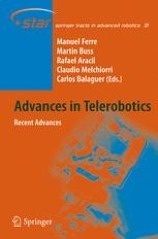
The main purpose of this book is to provide readers with recent advances in the field of Telerobotics. It describes methods, experimental results, applications, and developments, highly relevant for scientists, researchers, and students in Teleoperation. This book is structured in three parts: I. Human System Interfaces, II. Control, and III. Applications. Chapters in part I concentrate on human interface technology which allows a human operator to close the control loop of a remote robot. Topics related to control algorithms - in particular for the case with time delay in the communication network - are the focus in part II, concentrating on bilateral control methods. Part III presents a variety of advanced applications in surgery, space, and other fields relevant to everyday life.

Realizing the growing importance of semantic adaptation and personalization of media, the editors of this book brought together leading researchers and practitioners of the field to discuss the state-of-the-art, and explore emerging exciting developments. This volume comprises extended versions of selected papers presented at the 1st International Workshop on Semantic Media Adaptation and Personalization (SMAP 2006).

Enrique Castillo is a leading figure in several mathematical, statistical, and engineering fields, having contributed seminal work in such areas as statistical modeling, extreme value analysis, multivariate distribution theory, Bayesian networks, neural networks, functional equations, artificial intelligence, linear algebra, optimization methods, numerical methods, reliability engineering, as well as sensitivity analysis and its applications. Organized to honor Castillo's significant contributions, this volume is an outgrowth of the International Conference on Mathematical and Statistical Modeling and covers recent advances in the field. Also presented are applications to safety, reliability and life-testing, financial modeling, quality control, general inference, as well as neural networks and computational techniques.
The goal of this book is to provide effective optimization algorithms for solving a broad class of problems quickly, accurately, and reliably by employing evolutionary mechanisms. In this regard, five significant issues have been investigated: Bridging the gap between theory and practice of GEAs, thereby providing practical design guidelines. Demonstrating the practical use of the suggested road map. Offering a useful tool to significantly enhance the exploratory power in time-constrained and memory-limited applications. Providing a class of promising procedures that are capable of scalably solving hard problems in the continuous domain. Opening an important track for multiobjective GEA research that relies on decomposition principle.
Barry Arnold has made fundamental contributions to many different areas of statistics, including distribution theory, Bayesian inference, multivariate analysis, bounds and orderings, and characterization problems. Organized to honor Arnold’s significant contributions to the field, this volume is an outgrowth of the "International Conference on Distribution Theory, Order Statistics, and Inference," held at the University of Cantabria, Santander, Spain.Several distinguished and active researchers highlight some of the recent developments in statistical distribution theory, order statistics and their properties, as well as inferential methods associated with them. Applications to survival analysis, reliability, quality control, and environmental problems are emphasized.
Focuses on exploratory data analysis, learning of latent structures in datasets, and unscrambling of knowledge. Coverage details a broad range of methods from multivariate statistics, clustering and classification.
Acollection of world class paper articles addressing the following topics: Image and Pattern Recognition: Compression, Image processing, Signal Processing Architectures, Signal Processing for Communication, Signal Processing Implementation, Speech Compression, and Video Coding Architectures. Languages and Systems: Algorithms, Databases, Embedded Systems and Applications, File Systems and I/O, Geographical Information Systems, Kernel and OS Structures, Knowledge Based Systems, Modeling and Simulation, Object Based Software Engineering, Programming Languages, and Programming Models and tools. Parallel Processing: Distributed Scheduling, Multiprocessing, Real-time Systems, Simulation Modeling and Development, and Web Applications. New trends in computing: Computers for People of Special Needs, Fuzzy Inference, Human Computer Interaction, Incremental Learning, Internet-based Computing Models, Machine Intelligence, Natural Language Processing, Neural Networks, and Online Decision Support System.
"Advanced Topics in Control Systems Theory" contains selected contributions written by lecturers at the third (annual) Formation d’Automatique de Paris (FAP) (Graduate Control School in Paris). Following on from the lecture notes from the second FAP (Volume 311 in the same series) it is addressed to graduate students and researchers in control theory with topics touching on a variety of areas of interest to the control community such as nonlinear optimal control, observer design, stability analysis and structural properties of linear systems. The reader is provided with a well-integrated synthesis of the latest thinking in these subjects without the need for an exhaustive literature review. The internationally known contributors to this volume represent many of the most reputable control centers in Europe.
Advanced Topics in Control Systems Theory contains selected contributions written by lecturers at the second (annual) Formation dAutomatique de Paris (FAP) (Graduate Control School in Paris). It is addressed to graduate students and researchers in control theory with topics touching on a variety of areas of interest to the control community such as cascaded systems, flatness, optimal control, and Hamiltonian and infinite-dimensional systems. The reader is provided with a well-integrated synthesis of the latest thinking in these subjects without the need for an exhaustive literature review.
Time-correlated single photon counting (TCSPC) is a remarkable technique for recording low-level light signals with extremely high precision and picosecond-time resolution. TCSPC has developed from an intrinsically time-consuming and one-dimensional technique into a fast, multi-dimensional technique to record light signals. So this reference and text describes how advanced TCSPC techniques work and demonstrates their application to time-resolved laser scanning microscopy, single molecule spectroscopy, photon correlation experiments, and diffuse optical tomography of biological tissue. It gives practical hints about constructing suitable optical systems, choosing and using detectors, detector safety, preamplifiers, and using the control features and optimising the operating conditions of TCSPC devices. Advanced TCSPC Techniques is an indispensable tool for everyone in research and development who is confronted with the task of recording low-intensity light signals in the picosecond and nanosecond range.
Advanced Reliability Models and Maintenance Policies introduces partition and redundant problems within reliability models, and provides optimization techniques. The book also indicates how to perform maintenance in a finite time span and at failure detection, and to apply recovery techniques for computer systems.

Daraa Highway - Ghabagheb - Syria
+963-15 2050 - 15 860 380 /1/2/3 - 11 662 3900