



Page 20
Page 20
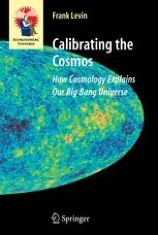
Calibrating the Cosmos : How Cosmology Explains Our Big Bang Universe
Calibrating the Cosmos describes hard science, but is gently written. It explains in clear, non-mathematical language the measurements and the interpretation of the resulting data that have led to the current understanding of the origin, evolution and properties of our expanding Big Bang universe. Many people have a sketchy idea of the work of cosmologists, but Professor Levin’s experience in teaching both scientific and liberal arts students has enabled him to impart much of our current thinking without resorting to difficult mathematics. Theoretical concepts are emphasized, in particular the symmetries of homogeneity and isotropy enjoyed by our universe on the largest scales, how these symmetries lead to only one quantity being needed to describe the growth of the universe from its infancy to the present time, and how the so-called parameters of the universe are the ingredients used to construct the model universes to which ours – the real thing – is compared.

C*-algebras and Elliptic Theory II
This book consists of a collection of original, refereed research and expository articles on elliptic aspects of geometric analysis on manifolds, including singular, foliated and non-commutative spaces. There are contributions from leading specialists, and the book maintains a reasonable balance between research, expository and mixed papers.

C*-algebras and Elliptic Theory
This volume contains the proceedings of the conference on "C*-algebras and Elliptic Theory" held in Bedlewo, Poland, in February 2004. It consists of original research papers and expository articles focussing on index theory and topology of manifolds.The collection offers a cross-section of significant recent advances in several fields, the main subject being K-theory (of C*-algebras, equivariant K-theory). A number of papers is related to the index theory of pseudodifferential operators on singular manifolds (with boundaries, corners) or open manifolds. Further topics are Hopf cyclic cohomology, geometry of foliations, residue theory, Fredholm pairs and others.

Breath odors : Origin, diagnosis, and management
Presents a comprehensive and cohesive science-based approach to bad breath, combining basic research with clinical approaches to diagnosis and treatment. All aspects of the subject are examined thoroughly and critically, including the psychological impact of breath odor and future prospects.

Breath odors : Origin, diagnosis, and management
Presents the latest knowledge on bad breath, describing insights from basic research and offering expert guidance on current approaches to diagnosis and treatment.

Brain tumor pathology : Current diagnostic hotspots and pitfalls
Since Bailey and Cushing (1926), all brain tumor classifications have been called histogenetic. The nosographic position that the tumor types progressively acquired in the classification systems derived from the resemblance of tumor cells to those of the cytogenesis, modified whenever new information became available from different biological research fields and especially from molecular genetics. Classically, on the basis of the rough correspondence between the mature/immature aspect of tumor cells and the benign/malignant biological behavior of the tumors, the histological labels contained a prognostic significance. The supposed origin of the tumors was thus a factor for prognosis. Later on, with the concept of anaplasia (Cox, 1933; Kernohan et al., 1949) new criteria were introduced for establishing the malignancy grades of tumors. Immunohistochemistry and later molecular genetics further refined the prognostic diagnoses, substantially increasing the opportunities to recognize the cell origin of tumors, beside revealing the pathogenetic mechanisms. Prognoses became more accurate, as required by the greater and more targeted possibilities of therapy.
Bone Resorption
Bone Resorption, the second volume in the series Topics in Bone Biology, deals with the osteoclast, the bone-resorbing cell, its origins, its enzymes, the regulation of osteoclast activity, and structural aspects of bone resorption. Diseases involving osteoclast function are discussed from the genetic viewpoint in two chapters that span transgenic mouse models to human pathology. Another chapter treats diseases of osteoclast function. Because osteoporosis may be considered a disease in which the bone resorption rate exceeds formation, a separate chapter deals with current and potential therapeutic approaches to this widespread disease that affects both men and women. Bone metastases and an analysis of the central role of the osteoclast in this condition are treated in the concluding chapter.
Bone Morphogenetic Proteins : From Local to Systemic Therapeutics
Tissue engineering is gaining interest as it is applied for regeneration of organs to attain their lost function. Although resorbable scaffolds and progenitor cell types are required principles to engineer a functional tissue locally, the inductive signal is a prerequisite to trigger the growth and differentiation of responding cells in space and time. Bone morphogenetic proteins (BMPs), also called growth and differentiation factors (GDFs), originally identified from bone have been successfully used to regenerate the bone in humans. Most recent preclinical data suggests that BMPs have a potential to provide protection against inflammation and fibrosis in acute and chronic injury of parenchymal tissues when applied systemically to sustain the function of kidney and liver. The application of BMPs from a local to systemic utility is a rapidly growing field, gaining interest among researchers and biotech entrepreneurs.
Biosphere Origin and Evolution
The book covers notions by scientists of various branches on the evolutionary relationship between the biosphere and geosphere, evolution features at various levels of living matter organization, and problems of prebiotic evolution and life origin. The data were collected in the course of the RAS program "Biosphere origin and evolution" (subprogram II) in 2003–2006. The objectives of this subprogram were (1) generalization of data related to problems of biosphere origin and evolution accumulated by geneticists, molecular biologists, zoologists, botanists, paleontologists, microbiologists, geologists, chemists, and archaeologists; (2) search for new interdisciplinary approaches to biosphere origin and evolution; (3) development of a "lingua franca" understandable by experts in various fields, which would allow apprehension of results concerning the topic obtained in allied sciences
Bioorganometallic Chemistry
Bioorganometallic Chemistry has become a mature area of science and is comprehensively covered by leading experts in this book. Naturally occuring bioorganometallic complexes, such as vitamin B12 and recently discovered iron and nickel hydrogenases, including a possible role of the latter in the geochemical theory of the origin of life, are considered.
Biologically Inspired Approaches to Advanced Information Technology ; 2nd International Workshop, BioADIT 2006, Osaka, Japan 26-27, 2006, Proceedings
This book contains 30 articles and three abstracts of invited talks presented at The Second International Workshop on Biologically Inspired Approaches for Advanced Information Technology,The workshop is intended to provide an e?ective forum for original research results in the ?eld of bio-inspired approaches to advanced information technologies. It also serves to foster the connection between biological paradigms and solutions to building the next-generation information systems.

Biogeography, Time, and Place : Distributions, Barriers, and Islands
Biogeography considers the distribution of biological units over a wide range of scales. The units range from genotypes, populations and species to families and higher taxa. Processes can be local, such as the isolation on islands due to sea-level fluctuations, or large-scale tectonic processes that separates continents and creates oceans. In all processes time is an important factor and by combining data on recent patterns with paleontological data the understanding of the distribution of extant taxa can be improved. This volume focuses on speciation due to isolation in island-like settings, and the evolution of large-scale diversity as the result of origination, maintenance and extinction.
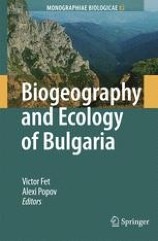
Biogeography and Ecology of Bulgaria
The book includes 22 chapters by 28 authors united by the single theme: biogeography and ecology of Bulgaria. From the single-celled organisms in the Black Sea sand to the endemic cave crustaceans, from the mountain glacial relict insects to the most diverse bird fauna in Europe, the unique fauna of Bulgaria has been a subject of study of mostly Bulgarian zoologists for more than a century. This is the first monograph in English broadly addressing all vertebrate and many key invertebrate groups of Bulgaria, their faunistics, origin, geographical and ecological distribution, and conservation issues are addressed by the experts on each group.
Biodiversity and Conservation in Europe
This book brings together a selection of original studies submitted to Biodiversity and Conservation that address biodiversity and conservation in Europe. Europe is certainly the most intensively inventoried region of the world; detailed maps are available for species distributions while action plans are being drawn up for species under threat. At the same time, the wildlife of Europe has been subject to enormous human pressures, with limited ‘wilderness’ sites remaining in most countries. Europe consequently presents a case-study of what the human impact on biodiversity has been, and also what can be done to improve the situation.

Bioceramic Materials in Clinical Endodontics
This book focuses on hydraulic calcium silicate-based materials available in clinical dentistry, used as pulp capping materials, root canal sealers, root-end fillers, or root repair materials and which offer improved properties and easier clinical application compared with the original mineral trioxide aggregate. The book introduces the current classification of bioceramic materials and explains their characterization and their physicochemical and biological properties.
Bioactive Molecules and Medicinal Plants
Use of medicinal plants is as old as human civilization and continuous efforts are being made to improve medicinal plants or produce their products in high amounts through various technologies. About 200,000 natural products of plant origin are known and many more are being identifed from higher plants and microorganisms. Some plant-based drugs have been used for centuries and there is no alternative medicine for many drugs, such as cardiac glycosides. However, natural products research was sidelined to pave the way for com- natorial chemistry, which was expected to produce large numbers of synthetic compounds for high-throughput screening (HTS). This line of work has failed to deliver desirable results. Moreover, it is not possible for all pharmaceutical companies and institutions to adopt costly HTS technology. Therefore, medi- nal plants and their bioactive molecules are always in demand and are a central point of research. While planning this book, we endeavored to incorporate - ticles that cover the entire gamut of current medicinal plants research.

Bioactive Marine Natural Products
Bioactive Marine Natural Products is the first book available that covers all aspects of bioactive marine natural products. It fills the void in the literature for bioactive marine natural products. The book covers various aspects of marine natural products and it is hoped that all the major classes of bioactive compounds are included. Different classes of marine organisms and the separation and isolation techniques are discussed. The chemistry and biology of marine toxins, peptides, alkaloids, nucleosides and prostanoids are discussed in detail. Biological, toxicological and clinical evaluations are also dealt with to ensure that the book may be adopted at any stage by any practicing organic chemist or biologist, working in academia or in R&D divisions of pharmaceutical companies. Each chapter in the book includes an abstract to highlight the major points discussed in the text and concluding remarks are given. References to books, monographs, review articles and original papers are provided at the end of each chapter.
Big Data Recommender Systems ; Vol.2 : Application Paradigms
Combines experimental and theoretical research on big data recommender systems to help computer scientists develop new concepts and methodologies for complex applications. It includes original scientific contributions in the form of theoretical foundations, comparative analysis, surveys, case studies, techniques and tools. First designed to generate personalized recommendations to users in the 90s, recommender systems apply knowledge discovery techniques to users’ data to suggest information, products, and services that best match their preferences. In recent decades, we have seen an exponential increase in the volumes of data, which has introduced many new challenges. recommender systems. Volume 2 covers a broad range of application paradigms for recommender systems over 22 chapters
Big Data Recommender Systems ; Vol.1 : Algorithms, Architectures, Big Data, Security and Trust
Combines experimental and theoretical research on big data recommender systems to help computer scientists develop new concepts and methodologies for complex applications. It includes original scientific contributions in the form of theoretical foundations, comparative analysis, surveys, case studies, techniques and tools.
Between Necessity and Probability : Searching for the Definition and Origin of Life
This study investigates the major theories of the origins of life in light of modern research with the aim of distinguishing between the necessary and the optional and between deterministic and random influences in the emergence of what we call ‘life.’ Life is treated as a cosmic phenomenon whose emergence and driving force should be viewed independently from its Earth-bound natural history. The author synthesizes all the fundamental life-related developments in a comprehensive scenario, and makes the argument that understanding life in its broadest context requires a material-independent perspective that identifies its essential fingerprints.
