



Page 20
Page 20

New Voices and New Perspectives in International Economic Law
brings together a series of contributions by international legal scholars that explore a range of subjects and themes in the field of international economic law and global economic governance through a variety of methodological and theoretical lenses. It introduces the reader to a number of different ways of constructing and approaching the study of international economic law. deals with a series of different theoretical agendas and perspectives ranging from the more traditional (empirical legal studies) to the more alternative (language theory) and it expands the scope of substantive discussion and thematic coverage beyond the usual suspects of international trade, international investment and international finance.

New Vision of Multiblesclerosis
"There is an evidence that both the multiple sclerosis increased prevalence and incidence rate of over the last few decades. Therefore, the goal of our study is to highlight the causes and the risk factors of such neurological disease in order to raise the public awareness for its early symptoms to be able to treat the patients as early as possible and to have the best outcome. The symptoms of this disease are similar to some extent to other diseases so we will design a table and a test for differential diagnosis with such diseases because there is not a specific diagnostic test also taking into consideration to include in our current project A new promising medication (Radicava)which was first approved by FDA in 2015 in Japan 20 years after all old mentioned medications in this study and we started communication with a brilliant neurological doctor to plan using it first time ever in our country. Beside that we will recommend some important diet to follow for patients and some advises to avoid some risk factors which can develop this disease."

New Vision of Metformin in treating cancer
The anti-diabetic drug metformin is rapidly emerging as a potential anticancer agent. Metformin is a biguanide that is effective in treating type 2 diabetes and the insulin resistance syndromes, improves insulin resistance by reducing hepatic gluconeogensis and by enhancing glucose uptake by skeletal muscle. Metformin can reduce the incidence of cancers and can reduce the mortality from cancers, increase the response to treatment cancer cells when using radiotherapy and chemotherapy, reduce the likelihood of relapse. Diabetes can be a factor in the occurrence of various types of cancer, and develop a variety of cancers such as colo-rectal, pancreas and liver cancers, compared to non-diabetic patients. Incidence of various cancers is high among patients of T2DM due to insulin resistance and mitogenic effects caused by hyperglycemia.

New Vision 2050 : A Platinum Society
Presents the "New Vision 2050," which adds the concept of the “platinum society” to the “Vision 2050”.The 20th century was a century in which energy led the development of material civilization, resulting in deletion of resources, global warming and climate change. What form should sustainable material and energy take to protect the Earth? The "Vision 2050" was established 20 years ago as a model that we should pursue for the next half century. Fortunately, the world is on course for the Vision 2050.Since the author presented the concept of "Vision 2050" in 1999, the idea has been introduced in two books entitled Vision 2050: Roadmap for a Sustainable Earth (2008) and Beyond the Limits to Growth: New Ideas for Sustainability from Japan(2014). The latter includes a chapter that sheds light on the concept of a “platinum society”. In this publication, the author presents the "New Vision 2050" in more detail.

New Trends of Surgery for Cerebral Stroke and its Perioperative Management
In July 2004 specialists in neurosurgery, neuroradiology, neurology and neurointensive care discussed recent trends at the 2nd Swiss Japanese Joint Conference on Cerebral Stroke Surgery, held in Zurich, Switzerland. New concepts were worked out during the conference and are published in this volume. The book starts with the topic intracranial aneurysms, discussing microsurgical and endovascular treatment modalities, as well as new surgical approaches. Further chapters deal with the management of unruptured aneurysms and with subarachnoid hemorrhage. Practical guidelines for vasospasm treatment are given. Together with contributions about arteriovenous malformations and fistulas, cerebral revascularization techniques and surgery related to the intracranial venous system a comprehensive overview about stroke surgery is given with an interdisciplinary approach. The book will be of interest for all specialists involved in therapy of cerebrovascular disease.

New Trends in the Theory of Hyperbolic Equations
The present volume is dedicated to modern topics of the theory of hyperbolic equations such as evolution equations, multiple characteristics, propagation phenomena, global existence, influence of nonlinearities. It is addressed to beginners as well as specialists in these fields. The contributions are to a large extent self-contained.

New Trends in Soil Micromorphology
The soil water retention curve, the saturated hydraulic conductivity and the unsaturated hydraulic conductivity function are basic soil hydraulic functions and parameters. Ample apprehension of the soil hydraulic functions and parameters is required for a successful formulation of the principles leading to sustainable soil management, agricultural production and environmental protection. From these, all the other parameters, required in the solution of the practical tasks, are derived.

New Trends in Optimal Filtering and Control for Polynomial and Time-Delay Systems
0. 1 Introduction Although the general optimal solution of the ?ltering problem for nonlinear state and observation equations confused with white Gaussian noises is given by the Kushner equation for the conditional density of an unobserved state with respect to obser- tions (see [48] or [41], Theorem 6. 5, formula (6. 79) or [70], Subsection 5. 10. 5, formula (5. 10. 23)), there are a very few known examples of nonlinear systems where the Ku- ner equation can be reduced to a ?nite-dimensional closed system of ?ltering eq- tions for a certain number of lower conditional moments.

New Trends in Macroeconomics
This volume does exactly what its title says: it acquaints with 'New Trends in Macroeconomics'. More specifically, it contains eleven chapters covering different aspects of modern macroeconomics: short-run fluctuations, long-run growth, monetary economics, international finance, macroeconometrics and complex dynamics. All chapters break new grounds in their area while at the same time remain very accessible. The book contains also an excellent mixture of new techniques, interesting applications and methodological arguments. A valuable reference for both practitioners and researchers, it will also be of great help to gradutate students seeking to bring themselves to the frontier of one of the most fascinating fields of economics
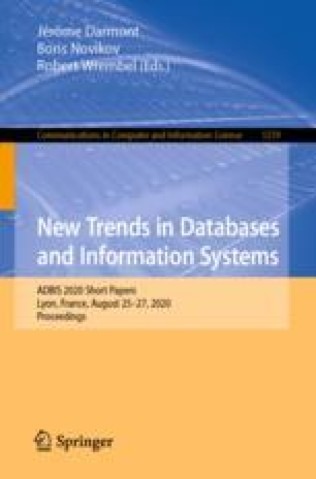
New Trends in Databases and Information Systems ; ADBIS 2020 Short Papers, Lyon, France, August 25–27, 2020, Proceedings
This book constitutes thoroughly refereed short papers of the 24th European Conference on Advances in Databases and Information Systems, ADBIS 2020, held in August 2020. ADBIS 2020 was to be held in Lyon, France, however due to COVID-19 pandemic the conference was held in online format. The 18 presented short research papers were carefully reviewed and selected from 69 submissions. The papers are organized in the following sections: data access and database performance; machine learning; data processing; semantic web; data analytics.
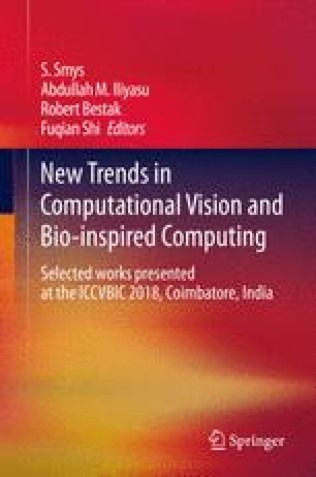
New trends in computational vision and bio-inspired computing : Selected works presented at the ICCVBIC 2018, Coimbatore, India
Gathers selected, peer-reviewed original contributions presented at the International Conference on Computational Vision and Bio-inspired Computing (ICCVBIC) conference which was held in Coimbatore, India, on November 29-30, 2018. The works included here offer a rich and diverse sampling of recent developments in the fields of Computational Vision, Fuzzy, Image Processing and Bio-inspired Computing. The topics covered include computer vision; cryptography and digital privacy; machine learning and artificial neural networks; genetic algorithms and computational intelligence; the Internet of Things; and biometric systems, to name but a few. The applications discussed range from security, healthcare and epidemic control to urban computing, agriculture and robotics.

New Trends in Cancer for the 21st Century
It is difficult to imagine anyone who has not heard of cancer. This disease can affect families, friends or any one of us at any time in our lives. Every year nearly 3 million Europeans are diagnosed with cancer, leading to around 800,000 deaths per year. These deaths occur not only in aging populations, but also in children and adults who are in the most active period of their lives. This represents a tremendous problem that cannot be ignored by politicians or citizens. Fortunately, there is a constantly growing awareness that although cancer is a problem to be dealt with by clinicians, it should also be the concern of everyone. This volume contains the lectures held at the International Symposium on Cancer "New Trends in Cancer for the 21st Century". Fundamental researchers, politicians and representatives from patient coalitions share here their knowledge and interests as well as their concerns and experiences. Not only do these papers provide state-of-the-art information on cancer, they are also an opportunity to look at the problem from different points of view. It can be encouraging to realise that we are not alone in this fight.
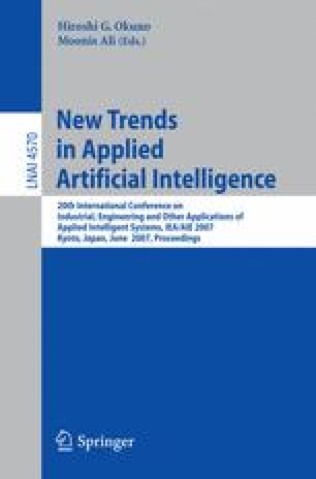
New Trends in Applied Artificial Intelligence ; 20th International Conference on Industrial, Engineering, and Other Applications of Applied Intelligent Systems. IEA/AIE 2007, Kyoto, Japan, June 26-29, 2007, Proceedings
The 20 International Conference on Industrial, Engineering and Other Applications of Applied Intelligent S- tems (IEA/AIE-2007) held in Kyoto, Japan presented such work performed by many scientists worldwide. The previous IEA/AIE conference held in Japan was the Ninth International Conference on Industrial and Engineering Applications of Arti?cial Intelligence and Expert systems (IEA/AIE-1996) in Fukuoka in 1996.

New Trends and Technologies in Computer-Aided Learning for Computer-Aided Design ; IFIP International Working Conference: EduTech 2005, Perth, Australia, October 20-21, 2005
Computation and communication technologies underpin work and development in many different areas. Among them, Computer-Aided Design of electronic systems and E-Learning technologies are two areas which are different but share many concerns. The design of CAD and E-Learning systems already touches on a number of parallels, such as system interoperability, user interfaces, standardization, EML-based formats, reusability aspects (of content or designs), and intellectual property rights. Furthermore, the teaching of Design Automation tools and methods is particularly amenable to a distant or blended learning setting, and implies the interconnection of typical CAD tools, such as simulators or synthesis tools, with e-learning tools. There are many other aspects in which synergy can be found when using E-Learning technology for teaching and learning technology. This workshop, sponsored by IFIP WG 10.5 Design and Engineering of Electronic Systems in cooperation with IFIP WG 3.6 Distance Education, will explore the interrelationship between these two subjects, where Computer-Aided Design meets Computer-Aided Learning. New Trends and Technologies in Computer-Aided Learning for Computer-Aided Design documents recent approaches and results presented at the EduTech 2005 Workshop, which was held in October 2005 in Perth, Australia and sponsored by the International Federation for Information Processing (IFIP). The topics chosen for this working conference are very timely: learning environments, tools and applications for education, education technologies and trends, and teaching in the hardware design area.

New Treminal for Damascus International Airport = مبنى ركاب جديد لمطار دمشق الدولي
يخدم15 مليون شخص سنويا يعطي المسافر تجربة شعورية مميزة من خلال الساحات تفاعلبية و الخدمات الترفيهية و الحديقة البيئية إضافة الى استخدام مواد صديقة للبيئة و أساليب للاستدامة و استغلال الموارد الطبيعية

New Tools of Economic Dynamics
New Tools of Economic Dynamics gives an introduction and overview of recently developed methods and tools, most of them developed outside economics, to deal with the qualitative analysis of economic dynamics. It reports the results of a three-year research project by a European and Latin American network on the intersection of economics with mathematical, statistical, and computational methods and techniques. Focusing upon the evolution and manifold structure of complex dynamic phenomena, the book reviews and shows applications of a variety of tools, such as symbolic and coded dynamics, interacting agents models, microsimulation in econometrics, large-scale system analysis, and dynamical systems theory. It shows the potential of a comprehensive analysis of growth, fluctuations, and structural change along the lines indicated by pioneers like Harrod, Haavelmo, Hicks, Goodwin, Morishima, and it highlights the explanatory power of the qualitative approach they initiated.

New Technologies, Mobility and Security
NTMS’2007 is the first IFIP International Conference on New Technologies, Mobility and Security that was held from May 2 to May 4, 2007 in Paris, France. NTMS'2007 aims at fostering advances in the areas of New Technologies, Wireless Networks, Mobile Computing, Ad hoc and Ambient Networks, QoS, Network Security and E-commerce, to mention a few, and provides a dynamic forum for researchers, students and professionals to present their state-of-the-art research and development in these interesting areas. The event was combined with tutorial sessions and workshops. Tutorials preceded the main program, aiming at the dissemination of mature knowledge and technology advances in the field. One Workshop immediately followed the main conference, offering the opportunity for a more focused exchange of ideas and presentation of on-going research relevant to selected topics.

New Technologies in Radiation Oncology
This book provides an overview of recent advances in radiation oncology, many of which have originated from physics and engineering sciences. After an introductory section on basic aspects of 3D medical imaging, the role of 3D imaging in the context of radiotherapy is explored in a series of chapters on the various modern imaging techniques. A further major section addresses 3D treatment planning for conformal radiotherapy, with consideration of both external radiotherapy and brachytherapy. Subsequently the modern techniques of 3D conformal radiotherapy are described, including stereotactic radiotherapy, intensity-modulated radiation therapy, image-guided and adaptive radiotherapy, and radiotherapy with charged particles. More clinically oriented chapters explore the use of brachytherapy in patients with prostate cancer, cardiovascular disorders and breast cancer. The book concludes with a section on quality assurance.

New techniques, materials and technologies in dentistry
Encompasses thrilling state-of-the-art techniques, materials and technologies in dentistry. It compiles a series of original articles that include review articles, in vitro studies and clinical studies, presenting the latest developments in this area.

New Techniques in Solid-State NMR
After the discovery of nuclear magnetic resonance, [1, 2] the new spectroscopy was used for the study of 1 H nuclei in liquids, but then the signal from copper in the receiver coil itself, the first observation of NMR in the solid state, was found.“Wide-line NMR”, named thus because of the line-broadening effects of dipolar interaction and chemical shift anisotropy, was not far behind, and soon led to significant advances through the analysis of spectral lineshapes. Inthis way Richards and Smith [3] demonstrated the presence of H3O+ cations in solid hydrates of strong acids, while Andrew and Eades [4] investigated the details of molecular motion in three solid benzenes. Even now, 50 years later, it is difficult to think of a technique which would provide a more convincing demonstration of the reality of these effects.
