


Refine Results
Sort By
From
To


Learn how to provide dental care to any patient, regardless of existing medical conditions. Little and Falace’s Dental Management of the Medically Compromised Patient, 9th Edition, has been thoroughly revised to give you the information you need to assess common problems, and make safe and healthy dental management decisions. The new addition includes expanded coverage of women’s health issues and introduces a process for developing a medical-risk source. Also, each chapter features vivid illustrations and well-organized tables to give you in-depth details and overall summaries to help you get to the root of your future patients’ needs.
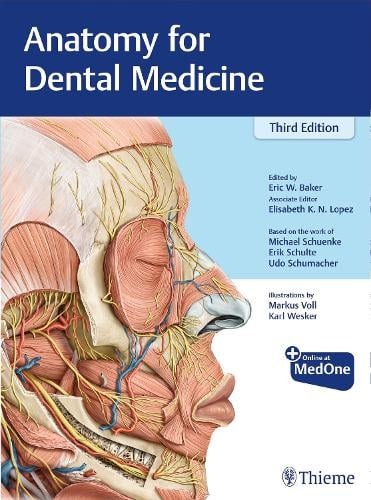
Strikes an optimal balance between systemic and regional approaches to complex head and neck anatomy. Award-winning full-color illustrations, succinct text, summary tables, and questions put anatomical structures and knowledge into a practical context. NEW! Additional radiologic images and landmark features throughoutNEW! Reorganized brain/nerve sectionsNEW! Expanded clinical question appendix including patient box questions in the style of the INBDENEW! Factual question appendix places greater emphasis on areas including the skull, larynx, cross sectional anatomy, body below the neck, and local anesthesia

Provides complete coverage of the Building Services Engineering for Construction qualification's core units and will equip you with the skills you need to shape your career. - Break down complex topics with summary tables and hundreds of images and artworks - Apply your knowledge in real-world case studies and discover some of the dilemmas you can.
Although there are now a large number of computer programmes for solving all sorts of foundation design problems, the need to check these outputs by 'hand-calculation' has become vitally important. This book concentrates on getting the fundamentals right and then using them in practical applications. The book is illustrated with numerous worked examples and with quick-reference tables and charts.
The present collection of formulas has been composed for students of economics or management science at universities, colleges and trade schools. It contains basic knowledge in mathematics, financial mathematics and statistics in a compact and clearly arranged form. This volume is meant to be a reference work to be used by students of undergraduate courses together with a textbook and by researchers in need of exact statements of mathematical results. People dealing with practical or applied problems will also find this collection to be an efficient and easy-to-use work of reference.
This collection of formulas constitutes a compendium of mathematics for eco nomics and business. It contains the most important formulas, statements and algorithms in this significant subfield of modern mathematics and addresses primarily students of economics or business at universities, colleges and trade schools. But people dealing with practical or applied problems will also find this collection to be an efiicient and easy-to-use work of reference. First the book treats mathematical symbols and constants, sets and state ments, number systems and their arithmetic as well as fundamentals of com binatorics. The chapter on sequences and series is followed by mathematics of finance, the representation of functions of one and several independent vari ables, their differential and integral calculus and by differential and difference equations. In each case special emphasis is placed on applications and models in economics. The chapter on linear algebra deals with matrices, vectors, determinants and systems of linear equations. This is followed by the representation of struc tures and algorithms of linear programming. Finally, the reader finds formu las on descriptive statistics (data analysis, ratios, inventory and time series analysis), on probability theory (events, probabilities, random variables and distributions) and on inductive statistics (point and interval estimates, tests). Some important tables complete the work.
• Practical, “how-to” approach that teaches you the skills you need to run a project successfully. • New spreads on powerful leadership while working remotely. / • Step-by-step instructions, tips, checklists and “Ask yourself” features that show you how to make an impact / • Tables, illustrations, “in-focus” panels and real-life case studies that demonstrate and explain problem-solving, and how to build confidence and get results.

Covers: Payment cards and protocols / EMV contact chip and contactless transactions / Disputes, arbitration, and compliance / Data security standards in the payment card industry / Validation algorithms / Code tables / Basic cryptography / Pin block formats and algorithms
provides thought-provoking and inquisitive insights into how we can prolong the useful life of buildings by designing them to be more adaptable, and hence create a more sustainable built environment. The book provides a theoretical foundation counterpointed by the experiences and ideas of those involved in the design and use of buildings. It explains many approaches to designing for change, with lessons from history, and case studies including The Cedar Rapids Public Library, Kentish Town Health Centre and Folkestone Performing Arts Centre, which stretch our thinking beyond the conventional notions of adaptability. The authors reveal the many conditions that make it a complex design phenomenon, by considering the purpose, design and business case of buildings as well as the physical product. Full of summaries, diagrams, reference charts, tables, and photos of exemplar solutions for use as conversational tools or working aids, this book is for any professional or student who wants to research, question, imagine, illustrate - and ultimately design for - adaptation.

At the system level, a novel systematic study on the full feedforward Sigma-Delta topology is presented in this book. As a design example, a fourth-order single-loop full feedforward Sigma-Delta modulator design in a 130-nm pure digital CMOS technology is presented. This design is the first design using the full feedforward Sigma-Delta topology and reaches the highest conversion speed among all the 1-V Sigma-Delta modulators to date.
Local Newforms for GSp(4) describes a theory of new- and oldforms for representations of GSp(4) over a non-archimedean local field. This theory considers vectors fixed by the paramodular groups, and singles out certain vectors that encode canonical information, such as L-factors and epsilon-factors, through their Hecke and Atkin-Lehner eigenvalues. While there are analogies to the GL(2) case, this theory is novel and unanticipated by the existing framework of conjectures. An appendix includes extensive tables about the results and the representation theory of GSp(4).

It is only in the past few years that methods of adequate sensitivity have become available for true ultra-trace metal determinations in water. In the case of organics in seawater it has now become possible to resolve the complex mixtures of organics in seawater and achieve the required very low detection limits. Fortunately, the interest in micro-constituents in the seawater both from the environmental and the nutrient balance points of view has coincided with the availability of advanced instrumentation capable of meeting the analytical needs. This complete and up-to-date compilation of the currently employed proven methods for the chemical analysis of seawaters includes 45 tables and 48 figures.
The book presents basic concepts of adaptive signal processing and filtering in a concise and straightforward manner. It concentrates on on-line algorithms whose adaptation occurs whenever a new sample of each environment signal is available. The material also illustrates block algorithms using a sub-band filtering framework whose adaptation occurs when a new block of data is available.

Astronomy and Astrophysics is a comprehensive, fundamental, up-to-date reference book. It is filled with vital information and basic facts for amateur astronomers and professional astrophysicists, and for anyone interested in the Universe, from the Earth and other planets to the stars, galaxies and beyond. Although serious and thorough, the language, and ideas will attract the general reader, as well as students and professionals. Astronomy and Astrophysics consists of two main parts, a Timeline and a Dictionary. The Timeline is a concise history, arranged chronologically, which provides the complete story of cosmic discovery from early Chinese and Greek astronomy to the latest findings of modern astrophysics and robotic spacecraft.

Daraa Highway - Ghabagheb - Syria
+963-15 2050 - 15 860 380 /1/2/3 - 11 662 3900