


Refine Results
Sort By
From
To


Springer Handbook of Enzymes provides data on enzymes sufficiently well characterized. It offers concise and complete descriptions of some 5,000 enzymes and their application areas. Data sheets are arranged in their EC-Number sequence and the volumes themselves are arranged according to enzyme classes. This new, second edition reflects considerable progress in enzymology: many enzymes are newly classified or reclassified. Each entry is correlated with references and one or more source organisms. New datafields are created: application and engineering (for the properties of enzymes where the sequence has been changed). The total amount of material contained in the Handbook has more than doubled so that the complete second edition consists of 39 volumes as well as a Synonym Index.

Springer Handbook of Enzymes provides data on enzymes sufficiently well characterized. It offers concise and complete descriptions of some 5,000 enzymes and their application areas. Data sheets are arranged in their EC-Number sequence and the volumes themselves are arranged according to enzyme classes. This new, second edition reflects considerable progress in enzymology: many enzymes are newly classified or reclassified. Each entry is correlated with references and one or more source organisms. New datafields are created: application and engineering (for the properties of enzymes where the sequence has been changed). The total amount of material contained in the Handbook has more than doubled so that the complete second edition consists of 39 volumes as well as a Synonym Index.

Springer Handbook of Enzymes provides data on enzymes sufficiently well characterized. It offers concise and complete descriptions of some 5,000 enzymes and their application areas. Data sheets are arranged in their EC-Number sequence and the volumes themselves are arranged according to enzyme classes. This new, second edition reflects considerable progress in enzymology: many enzymes are newly classified or reclassified. Each entry is correlated with references and one or more source organisms. New datafields are created: application and engineering (for the properties of enzymes where the sequence has been changed). The total amount of material contained in the Handbook has more than doubled so that the complete second edition consists of 39 volumes as well as a Synonym Index.

This new, second edition reflects considerable progress in enzymology: many enzymes are newly classified or reclassified. Each entry is correlated with references and one or more source organisms. New datafields are created: application and engineering (for the properties of enzymes where the sequence has been changed). The total amount of material contained in the Handbook has more than doubled so that the complete second edition consists of 39 volumes as well as a Synonym Index. In addition, starting in 2009, all newly classified enzymes are treated in Supplement Volumes. Springer Handbook of Enzymes is an ideal source of information for researchers in biochemistry, biotechnology, organic and analytical chemistry, and food sciences, as well as for medicinal applications

Springer Handbook of Enzymes provides data on enzymes sufficiently well characterized. It offers concise and complete descriptions of some 5,000 enzymes and their application areas. Data sheets are arranged in their EC-Number sequence and the volumes themselves are arranged according to enzyme classes. This new, second edition reflects considerable progress in enzymology: many enzymes are newly classified or reclassified. Each entry is correlated with references and one or more source organisms. New datafields are created: application and engineering (for the properties of enzymes where the sequence has been changed). The total amount of material contained in the Handbook has more than doubled so that the complete second edition consists of 39 volumes as well as a Synonym Index.

This new, second edition reflects considerable progress in enzymology: many enzymes are newly classified or reclassified. Each entry is correlated with references and one or more source organisms. New datafields are created: application and engineering (for the properties of enzymes where the sequence has been changed). The total amount of material contained in the Handbook has more than doubled so that the complete second edition consists of 39 volumes as well as a Synonym Index. In addition, starting in 2009, all newly classified enzymes are treated in Supplement Volumes. Springer Handbook of Enzymes is an ideal source of information for researchers in biochemistry, biotechnology, organic and analytical chemistry, and food sciences, as well as for medicinal applications.

This new, second edition reflects considerable progress in enzymology: many enzymes are newly classified or reclassified. Each entry is correlated with references and one or more source organisms. New datafields are created: application and engineering (for the properties of enzymes where the sequence has been changed). The total amount of material contained in the Handbook has more than doubled so that the complete second edition consists of 39 volumes as well as a Synonym Index. In addition, starting in 2009, all newly classified enzymes are treated in Supplement Volumes. Springer Handbook of Enzymes is an ideal source of information for researchers in biochemistry, biotechnology, organic and analytical chemistry, and food sciences, as well as for medicinal applications.

Springer Handbook of Enzymes provides data on enzymes sufficiently well characterized. It offers concise and complete descriptions of some 5,000 enzymes and their application areas. Data sheets are arranged in their EC-Number sequence and the volumes themselves are arranged according to enzyme classes. This new, second edition reflects considerable progress in enzymology: many enzymes are newly classified or reclassified. Each entry is correlated with references and one or more source organisms. New datafields are created: application and engineering (for the properties of enzymes where the sequence has been changed). Springer Handbook of Enzymes is an ideal source of information for researchers in biochemistry, biotechnology, organic and analytical chemistry, and food sciences, as well as for medicinal applications.

Springer Handbook of Enzymes provides data on enzymes sufficiently well characterized. It offers concise and complete descriptions of some 5,000 enzymes and their application areas. Data sheets are arranged in their EC-Number sequence and the volumes themselves are arranged according to enzyme classes. This new, second edition reflects considerable progress in enzymology: many enzymes are newly classified or reclassified. Each entry is correlated with references and one or more source organisms. New datafields are created: application and engineering (for the properties of enzymes where the sequence has been changed). Springer Handbook of Enzymes is an ideal source of information for researchers in biochemistry, biotechnology, organic and analytical chemistry, and food sciences, as well as for medicinal applications.

Springer Handbook of Enzymes provides data on enzymes sufficiently well characterized. It offers concise and complete descriptions of some 5,000 enzymes and their application areas. Data sheets are arranged in their EC-Number sequence and the volumes themselves are arranged according to enzyme classes. This new, second edition reflects considerable progress in enzymology: many enzymes are newly classified or reclassified. Each entry is correlated with references and one or more source organisms. New datafields are created: application and engineering (for the properties of enzymes where the sequence has been changed). Springer Handbook of Enzymes is an ideal source of information for researchers in biochemistry, biotechnology, organic and analytical chemistry, and food sciences, as well as for medicinal applications.

From a public health point of view, there is little doubt that one of the most important preventable causes of disease worldwide is tobacco smoking. From a scientifc point of view, we found it of interest to make a comprehensive ov- view of what we presently know about oxidative stress and tobacco smoke, because sm- ing is presently the best-known common condition associated with oxidative stress, and it may serve as a model for others. To this end, we have asked distinguished researchers from the public and the private sectors to evaluate the present scientifc status in their particular area. Authors were selected purely because of their scientifc merits.

This book summarizes the chemical, physical, biological and medical aspects of chlorophyll (and bacteriochlorophyll) research and development, with a focus on the tremendous progress achieved over the past 15 years. Each section has an up-to-date introductory overview which is followed by a series of concise well-focused and fully-referenced chapters written by experts in (bio)chemistry, (bio)physics, photobiology and photomedicine.

Chemometrics and Cheminformatics in Aquatic Toxicology delivers an exploration of the existing and emerging problems of contamination of the aquatic environment through various metal and organic pollutants, including industrial chemicals, pharmaceuticals, cosmetics, biocides, nanomaterials, pesticides, surfactants, dyes, and more. The book discusses different chemometric and cheminformatic tools for non-experts and their application to the analysis and modeling of toxicity data of chemicals to various aquatic organisms.

Covers in detail advances in the biochemistry and physiology of several chemolithoautotrophic bacteria as well as their relationship to certain environments. Included are recent findings regarding the oxidation mechanisms of ammonia, nitrite, sulfur compounds, and ferrous iron by special bacteria. The characteristics of many cytochromes are described to further advance the understanding of bacterial oxidation systems of inorganic compounds. Applications of bacteria, such as in sewage treatment and in biohydometallurgy, among others, are detailed, and bacteria considered closest to the origins of life are discussed in the final chapter.
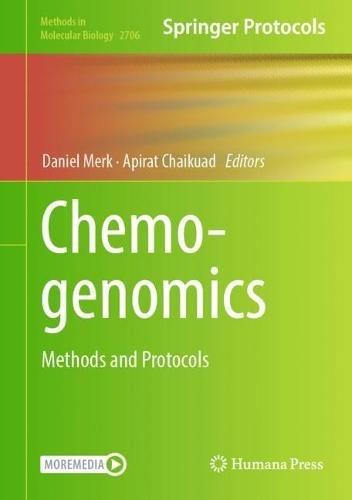
Presents both theoretical guidance and protocols on chemogenomics including chemogenomics library assembly, compound profiling, and phenotypic assays. The chapters in this book cover topics such as the assembly and use of Kinase Chemogenomics; data mining for chemogenomic compound candidates; protocols for protein family-focused assay systems to profile chemogenomic compounds; functional and target engagement assays in cellular settings for broad characterization; and a discussion on phenotypic assays where chemogenomic sets may be applied.
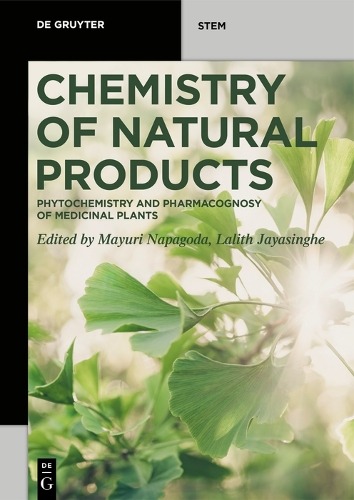
Plants produce secondary metabolites that humans harness for their own benefit. About half of drugs currently in clinical use are based on these chemicals found in nature. Chemistry of Natural Products covers secondary metabolites present in medicinal plants and their biosynthesis, biological activities, and isolation and separation techniques.
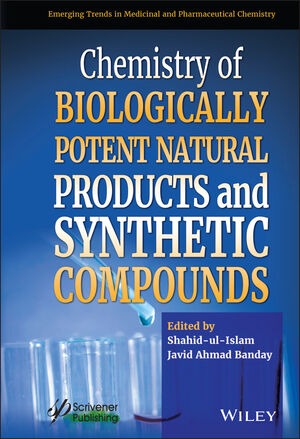
Several novel natural product derivatives, heterocyclic and other synthetic compounds, have been reported to have shown interesting biological activities including anticancer, antimicrobial, anti-inflammatory, anti-glycemic, anti-allergy and antiviral etc. Provides up-to-date information on new developments and most recent medicinal applications of the natural products and derivatives, as well as the chemistry and synthesis of heterocyclic and other related compounds.
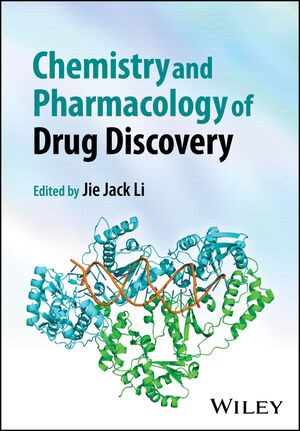
Illustrates how chemistry, biology, pharmacokinetics, and a host of disciplines come together to produce successful medicines, discussing a total of 20 drugs that are all FDA-approved post 2021. Cover Infectious Disease, Cancer Drugs, CNS Drugs, and Miscellaneous Drugs. Each chapter covers background material on the drug class and/or disease indication and key aspects relevant to the discovery of the drug, including structure-activity relationships, pharmacokinetics, drug metabolism, efficacy, and safety.

Presents the proceedings of "Chemical Signals in Vertebrates 11", hosted by the University of Liverpool and held July 25 - 28, 2006 at the University of Chester in the United Kingdom. Chemical Signals in Vertebrates 11 contains the latest research on chemical communication relevant to vertebrates, particularly focusing on new research since the last meeting in 2003. Topics covered include chemical ecology, biochemistry, behavior and neurobiology of both the main olfactory and vomeronasal systems of vertebrates, from amphibia to mammals including humans. A broad range of taxonomic groups and topics are discussed, including sections on new directions in semiochemistry, olfactory response and function, recognition within species, sexual communication, maternal-offspring communication, communication between species, and applications for zoo animal enrichment and pest control. The volume is dedicated to the memory of Dr. Bets Rasmussen and includes a special tribute chapter on her ground-breaking research on elephant communication.
A team of renowned technologists and engineers delivers a practice guide to chemical product design. Offering real-world case studies for disinfectant formulation, the optimization of defined media, and the formulation of biocomposites, the book contains introduction to the current product design process. A practical approach to the essentials of product design, related statistical techniques and optimization, patents, green chemistry and gives real life case studies.

Daraa Highway - Ghabagheb - Syria
+963-15 2050 - 15 860 380 /1/2/3 - 11 662 3900