


Refine Results
Sort By
From
To

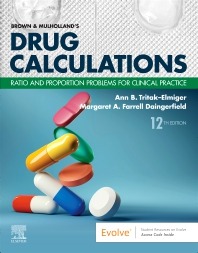
A realistic practice problems and unique "proof" step in the answer key that allows you to double-check your answers to avoid medication errors. This edition continues to promote critical thinking, clinical judgment, and patient safety with respect to accurate drug dosages. Helpful worksheets, assessment tests, and Clinical Alerts call attention to situations in actual practice that have resulted in drug errors — giving you extensive hands-on practice for the Next Generation NCLEX® and beyond.
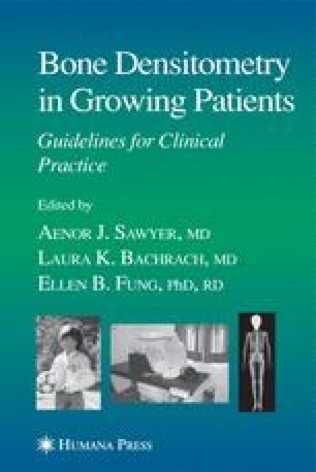
Bone Densitometry in Growing Patients is the first resource available for expert opinion on the use of dual energy x-ray absorptiometry (DXA) for evaluating bone density in children and adolescents. Written by internationally recognized pediatric bone researchers and clinicians, this volume is unique in its specific attention to the myriad challenges of measuring and evaluating bone density in the pediatric patient. There is sufficient technical detail presented in this volume to enable the establishment of a pediatric DXA center or the proper utilization of DXA scan information in current clinical practice.
Provides a comprehensive overview of the biosimilar regulatory framework, the development process and clinical aspects for development of biosimilars. The development path of a biosimilar is just as unique as a development path of a new drug, tailored by the mechanism of action, the quality of the molecule, published information on the reference product, the current competitive environment, the target market and regulatory guidance, and most importantly, the emerging totality of evidence for the proposed biosimilar during development.
Biological Low-Voltage Scanning Electron Microscopy is the first book to address both of these aspects of biological LVSEM. After providing a thorough description of the unique advantages and the operating constraints related to operating a scanning electron microscope at low beam voltage, the remainder of book focuses on the the best way to image all types of plant and animal cells and covers specimens that range from macromolecules to the surfaces revealed by de-embedding resin-embedded samples. Advanced specimen preparation techniques such as cryo-LVSEM, and immuno-gold-LVSEM are fully covered, as is x-ray microanalysis at low beam voltage and live-time stereo imaging. The preparative protocols provided represent the distilled essence of the experience of a group of world-renowned authors who have, for many decades, been instrumental in developing and applying new approaches to LVSEM to support their own biological research.
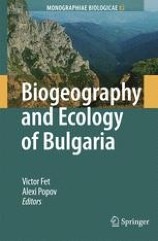
The book includes 22 chapters by 28 authors united by the single theme: biogeography and ecology of Bulgaria. From the single-celled organisms in the Black Sea sand to the endemic cave crustaceans, from the mountain glacial relict insects to the most diverse bird fauna in Europe, the unique fauna of Bulgaria has been a subject of study of mostly Bulgarian zoologists for more than a century. This is the first monograph in English broadly addressing all vertebrate and many key invertebrate groups of Bulgaria, their faunistics, origin, geographical and ecological distribution, and conservation issues are addressed by the experts on each group.
The present book addresses fundamental questions of biological energy transformation and conservation, with a focus on those processes which can now be understood on a structural basis.Current knowledge of selected examples of the biological energy conservation machinery such as cellular oxygen respiration, light-driven energy converters, and fermentation is reviewed. The machinery is highly variable, particularly that within microorganisms, but all of these devices universally rely on one unique underlying physico-chemical principle. The book is a rich source for specialists interested in recent developments in bioenergetics research and novices in the field alike.
In this edited book, we highlight the central players in the Bionanotechnology field, which are the nanostructures and biomolecules. The book starts by describing how nanostructures are synthesized and by describing the wide variety of nanostructures available for biological research and applications. Also shown are the techniques used to synthesize a wide variety of biological molecules. Next, there is a focus on the assembly of nanostructures with biological molecules, which could lead to the design of multi-functional nanosystems. In the following chapters, examples of the unique properties of nanostructures are provided along with the current applications of these nanostructures in biology and medicine. Some applications include the use of gold nanoparticles in diagnostic applications, quantum dots and silica nanoparticles for imaging, and liposomes for drug delivery. In the final chapters of the book, the toxicity of nanostructures are described. This book provides broad examples of current developments in Bionanotechnology research and would be an excellent introduction to the field.
Hen eggs have exceptional potential as an inexhaustible source for a variety of products with unique properties. These products are valuable to human health and nutrition and can be used as raw materials for diverse purposes in the cosmetics and pharmaceutical industries. Bioactive Egg Compounds presents the latest results and concepts in the biotechnological use of egg compounds. Following an introduction to the different compounds of egg white, yolk and shell, the nutritive value of egg compounds is discussed. Procedures for processing egg compounds to improve their nutritive value are described, including the concept of so-called enriched eggs. Also described is the isolation and application of egg compounds with special properties, such as antibiotic action.
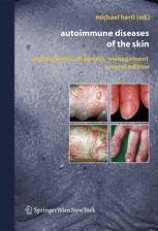
The book provides an overview and the latest information on the broad spectrum of cutaneous autoimmune disorders for clinicians, scientists and practitioners in dermatology, medicine, rheumatology, ENT, pediatrics and ophthalmology. The book is unique since it presents the state-of-the-art knowledge on pathophysiology, clinical diagnosis and management of these disorders provided by the world experts in the field. The primary intention is to broaden the understanding of the pathophysiology of cutaneous autoimmune disorders and to provide a practical guide to how to identify and handle these conditions. The book is illustrated with many tables, illustrative figures and clinical color photographs. The second edition has been extended by chapters on autoimmune pigmentary disorders (vitiligo), hairloss (alopecia areata) and cutaneous symptoms of rheumatic disorders.
The present book comprises a unique collection of primary research papers spanning a wide range of topics in aquatic biodiversity studies, and including a first global assessment of specific diversity of freshwater animals. The book also presents a section on the interaction between scientists and science policy managers
This new volume of the Emerging Infectious Diseases of the 21st Century series is a collection of chapters by leading world authorities on antimicrobial resistance of common, important bacterial, viral and fungal pathogens. This unique book should be in the possession of anyone interested in the field of infectious diseases, microbiology, infection control & public health. The chapters, which are written by reknown experts, provide a wealth of contemporary information on microbiology, molecular mechanisms, epidemiology, clinical relevance, treatment, and prevention
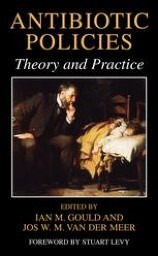
This unique book assembles contributions from experts around the world concerned with responsible use of antibiotics and the consequences of overuse. For the first time, it provides up to the minute texts on both the theoretical aspects of antibiotic stewardship and the practical aspects of its implementation, with consideration of the key differences between developed and developing countries
Provides unique insights into the issues that drive modified dosing regimens for antibiotics in the critically ill. Leading international authors provide their commentary alongside a summary of existing evidence on how to effectively dose antibiotics. Severe infection frequently necessitates admission to the intensive care unit (ICU). Equally, nosocomial sepsis often complicates the clinical course in ICU. Early, appropriate application of antibiotic therapy remains a cornerstone of effective management. However, this is challenging in the critical care environment, given the significant changes in patient physiology and organ function frequently encountered. Being cognisant of these factors, prescribers need to consider modified dosing regimens, not only to ensure adequate drug exposure, and therefore the greatest chance of clinical cure, but also to avoid encouraging drug resistance.
This volume provides an overview of climate change data, its effects on the structure and functioning of Antarctic ecosystems, and the occurrence and cycling of persistent contaminants. It discusses the unique physico-chemical characteristics of the Antarctic environment, ecophysiological adaptations of terrestrial and marine organisms, the transfer of contaminants in pelagic and neritic food chains and the possible consequences for animals at higher trophic levels.
This is the first ever book devoted entirely to the chemical ecology of algae. Algae from both marine and freshwater habitats are covered, as are macroalgae (seaweeds) and microalgae (including phytoplankton). While its main emphasis is on the ecological rather than chemical aspects of the field, the book also includes a unique introductory chapter intended as a primer on algal natural products chemistry for ecologists. It elucidates the roles of chemical defenses in various regions and habitats, of DMSP, oxidative burst responses, and herbivore offense. Topics such as algal sensory chemical ecology and defenses against ultraviolet radiation are also treated, and an introduction to the chemical ecology of phytoplankton is provided.
ALGAE AND CYANOBACTRIA IN EXTREME ENVIRONMENTS is a unique collection of essays, contributed by leading scientists from around the world, devoted to algae – and some related microbes – observed in unexpected harsh habits, which it seems are an oasis or Garden of Eden for these organisms. This timely book on Extremophilic alga, including its especially impressive micrographs, may provide clues about the edges of life on Earth and possibly elsewhere in the universe. This volume is a must for students of the field of biodiversity, as well as those in Phycology, ecology and general biological research.
In Age-Related Changes of the Human Eye, the authors review all aspects of human eye aging. In addition to descriptions of age-related changes in almost all the structures of the human eyes, the authors also include interesting accounts of personal experiments and data.
This volume is unique in being devoted solely to the radiation oncology of lung cancer, and will be of great value to all who are involved in the diagnosis and treatment of the disease. Both non-small cell and small cell lung cancer are considered in detail. Current state of the art treatment strategies and novel approaches that promise further improvements in outcome are explained and evaluated, with the aid of high-quality illustrations. Treatment-related toxicity is discussed, and further individual chapters focus on topics such as quality of life studies, prognostic factors and pitfalls in the design and analysis of clinical trials.
Advances in Molecular Breeding toward Drought and Salt Tolerant Crops seeks to integrate the most recent findings about key biological determinants of plant stress tolerance with modern crop improvement strategies. This volume is unique because is provides exceptionally wide coverage of current knowledge and expertise being applied in drought and salt tolerance research, spanning the scientific hierarchy from physiology, biochemistry, development, and genetics, to the newest technologies being used to manipulate drought and salinity associated traits for germplasm improvement. This book will be an invaluable reference for educators and researchers in agronomy and horticulture, crop breeding, molecular genetics, and biotechnology.
Proceedings of the 7th International Conference on Alzheimer’s Disease and Parkinson’s Disease (ADPD), held March 9-13, 2005 in Sorrento, Italy.The subject matter of the ADPD conferences is unique in that it deals not only with issues related individually to Alzheimer’s disease and Parkinson’s disease, but also with the integration of these and other related diseases. The most up-to-date techniques and research findings are illustrated in this volume, covering topics such as immunology, neuroscience, pharmacology, genetics, molecular biology, biochemistry and the history, epidemiology, clinical phenomenology, diagnosis, imaging, treatment ,and future perspectives of Alzheimer’s and Parkinson’s Diseases.

Daraa Highway - Ghabagheb - Syria
+963-15 2050 - 15 860 380 /1/2/3 - 11 662 3900