



Page 2
Page 2

Haptic and Audio Interaction Design ; 2nd International Workshop, HAID 2007 Seoul, Korea, November 29-30, 2007 Proceedings
This book constitutes the refereed proceedings of the Second International Workshop on Haptic and Audio Interaction Design, HAID 2007 held in Seoul, South Korea, in November 2007. The papers are organized in topical sections on tactile displays, communication and games, accessibility and navigation, as well as design.

Gastrointestinal Cancer
Gastrointestinal cancer includes cancer of the digestive system - the esophagus, colon, rectum, anus, liver, pancreas, and other digestive organs. Taken as a whole, there are an estimated 250,600 new cases in the US. Colon and rectum cancer is the third leading cause of cancer and cancer deaths in the US. Gastrointestinal Cancer is the third volume in the M.D. Anderson Cancer Care series, featuring the current standard approach to GI cancer care from the experts at M.D. Anderson Cancer Center. Designed for the practicing oncologist, this clinical guidebook allows for quick, authoritative access to the latest and best multimodality therapies. Topics covered in this volume include AJCC staging of gastrointestinal malignancies, recent advances in histopathology of gastroinestinal cancers, imaging techniques and endoscopy in the management of GI malignancies, colorectal cancer, liver cancer, gastric cancer, esophageal cancer, anal cancer, and palliative therapy. Each of the 20 chapters ends with an up-to-date list of suggested readings, as well as "key practice points" highlighting the most principles and practices of each chapter for at-a-glance reference. More than 80 illustrations complement the text. This thorough, practical volume is the essential clinical guide for the oncologists, surgeons, and all physicians involved in the care of patients with GI cancer.

Evolving Connectionist Systems : The Knowledge Engineering Approach
Evolving Connectionist Systems is aimed at all those interested in developing and using intelligent computational models and systems to solve challenging real world problems in computer science, engineering, bioinformatics and neuroinformatics. The book challenges scientists and practitioners with open questions about future creation of new information models inspired by Nature. This edition includes new methods for adaptive, knowledge-based learning, such as online incremental feature selection, spiking neural networks, transductive neuro-fuzzy inference, adaptive data and model integration, cellular automata and artificial life systems, particle swarm optimisation, ensembles of evolving systems, and quantum inspired neural networks. New applications to gene and protein interaction modelling, brain data analysis and brain model creation, computational neuro-genetic modelling, adaptive speech, image and multimodal recognition, language modelling, adaptive robotics, modelling dynamic financial and socio-economic systems, and ecological modelling, are covered. An important new feature of the book is the attempt to connect different structural and functional levels of a complex, intelligent system, looking for inspiration from functional relationships in natural systems, such as the genetic and the brain activity.

Evaluation of Text and Speech Systems
Provides an overview of the state-of-the-art and best practice in several sub-fields of evaluation of text and speech systems and components. The evaluation aspects covered include speech and speaker recognition, speech synthesis, animated talking agents, part-of-speech tagging, parsing, and natural language software like machine translation, information retrieval, question answering, spoken dialogue systems, data resources, and annotation schemes. With its broad coverage and original contributions this book is unique in the field of evaluation of speech and language technology.

Engineering human computer interaction and interactive systems ; Joint Working Conferences EHCI-DSVIS 2004, Hamburg, Germany, July 11-13, 2004, Revised Selected Papers
As its name suggests, the EHCI-DSVIS conference has been a special event, merging two different, although overlapping, research communities: EHCI (Engineering for Human-Computer Interaction) is a conference organized by the IFIP 2.7/13.4 working group, started in 1974 and held every three years since 1989. The group’s activity is the scientific investigation of the relationships among the human factors in computing and software engineering. DSVIS (Design, Specification and Verification of Interactive Systems) is an annual conference started in 1994, and dedicated to the use of formal methods for the design of interactive systems. Of course these two research domains have a lot in common, and are informed by each other’s results.

Designing virtual reality systems : The structured approach
Virtual Reality (VR) is a field of study that aims to create a system that provides a synthetic experience for its users. Developing and maintaining a VR system is a very difficult task, requiring in-depth knowledge in many different disciplines, such as sensing and tracking technologies, stereoscopic displays, multimodal interaction and processing, computer graphics and geometric modeling, dynamics and physical simulation, performance tuning, etc. The difficulty lies in the complexity of having to simultaneously consider many system goals, some of which are conflicting.

Designing human interface in speech technology
Designing Human Interface in Speech Technology bridges a gap between the needs of the technical engineer and cognitive researchers working in the multidisciplinary area of speech technology applications. The approach is systematic and the focus is on the utility of developing and designing speech related products. Included is coverage of topics such as neuroscience on the multimodal cortex, cognitive theories on multi-task performance, stress and workload, as well as human information process theory and ecological interface design theory for evaluating speech-related human-system interfaces.

Decarbonizing Freight Transport: Acceptance and Policy Implications
This Book analyzes the acceptance of sustainable freight transport and suggests a new framework for policy measures to decarbonize freight transport. Despite intense political endeavors, the environmental performance of the transport system has not improved in the previous years. It seems that the existing measures are not sufficient to motivate transport users to implement sustainable freight transport strategies. The case of three different strategies for sustainable freight transport is studied: horizontal collaboration in a Physical Internet network, multimodal freight transport and liquefied natural gas (LNG) as alternative truck fuel.

Cured II - LENT Cancer Survivorship Research and Education : Late Effects on Normal Tissues
Multimodal treatment lies at the heart of the improvement in cancer cure rates. However, the more aggressive the treatment delivery in terms of dose, time and volume for radiation and chemotherapy, the more adverse effects in normal tissues can be anticipated. Against this background, a major paradigm shift has taken place in that there is a new focus on cancer survivorship. Put another way, there has been a realization that prolongation of life must be accompanied by maintenance of the quality of life: the life worth saving must be worth living.

Constraint solving and language processing
Contains selected and thoroughly revised papers plus contributions from invited speakers presented at the First International Workshop on C- straint Solving and Language Processing, held in Roskilde, Denmark, September 1–3, 2004. Constraint Programming and Constraint Solving, in particular Constraint Logic Programming, appear to be a very promising platform, perhaps the most promising present platform, for bringing forward the state of the art in natural language processing, this due to the naturalness in speci?cation and the direct relation to e?cient implementation. Language, in the present context, may - fer to written and spoken language, formal and semiformal language, and even general input data to multimodal and pervasive systems, which can be handled in very much the same ways using constraint programming. The notion of constraints, with slightly differing meanings, apply in the characterization of linguistic and cognitive phenomena, in formalized linguistic m- els as well as in implementation-oriented frameworks. Programming techniques for constraint solving have been, and still are, in a period with rapid devel- ment of new eficient methods and paradigms from which language processing can prompt. A common metaphor for human language processing is one big c- straint solving process in which the differently specified linguistic and cognitive phases take place in parallel and with mutual cooperation, which ?ts quite well with current constraint programming paradigms.

Computer-Aided Design of User Interfaces IV
Computer-Aided Design of User Interfaces IV gathers the latest research of experts, research teams and leading organisations involved in computer-aided design of user interactive applications supported by software, with specific attention for platform-independent user interfaces and context-sensitive or aware applications. This includes: innovative model-based and agent-based approaches, code-generators, model editors, task animators, translators, checkers, advice-giving systems and systems for graphical and multimodal user interfaces. It also addresses User Interface Description Languages. This books attempts to emphasize the software tool support for designing user interfaces and their underlying languages and methods, beyond traditional development environments offered by the market. It will be of interest to software development practitioners and researchers whose work involves human-computer interaction, design of user interfaces, frameworks for computer-aided design, formal and semi-formal methods, web services and multimedia systems, interactive applications, and graphical user and multi-user interfaces.

Cognitive Systems ; Joint Chinese-German Workshop, Shanghai, China, March 7-11, 2005, Revised Selected Papers
This book organized in topical sections on multimodal human-computer interfaces, neuropsychology and neurocomputing, Chinese-German natural language processing and psycholinguistics, as well as information processing and retrieval from the semantic Web for intelligent applications.
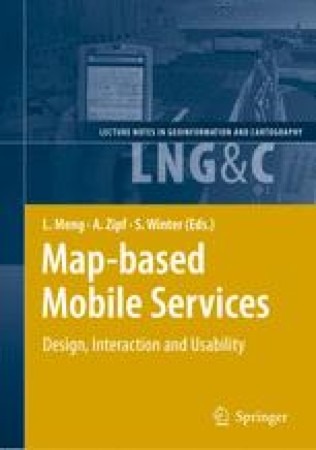
Map-based Mobile Services : Design, Interaction and Usability
It addresses methods and techniques for topics that range from design and rendering, context modelling, personalisation, multimodal interaction to usability test. Instead of striving for a seamless coverage of all essential theoretical and technical issues with an equal depth and extent, we attempt to pinpoint a number of research highlights and representative development activities at universities, research institutions and so- ware industry. The operational prototypes and platforms reported in the book are on the one hand outcome and feasibility proof of various approaches. On the other hand, they serve as a new starting point for the refinement of user interfaces and iterative usability tests.

Machine Learning for Multimodal Interaction ; Vol.4299 ; 3rd International Workshop, MLMI 2006, Bethesda, MD, USA, May 1-4, 2006, Revised Selected Papers
This book contains a selection of refereed papers presented at the 3rd Workshop on Machine Learning for Multimodal Interaction (MLMI 2006), held in Bethesda MD, USA during May 1–4, 2006.

Machine Learning for Multimodal Interaction ; Vol.3869 ; 2nd International Workshop, MLMI 2005, Edinburgh, UK, July 11-13, 2005, Revised Selected Papers
The papers are organized in topical sections on multimodal processing, HCI and applications, discourse and dialogue, emotion, visual processing, speech and audio processing, and NIST meeting recognition evaluation

Machine Learning for Multimodal Interaction ; Vol.3361 : 1st International Workshop, MLMI 2004, Martigny, Switzerland, June 21-23, 2004, Revised Selected Papers
his book contains a selection of refereed papers presented at the 1st Wo- shop on Machine Learning for Multimodal Interaction (MLMI 2004), held at the “Centre du Parc,” Martigny, Switzerland, during June 21–23, 2004. The workshop was organized and sponsored jointly by three European projects, – AMI, Augmented Multiparty Interaction, http://www.amiproject.org – PASCAL, Pattern Analysis, Statistical Modeling and Computational Learning, http://www.pascal-network.org – M4, Multi-modal Meeting Manager, http://www.m4project.org as well as the Swiss National Centre of Competence in Research (NCCR): – IM2: Interactive Multimodal Information Management, http://www.im2.ch MLMI 2004 was thus sponsored by the European Commission and the Swiss National Science Foundation.

Machine Learning for Multimodal Interaction ; 5th International Workshop, MLMI 2008, Utrecht, The Netherlands, September 8-10, 2008. Proceedings
The 12 revised full papers and 15 revised poster papers presented together with 5 papers of a special session on user requirements and evaluation of multimodal meeting browsers/assistants were carefully reviewed and selected from 47 submissions. The papers cover a wide range of topics related to human-human communication modeling and processing, as well as to human-computer interaction, using several communication modalities. Special focus is given to the analysis of non-verbal communication cues and social signal processing, the analysis of communicative content, audio-visual scene analysis, speech processing, interactive systems and applications.

Machine Learning for Multimodal Interaction ; 4th International Workshop, MLMI 2007, Brno, Czech Republic, June 28-30, 2007, Revised Selected Papers
This book contains a selection of revised papers from the 4th Workshop on Machine Learning for Multimodal Interaction (MLMI 2007), which took place in Brno, Czech Republic, during June 28 30, 2007. As in the previous editions of the MLMI series, the 26 chapters of this book cover a large area of topics, from multimodal processing and human computer interaction to video, audio, speech and language processing. The application of machine learning techniques to problems arising in these felds and the design and analysis of software

Journal on Data Semantics X
Web semantics and semi-structured data , Semantic caching , Data warehousing and semantic data mining , Spatial, temporal, multimedia and multimodal semantics , Semantics in data visualization , Semantic services for mobile users , Supporting tools , Applications of semantic-driven approaches These topics are to be understood as specifically related to semantic issues. Contributions submitted to the journal and dealing with semantics of data will be considered even if they are not from the topics in the list. While the physical appearance of the journal issues is like the books from the we- known Springer LNCS series, the mode of operation is that of a journal. Contributions can be freely submitted by authors and are reviewed by the Editorial Board.

Journal on Data Semantics VI
Data warehousing and semantic data mining • Spatial, temporal, multimedia and multimodal semantics • Semantics in data visualization • Semantic services for mobile users • Supporting tools • Applications of semantic-driven approaches These topics are to be understood as speci?cally related to semantic issues. Contributions submitted to the journal and dealing with semantics of data will be considered even if they are not within the topics in the list. While the physical appearanceof the journal issues looks like the books from the well-known Springer LNCS series, the mode of operation is that of a jo- nal. Contributions can be freely submitted by authors and are reviewed by the Editorial Board. Contributions may also be invited, and nevertheless carefully reviewed, as in the case for issues that contain extended versions of best papers from major conferences addressing data semantics issues. Special issues, foc- ing on a speci?c topic, are coordinated by guest editors once the proposal for a special issue is accepted by the Editorial Board.
