


Refine Results
Sort By
From
To

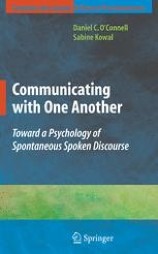
In other words, this book is a call for a paradigm shift in the study of oral communication. It is a must read for people interested in language use, as well as for specialists in language studies. "The authors have identified crucial theoretical and methodological assumptions that have hampered scholarship on language use. Their critical assessment is grounded in nuanced theoretical analysis and rigorous empirical studies. As a result, they reveal the complexity, elegance, and moral aspects of day to day dialogical communication."
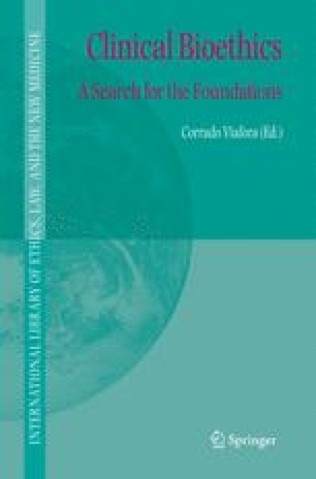
Clinical Bioethics. A Search for the Foundations compares major theoretical models in the foundation of clinical bioethics and explains medicine as a normative practice. The goals of medicine are discussed with particular reference to the subjectivisation of health and the rationalisation of health care institutions. This volume provides a consistent reconstruction of bioethical judgment both at the level of epistemological statute and institutional context, i.e. clinical ethics committees and clinical ethics consultation.
This book presents a multidisciplinary perspective to increase our understanding of climate policies that are rooted in the natural moral inclinations of people, families and firms. Which policies prevent a widening gap between higher and lower educated people? Which policy instruments are there, and how could they be used? What is the role of free entrepreneurship?

This volume provides a unique perspective on the market reforms currently taking place in Chinese health care. The authors come to grips with the changes taking place in Chinese health care and its effect on the traditional doctor-patient relationship, but also its positive effects on the availability and quality of health care particularly in urban areas. In doing so the various authors wrestle with moral, political and social issues deeply ingrained in Chinese culture as well as the perceived practical and moral difficulties associated with the change to a market oriented economy especially in area of health care.
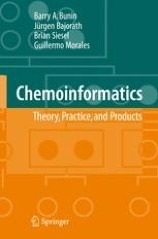
Chemoinformatics: Theory, Practice & Products covers theory, commercially available packages and applications of Chemoinformatics. Chemoinformatics is broadly defined as the use of information technology to assist in the acquisition, analysis and management of data and information relating to chemical compounds and their properties.The book also provides a summary of currently available, state-of-the-art, commercial Chemoinformatics products, with a specific focus on databases, toolkits, and modelling technologies designed for drug discovery.

This book explores the historical, cultural and philosophical contexts that have made anti-poverty the core of Chinese society since Liberation in 1949, and why poverty alleviation measures evolved from the simplistic aid of the 1950s to Xi Jinping’s precision poverty alleviation and its goal of eliminating absolute poverty by 2020. The book also addresses the implications of China’s experience for other developing nations tackling not only poverty but such issues as pandemics, rampant urbanization and desertification exacerbated by global warming. The first of three parts draws upon interviews of rural and urban Chinese from diverse backgrounds and local and national leaders. These interviews, conducted in even the remotest areas of the country, offer candid insights into the challenges that have forced China to continually evolve its programs to resolve even the most intractable cases of poverty.
Believing the wrong thing may sometimes have drastic consequences. The question as to when a person is not only ill-guided, but genuinely at fault for holding a particular belief is an important one: It touches upon the roots of our understanding of such notions as criminal negligence and moral responsibility. The answer to this question may influence the extent to which we are willing to submit each other to punishments ranging from mild resentment to harsh prison terms. This book presents an extensive effort to shed light on the conditions under which we may appropriately deem someone blameworthy for holding a particular belief. It regiments and unifies several debates within contemporary epistemology, ethics and legal scholarship. Finally, the book brings a new philosophical look on issues like our power to control beliefs and the extent and nature of foresight.
This book discusses a range of methodological issues for an interdisciplinary bioethics. How can bioethics be an enterprise that does not only isolate issues and moral reasons but also (re)contextualises them? What are the strengths and weaknesses of different traditional and innovative modes of ethical work in terms of these tasks?

Bioethics has addressed many of the issues that arise in the context of globalisation. This book presents the results of a conference the Europaische Akademie held in 2003 which developed its thesis in open discussions of foundational and applied problems of bioethics from an interdisciplinary and international perspective.
The book presents objections to the most common response given by contemporary legal and political theorists to the moral complexity of decision-making in modern societies, namely: the attempt to release public agents from their argumentative burden by insulating a particular set of reasons from the general.

Beauty fulfils human existence. As it registers in our aesthetic experience, beauty enhances nature’s enchantment around us and our inward experience lifting our soul toward moral elevation. Carried by creative imagination (Imaginatio Creatrix), beauty participates in the moulding of the forms of the intellective constitution of the mind in tandem with praxis and seeks deeper enigmas of the real in the labyrinth of the cosmos. Yet with the evolution of human development and in technological inventions, beauty, while suffusing all modalities of experience, seems to undergo transformations and expansion. Are there perduring norms and modalities of beauty or are we carried along blindly by human development? Is there a measure intrinsic to our human ontopoietic unfolding and the growth of human life that we may follow instead of the whim of fancy and excess? The present collection of art-explorations seeks the elemental ties of Human Condition. Together, the authors aim to answer the questions posed above.
This collection of essays by some of the most prominent Catholic bioethicists addresses the Pope’s statements, the moral issues surrounding artificial feeding and hydration, the refusal of treatment, and the ethics of care for those at the end of life.

This book brings together the work of leading experts in argumentation in science education. It presents research combining theoretical and empirical perspectives relevant for secondary science classrooms. Since the 1990s, argumentation studies have increased at a rapid pace, from stray papers to a wealth of research exploring ever more sophisticated issues. This volume constitutes a unique collection and covers fundamental issues in argumentation such as cognitive, methodological and epistemological aspects; classroom-based research in teaching and learning of argumentation in science classrooms; and argumentation in context such as in socio-scientific and moral contexts. The book’s underlying premise is that argumentation is a significant aspect of scientific inquiry and plays an important role in teaching and learning of science.
This book provides the first explicit case study for an application of the method of reflective equilibrium (RE), using it to develop and defend a precautionary principle. It thereby makes an important and original contribution to questions of philosophical method and methodology. The book shows step-by-step how RE is applied, and develops a methodological framework which will be useful for everyone who wishes to use reflective equilibrium. With respect to precautionary principles, the book demonstrates how a rights-based precautionary principle can be constructed and defended.
This book explores the social history of the anti-vivisection movement in Britain from its nineteenth-century beginnings until the 1960s. It discusses the ethical principles that inspired the movement and the socio-political background that explains its rise and fall. Opposition to vivisection began when medical practitioners complained it was contrary to the compassionate ethos of their profession. Christian anti-cruelty organizations took up the cause out of concern that callousness among the professional classes would have a demoralizing effect on the rest of society. As the nineteenth century drew to a close, the influence of transcendentalism, Eastern religions and the spiritual revival led new age social reformers to champion a more holistic approach to science, and dismiss reliance on vivisection as a materialistic oversimplification.
This book brings together authoritative voices in animal and environmental ethics, who address the many different facets of changing human-animal relationships in the Anthropocene. As we are living in complex times, the issue of how to establish meaningful relationships with other animals under Anthropocene conditions needs to be approached from a multitude of angles. This book offers the reader insight into the different discussions that exist around the topics of how we should understand animal agency, how we could take animal agency seriously in farms, urban areas and the wild, and what technologies are appropriate and morally desirable to use regarding animals. This book is of interest to both animal studies scholars and environmental ethics scholars, as well as to practitioners working with animals, such as wildlife managers, zookeepers, and conservation biologists.
The thesis of this book is that members of what I shall call the “animal welfare science community,”3 which includes both scientists and philosophers, have illegitimately appropriated the concept of animal welfare by claiming to have given a scientific account of it that is more objectively valid than the more sentimental” account given by animal liberationists.
The two volumes of Altering Nature consider the complex ways that concepts of 'nature' and 'the natural' are understood and the relevance of those understandings to discussions of biotechnology.Volume Two, Religion, Biotechnology, and Public Policy, reviews recent religious and ethical analyses of four specific areas of biotechnology: assisted reproduction, genetic therapy and enhancement, human-machine incorporation, and biodiversity. It identifies and explores the richer normative themes that inform particular debates and suggests ways that policy choices in biotechnology may be illuminated by devoting greater attention to religious perspectives.
Volume One, Concepts of 'Nature' and 'The Natural' in Biotechnology Debates, offers nuanced accounts of the ways that nature is invoked and interpreted, both descriptively and prescriptively, by different disciplines, including perspectives from spirituality and religion, philosophy, science and medicine, law and economics, and aesthetics. In the context of that broad discussion.
What makes an event count as an action? Typical answers appeal to the way in which the event was produced: e.g., perhaps an arm movement is an action when caused by mental states (in particular ways), but not when caused in other ways. Andrew Sneddon argues that this type of answer, which he calls "productionism", is methodologically and substantially mistaken. In particular, productionist answers to this question tend to be either individualistic or foundationalist, or both, without explicit defence.

Daraa Highway - Ghabagheb - Syria
+963-15 2050 - 15 860 380 /1/2/3 - 11 662 3900