


Refine Results
Sort By
From
To

Learn to use the jOOQ library to manage SQL database operations in Java and JVM applications. This book walks you through what JOOQ is, how to install and get started with it, and then gets you working with it. You will: Comparing equivalent features between Hibernate, JPA and jOOQ. Unlock the power of your SQL database with high performing, flexible and typesafe SQL queries. Seamlessly work with many different SQL database vendors without changing your code. Effortlessly generate Java code based on the content of your database. Write reactive SQL database access code with R2DBC. Integrating jOOQ into popular frameworks and platforms like Hibernate, Spring boot and Quarkus tools like IDEs. Testing jOOQ-based code with modern integration testing frameworks like TestContainers and Docker. Learn how to safely handle data access code within frameworks like the Java Persistence API (JPA)
Teaches you tools that you can use to build efficient applications. It starts with an introduction to algorithms and big O notation, later explains bubble, merge, quicksort, and other popular programming patterns. You’ll also learn about data structures such as binary trees, hash tables, and graphs. The book progresses to advanced concepts, such as algorithm design paradigms and graph theory. By the end of the book, you will know how to correctly implement common algorithms and data structures within your applications.
Learn the fundamentals of the Java 17 LTS or Java Standard Edition version 17 Long Term Support release, including basic programming concepts and the object-oriented fundamentals necessary at all levels of Java development. You will: Write your first Java programs with emphasis on learning object-oriented programming / How to work with switch expressions, value types (records), local variable type inference, pattern matching switch and more from Java 17 / Handle exceptions, assertions, strings and dates, and object formatting / Learn about how to define and use modules / Dive in depth into classes, interfaces, and inheritance in Java / Use regular expressions / Take advantage of the JShell REPL tool
Shows you how to leverage IntelliJ’s tools to develop clean, efficient Java applications. The last portion of the book focuses on application testing and deployment, and language- and framework- specific guidelines. After reading this book and working through its freely available source code, you'll be up to speed with this powerful IDE for today's Java development. You will: Use IntelliJ IDEA to build Java applications / Set up your IDE and project / Work with source code / Extend your Java application to data science and other kinds of applications / Test and deploy your application and much more
The open source, lightweight Google Web Toolkit (GWT) is a framework that allows Java developers to build rich Internet applications (RIAs), more recently called Ajax applications, in Java. Typically, writing these applications requires a lot of JavaScript development. However, Java and JavaScript are very distinctively different languages (although the name suggests otherwise), therefore requiring a different development process. In Beginning Google Web Toolkit: From Novice to Professional, you'll learn to build rich, user–friendly web applications using a popular Java–based Ajax web framework, the Google Web Toolkit.
The book continues with a complete tutorial on PostgreSQL features and functions and include information on database construction and administration. Key features such as transactions, stored procedures and triggers are covered, along with many of the capabilities new to version 8. To help you get started quickly, step-by-step instructions on installing PostgreSQL on Windows and Linux/UNIX systems are included. In the remainder of the book, we show you how to make the most of PostgreSQL features in your own applications using a wide range of programming languages, including C, Perl, PHP, Java and C#. Many example programs are presented in the book, and all are available for download from the Apress web site. By the end of the book you will be able to install, use, and effectively manage a PostgreSQL server, design and implement a database, and create and deploy your own database applications.
Probabilistic graphical models and decision graphs are powerful modeling tools for reasoning and decision making under uncertainty. As modeling languages they allow a natural specification of problem domains with inherent uncertainty, and from a computational perspective they support efficient algorithms for automatic construction and query answering. This includes belief updating, finding the most probable explanation for the observed evidence, detecting conflicts in the evidence entered into the network, determining optimal strategies, analyzing for relevance, and performing sensitivity analysis. The book introduces probabilistic graphical models and decision graphs, including Bayesian networks and influence diagrams.It contians two parts. The first part focuses on probabilistic graphical models. Compared with the previous book, the new edition also includes a thorough description of recent extensions to the Bayesian network modeling language, advances in exact and approximate belief updating algorithms, and methods for learning both the structure and the parameters of a Bayesian network. The second part deals with decision graphs, and in addition to the frameworks described in the previous edition, it also introduces Markov decision processes and partially ordered decision problems.
Takes a humorous slant on the programming practice manual by reversing the usual approach: under the pretence of teaching you how to become the world’s worst programmer who generally causes chaos, the book teaches you how to avoid the kind of bad habits that introduce bugs or cause code contributions to be rejected.
This work, a tribute to renowned researcher Robert Paige, is a collection of revised papers published in his honor in the Higher-Order and Symbolic Computation Journal in 2003 and 2005. The book also includes some papers by members of the IFIP Working Group 2.1 of which Bob was an active member.
Introduces readers to various topics and examples of programming in Python, as well as key concepts in artificial intelligence. Python programming skills will be imparted as we go along. Concepts and code snippets will be covered in a step-by-step manner, to guide and instill confidence in beginners. Complex subjects in deep learning and machine learning will be broken down into easy-to-digest content and examples. Artificial intelligence implementations will also be shared, allowing beginners to generate their own artificial intelligence algorithms for reinforcement learning, style transfer, chatbots, speech, and natural language processing.
Applies the functional OCaml programming language to numerical or computational weighted data science, engineering, and scientific applications. This book is based on the authors' first-hand experience building and maintaining Owl, an OCaml-based numerical computing library. You'll first learn the various components in a modern numerical computation library. Then, you will learn how these components are designed and built up and how to optimize their performance. After reading and using this book, you'll have the knowledge required to design and build real-world complex systems that effectively leverage the advantages of the OCaml functional programming language.
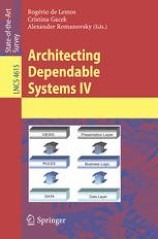
As software systems become ubiquitous, the issues of dependability become more and more crucial. Given that solutions to these issues must be considered from the very beginning of the design process, it is reasonable that dependability is addressed at the architectural level. It also contains sections on architectural description languages, architectural components and patterns, architecting distributed systems, and architectural assurances for dependability.
Focuses on the fundamental concepts and at the same time on practical aspects of implementing neural networks and deep learning for your research projects. This book is designed so that you can focus on the parts you are interested in. You will explore topics as regularization, optimizers, optimization, metric analysis, and hyper-parameter tuning. In addition, you will learn the fundamentals ideas behind autoencoders and generative adversarial networks. All the code presented in the book will be available in the form of Jupyter notebooks which would allow you to try out all examples and extend them in interesting ways. A companion online book is available with the complete code for all examples discussed in the book and additional material more related to TensorFlow and Keras. All the code will be available in Jupyter notebook format and can be opened directly in Google Colab (no need to install anything locally) or downloaded on your own machine and tested locally. You will: Understand the fundamental concepts of how neural networks work / Learn the fundamental ideas behind autoencoders and generative adversarial networks / Be able to try all the examples with complete code examples that you can expand for your own projects / Have available a complete online companion book with examples and tutorials.
This book constitutes the thoroughly refereed post-conference proceedings of the Third International Symposium on Applications of Graph Transformations, AGTIVE 2007, held in Kassel, Germany, in October 2007.
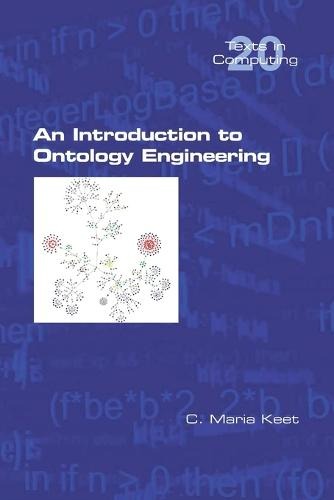
Provides the reader with a comprehensive introductory overview of ontology engineering. A secondary aim is to provide hands-on experience in ontology development that illustrate the theory. The book is divided into three blocks: Block I: logic foundations for ontologies both regarding the languages (mainly First Order predicate Logic, Description Logics, and OWL) and automated reasoning. Block II: developing good ontologies with methods and methodologies, the top-down approach with foundational ontologies, and the bottom-up approach to extract as much useful content as possible from legacy material. Block III: advanced topics with a selection of areas of specialisation, including Ontology-Based Data Access, the interaction between ontologies and natural languages (multilingual ontologies, controlled natural language), and advanced modelling with additional language features (fuzzy and temporal ontologies)
Designed for an introductory course on formal languages, automata, compatibility, and related matters forming what is known as the theory of computation
Designed so that domain knowledge can be described and so that computers can reason about this knowledge. DLs have recently gained increased importance since they form the logical basis of widely used ontology languages, in particular the web ontology language OWL. Written by four renowned experts, this is the first textbook on description logics. It is suitable for self-study by graduates and as the basis for a university course. Starting from a basic DL, the book introduces the reader to their syntax, semantics, reasoning problems and model theory and discusses the computational complexity of these reasoning problems and algorithms to solve them.
This book constitutes the refereed proceedings of the 12th International Conference on Algebraic Methodology and Software Technology, AMAST 2008, held in Urbana, IL, USA, in July 2008.
This Festschrift volume - published to honor Joseph Goguen on his 65th Birthday on June 28, 2006 - includes 32 refereed papers by leading researchers in the different areas spanned by Joseph Goguen's work. The papers address a broad variety of topics from meaning, meta-logic, specification and composition, behavior and formal languages, as well as models, deduction, and computation.The papers were presented at a Symposium in San Diego, California, USA in June 2006.
This volume is the first ever collection devoted to the field of proof-theoretic semantics. Contributions address topics including the systematics of introduction and elimination rules and proofs of normalization, the categorial characterization of deductions, the relation between Heyting's and Gentzen's approaches to meaning, knowability paradoxes, proof-theoretic foundations of set theory, Dummett's justification of logical laws, Kreisel's theory of constructions, paradoxical reasoning, and the defence of model theory.

Daraa Highway - Ghabagheb - Syria
+963-15 2050 - 15 860 380 /1/2/3 - 11 662 3900