



Page 2
Page 2

Geotechnical Earthquake Engineering
This book presents all issues of earthquake geotechnical engineering in a comprehensive way. It summarizes the present knowledge on earthquake hazards and their causative mechanisms, experimental studies on nonlinear complex soil behaviour, an analysis to predict ground behaviour during earthquakes, field studies to determine nature of real ground as input data for analysis, and damage mitigation technologies.
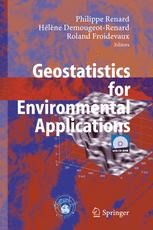
Geostatistics for environmental applications ; Proceedings of the Fifth European Conference on geostatistics for environmental applications
Once applied only to problems of mining-reserves assessment or petroleum-reservoir characterization, geostatistics is now being used in an increasingly large number of disciplines in environmental sciences. On the one hand, it enables the analysis and handling, in a rigorous probabilistic framework of the issues of spatial and temporal interpolation of continuous or categorical environmental variables. On the other hand, the methodology is also used to design and optimize sampling campaigns. "Geostatistics for Environmental Applications" contains forty selected contributions covering the latest progress in a broad spectrum of fields including air quality, climatology, ecology, groundwater hydrology, surface hydrology, oceanography, soil contamination, epidemiology and health, natural hazards, and remote sensing.

Geological atlas of Africa : With notes on stratigraphy, tectonics, economic geology, geohazards, geosites and geoscientific education of each country
Here is the new edition of the first attempt to summarize the geology of Africa by presenting it in an atlas and to synthesize the stratigraphy, tectonics, economic geology, geohazards and geosites of each country and territory of the continent. Furthermore, the digitized geological maps are correlated and harmonized according to the current stratigraphic timetable. The atlas aims to contribute to capacity building in African Earth Sciences and to aid the initiation of research and enable the achievement of economic opportunities by providing a database of basic geological background information.

Geological atlas of Africa : With notes on stratigraphy, tectonics, economic geology, geohazards, geosites and geoscientific education of each country
T is atlas is intended primarily for anybody who is in-some background for the arrangement of how the terested in basic geology of Africa. Its originality lies atlas was done. T e second chapter is devoted to the in the fact that the regional geology of each African history of geological mapping in Africa, necessary nation or territory is reviewed country-wise by maps for a fuller appreciation of why this work in Africa is and text, a view normally not presented in textbooks worth doing. Chapter 3 provides an executive s- of regional geology. It is my belief, that there has long mary on the stratigraphy and tectonics of Africa as a been a need in universities and geological surveys, whole, i. e. in the context of no political boundaries.

Fossil earthquakes : The formation and preservation of pseudotachylytes
This book encompass the principl results of field investigations, analyses of meso-scale and micro-scale textures and structures, laboratory experiments, chemical analyses, conceptual fault models, as well as the implications of fault related pseudotachylyte an its related fault rocks for our understanding of earthquakes. We hope that this book helps to bridge the gap between seismology and geology and that it encourages further studies of earthquake and seismic faulting processes.

Flood Risk Management : Hazards, Vulnerability and Mitigation Measures
Floods are of increasing public concern world-wide due to increasing damages and unacceptably high numbers of injuries. Previous approaches of flood protection led to limited success especially during recent extreme events. Therefore, an integrated flood risk management is required which takes into consideration both the hydrometeorogical and the societal processes. Moreover, real effects of risk mitigation measures have to be critically assessed. The book draws a comprehensive picture of all these aspects and their interrelations. It furthermore provides a lot of detail on earth observation, flood hazard modelling, climate change, flood forecasting, modelling vulnerability, mitigation measures and the various dimensions of management strategies. In addition to local and regional results of science, engineering and social science investigations on modelling and management, transboundary co-operation of large river catchments are of interest.

Famine Early Warning Systems and Remote Sensing Data
This book describes the interdisciplinary work of USAID’s Famine Early Warning System Network (FEWS NET) and its in uence on how food security crises are identi ed, documented and the kind of responses that result. The book describes FEWS NET’s systems and methods for using satellite remote sensing to identify and describe how biophysical hazards impact the lives and livelihoods of the po- lation where they occur. It presents several illustrative case studies that will dem- strate the integration of both physical and social science disciplines in its work. FEWS NET’s operational needs have driven science in biophysical remote sensing applications through its collaboration with the US Geological Survey, the National Aeronautics and Space Administration, National Oceanographic and Atmospheric Administration, and US Department of Agriculture, as well as methodologies in the social science domain through its support of the US Agency for International - velopment, UN World Food Program and numerous international non-governmental organizations such as Save the Children, Oxfam and others. Because FEWS NET is an organization that must provide a global picture of food insecurity to decision makers, the information it relies on are by necessity - servable and able to be documented.

Extremes in Nature : An Approach Using Copulas
The study of the statistics of extreme events is an essential first step in the mitigation of natural catastrophies, that often cause severe economic losses worldwide. This book is about the theoretical and practical aspects of the statistics of Extreme Events in Nature. Most importantly, this is the first text in which Copulas are introduced and used in Geophysics. Several topics are fully original, and show how standard models and calculations can be improved by exploiting the opportunities offered by Copulas. In addition, new quantities useful for design and risk assessment are introduced. Practicioners in all research areas of Geosciences and extreme events (including Finance and Insurance, closely related to natural disasters) will definitely benefit from the new Copula-approach outlined in the book.

Extreme Man-Made and Natural Hazards in Dynamics of Structures
The present threat of the terrorist attacks or accidental explosions, the climate change which brings strong stormy winds or yet the destructive earthquake motion that occurs in previously inactive regions or brings about tsunamis, are a few examples of the kind of applications we seek to address in this work.

Evaporites : Sediments, Resources and Hydrocarbons
The monograph offers a comprehensive discussion of the role of evaporites in hydrocarbon generation and trapping. For the first time, diverse knowledge on exploitable salts has been assembled and organized, along with a summary of evaporate karst hazards as well as a summary of exploitative methods and pitfalls in dealing with evaporites in conventional and solution mining. Written by a field specialist in research and exploration, the book presents a comprehensive synthesis of the low temperature realm of evaporite evolution. It is aimed for earth science professionals, sedimentologists, oil and gas explorers, mining geologists, as well as environmental geologists.

Essentials of industrial pharmacy
Presents various pharmaceutical processes and equipment that are frequently used for production of pharmaceutical dosage forms, along with quality control tests of these dosage forms. Pictorial/graphical illustrations provide easier understanding of complex pharmaceutical concepts, manufacturing processes of pharmaceutical dosage forms. Since it is imperative for pharmacy students to have a clear understanding of the basic concepts used in development of drugs into suitable and stable dosage forms.

Earthquakes, Tsunamis and Nuclear Risks : Prediction and Assessment Beyond the Fukushima Accident
This book covers seismic probabilistic risk assessment (S-PRA) and related studies which have become more important to increase the safety of nuclear facilities against earthquakes and tsunamis in the face of the many uncertainties after the Fukushima accident. The topics are (1) Active faults and active tectonics important for seismic hazard assessment of nuclear facilities,(2) Seismic source modeling and simulation and modeling techniques indispensable for strong ground motion prediction, and (3) PRA with external hazard and risk communication.

Earthquake Monitoring and Seismic Hazard Mitigation in Balkan Countries
this book including deployment of modern seismograph stations and arrays and these developments are detailed in the book. Station and network operations require near real time record analysis and topics dealt with here are 2-D signal detector, epicenter location and earthquake monitoring. Balkan is seismically the most active part of Europe due to multiple plate interactions in the Aegean Sea. The tectonic evolution and on-going geodynamic deformations are described in 2 articles. Earthquake hazard analysis and topographic site effects are discussed and likewise large earthquake hazards in the Aegean and the Marmara seas relate to practical applications of such procedures. Foremost; the book gives a good account of past, present and likely future seismological developments in Balkan countries and various kinds of network operations on local to global scales.

Earthquake disaster simulation of civil infrastructures : From tall buildings to urban areas
Covers a range of numerical modeling approaches, higher performance computation methods, and high fidelity visualization techniques for earthquake disaster simulation of tall buildings and urban areas. It also demonstrates successful engineering applications of the proposed methodologies to typical landmark projects (e.g., Shanghai Tower and CITIC Tower, two of the world's tallest buildings; Beijing CBD and San Francisco Bay Area).

Earth Sciences and Mathematics ; Vol.1
This volume contains papers addressing different topics as deformation modelling applied to natural hazards, inverse gravimetric problem to determine 3D density structure, advanced differential SAR interferometry, climate change, geomagnetic field, Earthquake statistics, meteorological studies using satellite images, climate energy balance models, study of soils properties, and multifractal data sets.

Disasters : Core Concepts and Ethical Theories
Examines disasters from a multidisciplinary perspective. Justification of actions in the face of disasters requires recourse both to conceptual analysis and ethical traditions. Part 1 of the book contains chapters on how disasters are conceptualized in different academic disciplines relevant to disasters. Part 2 has chapters on how ethical issues that arise in relation to disasters can be addressed from a number of fundamental normative approaches in moral and political philosophy. This book sets the stage for more focused normative debates given that no one book can be completely comprehensive. Providing analysis of core concepts, and with real-world relevance, this book should be of interest to disaster scholars and researchers, those working in ethics and political philosophy, as well as policy makers, humanitarian actors and intergovernmental organizations.

Digital twin technology : fundamentals and applications
Provides an in-depth examination of digital twin technology to take you on an enthralling trip across the intersection of the virtual and real worlds. It explores the transformational impact of digital twins, from their roots in engineering to their widespread applications in manufacturing, health care, and other areas. Real-world case studies highlight the practical benefits, while potential hazards are addressed wisely. This book is your guide to comprehending the present and visualizing a future where digital twins transform innovation, efficiency, and connectedness in our increasingly complicated world. Begin this illuminating trip and embrace the possibilities that exist at the intersection of the physical and digital worlds.

Differential Optical Absorption Spectroscopy : Principles and Applications
This book reviews the basics of atmospheric chemistry, radiation transport, and optical spectroscopy before detailing the principles underlying DOAS. The second part of the book describes the design and application of DOAS instruments as well as the evaluation and interpretation of spectra. The recent expansion of DOAS application to the imaging of trace gas distributions by ground, aircraft, and satellite-based instruments is also covered.

Developing Tsunami-Resilient Communities : The National Tsunami Hazard Mitigation Program
Tsunamis remain an ever-present threat to lives and property along the coasts of most of the world’s oceans. Because of the geographical extent of U.S. coastlines, an earthquake in Alaska can generate a local tsunami for Alaskans and, hours later, a distant tsunami for communities in Hawaii and along the Pacific Coast . This volume chronicles the development and accomplishments of a joint State/Federal partnership that was forged to reduce tsunami hazards along U.S. coastlines – the National Tsunami Hazard Mitigation Program. By integrating hazard assessment, warning guidance, and mitigation activities, the program has created a roadmap and a set of tools to develop communities more resilient to local and distant tsunamis. Among the set of tools are tsunami forecasting, educational experiments, early alerting systems, and design guidance for tsunami-resilient communities. Part of this book has already been published in a recent journal issue.

Design of Hybrid Structures : Where Steel Profiles Meet Concrete
Focuses on design approaches for concrete structures reinforced in an unconventional way by steel profiles. It explains force transfer mechanisms of steel profiles and oncrete interfaces, and an analysis of the characteristics of hybrid structures, including slendercomponents. Several types of hybrid designs are addressed: walls and columns with several embedded steel profiles, connections strengthened by steel profiles between steel and composite or reinforced concrete components, including the specific case of shear keys connecting deep beams or flat slabs to columns. The transition zones in partly reinforced concrete and partly composite columns are also covered.
