



Page 2
Page 2

MCITP self-paced training Kit (Exam 70-444) : Optimizing and maintaining a database administration solution microsoft SQL server 2005
Designed to help you make the most of your study time. Maximize your performance on the exam by learning to: * Monitor and troubleshoot queries, databases, and servers * Help defend against injection attacks, denial of service attacks, worms, and viruses * Manage security strategies and perform audits * Detect and resolve data conflicts * Diagnose faults and recover from database failures and disasters * Optimize database availability with failover clustering, database mirroring, log shipping, and replication * Customize a maintenance strategy and automate routine tasks * Build, debug, and deploy SQL Server Integration Services packages PRACTICE TESTS Assess your skills with practice tests on CD. You can work through hundreds of questions using multiple testing modes to meet your specific learning needs. You get detailed explanations for right and wrong answers-including a customized learning path that describes how and where to focus your studies. Your training kit includes: Details inside. * Official self-paced study guide. * Practice tests with multiple, customizable testing options and a learning plan based on your results. *400+ practice and review questions. * Case scenarios, practice exercises, and best practices. *180-day evaluation version of Microsoft SQL Server 2005 Enterprise Edition. * Fully searchable eBook of this guide.

International conference on terrain and geohazard challenges facing onshore oil and gas pipelines : Evaluation, routing, resign, construction, operation ; Proceedings of a three day international conference on terrain and geohazard challenges facing onshore oil and gas pipelines, organised by the Institution of Civil Engineers in association with BP Exploration and held at the Institution of Civil Engineers, London, UK, on 2 – 4 June 2004
To access global oil and gas deposits, major pipelines must traverse remote regions with extreme terrains. There are a significant number of pipeline projects, active or planned, in tropical jungles, mountains and deserts, in permafrost and in areas of wetland. Each of these natural environments is associated with a range of geohazards, which may include landslides, soil erosion, karst, river migration, and seismic or volcanic activity. At the same time, society demands increasing availability and reliability of supply, together with improved environmental standards, all making for substantial challenges.

Insights into Receptor Function and New Drug Development Targets
G-Protein Coupled receptors (GPCRs) and other receptors are significant targets for drug discovery, due to their roles in fundamental physiological processes. Among these roles are: regulation of growth, food intake, reproduction, water balance, sensory perception, blood pressure and heart rate. GPCR-directed drugs account for approximately $40 billion in sales and, of drugs at market, approximately 70% target GPCR function. The availability of combinatorial chemistry coupled with high throughput screening techniques have facilitated discovery of peptidic and non-peptidic ligands of membrane receptors. Mutant receptor models have revealed their role in health and disease and provided insight to new therapeutic approaches, based on control of protein trafficking. Understanding receptor-receptor interactions has provided one mechanism for receptor cross-talk and revealed unexpected interactions.

Information assurance : Security in the information environment
This updated edition of Information Assurance: Security in the Information Environment was written to help IT managers and assets protection professionals to assure the protection and availability of vital digital information and related information systems assets. This Second Edition of Information Assurance includes major updates, including three new chapters • The Role of Policy in Information Assurance • Incident Management and Response • Security Standards Bridging the gap between information security, information systems security and information warfare, this edition re-examines and explains why organisations need to take information assurance seriously, and discusses the business, legal, and technical knowledge needed to secure these vital government and business assets.

Imaging in Drug Discovery and Early Clinical Trials
Efficient tools for the selection and validation of drug targets both at the preclinical and clinical level are required. Non-invasive imaging and in particular molecular imaging methods are becoming essential technologies to support drug discovery and dvelopment. Imaging provides structural, functional, metabolic and molecular readouts that are being applied to characterize a disease phenotype (diagnosis), to elucidate molecular mechanisms involved, to evaluate drug efficacy and safety, and to identify potential biomarkers of the drug's mechanism-of-action, efficacy and safety. Non-invasive imaging techniques constitute a bridge between preclinical and clinical drug evaluation. In this monograph the contribution of imaging modalities to the various stages of drug discovery and development, from early target validation to their use in clinical development programs, is described. Chapters are devoted to the description of the drug discovery process as such, to the various imaging modalities being used both preclinically and clinically, to applications of imaging during the optimization of a lead compound (addressing issues such as bioavailability and efficacy) and during the drug safety evaluation.

High-Velocity Clouds
On the occasion of the retirement of Ulrich Schwarz, a symposium was held in Groningen in May of 1996, celebrating his contributions to the study of the int- stellar medium, including his work on the high-velocity clouds. The coming together of many specialists in the latter ?eld prompted the idea of compiling a book c- taining their contributions, and summarizing the status of our understanding of the high-velocity cloud phenomenon. This seemed especially worthwhile at the time, since many exciting developments were taking place. After the discovery of some H i clouds with high velocities, about 40 years ago, the subject had been dominated by 21-cm observations of H i emission. Starting in the mid-1980s much progress was being made because of the availability of new instruments, such as large ground-based optical telescopes and UV observatories in space. The connections between the work on high-velocity clouds and other studies of the properties of the (hot) interstellar medium also became clearer.

High Availability and Disaster Recovery : Concepts, Design, Implementation
Companies and other organizations depend more than ever on the availability of their Information Technology, and most mission critical business processes are IT-based processes. Business continuity is the ability to do business under any circumstances and is an essential requirement modern companies are facing. High availability and disaster recovery are contributions of the IT to fulfill this requirement. And companies will be confronted with such demands to an even greater extent in the future, since their credit ratings will be lower without such precautions. Both, high availability and disaster recovery, are realized by redundant systems. Redundancy can and should be implemented on different abstraction levels: from the hardware, the operating system and middleware components up to the backup computing center in case of a disaster. This book presents requirements, concepts, and realizations of redundant systems on all abstraction levels, and all given examples refer to UNIX and Linux systems.
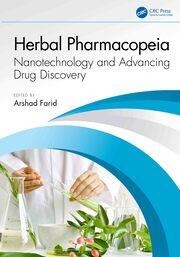
Herbal pharmacopeia : Nanotechnology and advancing drug
Explores the intersection between traditional herbal medicine and cutting-edge nanotechnology. The chapters introduce modern techniques used in herbal extraction and analysis. The principles of drug discovery from plants are discussed, with a focus on the identification and development of bioactive compounds that have therapeutic potential. It discusses the pharmacological properties, biotechnological approaches in drug development, and challenges in the formulation and standardization of herbal medicines. Emerging trends and applications of nanotechnology in herbal pharmacotherapy, such as nanoparticle synthesis, enhanced bioavailability using nanocarriers, safety assessments, novel and targeted delivery systems, and regulatory considerations, are thoroughly discussed. Additionally, it includes a comparative analysis of traditional and nano-formulated approaches and their implementation in clinical settings. Towards the end, the book reviews the regulatory considerations for herbal products and future perspectives in herbal pharmacopeia. This book is intended for researchers, clinicians, and professionals in herbal medicine, pharmacology, and nanotechnology.

Handbook of nanoencapsulation : Preparation, characterization, delivery, and safety of nutraceutical nanocomposites
Nutraceutical encapsulation envelopes protection of products from oxidative damage, controlled delivery of nanoencapsulated nutraceuticals and improved nutraceutical bioavailability as well as biological action. It is a promising technique to ensure the stabilization of such labile compounds and to protect the core ingredients from premature reactions and interactions In a comprehensive manner, the Handbook of Nanoencapsulation: Preparation, Characterization, Delivery and Safety of Nutraceutical Nanocomposites presents various nanosystems/nanocarriers, physical and chemical techniques used in encapsulation of various nutraceuticals, and the targeted delivery of various significant nutraceuticals.

Handbook of cell and gene therapy
Intended as a one-stop resource for availability of state-of-the-art information related to cell and gene therapy products for researchers, scientists, management and other academic and research institutions working in the field

Guide your education website
This platform is targeting more than one segment in the Damascene community and its suburbs. But first, I need to acknowledge mission of my work as a helping tool segmented in the educational sector to save time and effort of the users in finding the thing they are looking for by offering the right program that meets their own needs in a professional and efficient way. Thus, this will lead to the main purpose of my vision; me as an MIS graduated I dream of being the first facilitator in offering the right platform to the right people in the best way. That is why my slogan is “availability of information is for everyone”.

Gradients in a Tropical Mountain Ecosystem of Ecuador
This volume addresses a multitude of ecologically relevant aspects: macro- and microclimate; physics, chemistry and biology of soils; water relations, matter turnover and nutrient availability; plant growth and biomass partitioning; floral composition and plant life forms; vegetation structure and dynamics; organismic interactions, diversity and population biology of birds, moths and microarthropods; forest management, and reforestation with indigenous species; ethnobotanical and social aspects. New hypotheses are presented with regard to biodiversity and ecosystem functioning, as well as sustainable management of an ecosystem in a biodiversity hotspot.

Fungi as an Alternative Source of Anticancer and Antioxidant
Fungi are an " excellent but underexplored source " for new therapeutic compounds. The limited availability of bioactive principles in plant sources could be surpassed by exploiting the chemical entities in the endophytes fungi . fungi represent a rich source of bioactive metabolite that can manipulated to produce desirable novel analogs. In addition to the active substances that can be extracted from the fungi, so that they are useful in several mechanisms. Exploring and exploiting of metabolites from endophytic in terrestrial, mangrove and marine habitats may provide an avenue for discovery of drug candidates against deadly human disease. This review focuses on the production of antioxidant and anticancer from severa fungi habitats.

Formulating poorly water soluble drugs
A pharmaceutical scientist’s approach toward solubility enhancement of a poorly water-soluble molecule typically includes detailed characterization of the compound’s physiochemical properties, solid-state modifications, advanced formulation design, non-conventional process technologies, advanced analytical characterization, and specialized product performance analysis techniques. The scientist must also be aware of the unique regulatory considerations pertaining to the non-conventional approaches often utilized for poorly water-soluble drugs. One faced with the challenge of developing a drug product from a poorly soluble compound must possess at a minimum a working knowledge of each of the above mentioned facets and detailed knowledge of most. In light of the magnitude of the growing solubility problem to drug development, this is a significant burden especially when considering that knowledge in most of these areas is relatively new and continues to develop.

Filtering Theory : With Applications to Fault Detection, Isolation, and Estimation
The focus of this book is on filtering for linear processes, and its primary goal is to design filters from a class of linear stable unbiased filters that yield an estimation error with the lowest root-mean-square (RMS) norm. Various hierarchical classes of filtering problems are defined based on the availability of statistical knowledge regarding noise, disturbances, and other uncertainties. An important characteristic of the approach employed in this work for several aspects of filter analysis and design is structural in nature, revealing an inherent freedom to incorporate other classical secondary engineering constraints—such as placement of filter poles at desired locations—in filter design. Such a structural approach requires an understanding of powerful tools that then may be used in several engineering applications besides filtering.
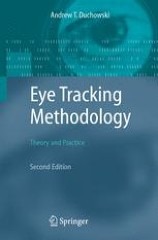
Eye Tracking Methodology : Theory and Practice
Despite the availability of cheap, fast, accurate and usable eye trackers, there is still little information available on how to develop, implement and use these systems. This second edition of Andrew Duchowski’s successful guide to these systems contains significant additional material on the topic and fills this gap in the market with this accessible and comprehensive introduction. Opening with useful background information, including an introduction to the human visual system and key issues in visual perception and eye movement, the second part surveys eye-tracking devices and provides a detailed introduction to the technical requirements necessary for installing a system and developing an application program. The book focuses on video-based, corneal-reflection eye trackers – the most widely available and affordable type of system, before closing with a look at a number of interesting and challenging applications in human factors, collaborative systems, virtual reality, marketing and advertising.

Enumerative Invariants in Algebraic Geometry and String Theory : Lectures given at the C.I.M.E. Summer School held in Cetraro, Italy June 6–11, 2005
Starting in the middle of the 80s, there has been a growing and fruitful interaction between algebraic geometry and certain areas of theoretical high-energy physics, especially the various versions of string theory. Physical heuristics have provided inspiration for new mathematical definitions (such as that of Gromov-Witten invariants) leading in turn to the solution of problems in enumerative geometry. Conversely, the availability of mathematically rigorous definitions and theorems has benefited the physics research by providing the required evidence in fields where experimental testing seems problematic. The aim of this volume, a result of the CIME Summer School held in Cetraro, Italy, in 2005, is to cover part of the most recent and interesting findings in this subject.

Enhancing the Dissolution Rate of Atorvastatin by Solid Dispersion Technique
In the last few decades, solid dispersion (SD) technology had been studied as an approach to produce an amorphous carrier to enhance the solubility, dissolution rate, and bioavailability of poorly water-soluble drugs. The use of suitable carrier and methodology in the preparation of SDs play a significant role in the biological behavior of the SDs. Atorvastatin is a statin group HMG-CoA reductase inhibitor drug that is commonly used to adverse cardiovascular events and to lower blood total cholesterol and LDL-cholesterol. the solubility of atorvastatin in water is very low (0.1 mg mL− 1), which results in reduced bioavailability. In order to enhance its solubility, we have prepared solid dispersions (SDs) of atorvastatin at different drug: polymer ratios (1:2, 1:10, 1:20,1:25 and 1:40), using polyethylene glycol 6000 as polymer and different preparation methods (co-precipitate and melting methods) The characterization of the SDs was performed using differential scanning calorimetry (DSC), Fourier transform infrared spectroscopy (FTIR) The solubility of AT was improved by the incorporation PEG6000.

Encyclopedic Dictionary of Polymers
The editor offers scientists, engineers, academia, and others interested in adhesives, coatings, elastomers, inks, plastics, and textiles a valuable communication tool within this book. In addition, the more recent innovations and biocompatible polymers and adhesives products have necessitated inclusion into any lexicon that addresses polymeric materials. Communication among scientific and engineering personnel has always been of critical importance, andas in any technical field, the terms and descriptions of materials and processes lag the availability of a manual or handbook that would benefit individuals working and studying in scientific and engineering disciplines.

Embedded systems design : The ARTIST roadmap for research and development
Embedded systems now include a very large proportion of the advanced products designed in the world, spanning transport (avionics, space, automotive, trains), electrical and electronic appliances (cameras, toys, televisions, home appliances, audio systems, and cellular phones), process control (energy production and distribution, factory automation and optimization), telecommunications (satellites, mobile phones and telecom networks), and security (e-commerce, smart cards), etc. The extensive and increasing use of embedded systems and their integration in everyday products marks a significant evolution in information science and technology. We expect that within a short timeframe embedded systems will be a part of nearly all equipment designed or manufactured in Europe, the USA, and Asia. There is now a strategic shift in emphasis for embedded systems designers: from simply achieving feasibility, to achieving optimality. Optimal design of embedded systems means targeting a given market segment at the lowest cost and delivery time possible. Optimality implies seamless integration with the physical and electronic environment while respecting real-world constraints such as hard deadlines, reliability, availability, robustness, power consumption, and cost. In our view, optimality can only be achieved through the emergence of embedded systems as a discipline in its own right.
